Violence Erupts Across Mexico After Death of Drug Lord ‘El Mencho’
By: Giselle Gunewardene
A major breakthrough came on Sunday (22nd) when Mexican security forces killed Nemesio Rubén Oseguera Cervantes, known worldwide as “El Mencho”, the leader of the powerful Jalisco New Generation Cartel (CJNG). The news sparked an unprecedented wave of violent retaliation from cartel members that has spread across much of the country. Mexican authorities confirmed that El Mencho was located and fatally wounded during a carefully planned operation carried out on the 22nd of February in the state of Jalisco, a longstanding stronghold of his criminal network. He died en route to medical care after being critically injured in the confrontation.
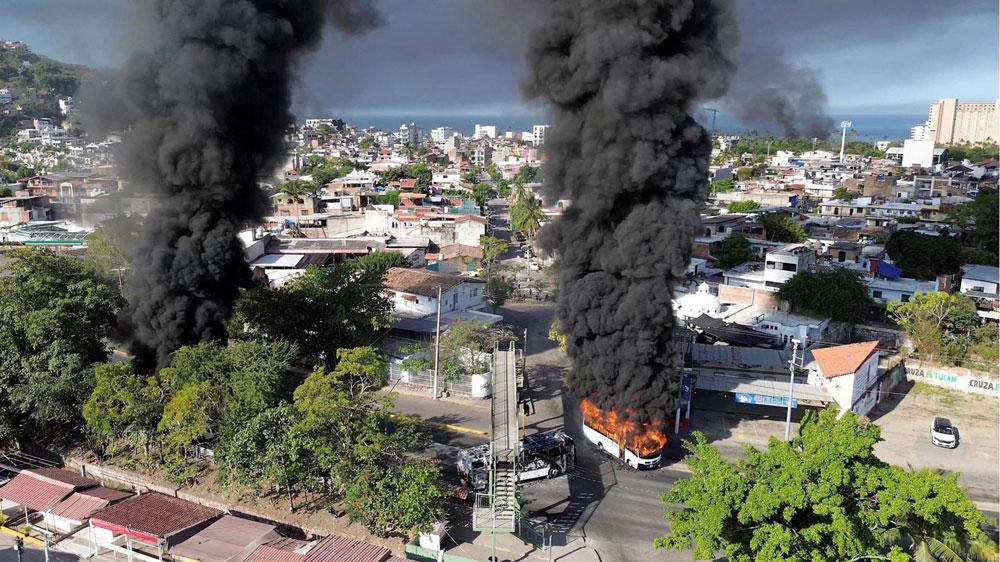
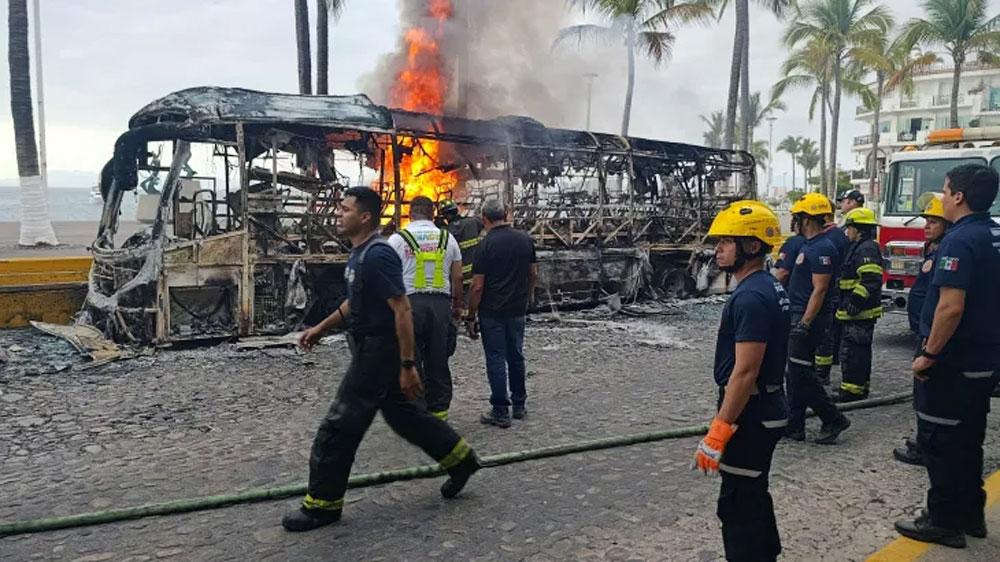
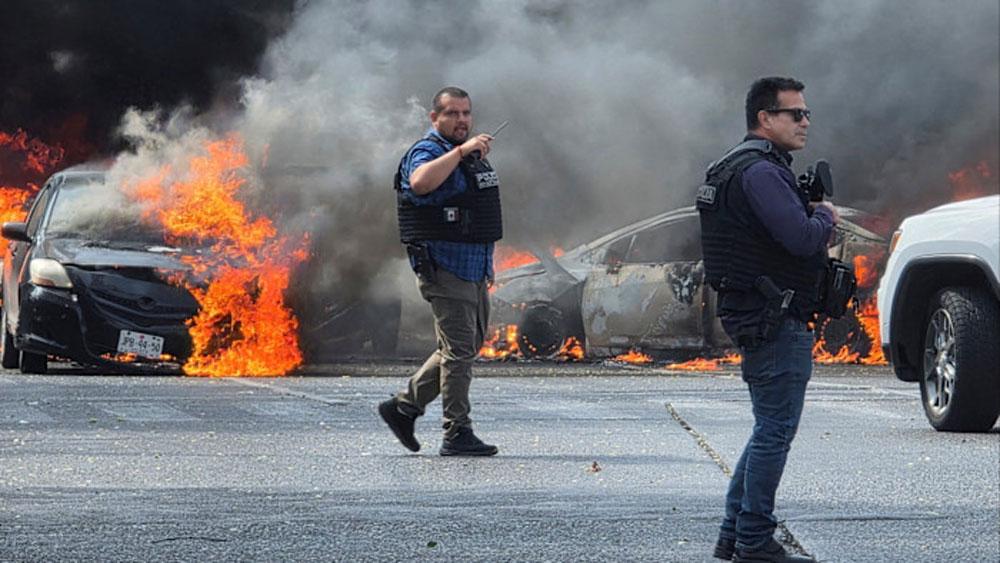
Violence followed rapidly. As word of El Mencho’s death spread, heavily armed cartel gunmen responded with a coordinated campaign of terror. Roads were blocked with burning vehicles. Fire spread to businesses and public infrastructure. Shootouts erupted in cities and towns. At least 73 people were killed in the operation and the ensuing chaos, including members of Mexico’s National Guard, suspected cartel fighters and others. Authorities also reported dozens of arrests. The carnage has reignited fears about the stability of security in Mexico, coming at a time when the government faces pressure to dismantle criminal organisations while safeguarding civilians and infrastructure.
The Operation That Killed a Kingpin
According to government officials, the raid that led to El Mencho’s death was the result of months of intelligence work by Mexican authorities, including input from external partners. Officials said they traced the drug lord to a safe house near Tapalpa, a mountainous region in south-western Jalisco, after tracking one of his romantic partners. Mexican Defence Secretary Ricardo Trevilla Trejo described how special forces encircled the compound and engaged the cartel leader’s security detail. A fierce firefight broke out. Gunmen fired on helicopters, forcing one to make an emergency landing. El Mencho and several of his bodyguards attempted to flee but were wounded in the clash. He later died despite efforts to save him. The operation reflects years of effort by Mexican security forces to apprehend one of the most elusive and violent crime bosses in the world.
Who Was El Mencho?
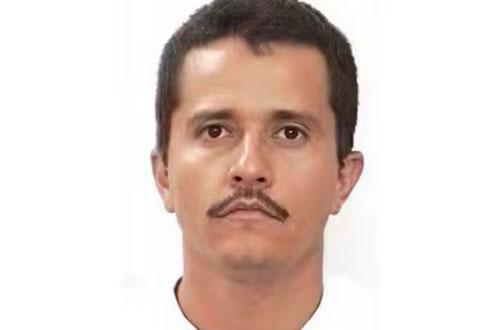
Nemesio Oseguera Cervantes was 59 years old and had been Mexico’s most wanted drug trafficker for years. He co-founded the CJNG in the 2010s and oversaw its rise to become one of the nation’s most aggressive and lucrative criminal enterprises. Unlike many cartel leaders before him, El Mencho was known for advanced paramilitary tactics, heavily armed cells, and brazen attacks on Mexican security forces. His cartel was also deeply involved in the production and trafficking of fentanyl, methamphetamine and cocaine, particularly into the United States. El Mencho’s organisation was listed as a Foreign Terrorist Organisation by the United States and at one point carried a reward of up to $15 million for information leading to his capture. Despite multiple attempts by authorities, including a major raid in 2015 that saw cartel members shoot down a military helicopter, he had remained at large until now.
Chaos and Retaliation Across Mexico
Within hours of news breaking that El Mencho had been killed, violence spread far beyond Jalisco. Images and eyewitness accounts show highways blocked by burning vehicles in at least 16 of Mexico’s 32 states. Cities including Guadalajara, Michoacán, Colima, Guanajuato and Nayarit saw fires, explosions and coordinated attacks on security personnel and government installations. In one incident, cartel gunmen allegedly stormed parts of Guadalajara’s international airport, forcing travellers and staff to take cover. In other areas locals reported seeing armed groups torch gas stations, supermarkets and transportation hubs. Around 250 roadblocks were reported in the first 24 hours alone, creating chaos for travellers, commuters and businesses. Authorities responded by deploying additional military and federal police units to troubled spots. As a precaution, authorities suspended public school classes and cancelled major events statewide, particularly in regions hit hardest by violence. Officials also warned that prisons in some states experienced riots and escape attempts amid the unrest.
Government Response and Public Reactions
Mexican President Claudia Sheinbaum addressed the nation following the unrest. She urged calm, saying that federal and state authorities were working in unison to restore order and protect citizens. She highlighted that while the violence had been severe, major thoroughfares had been reopened, and normalcy was beginning to return to affected areas. Security officials, including Secretary of Public Security Omar García Harfuch, confirmed the death toll and noted that many of the casualties were cartel operatives who engaged security forces in the chaos that followed the operation. They pledged continued operations to track down remaining criminals and to prevent further violence. Local leaders across Mexico also warned that while some immediate disruptions had eased, tensions remained high. Some governors reported isolated gunfire and sporadic clashes even more than a day after the operation.
International Reactions and Warnings
Governments around the world reacted swiftly to the upheaval in Mexico. The United States, which has cooperated closely with Mexico in anti-narcotics efforts, issued travel advisories advising its citizens to stay indoors and avoid travel in and around major urban centres. Similar warnings came from Canada, the United Kingdom, and other nations with significant expatriate communities in Mexico. The United Nations expressed its support for Mexico’s efforts to tackle organised crime while offering condolences for those who lost their lives in the violent aftermath. The UN called for efforts to protect civilians and emphasised the need for continued collaboration between governments to address drug trafficking and related violence.
What Happens Next?
Analysts say that the killing of a cartel leader rarely brings immediate peace in a country long plagued by organised crime. In many cases power vacuums trigger internal struggles and rivalries, often leading to further violence. Security experts warn that the CJNG may splinter and ignite fights for leadership among rival factions. There is also concern that other cartels may seek to expand their influence in the chaos that follows the fall of a dominant figure. The Mexican government insists it is prepared for that possibility and will launch operations to prevent further bloodshed. But residents in affected regions remain wary, with many describing the situation as volatile and unpredictable.
The Wider Impact
The death of El Mencho represents a defining moment in Mexico’s ongoing war against drug cartels. It is a symbolic and strategic victory for security forces, showing that even the most notorious figures can be located and neutralised. But the cost of achieving that victory has already been high, with dozens dead, hundreds displaced, and widespread fear gripping communities. For families in towns like Guadalajara and cities across Mexico, the coming days will be a test of resilience. Whether those regions can stabilise in the wake of this leadership shake-up remains an open and urgent question. In the immediate term, security forces continue patrolling highways and urban centres. Authorities are urging civilians to remain vigilant and to report suspicious activity. And as Mexico faces the aftermath of one of its most high-profile operations in years, world leaders watch closely.