Google Fitbit vs WHOOP: Which Wearable Truly Fits Your Lifestyle?
RAISE THE BAR BY MIFRA SADIKEEN
Lifestyle and fitness go hand in hand. Your health is not shaped only by the hour you spend training, but by how well your lifestyle supports that training. How you sleep, recover, manage stress, fuel your body, structure your routine, and maintain consistency all play a role in determining your long-term health and performance outcomes.
The reality is fitness is not built through motivation alone. Motivation is temporary and constantly influenced by mood, energy, stress, environment, and life circumstances. What truly sustains long term health is the system you build around your habits, routines, and daily behaviors. Because health is ultimately a long-term game. It is built through small, repeated actions done consistently over time. And when one area begins to suffer, whether it is sleep, recovery, stress management, nutrition, or consistency, it eventually impacts everything else around it.
This is why fitness wearables are becoming increasingly popular. Not simply as gadgets or step counters, but as tools that help people better understand their behavioral patterns, recovery, sleep quality, stress levels, activity, and overall health trends. The more awareness you have around your body and lifestyle habits, the better positioned you are to make smarter decisions around your health and performance.
Fitness wearables today are evolving far beyond simple activity tracking. They are becoming part of a larger lifestyle system, helping people stay accountable, make more informed decisions, and better align their lifestyle with their long-term health goals.
Today, we take a closer look at two fitness wearables currently making headlines, Google Fitbit and WHOOP, what they offer, who they are designed for, and the pros and cons of each platform. Because the more awareness and knowledge you have about your body, recovery, habits, and lifestyle patterns, the smarter and more intentional the decisions you are able to make towards optimizing both performance and long-term health.
At the center of this shift are two very different approaches to fitness tracking: Google’s evolving Fitbit ecosystem and WHOOP, the performance focused wearable that has become increasingly popular among elite athletes, fitness enthusiasts, and high performers.
With Google recently introducing its new minimalist Fitbit Air and expanding its AI powered Google Health platform, the conversation around Fitbit vs WHOOP has intensified. While both devices focus heavily on health tracking and recovery, they are built for very different users and lifestyles. So, which wearable actually delivers more value? And more importantly, which one fits the way you live, train, and recover?

Pros and Cons Breakdown
Here is a closer look at the strengths and limitations of both platforms based on the key areas currently shaping the wearable market.
1.Price and Accessibility
Fitbit Air: Pros
One of Fitbit Air’s strongest advantages is affordability. The device comes at a significantly lower annual cost compared to WHOOP, making advanced health tracking more accessible to a wider audience.
Unlike WHOOP, Fitbit Air also allows users to continue accessing core health metrics even without maintaining a premium subscription. This gives users more ownership over the device itself and removes pressure around long term subscription dependency.
For everyday users looking for sleep, stress, and recovery awareness without committing to high ongoing costs, this becomes a major advantage.
Fitbit Air: Cons
While the lower cost makes it more accessible, some of the advanced AI driven insights and coaching features remain locked behind Google’s premium subscription model. Users looking for deeper optimization may still need to pay for the upgraded experience.
WHOOP: Pros
WHOOP positions itself as a premium performance ecosystem rather than simply a wearable. The subscription includes the device, ongoing software updates, recovery insights, coaching, and ecosystem integration, creating a highly refined athlete focused experience.
For serious athletes or highly data driven individuals, many view the higher subscription as part of investing into a complete performance platform.
WHOOP: Cons
The biggest criticism surrounding WHOOP remains its subscription dependency. Once the subscription ends, the functionality of the device becomes extremely limited. Over time, the long-term cost can become significantly more expensive compared to competitors entering the market.

2.Performance Tracking and Battery Life
Fitbit Air: Pros
Fitbit Air still offers many of the core performance metrics most users look for including heart rate monitoring, HRV tracking, sleep analysis, SpO2, stress tracking, and skin temperature monitoring.
For the average fitness enthusiast or wellness focused user, the performance data available is more than sufficient for understanding lifestyle habits and recovery patterns.
Fitbit Air: Cons
Battery life currently falls behind WHOOP. Users need to remove the device for charging approximately every seven days, creating interruptions in continuous data tracking.
For users focused heavily on long term recovery trends or uninterrupted 24/7 monitoring, this may become a drawback.
WHOOP: Pros
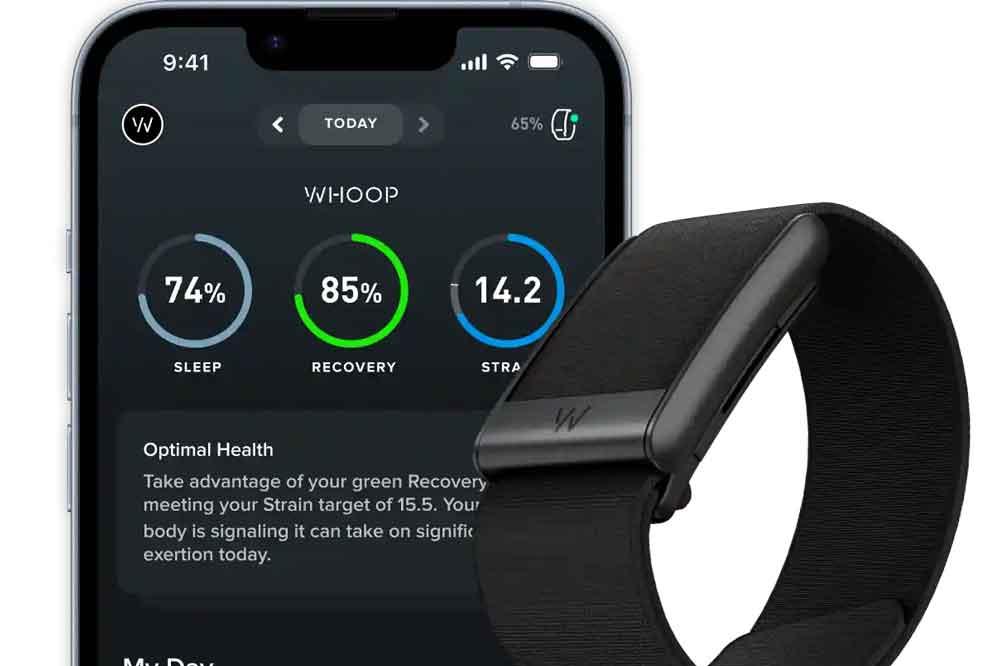
WHOOP continues to lead strongly in continuous recovery tracking and athlete centric performance analysis. One of its standout features remains the sliding battery pack, allowing users to charge the device without removing it. This enables uninterrupted 24/7 data collection.
WHOOP is also highly focused on strain, recovery, and sleep optimization, helping users understand exactly how recovered their body is before training harder again.
WHOOP: Cons
For more casual users, the amount of performance data can sometimes feel excessive or overwhelming. The platform is clearly designed for individuals deeply invested in optimization and tracking.
3.AI Coaching and Data Interpretation
Fitbit Air: Pros
Google’s integration into AI based health tracking could become one of Fitbit Air’s biggest long-term strengths. Features such as AI meal logging, integrated health recommendations, and ecosystem syncing position Fitbit Air as a broader lifestyle management tool rather than purely a fitness tracker.
Its AI capabilities appear designed to simplify health awareness for everyday users.
Fitbit Air: Cons
The platform is still relatively new in this space compared to WHOOP, meaning long-term consistency, coaching accuracy, and real-world usefulness are still being evaluated.
WHOOP: Pros
WHOOP’s biggest strength has always been how it interprets data rather than simply displaying it. The platform continuously uses recovery scores, sleep quality, HRV, and strain data to provide actionable recommendations around training intensity, recovery needs, and sleep optimization.
For users who enjoy detailed insights and highly personalized coaching, WHOOP remains one of the strongest systems currently available.
WHOOP: Cons
At times, users report inconsistencies with workout recognition or coaching recommendations. While highly advanced, the system can occasionally feel overly complex or data heavy for the average user.

4.Ecosystem and User Experience
Fitbit Air: Pros
Google Fitbit is increasingly positioning Fitbit Air as part of a much larger connected health ecosystem rather than simply a standalone fitness wearable. The platform is designed to integrate data across multiple devices and health sources, creating a broader lifestyle management experience that combines sleep, nutrition, recovery, activity levels, stress, and overall wellness into one centralized system.
This makes Fitbit Air particularly appealing for users looking for convenience, accessibility, and a more lifestyle driven approach to health tracking rather than purely performance optimization. Google’s growing AI integration also has the potential to make the ecosystem smarter and more intuitive over time, especially for everyday users wanting simplified insights and actionable health recommendations.
Fitbit Air: Cons
Because the ecosystem is still evolving, there are still questions around long term integration, accuracy, and how deeply the platform can interpret behavioral, and recovery data compared to more mature performance systems already in the market.
Unlike WHOOP, Fitbit Air has not yet had years of continuous user behavior data to refine its recovery algorithms and coaching intelligence at the same scale. For users already deeply invested in advanced recovery tracking, Fitbit Air may still feel relatively new and unproven in certain areas of performance optimization.
WHOOP: Pros
WHOOP has spent years refining its ecosystem specifically around recovery, strain, sleep optimization, and athlete performance. With multiple generations of the device already released, WHOOP has built a highly polished and deeply engaging user experience centered around long-term performance improvement.
Metrics such as recovery scores, strain targets, sleep coaching, and biological age create a system that feels highly personalized and performance focused. One of WHOOP’s biggest strengths is that it does not simply display data, it attempts to guide user behavior based on that data.
WHOOP also has a strong community driven element built into the platform. Users can join teams, athlete groups, and performance communities, allowing individuals to compare recovery, strain, and training metrics with other users. For athletes and highly competitive individuals, this creates an added layer of motivation, accountability, and engagement that extends beyond individual tracking.
WHOOP: Cons
WHOOP’s ecosystem can sometimes feel slightly restrictive compared to Google’s broader and more open health hub approach. The platform is heavily centered around WHOOP’s own recovery model and sensor ecosystem, which may not appeal to users wanting a more flexible multi device wellness experience.
Additionally, for new or casual users, the depth of data and athlete centric focus can sometimes feel overwhelming, particularly if they are simply looking for general lifestyle awareness rather than detailed performance optimization.
Conclusion
The comparison between Google Fitbit Air and WHOOP is ultimately less about which device is objectively “better” and more about understanding what type of user each system is designed for. WHOOP still appears to lead in advanced recovery optimization, continuous athlete monitoring, and performance driven coaching. It is built for individuals who want highly detailed data interpretation and are deeply invested in performance metrics. Google Fitbit Air, however, may become the stronger option for the wider population. Its lower price point, flexible subscription structure, AI integration, and lifestyle focused ecosystem make advanced health tracking far more accessible to everyday users. What is becoming increasingly clear is that fitness wearables are no longer simply tracking activity. They are helping people understand behavioral patterns, lifestyle habits, recovery, and long-term health outcomes in a far more intelligent and personalized way than ever before.