IN CONVERSATION WITH ONAYA KULATUNGA
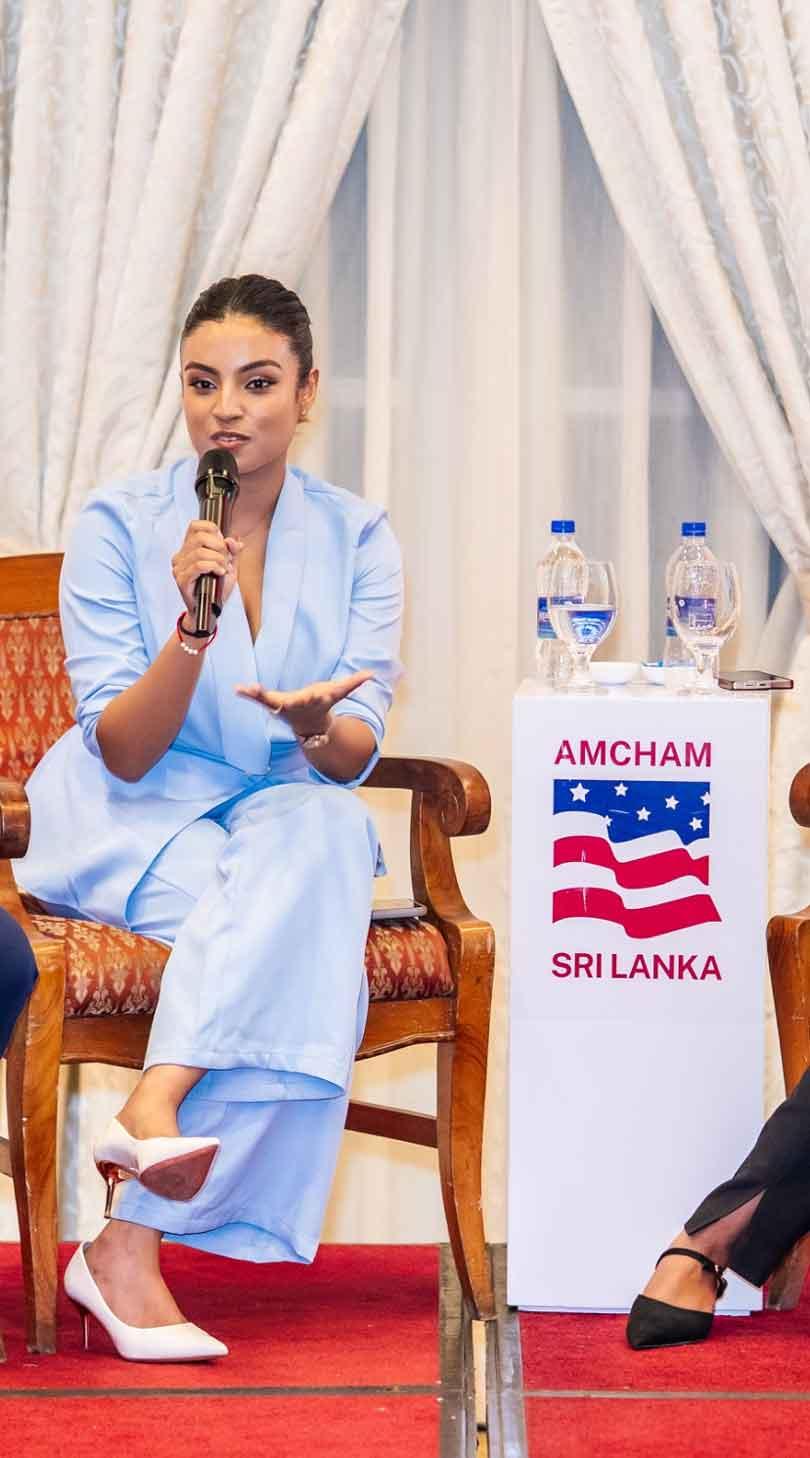
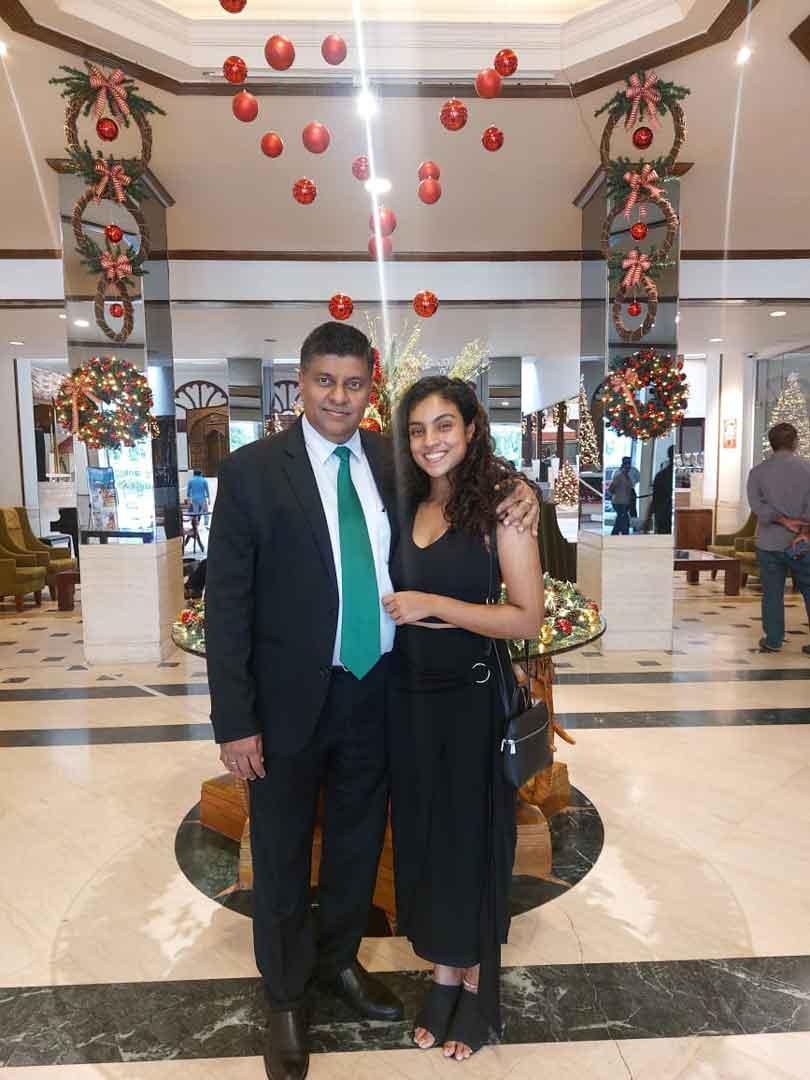
Onaya Kulatunga is a young leader, entrepreneur and youth advocate whose journey is defined by purpose, resilience and a commitment to creating meaningful change. As Managing Director of the Intercontinental Institute of Human Resource Management and Founder of Hope Gallery, she has dedicated her work to empowering people and helping young individuals recognise their potential. After losing her father at the age of 19, Onaya stepped into the leadership of his established human resources consultancy while navigating grief, university, family responsibilities and her own evolving ambitions. Rather than allowing adversity to define her, she transformed it into a deeper understanding of leadership, empathy and purpose. Her experiences in entrepreneurship, international youth engagement, sport and community development have shaped a people first approach to leadership. Today, she hopes her journey will remind young people that success is not about having a perfect path, but about finding the courage to begin again.
What inspired you to pursue a path that combines human resources, entrepreneurship and youth advocacy?
For me, inspiration only becomes meaningful when it is connected to purpose. Simon Sinek speaks about this in Start with Why, explaining how understanding our reason for doing something gives direction to our actions. We can feel inspired by many things, but we do not act on every moment of inspiration. The moments that truly move us are often those connected to something greater than ourselves. My purpose has always been to create meaningful impact within my community, the kind of impact that can stay with someone for a lifetime. That purpose has taken me in directions I did not necessarily anticipate. Human resources, entrepreneurship and youth advocacy may appear to be three different worlds, but for me, they are connected by people.
Whether I am helping someone develop professionally, building an organisation or creating opportunities for young people, the underlying goal remains the same. I want to help people recognise their potential and become better versions of themselves. That shared purpose is what continues to inspire everything I do.
As the Managing Director of IIHRM and Founder of Hope Gallery, what motivates you to keep pushing boundaries?
I believe motivation becomes sustainable when your passion, talent and livelihood connect to a greater purpose. I entered human resources at 19, taking over my father’s consultancy after his sudden passing, initially out of responsibility to my family and his legacy. Over time, I discovered the profound impact of helping people build careers and shape their futures and realised that HR aligned with my purpose. Hope Gallery was born from that same belief. Having navigated loss through a strong sense of self and purpose, I want to help young people build the same foundation. Knowing your work creates meaningful impact is motivation itself.
You often speak about empathy in leadership. What does empathetic leadership mean to you, and why is it important today?
Empathetic leadership is about making decisions while genuinely understanding the perspectives, experiences and emotions of the people you lead. Today, organisations often struggle with engagement and retention, sometimes blaming younger generations for lacking commitment. But if people do not feel seen, heard, understood or valued, why should we expect their loyalty? Leadership can become so focused on commercial results that we forget the people responsible for achieving them. Someone once told me, “Organisations do not succeed, people do.” That stayed with me. An organisation is only as strong as its people, which is why empathy is not simply desirable. It is essential.
Looking back, what has been the biggest challenge in your journey, and how did it shape the person you are today?
My greatest challenge was losing my father suddenly at 19 and realising that life as I knew it had completely changed. As the eldest of four children, I felt a responsibility to support my family while grieving, studying and stepping into my father’s HR consultancy as Managing Director. I paused my dream of becoming a diplomat and had to rediscover myself in an unfamiliar world. Through the support of New Generation Sri Lanka and finding purpose in my work, I realised I had not lost myself but was evolving. The experience taught me resilience, gratitude and that identity is shaped by our choices.
You have represented Sri Lanka on international platforms. What lessons have those experiences taught you about leadership and culture?
I have had the privilege of representing Sri Lanka through several international youth platforms, including IMUN and Best Diplomats, as well as working as a Project Associate with the International Youth Council and serving as an Ambassador for the PAD Project, an organisation focused on addressing menstrual poverty. Sri Lanka is a beautiful island with so much to offer, but the wider world is an extraordinary and thought-provoking canvas that deserves to be explored. One of my greatest lessons has been understanding how significantly leadership and communication can change across cultures. Some cultures have informal leadership structures with flatter hierarchies, while others value more direct communication, efficiency and clearly defined structures. During Best Diplomats in particular, I had to communicate and collaborate with people from very different cultural backgrounds. It required me to adapt quickly, listen carefully and understand that an approach that works in one environment may not work in another. These experiences strengthened my leadership skills, but more importantly, they taught me that to become a proactive leader in today’s world, you must learn to think globally. Adaptability, cultural awareness and curiosity are essential.
How has your background in hockey influenced the way you lead teams and make decisions?
Hockey has never been just a sport to me. It taught me a way of life from a very young age. My mother was also a hockey player and captained Bishop’s College in 1992. She introduced me to many sports, but hockey was always special. One of my greatest lessons came when I captained my school team in 2022. We had trained for six months for the annual Ladies’ College and Bishop’s College Hockey Encounter. During the match, goals were scored but not awarded. I had a choice. I could spend the rest of the match fighting a decision I could not change, or I could help my team refocus and fight for another opportunity. We chose to keep going. The match ended in a draw, but I had never been prouder of my team. That experience taught me that success is not only about the scoreboard. It is about people working in harmony, giving their best and refusing to give up. Today, results and numbers are an important part of my strategy, but never at the expense of the people responsible for achieving them. Hockey made me a people first leader. It taught me that true teamwork means believing in one another and carrying a shared vision forward, even when the leader is not in the room.
What advice would you give to young people who feel they are not ready to take on leadership roles?
We often look at difficult situations and think, “I could never survive that.” I once thought the same when I saw other young people lose their fathers. Then it happened to me. I did not feel ready, but somehow, I found the strength to keep moving. Today, I lead the Intercontinental Institute of Human Resource Management as its youngest Managing Director, continuing my father’s legacy while remaining committed to my own purpose and dreams. My advice is simple. You will never know how far you can go unless you begin. Leadership is not about waiting until you feel completely prepared. It is not a title someone gives you. Leadership begins when you take initiative in your own life, accept responsibility and choose to move forward despite uncertainty. Most importantly, remember that there is very little you cannot do simply because someone else believes you cannot do it. Impossible is often just an opinion. Other people’s perceptions should never become the definition of your capability.
What are some misconceptions people have about success, especially among young professionals?
One of the greatest misconceptions is that success can be measured purely by the amount of money in your bank account. Financial freedom is valuable, but it is not the complete definition of success. When we think about globally recognised individuals such as Bill Gates, Steve Jobs, Elon Musk or Priyanka Chopra, their stories are not remembered simply because of their wealth. They are recognised for what they created, built or contributed through their respective fields. What stands out to me is impact. Success, in my view, is about creating something meaningful that extends beyond yourself. It is about understanding why you are doing what you do and allowing that purpose to guide your decisions. Financial rewards may follow when you work with purpose, discipline and clear direction, but money should never be the only measure of a life well lived. To me, true success is the positive and meaningful impact you leave in the lives of others.
Looking ahead, what legacy do you hope to leave for the next generation of Sri Lankan youth?
I hope to leave behind a legacy that young people can turn to when they feel lost, hopeless or close to giving up. I want them to look at what I have built, not as evidence of a perfect journey, because mine has been far from perfect, but as proof that it is possible to begin again. I hope my story gives someone the courage, confidence and hope to keep moving forward and become the best version of themselves. More than anything, I want that legacy to continue beyond my own lifetime and keep changing lives for the better. None of what I have achieved would have been possible without my parents, Ranjeewa and Nadee Kulatunga, whose values have shaped who I am and everything I believe about leadership, purpose and service. I am equally grateful to my entire family, my grandmother, my friends and the professionals who have supported me and lifted me whenever I have fallen. My journey may carry my name, but my success has never belonged to me alone. It belongs equally to the people who believed in me, stood beside me and gave me the strength to keep going.