THE MAHJONG EFFECT
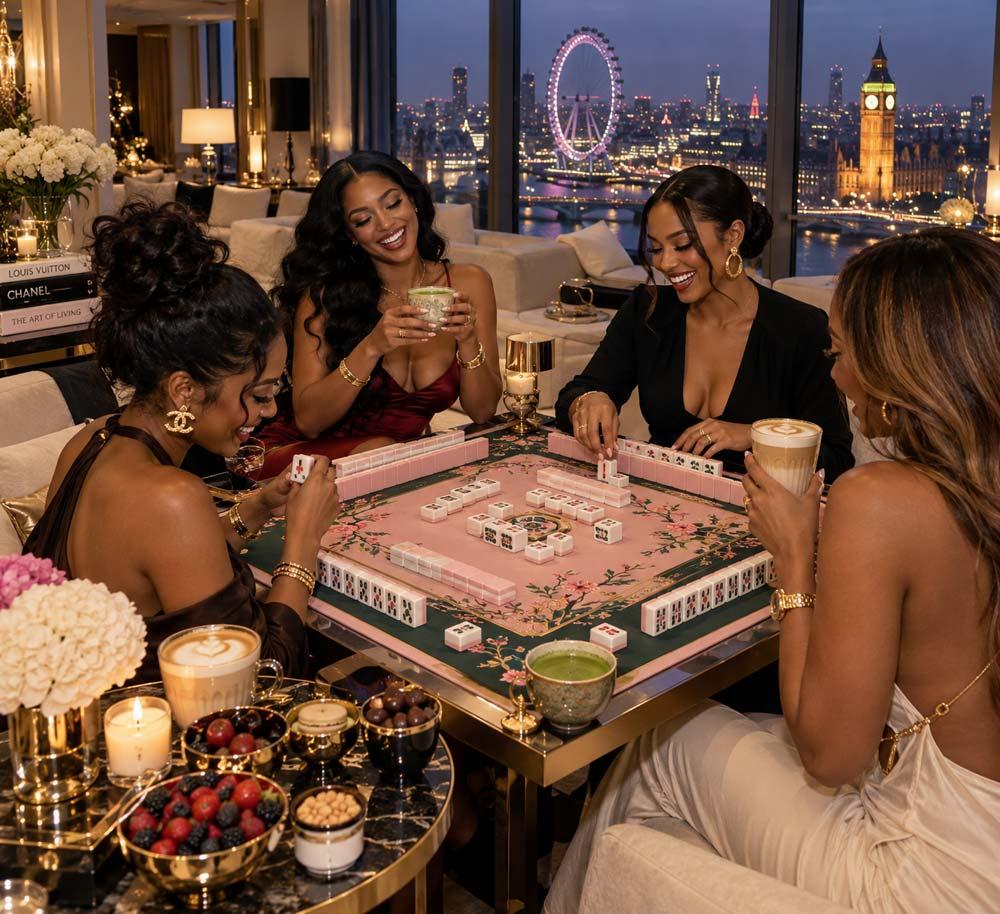
From London to Mumbai, Dubai to Melbourne, how an ancient-inspired Chinese tile game became the world's chicest social obsession.
Forget cocktails at six, crowded bars and another evening spent discussing where to have dinner. The hottest invitation in town now involves four chairs, a beautifully laid table, a bowl of snacks, perhaps an iced matcha latte and the unmistakable clack of Mahjong tiles. From London's elegant drawing rooms to New York's fashionable apartments, Dubai's glamorous gatherings, Mumbai's sea-facing homes and Delhi's lively social circles, Mahjong is having a spectacular moment. In Colombo and Melbourne, too, the game fits naturally into a culture of long lunches, friendship and competitive entertaining. The guest list is expanding; the players are getting younger and the tables are becoming increasingly fabulous. Mahjong is no longer simply a game associated with Chinese grandmothers, traditional family gatherings or smoky gambling rooms. It is a social ritual, a fashion statement, a mental workout and, increasingly, the reason people actually leave their homes. And unlike so many modern trends, this one requires putting your phone away.
FROM CHINESE TEAHOUSES TO THE WORLD'S DRAWING ROOMS
Mahjong's story begins in nineteenth-century China, during the Qing dynasty. Although romantic legends credit its invention to Confucius, historians generally trace the recognisable game to the Shanghai and Ningbo regions, where it evolved from older Chinese card and tile games. It’s beautiful rectangular tiles, traditionally made from bamboo and bone, featured intricate symbols representing bamboo, circles, Chinese characters, winds, dragons and flowers. The game spread through Chinese teahouses, trading communities and family homes, becoming an essential part of social life. By the 1920s, Mahjong had travelled far beyond China. American businessman Joseph P. Babcock helped introduce it to Western audiences, publishing simplified rules that made the game accessible to newcomers. America went Mahjong mad. Society women hosted elaborate Mahjong parties, department stores sold decorative sets and fashionable households embraced the exotic new pastime. The craze reached Britain and Australia, too. In New York, Mahjong subsequently became deeply embedded in Jewish American social culture, particularly among women who gathered for regular games. The National Mah Jongg League, founded in 1937, helped establish the distinctive American version still played today. Across Asia, meanwhile, the game remained woven into everyday life, passed between generations through family gatherings, festivals and neighbourhood friendships. What we are witnessing today is therefore not Mahjong's first global moment. It is a remarkable reinvention of a game that has already crossed continents, cultures and generations.
ONE GAME, MANY PERSONALITIES
Part of Mahjong's extraordinary appeal is that it is not one rigid game. Different countries have developed their own versions, each with its own rhythm, rules and character. Hong Kong or Cantonese Mahjong is generally played with 13 tiles in hand, with players completing a 14-tile winning combination. It is fast, lively and deeply rooted in Chinese social culture. Japanese Riichi Mahjong introduces sophisticated scoring patterns, strategic declarations and an almost chess-like intensity.
American Mahjong is another experience altogether, involving jokers, an annual card of winning combinations and the Charleston, a distinctive ritual in which players exchange tiles before play begins. Then there is Taiwanese Mahjong, the version particularly fashionable in many social circles across London, Dubai, Delhi and Mumbai. Taiwanese Mahjong typically uses 16 tiles in hand, with a 17-tile winning combination. Its longer hands offer additional possibilities for strategy, making it especially appealing to groups who enjoy conversation, friendly rivalry and extended afternoons around the table. Not every club in these cities plays the same rules. Indeed, many Indian groups use simplified or adapted versions, and experienced hosts know that establishing house rules is almost as important as choosing the guest list. But that flexibility is part of Mahjong's charm. Wherever it travels, the game acquires a local accent.
 THE NEW INTERNATIONAL SOCIAL CIRCUIT
In London, Mahjong is becoming an alternative to conventional nightlife. Younger players are discovering it through restaurants, organised lessons, cultural communities and private gatherings. A Mahjong evening offers something increasingly rare in a busy city. A reason to spend several uninterrupted hours with other people, without constantly checking messages or wondering when to leave. In New York, Mahjong has acquired an unmistakably fashionable edge. Stylish sets, private instructors, themed gatherings and intergenerational groups have helped introduce the game to an entirely new audience. Dubai's love of beautifully organised social occasions makes Mahjong an obvious fit. It lends itself to elegant afternoon gatherings, private homes, designer accessories and the kind of competitive hospitality that turns an ordinary invitation into an event. In Mumbai and Delhi, the enthusiasm is particularly striking. Mahjong has moved beyond traditional Army and Parsi family circles into fashionable clubs, restaurants, private lessons and friendship groups. Players who once organised poker evenings or kitty parties are now booking Mahjong sessions. Teachers are in demand; WhatsApp groups coordinate games and learning the difference between a Pong and a Kong has become a surprisingly useful social skill. Colombo's tradition of close-knit entertaining and Melbourne's multicultural communities offer similarly natural settings for Mahjong, although the scale of the current revival varies between cities. The attraction is universal. You can be twenty-five or seventy-five, a complete beginner or an intimidating expert. Once the tiles are shuffled, everyone has something to talk about.
THE CRAZY RICH ASIANS MOMENT
Of course, Hollywood deserves some credit. In the 2018 film Crazy Rich Asians, one of the most memorable scenes features Rachel Chu, played by Constance Wu, facing Eleanor Young, played by Michelle Yeoh, across a Mahjong table. It is a masterclass in understated confrontation. As the two women discuss love, family expectations and sacrifice, the game becomes a metaphor for their emotional battle. Rachel deliberately discards a tile that allows Eleanor to win, demonstrating that sometimes the greatest strategic move is choosing not to win. The scene introduced millions of viewers to Mahjong as something far more sophisticated than a recreational pastime. It was a game of intelligence, psychology, restraint and power. And frankly, Michelle Yeoh looking magnificent while playing Mahjong did nothing to hurt its glamorous reputation.
WHEN MAHJONG MEETS LUXURY FASHION
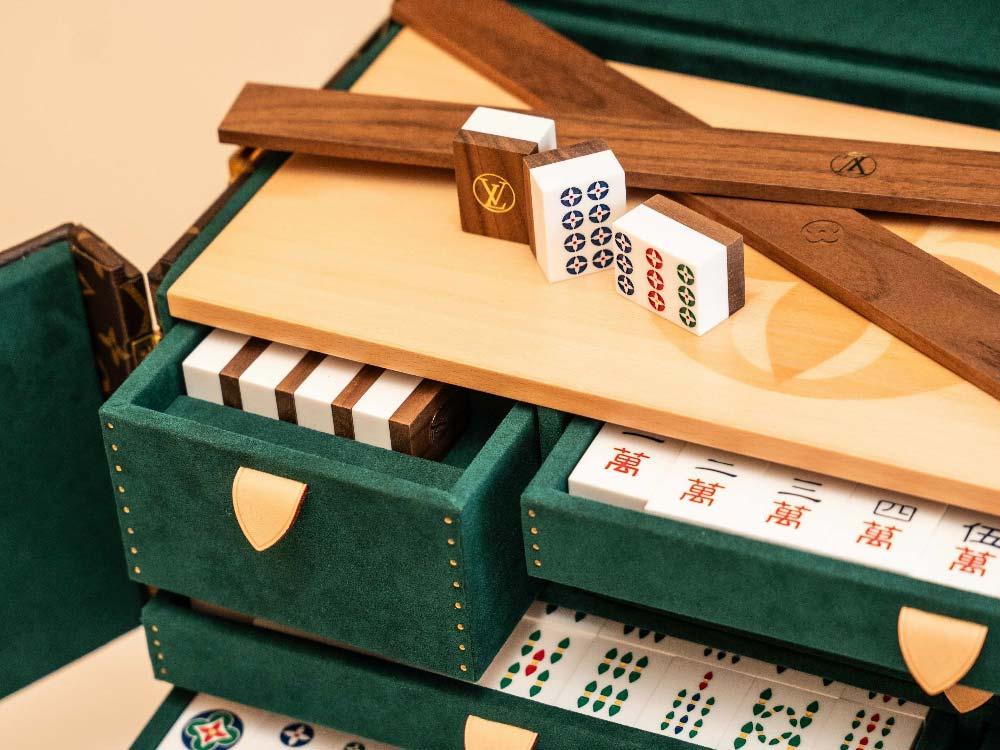
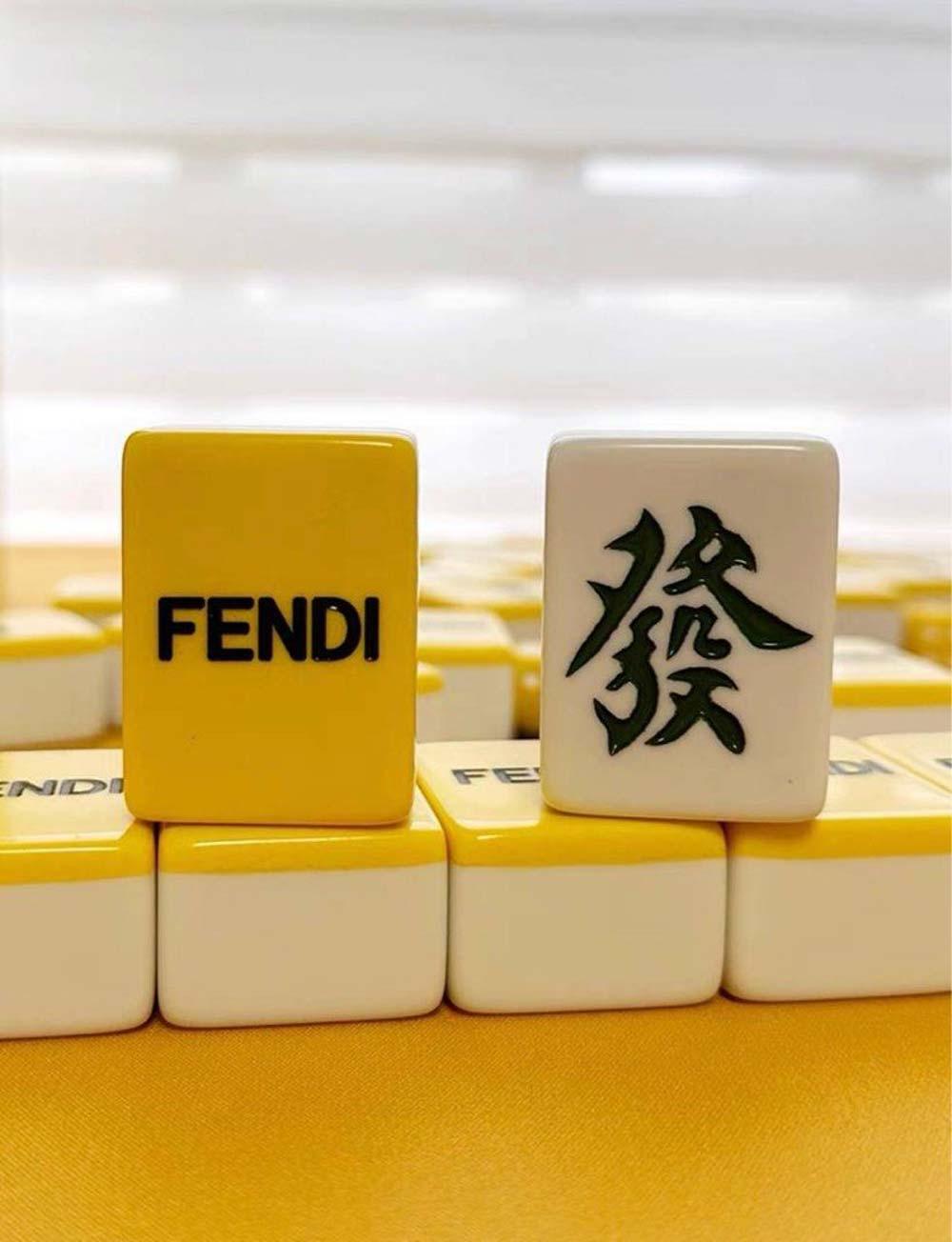
Naturally, wherever fashionable people gather, luxury is never far behind. Mahjong sets have become coveted design objects, with beautifully crafted tiles, lacquered boxes, leather cases, elegant racks and bespoke playing mats turning the game into a style statement. Luxury houses such as Hermès, Fendi and Louis Vuitton have also embraced the Mahjong aesthetic. Social media has only heightened the appeal, with pastel tiles, fresh flowers, porcelain teacups and perfectly coordinated mats creating tablescapes that are almost too beautiful to play on. Yet perhaps the greatest luxury of Mahjong has nothing to do with designer accessories. It is the simple pleasure of four friends setting aside an entire afternoon to enjoy each other's company.
MAHJONG AND MATCHA, THE NEW HAPPY HOUR
Perhaps the most interesting reason behind Mahjong's resurgence is that it reflects a wider change in how people want to socialise. Not everyone wants another late night, another expensive cocktail or another crowded restaurant. Increasingly, people are looking for experiences that feel engaging, meaningful and genuinely sociable. Enter Mahjong and matcha. A beautiful table, an iced matcha, some delicious nibbles and three friends can provide an afternoon's entertainment. There is no pressure to drink, no loud music to shout over and no endless scrolling through phones. The game provides a shared purpose, while the conversation unfolds naturally around it. It also satisfies our appetite for activities that challenge the brain. Players must remember discarded tiles, recognise patterns, calculate probabilities and anticipate opponents' decisions. The result is an unusual combination of mindfulness and mischief. You are completely absorbed in the present moment, while simultaneously plotting how to defeat your closest friends. That may be the perfect definition of modern leisure.
HOW TO PLAY TAIWANESE MAHJONG WITHOUT PANICKING
The rules can appear intimidating, but the basic idea is surprisingly simple. Taiwanese Mahjong is generally played by four people using 144 tiles, including numbered suits, winds, dragons and bonus flowers and seasons. The objective is to create a winning hand of 17 tiles, consisting of five sets and one pair. Each player begins with 16 tiles, except the dealer, who starts with 17 and discards first. Players take turns drawing a tile and discarding one they do not need. There are three principal combinations.
- A Chow is three consecutive numbers from the same suit, such as 3, 4 and 5 of Bamboo.
- A Pong is three identical tiles, such as three Red Dragons.
- A Kong is four identical tiles. It counts as one set, and the player draws a replacement tile.
- A pair is simply two identical tiles.
- To win, you normally need five combinations of Chows, Pongs or Kongs, plus one pair.
Players can claim certain discarded tiles to complete combinations. A Chow can generally be claimed only from the player immediately before you, while Pongs and Kongs can be claimed from other players according to the agreed rules.
Flower and season tiles are displayed separately and replaced with fresh tiles. They can contribute bonus points. Scoring is often calculated in units called tai, awarded for particular combinations, bonuses and winning conditions. The important thing to remember is that scoring systems and house rules vary, so agree on them before beginning. The first few games may involve confusion, misplaced tiles and enthusiastic advice from everyone at the table. Then something clicks. You begin spotting combinations, remembering discards and quietly planning your next move. And before long, you are cancelling other plans because you have a Mahjong game.
THE REAL REASON EVERYONE IS HOOKED
Mahjong's greatest achievement is not that it has become fashionable. It is that it makes friendship an activity rather than an afterthought. It brings different generations together, creates new communities and gives people something to look forward to every week. In a world of digital distractions and increasingly fragmented social lives, the simple pleasure of gathering around a table feels wonderfully refreshing. From London to Dubai, Mumbai to Melbourne, the sound of shuffling tiles is becoming the soundtrack to a new kind of social life. The cocktails can wait. The matcha is ready. And someone has just shouted Mahjong.