NEW LAWS, OLD INSTINCT: POWER WITHOUT ACCOUNTABILITY.

Sri Lanka has real enemies and a real need for the powers to stop them. We fought a separatist war for close to thirty years, against an organisation that at its height held a third of the island. On a single Easter morning in 2019, suicide bombers killed more than two hundred and sixty people in our churches and hotels. Today drug trafficking runs through our ports and into our schools, and foreign scam syndicates have established themselves across the country. Anyone who argues that this country can do without preventive security powers has not been reading its history.
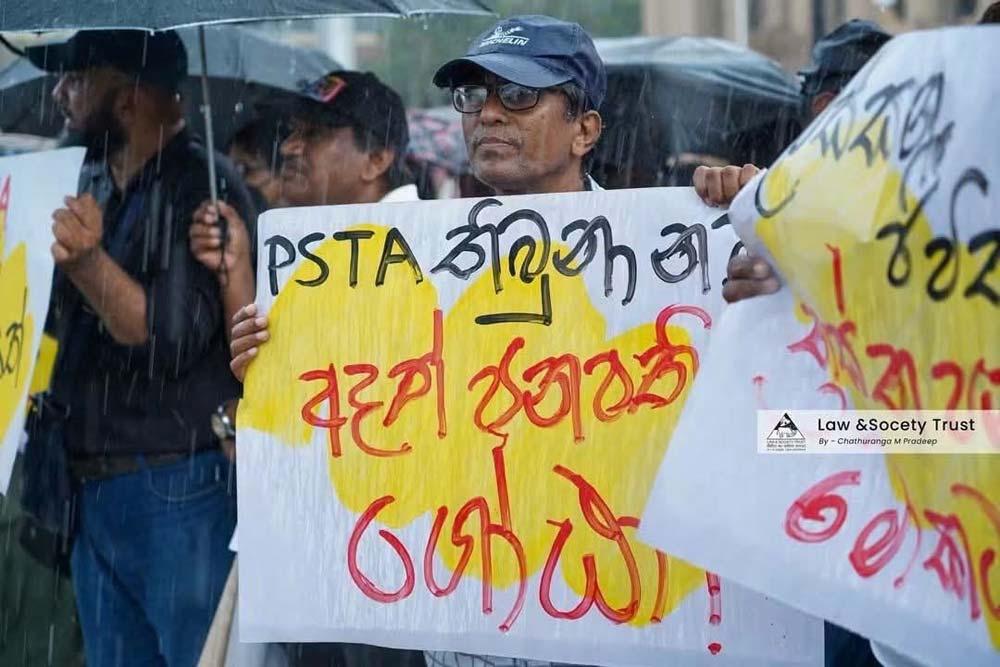
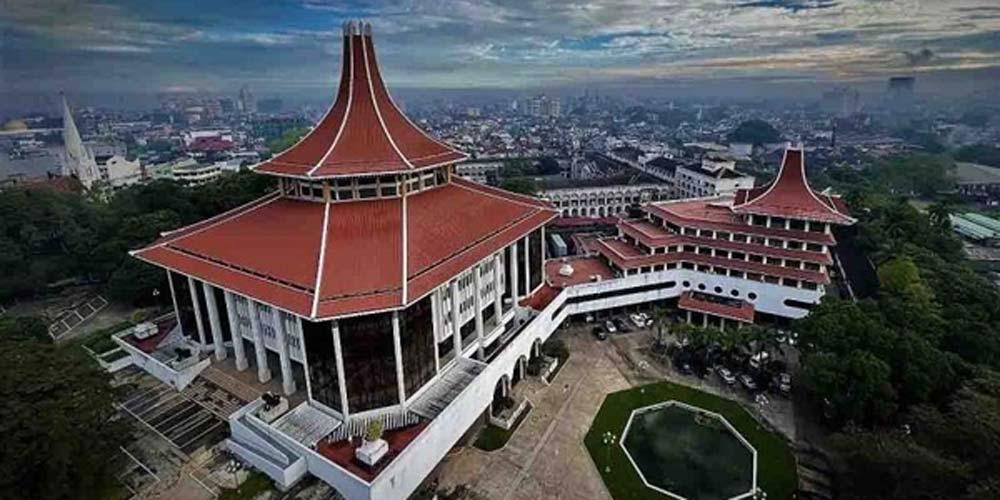
But treating every security law as inherently dangerous is just as wrong. We need these powers. The real question is whether the laws now before Parliament will actually make us safer. Two bills would reshape how the state fights serious crime. The first, the Protection of the State from Terrorism Act, now in its revised form gazetted on 22 September 2026, repeals the Prevention of Terrorism Act at last; it has already been challenged before the Supreme Court. The second, the Prevention of Organized Crimes Bill, followed a fortnight later. Both have drawn scrutiny: the terrorism bill from the United Nations and international rights groups, the organized-crimes bill from our own legal community and activists. Most of that scrutiny has run along the familiar divide: the Government insisting the powers are necessary, rights groups insisting they are dangerous. Both sides keep missing the lesson our own history has already paid for.
The PTA had every power, and still failed
The Prevention of Terrorism Act deserves no mourning. Amnesty International documented detainees held for years without charge: a Tamil journalist, a young Muslim man, neither ever charged. The UN’s Special Rapporteur called it a vehicle for some of the worst human rights violations in our history, overwhelmingly against minorities. That record is real and shameful.
But set the rights question aside for a moment and judge the law purely as a security instrument, on its own terms. In 2019 the PTA was fully in force, arming the state with sweeping powers of arrest and detention. It did not stop the Easter attacks. The Parliamentary and Presidential inquiries that followed found that officials had received specific, advance warnings and failed to assess them, share them, or act. The state held enormous power. What it lacked was the capacity to use that power well, and any accountability for failing to use it at all.
That is the lesson neither camp in today’s debate wants to sit with. The failure of the PTA was not that it granted too little power. It was that the vast power it conferred came with almost no accountability for how it was used or left unused. The attackers were eventually prosecuted, as they should have been. But the warnings that could have stopped them were received and ignored, and no part of that institutional failure was answerable to anyone in time to matter. Give a state sweeping authority without that kind of accountability and you do not get a safer country.
You get a system very good at detaining people after the fact and very poor at preventing the harm in the first place.
A better replacement, but still not enough
The terrorism bill deserves more credit than its harshest critics allow, and the credit begins with how it was made. This did not appear overnight. The effort to replace the PTA has spanned multiple governments and multiple drafts, an Anti-Terrorism Bill and its revisions under the last administration, and after the 2024 election, a committee appointed specifically to oversee repeal, a published draft, and a genuine round of consultation. The current bill is the product of that process, and it is meaningfully narrower and better safeguarded than the PTA. It defines terrorism more tightly, recognises access to counsel, requires notification of detention, and restricts the custodial confessions that enabled so much past torture. Even the UN experts, reviewing it, acknowledged these as real improvements. This is a government willing to consult and to revise, which is not nothing in a country where the PTA sat unreformed for forty-six years.
And yet, draft after draft, the one thing none has delivered is the thing that matters most. The initial two-month detention is ordered by the Defense Secretary, and when that order comes before a magistrate, the magistrate has no power to question whether it was necessary or to refuse it. The revised bill did move the approval of longer extensions to the High Court, a genuine change from the earlier draft, but even there the court’s hands are tied, and the initial detention remains mandatory and effectively unreviewable. As the former Human Rights Commissioner Ambika Satkunanathan has noted, the bill strips the magistrate even of the power to decide whether a detained person should be remanded, bailed, or released at all. The Independent Review Committee meant to check detention can only recommend to the Defense Minister, who appoints it and is bound only to consider its findings. Oversight that cannot overrule, exercised by a body the overseen authority itself selects, is not oversight. It is its likeness.
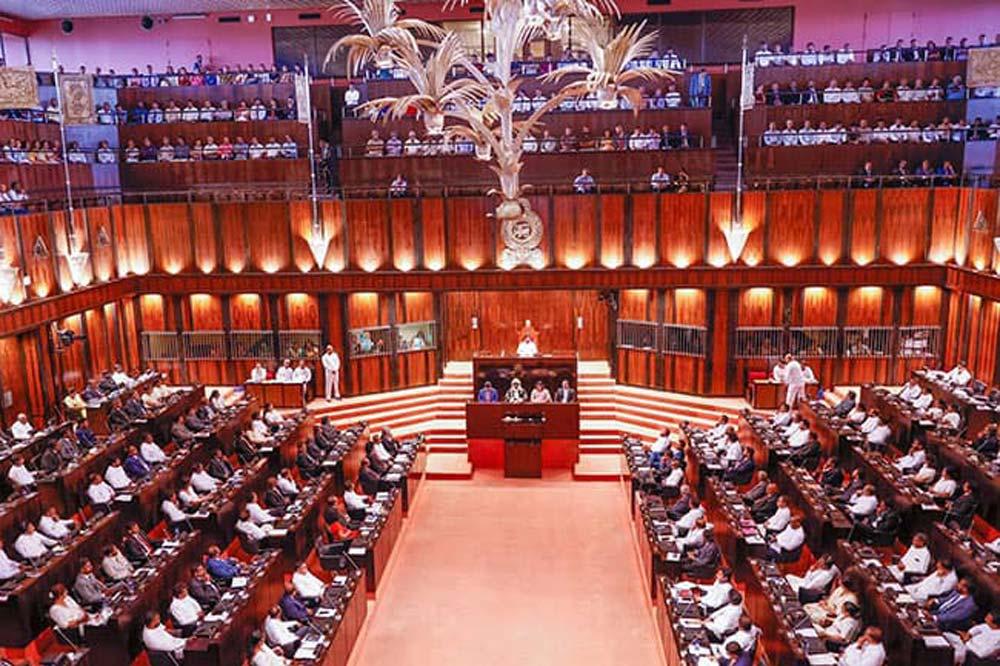
A power every democracy has reached for, and every democracy has had to check
None of this makes Sri Lanka uniquely authoritarian, and here the foreign lecturing deserves a reply. Laws of this kind are not ours alone. The democracies most fond of instructing us have reached for the same powers under their own flags: the United States passed the Patriot Act after September 11, Britain one sweeping Terrorism Act after another following its own bombings. Every country that has been attacked has grasped for extraordinary powers afterward. That is not hypocrisy to be waved away; it is human, and it is the point. Because every one of those democracies then spent years fighting, in its own courts and parliaments, over how to constrain the powers it had taken. The Patriot Act was pared back by later reform. Britain’s harshest control orders were challenged and rewritten. The lesson of the democratic world is not that these powers are forbidden. It is that they are only ever safe when real, binding oversight sits on top of them, and that the oversight has to be fought for, because Governments do not surrender it willingly.
We should learn both halves of that lesson, not just the first. The question is not whether these powers should exist, but whether they are checked. That is how our second bill should be judged.
The companion bill, and the same instinct
That second bill is the Prevention of Organized Crimes Bill, and our legal community has rightly begun to examine it. Much of it is overdue. It gives domestic effect to the UN Convention Against Transnational Organized Crime, which we ratified in 2006, and the offences it creates, membership of a criminal group, racketeering, asset forfeiture, are standard across the democratic world. Singapore’s Organized Crime Act criminalizes criminal-group membership in almost the same language. India has relied on such statutes for decades. Australian states have criminalized association with organized crime long before we did. The architecture is mainstream, and anyone calling it uniquely Sri Lankan repression has not read the comparisons.
But those same countries attach these powers to courts strong enough to check them, and our bill thins the oversight below even what the terrorism bill offers. It has no independent review committee at all. It lets a senior officer seize a person’s call records and location data with no court order, informing the magistrate only afterward. And a Cabinet spokesman has said the terrorism law would cover “organized crimes” as well, which should prompt Parliament to ask whether we are defining genuine offences or simply stretching exceptional powers across ordinary crime. The pattern across all three laws is the same: generous power, threadbare accountability.
There is a newer front to this old problem, and it is digital. The terrorism bill criminalizes not only acts but speech: disseminating a “terrorist publication,” or even providing a service that lets others reach one. The bill does carve out journalism, research, dissent and satire, and that is to its credit. But the deeper question is not how a terrorist publication is defined on paper. It is who gets to decide, in the moment, that a particular post or report or song is one. In practice that judgment falls first to the officer making the arrest, and is tested by a court only much later, if at all. By the time a judge rules that what you shared was protected dissent and not incitement, the arrest has happened, the detention has run, and every other citizen has already learned the safer course is silence. A protection that arrives at trial does little for the speech it was meant to shield.
The organized-crimes bill carries the same instinct into our private lives, routing most surveillance through a magistrate, as it should, but letting a senior officer seize a citizen’s call records and phone location with no court order at all. Online speech and private communication now sit within the state’s reach, and the same question hangs over them as over every detention order: who checks the reach, and who answers for its abuse?
What oversight with teeth would actually mean
The remedy is not to strip the state of powers it genuinely needs. It is to build, for once, accountability that can bite, and since that phrase is used loosely by everyone, let me be exact about what it requires.
Review that can overturn, not merely inspect; a detention order a magistrate can only rubber-stamp is not under judicial control in any real sense. Independent appointment, not ministerial; a review body chosen by the Constitutional Council or the judiciary rather than by the minister whose officers it examines, so its independence is genuine and not decorative. Oversight bodies with power to act, not just to be notified; we already have a National Police Commission and a Human Rights Commission, and both are largely toothless, able to receive complaints but rarely to secure a prosecution, and notification without consequence is theatre. No blanket good-faith immunity, the single clause that quietly cancels every other safeguard. And judicial authorization before surveillance, not after.
None of this blunts the fight against terrorists or syndicates. It sharpens it. The Easter failure was not caused by too few powers; it was caused by institutions answerable to no one for what they did and failed to do. Real oversight is what forces intelligence to be acted upon, evidence to be gathered cleanly, and convictions to hold up in court. There is also a harder-nosed reason to care: the EU’s GSP+ facility, which gives our exporters duty-free access to a vital market, is tied to bringing these laws in line with international standards, and we have lost that status once before. Accountability is not the enemy of security, or of the economy. It is the discipline that serves both.
We have never, in half a century, suffered from a shortage of power. We have suffered from its concentration in hands answerable to no one, and from the recurring faith that the next law, with a little more authority, will finally keep us safe. It will not, any more than the last one did. No further redrafting closes that gap; only teeth do. Until we build oversight with genuine teeth, each new act simply forges a sharper instrument and hands it to whoever governs next. We have lived long enough with the consequences to know the difference.
About the Writer:
Damintha Gunasekera is a political analyst and columnist. Views are his own.