The Ladder We Pulled Up
By: Damintha Gunasekera
There is a moment in every young person's political life in this country when an elder, kindly or otherwise, tells them to wait their turn. Get some experience. Learn how things work. Come back in twenty years. It is said as wisdom, and sometimes it is. But it is also the most effective tool the old have ever devised for staying exactly where they are. I have spent the better part of a decade inside Sri Lankan politics, close enough to watch how the machine actually treats the young, and I have come to believe that our problem is not a shortage of capable young people. It is that we have built a system with no ladder for them to climb, unless they happen to be somebody's son or daughter.
The world is letting them in. Slowly, unevenly, but in.
Look outward and you see movement. In January, New York City swore in Zohran Mamdani as mayor at 34, an immigrant who arrived as a backbench state legislator and now runs America's largest city. In the United States Congress, where the median age sits close to sixty in a country whose median age is thirty-nine, Alexandria Ocasio-Cortez entered at 29 as the youngest woman ever to serve, with no dynasty behind her, only an organiser's background and a talent for reaching people her own age. Nepal, closer to home, elected a 35-year-old outsider as prime minister this year.
It would be easy, and wrong, to turn this into a fairy tale about a young world sweeping aside the old. The truth is harder and more useful. Chile elected the student leader Gabriel Boric president at 35, and four years later watched his approval collapse and a hard-right successor take his place. Youth in power is no guarantee of youth staying in power. Breaking in is one thing. Governing well enough to survive the backlash is another, and far rarer. That is precisely the lesson worth carrying, not that the young should inherit by right, but that a country needs a steady supply of them, tested and ready, so that a single failure does not send everyone running back to the familiar old names.

Asia keeps the door heaviest
And this is where our part of the world struggles most. Across much of Asia, the on-ramps that let a young person of talent, but no lineage enter public life are simply missing. There is no meaningful pipeline from campus or community into real political responsibility that does not run through a family name or a decade of patient deference. The young faces that do rise to the top tend to carry surnames the electorate already knows. Where the genuine outsider breaks through, the system often closes around them.
I say this as someone who has met the alternative. Through a regional programme that brings together young people working in politics across Asia, I have sat with a member of parliament from one Southeast Asian capital who is younger than I am, and a city councillor from a Malaysian town who won real local office in his twenties. They are not exceptions their systems tolerate. They are products of systems that built a rung for them to stand on: winnable local seats, party structures that promote on merit rather than seniority, a culture that does not treat a thirty-year-old with ideas as an impertinence. We have not built those rungs. We have, if anything, pulled them up behind us.
The mirror at home
It would be comfortable to blame this on the old political dynasties, the families who ran this country for generations. But look at the government that a youth uprising itself brought to power, and the picture is more complicated. The National People's Power won on the energy and hope of the young. Its parliamentary benches are visibly younger and more diverse than any before them, and that is real. Yet the party's core remains in older hands. The President, who leads the JVP at the alliance's centre, is 56 and has sat on the party's politburo since 1998. Its general secretary is 70. When a cabinet reshuffle was floated last year, senior politburo figures reportedly warned that promoting a younger minister to a top post might be premature, even as the leadership publicly faulted some of its own younger MPs for immature conduct.
Premature. Immature. These are the words. They are the same words the old guard of every party has used about the young for as long as anyone can remember, and here they surface even inside the movement that rode youthful hope into office. This is not a partisan point. It is a cultural one, and it runs deeper than any single party. The instinct to see the young as raw material to be seasoned for two decades before they are trusted with anything real is not the property of the left or the right. It is ours, collectively, and it is costing us.
Whose future is it
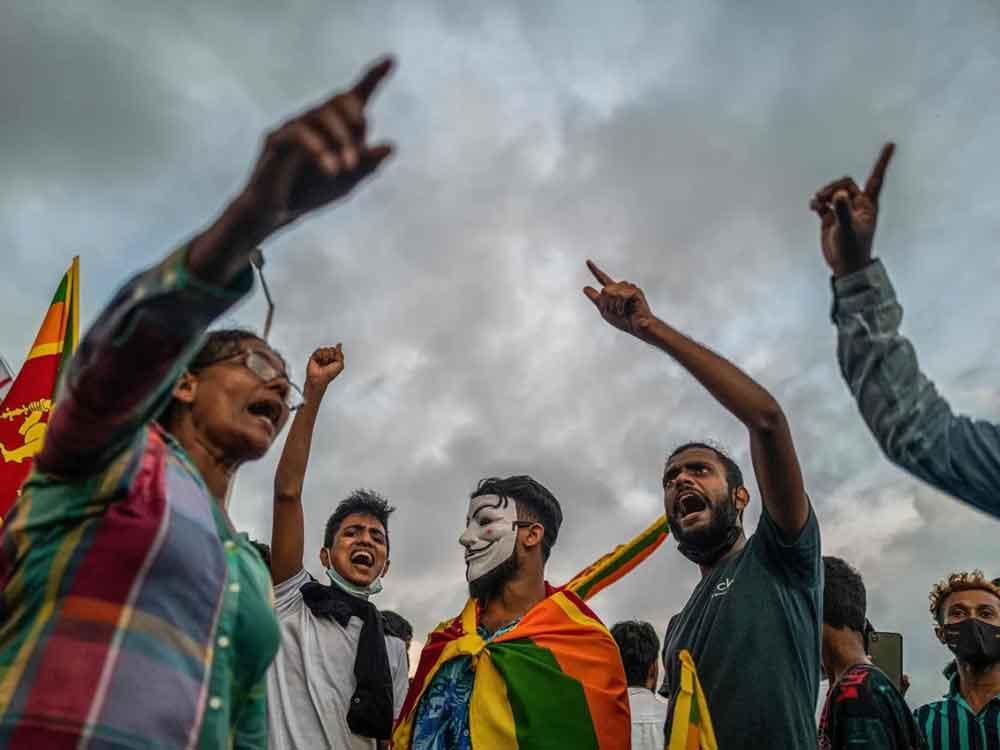
Here is the question I keep returning to. When we tell a capable twenty-eight-year-old to wait her turn, whose future are we asking her to wait for? It is hers. The decisions taken in that chamber, on debt, on climate, on what kind of economy exists in 2050, will land on her generation long after the people making them are gone. A generation that will live with the consequences the longest has the smallest voice in choosing them. We have inverted the natural order of things and called it prudence. I am not arguing that youth is a qualification. It is not. Governing badly is easy at any age, and we have all watched young people fail at it. The argument is narrower and, I think, harder to refuse. A serious country builds a pipeline. It creates the local seats, the party pathways, the genuine opportunities that let the capable young enter, be tested, fail sometimes, succeed sometimes, and be ready when their moment comes, rather than parachuting in unprepared or being locked out until they are no longer young. The countries that will do well this century are the ones filling their benches with people who will still be alive to see the results of their decisions.
We have some of the most capable young people I have encountered anywhere, and I have looked in a good many places. I know them by name. They are not asking to be handed power. They are asking for a rung to stand on. The least we owe the generation that will inherit this country is a way in. Right now, too often, all we offer them is the advice to wait, from people who have no intention of ever making room.