The QR Code Is the New Language
By: Damintha Gunasekera
I landed in Beijing braced for friction. I had heard the stories. The language barrier. The apps I could not read. The bureaucracy that swallows foreigners whole. I expected a daily grind of pointing at things and hoping. Instead, I found a city that had solved the problem I was worried about, without asking me to learn a single character.
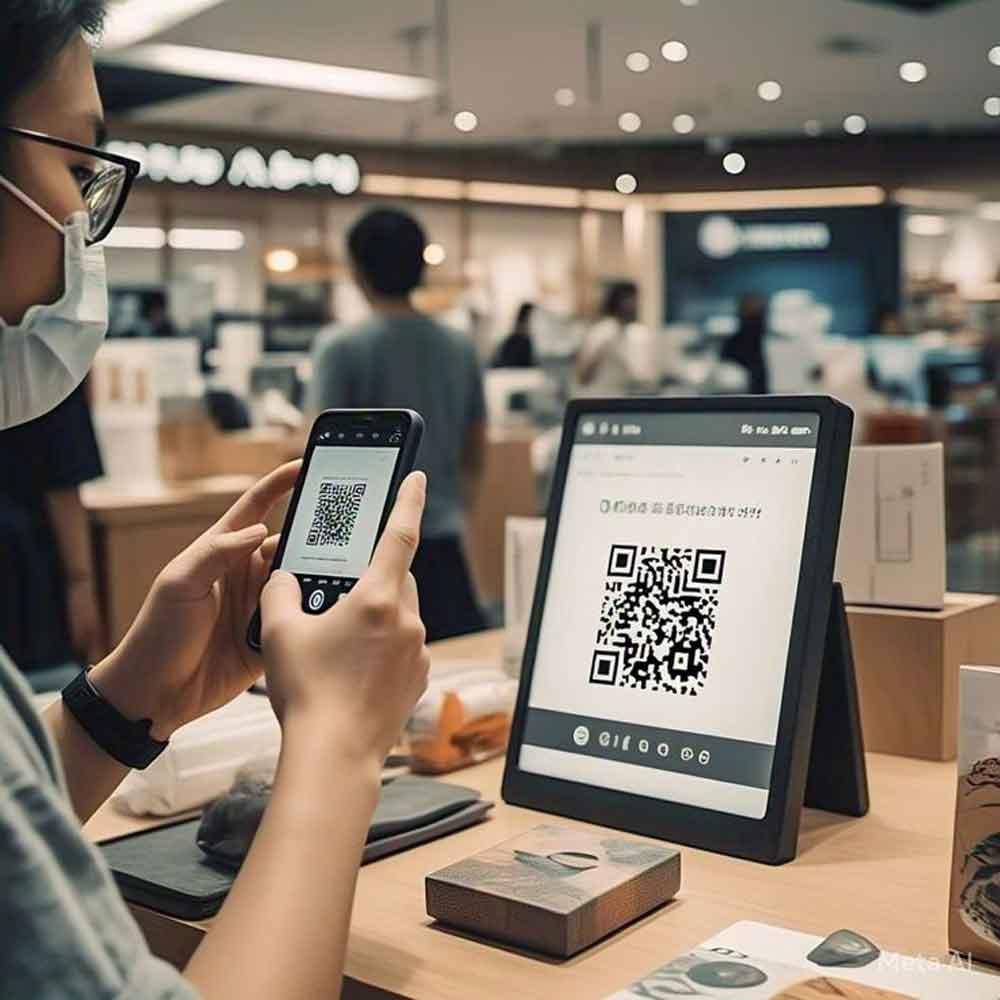
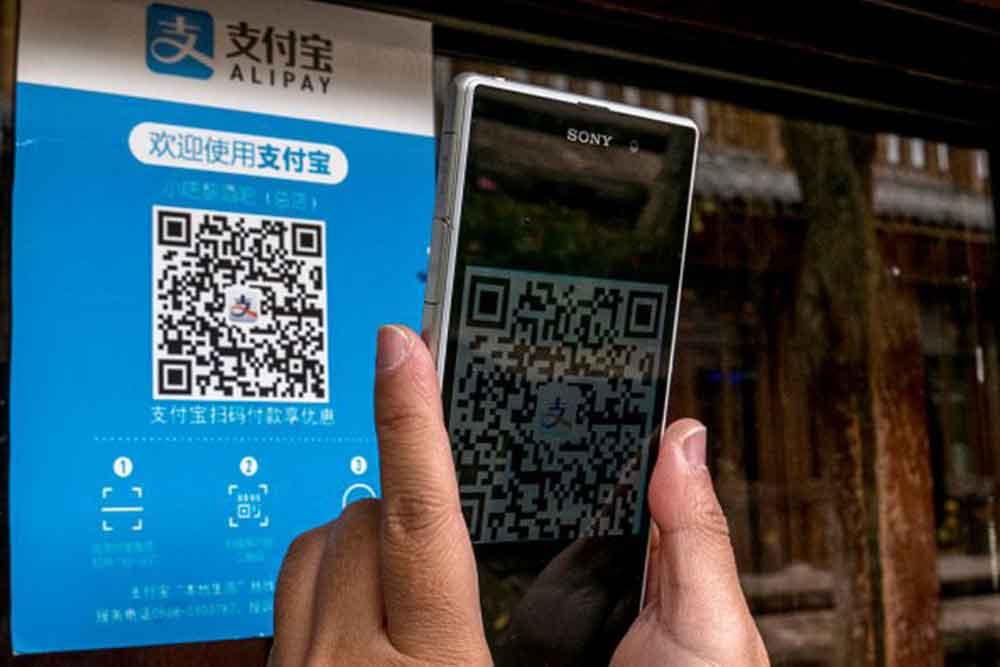
It started with the small things. I rode the metro by tapping my phone. I hired a bicycle by scanning a code: unlock, ride, park, lock. No dock, no cash, no conversation. I booked a DiDi (the Chinese equivalent of Uber) without ever downloading the app, because it lives inside Alipay. I ordered dinner on Meituan, and when I was not home, the courier left it in a parcel box in my compound, and I collected it later. I have not touched cash once since I arrived. I have not withdrawn a single note. A city of over twenty million people runs on a phone and a scanned code, and it runs the same whether or not you speak the language.
The point is not that any single app is brilliant. It is that they talk to each other. You do not download DiDi; you find it inside Alipay. You do not download a bike app; you scan the code through Meituan. Attraction tickets, hospital bookings, government services — they all live as mini programs inside WeChat or Alipay, running on the same identity and the same payment layer. One login, one wallet, one verification, threaded through everything. The Chinese call it ‘生态 ‘ an ecosystem. What it really means is that every service inherits the trust and the infrastructure of the one next to it. You do not build twenty apps, and hope people find them. You build one rail and let everything run on it.
Then came the real test. I had to negotiate an apartment lease in Beijing, in Chinese, with a landlord and a broker who spoke no English at all.
The broker sent me a sample contract. I photographed it and ran it through DeepSeek, the Chinese AI model, which read the Chinese text and flagged several clauses I would never have caught on my own. We negotiated from there, line by line, me typing in English, the tool turning it into Chinese and back again. By the end, we had a signed contract that neither of us could have explained to the other in a shared word.
The same thing happened when I went to buy an air humidifier. The shop assistant quoted me the shelf price. Neither of us could understand the other, so I photographed the product details, and the app found a lower price listed online. I showed her the screen, she checked her own system, and I paid about 250 yuan less than the sticker.
This is the part we miss when we talk about China's rise. We talk about the highways, the high-speed rail, the bridges, the factories. All real. But the most consequential infrastructure here is invisible. It is the digital rails that connect payments to transport to commerce to public services, so tightly that a foreigner with no Mandarin can lease a flat, order dinner, and cross the city without once feeling locked out.
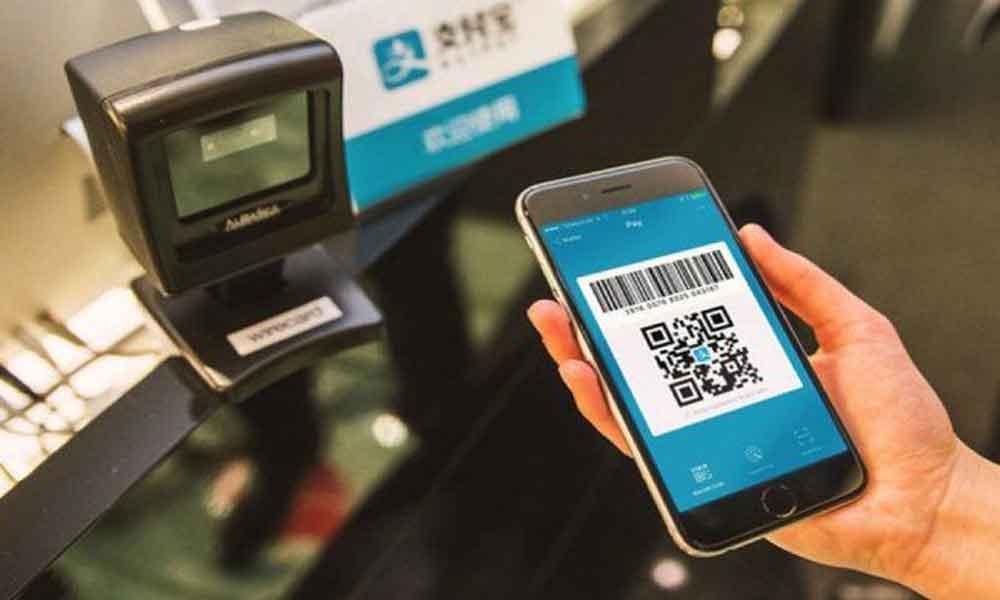
And Sri Lanka? We have spent over two years talking about this. There has been a DPI summit, a budget line of around 35 billion rupees for digitization, a national digital identity, built on India's platform and largely India's money, whose launch date has already slipped more than once and which independent analysts say is unlikely before 2027. There are payment rails, LankaQR and JustPay, that already exist. What there is not, after two years, is a system a citizen actually holds. Plans are not infrastructure. A procurement shortlist is not a service. The gap between the announcement and the thing that works in your hand is where our digital ambitions have gone to sit.
Here is the part I have thought about most, because it cuts both ways and honesty demands both edges.
A fully traceable, cashless system is not only convenient. It is a fiscal instrument. Sri Lanka's revenue problem is, at its core, a visibility problem: too much of the economy moves in cash that the state cannot see and cannot tax. A society where every transaction leaves a digital trace closes that gap almost by accident. For a country living inside an IMF programme, with revenue targets it has to hit, that is not a small thing.
And there is a second, less obvious consequence. Sri Lanka leans heavily on indirect taxes, VAT at 18%, paid by everyone who buys anything, whether they earn thirty thousand rupees a month or a million. It is a tax that does not care about your income. The reason we lean on it is not philosophy; it is visibility. We tax what we can see. If a society moves to a system where transactions leave a trace, the state no longer has to tax the supermarket receipt because it cannot see the salary. It can begin to shift the burden toward direct taxation, the kind that falls on those most able to pay. That is not a small reform. It is the difference between a tax system that squeezes the poor to hit a target and one that asks everyone to pay their share. The technology to do this already exists. What is missing is the decision.
But the same trace that lets the state tax you is a trace that lets the state see you. The architecture that solves the revenue problem is the architecture of total financial visibility over every citizen. The same QR code that let me buy a humidifier for less is the one that records that I did. In a country still building its data protection law rather than living under one, that is not a detail to wave away. You do not get the convenience and the fiscal fix without also building the capacity to watch. Any honest version of this argument has to hold both facts at once and decide with its eyes open.
That is the real lesson, and it is not really about apps. We keep framing our digital future as a series of projects: an e-government app, a payment app, a transport app, each announced, each launched, each sitting alone. Integration is the point, and integration is a decision, not a download. It means designing for the citizen's reality rather than the bureaucracy's convenience, and it means being honest that the more integrated the system, the more it can do both for you and to you.
I saw how deep that dependence runs in a small, almost comic detail. On streets, in stations, outside shops, there are battery pods everywhere here: scan a code, a charged power bank slides out, and your phone stays alive. A whole layer of public infrastructure exists for no reason other than to keep the device breathing, because if the phone dies, you cannot pay, travel, or prove who you are. A society builds those pods only when it has decided, completely, that life runs through the screen. It is astonishing. It is also worth pausing on.
The QR code, it turns out, is a kind of language. The countries that learn to speak it will move faster than the ones that do not. The only question that matters is who gets to read what it records.