
The Diagnostic Trap Labeling the Narcissist Makes You One
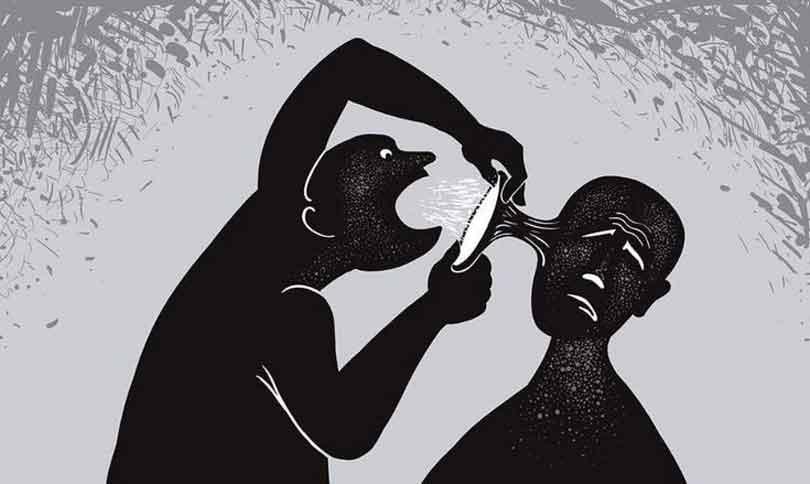
We live in the era of the amateur clinician. Armed with a pocketful of therapy terms and a battery of private grievances, we have transformed our interpersonal lives into a series of informal courtrooms. We no longer simply break up with romantic partners, clash with managers, or drift away from childhood friends; we identify them. We evaluate them. We slap the word "narcissist" onto their behavior with the unflinching, clinical confidence of a seasoned psychiatrist, satisfied that we have finally named the monster lurking in the room. It feels like an act of emotional liberation. It feels like self-awareness. It feels like the ultimate victory of truth over manipulation. It feels like freedom. You got away from them. But are you truly free, or have you simply replaced the person you left behind with an obsession? It is, in fact, an act of radical self-occupation.
The central irony of our modern cultural obsession with narcissism is that the act of labelling someone else a narcissist can require the same cognitive machinery that narcissism itself exploits. To declare, with absolute certainty, that you hold the definitive key to the hidden architecture of another person's mind is not necessarily an exercise in empathy or objective insight. It can become an act of supreme ego. It is the precise moment you decide that your internal interpretation of someone's flaws represents the total, indisputable reality of their character, and that you, conveniently, are the morally unblemished victim standing in the light.
In our desperate attempt to expose those who are trapped in the mirror, we have simply invented a far cleverer way to gaze into one. We have created diagnostic narcissism.
I. The Closed Circuit of the Self
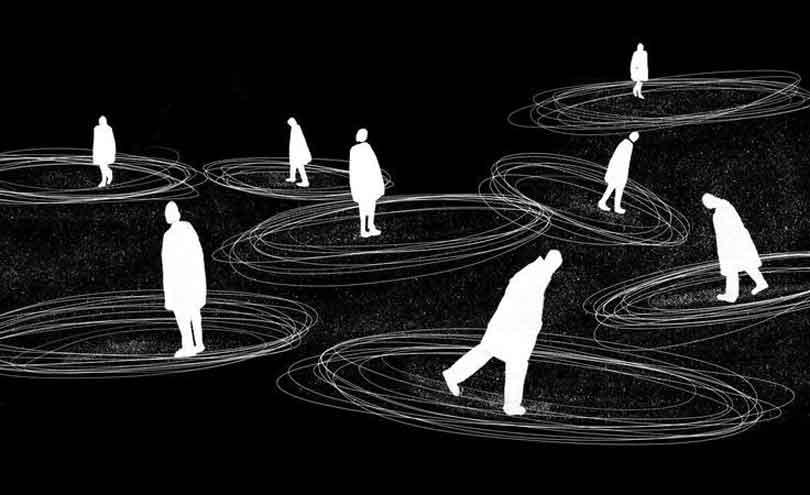
To understand why diagnostic narcissism is so persuasive, we must first look at what happens when human self-consciousness becomes continuous. Modern culture has rendered us exceptionally good at looking at ourselves. We do not merely inhabit our identity; we repeatedly inspect it. We encounter versions of ourselves in photographs, in text threads, in the presence or absence of a reply, and in the imagined judgments of roomfuls of strangers. The human mind has become both the actor on the stage and the critic in the front row.
Narcissism, in its psychological sense, is not synonymous with simple vanity or high self-esteem. It can involve a fragile internal architecture in which self-worth is unstable and requires external confirmation, status, or validation to keep an underlying sense of inadequacy from breaking through. The grandiose exterior can function as a defense against the possibility of insignificance. The tragedy of Narcissus in the ancient myth was not merely that he loved his reflection too much; it was that he became trapped in an unbreakable relationship with an image.
Diagnostic narcissism operates on this same closed circuit. When you encounter someone who hurts, disappoints, or challenges you, your brain faces a choice. You can acknowledge that the other person is a chaotic, independent world with their own unseen motives, or you can reduce them to a reflection of your own narrative. By assigning them a clinical diagnosis, you fold their behavior back into your own universe. Their actions cease to be about their messy human existence; they become deliberate plot points in your story.
II. Pathologizing as Interpersonal Exoneration
The primary utility of an informal psychological diagnosis is the immediate termination of self-scrutiny. In medical settings, a diagnosis identifies a root cause so that treatment can begin. In everyday social conflicts, however, the informal diagnosis can serve an entirely different function: it assigns absolute blame so that personal accountability can end. The moment you decide that the person across the table is not merely difficult, selfish, or wrong, but pathological, you grant yourself a total moral discharge.
Consider what occurs in a standard human collision. Two individuals bring competing desires, unstated expectations, defensive reflexes, and private histories into a room. Communication collapses. Pain is experienced. In a mature human dynamic, resolving that failure requires a grueling inventory of mutual responsibility. Diagnostic narcissism erases that internal discomfort with a single stroke. When you reframe a relational failure as an encounter with a "narcissist," the mathematics of conflict shift overnight. Responsibility ceases to be shared; it becomes absolute and binary.
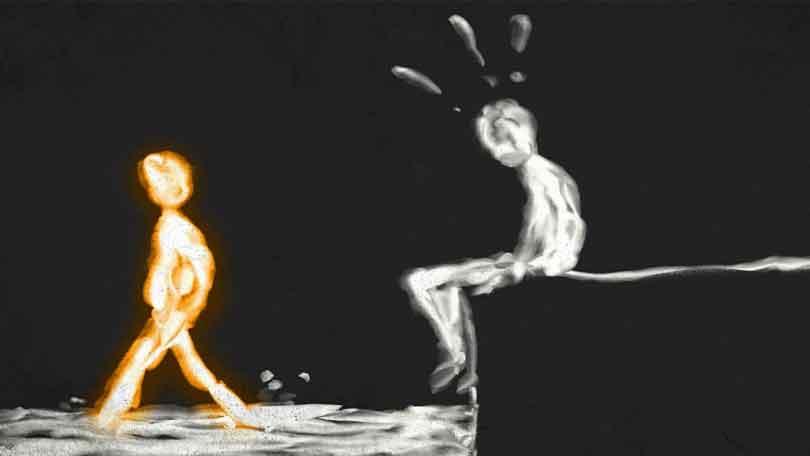
By labelling the other person, you transform yourself from an active participant in a complex human exchange into a passive observer of someone else's pathology. The focus shifts instantly from what happened between us to what is fundamentally wrong with you. This is why diagnostic narcissism can be so profoundly addictive. It allows us to process genuine emotional distress while quietly bypassing the painful work of self-examination. You no longer have to ask whether your own silence was passive-aggressive. You do not have to evaluate whether your demands were unrealistic, whether you overlooked obvious warning signs because they flattered your vanity, or whether you leveraged the other person's need for admiration to feed your own desire for validation until the arrangement dissolved. The diagnosis builds an impenetrable fortress around your self-image.
III. The Identity of the "Empath" and the Weaponization of Sensitivity
If the "narcissist" is the designated villain of modern pop psychology, the self-proclaimed "empath" is its canonized saint. The two figures have become locked in a strange, symbiotic mythology: a cosmic struggle between the pure-hearted creature who feels too deeply and the hollow monster who feels nothing at all.
Yet the identity of the "empath" is rarely a demonstration of genuine compassion. More often, it represents the weaponization of emotional sensitivity, a tactical manoeuvre that uses internal distress to secure the absolute moral high ground.\
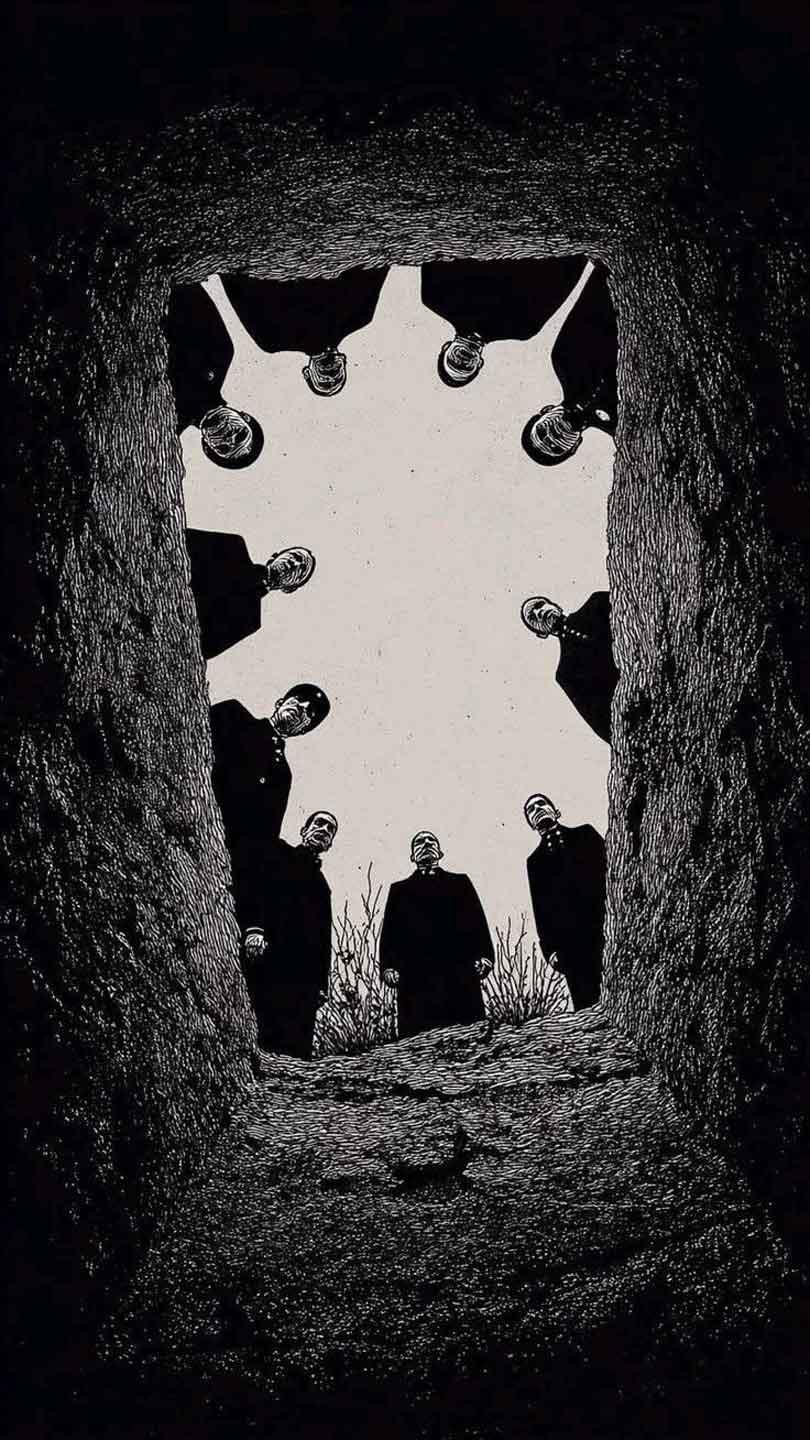
This is empathy inverted. True empathy is outward-directed, rigorous, and deeply humbling; it requires trying to understand the private interior life of another person without assuming you have solved it. The identity of the empath, by contrast, turns emotional perception inward, converting one's own feelings into proof of another person's defect. By defining yourself as an empath trapped in a world of narcissists, you execute the ultimate narcissistic turn: you place your own emotional state at the absolute center of the universe while denying the genuine complexity of everyone else in the room.
IV. The Vocabulary of Self-Awareness Without Morality
We have never possessed such an extensive vocabulary for interpreting our inner lives. We talk effortlessly about attachment styles, nervous system regulation, emotional boundaries, triggers, trauma responses, and identity validation. This language has brought clarity to real psychological suffering, but it has also created a darker possibility: we can become extraordinarily articulate about our wounds without becoming any more capable of living alongside other human beings.
Self-awareness is not automatically moral. A person can understand their personal narrative intimately and still act with profound selfishness. They can trace their emotional triggers back to early childhood and still demand that everyone around them walk on eggshells to accommodate them. They can speak fluently about healing while remaining utterly incapable of looking someone in the eye and saying, simply, "I was wrong."
There is an uncomfortable narcissism in this brand of continuous introspection. When the self remains the hero of every story, even suffering becomes a prized possession. We curate our pain, organize it into clean psychological narratives, and begin to treat it as an all-encompassing explanation for our behavior. The story becomes so rigid that it leaves no room for contradiction; even constructive criticism is reframed as an assault on our emotional safety.
When two people operating from this mindset interact, true communication becomes impossible. Intention is privileged above impact because intention protects the self-image. "I didn't mean to hurt you" quietly morphs into "Therefore, you have no right to feel hurt."
Psychological maturity requires a far more difficult internal posture: I did not mean to hurt you, and I recognize that I did. This simple acceptance allows two separate realities to exist at once. It acknowledges that you can be a well-intentioned person and still cause real harm, that you can be misunderstood without being entirely innocent, and that someone can criticize your behavior without seeking to destroy your identity.
V. Decentering the Self
The ultimate antidote to diagnostic narcissism is not to refine our psychological labels, nor is it to win the perpetual debate over who was more toxic. It is to surrender the practice of diagnosis altogether.
Surrendering the label is not an act of submission, nor is it an invitation to endure mistreatment. You do not need a clinical classification to enforce a boundary. You do not need a psychological taxonomy to leave an unhealthy relationship, walk away from an abusive boss, or end a friendship that drains your life. You can simply state the baseline reality: "This environment is harmful to me, and I will no longer participate in it."
The urge to go further, to explain why they behave this way, to pin their psyche to a diagnostic chart, to recruit an audience to validate their pathology, is the precise moment when self-protection subtly turns back into self-occupation. It is the moment we convert the exit door into a performance.