Building Visual Worlds In Conversation with Jerusha Perera
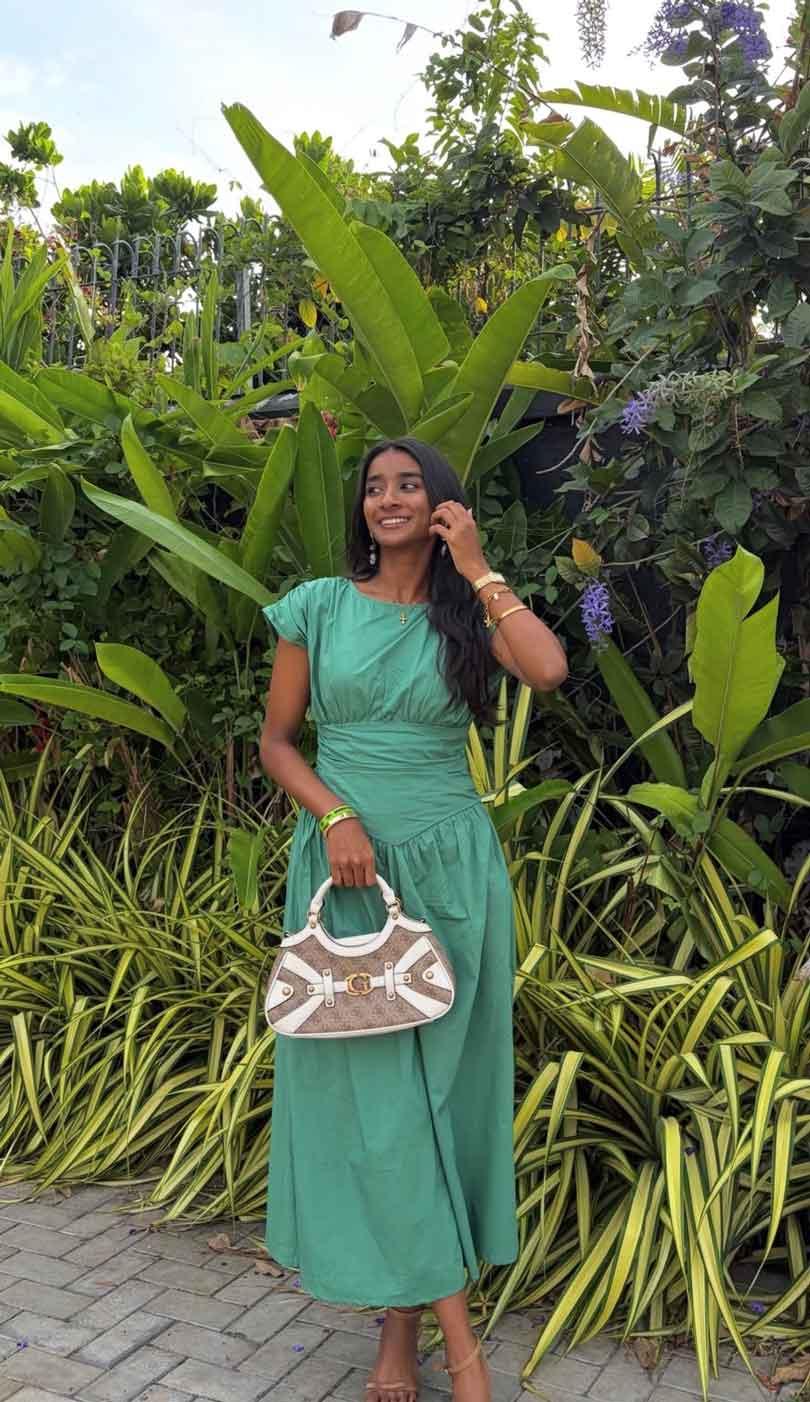
Jerusha Perera has always been someone who likes to make things. What began with doodles on whatever she could find has grown into a creative practice that moves across painting, illustration, design, creative direction and ceramics. Color, texture, storytelling and Sri Lankan visual traditions have gradually found their way into her work, while each new project seems to offer another way of looking at the world. Today, alongside her work as Creative Director at Sareli, she is building River Jai, a project rooted in her long-standing love for ceramics and the idea that everyday objects can carry something beyond their function. We speak to Jerusha about where her curiosity comes from, how an idea takes shape, working with children, finding a visual language of her own, and the many things she still wants to make.
1. Jerusha, you’ve been creating in several forms for quite a few years now. Where do you think that interest in creating things really started for you?
I wish I could take the credit, but the truth is, I think that desire and need to create comes from an inherent sense of curiosity that was put in me by God when He created me. Even as a child, I was never able to just sit with my hands to myself. If there was something within my reach, I was painting on it. My teachers can attest to this because I was constantly getting pulled up for doodling during class, and half the things in my home, from hangers to bottles of cream, were covered with my drawings. But that interest can only go as far as it’s nurtured, and I think that was facilitated by the environment my parents created for me, as well as my spiritual parents, Prophet Jerome and Pastor Melanie. I am what I am because of the grace of God on my life and the Word of God that has come to me through my man of God. I would not even be doing this today if not for them. As a result, my interest and the skill needed to back it have only continued to grow and develop from there and still do to this day.
2. You describe your work as building “visual worlds”. What does that mean to you?
I think building a visual world all comes down to telling a story within a specific context. Storytelling is a huge part of my personal creative practice, so whether it’s a story that I want to tell or helping tell someone else’s story, having something exist that is intentional and connected to something greater than itself is so important. Which is where this idea of building a whole world around it comes together. It’s not just there for the sake of it, but it serves a purpose in the grand scheme of things.
3. When you start a new project, what usually comes first for you: an idea, a feeling, a color, a story or something else?
This is a great question, and the answer really is that anything can create that initial spark.
It is also heavily dependent on the type of project I’m involved in. Say, if it’s something I’m creating on my own or for my brand, things like birds on a safari have inspired me, or a lady in a colorful blouse walking down the street can inspire me. It catches you off guard sometimes, honestly, and then it’s the only thing that consumes your mind until you’ve brought the vision you’ve seen in your head to life. When it comes to working with someone else or another brand, it can go one of two ways. Either I make use of an idea that’s been at the back of my mind, waiting for the perfect opportunity to be used, or I need to ‘marinate’, which is basically a term I came up with while I was at university that involves a heavy research process. Downloading a bunch of information, talking to people, researching and just sitting with those ideas and allowing the dots to connect themselves in a very natural and organic way is my favorite thing ever, because you never know when it’s going to hit, but when it does, it just flows from there.
6. You’re also the Creative Director at Sareli. What does being a Creative Director mean to you beyond the visual side of things?
Again, I think it comes back to storytelling. Sareli was started by my mum two years ago, and it’s a family business we’re all involved in. Everything is done organically, with so much intention, whether that’s sourcing fabrics, the designs we create or how we choose to present the brand to the market. So, beyond the visual side of things, staying true to those roots and how we communicate that to our audience is the main focus for me.
7. You work with children through your workshops as well. How different is it working with children, and does the way they think and create ever influence you?
I absolutely love working with kids. I’ve been teaching art classes for a few years now, and we currently conduct classes every week for children between the ages of 8 and 13. And they are always so interesting. If you sit down with three kids, you’ll see three different interpretations of the world entirely. That unique and unfiltered point of view is what influences and inspires me the most as their teacher. They don’t hold back in how they express themselves and how they create, and that free spirit and boldness are key to being creative.
8. Sandaawa was one of the pieces that really caught my attention. It feels so tropical, colorful and playful, and there’s a sense of joy in it. What was behind that piece, and do you have a favorite among everything you’ve created?
I’m so glad you feel that way because that’s exactly the feeling I wanted to evoke through the piece. It was inspired by a trip to Kumana. We were travelling through the park and, towards the end of the evening, when the sun was just beginning to set, we reached this watering hole where all sorts of animals had come together. Overlooking them all were these Malabar pied hornbills. The unusual shape of their beak is what really caught my attention and convinced me that I had to paint this. While that was the focus, alongside that, in this piece I’ve also included traditional painting motifs in some of the natural elements because it’s become such a source of inspiration for me and now a key part of my visual style as well.
Overall, it brings together the vibrancy of how I personally see this island, the life on it and the heritage that has brought us thus far. I think it has been my favorite piece so far.
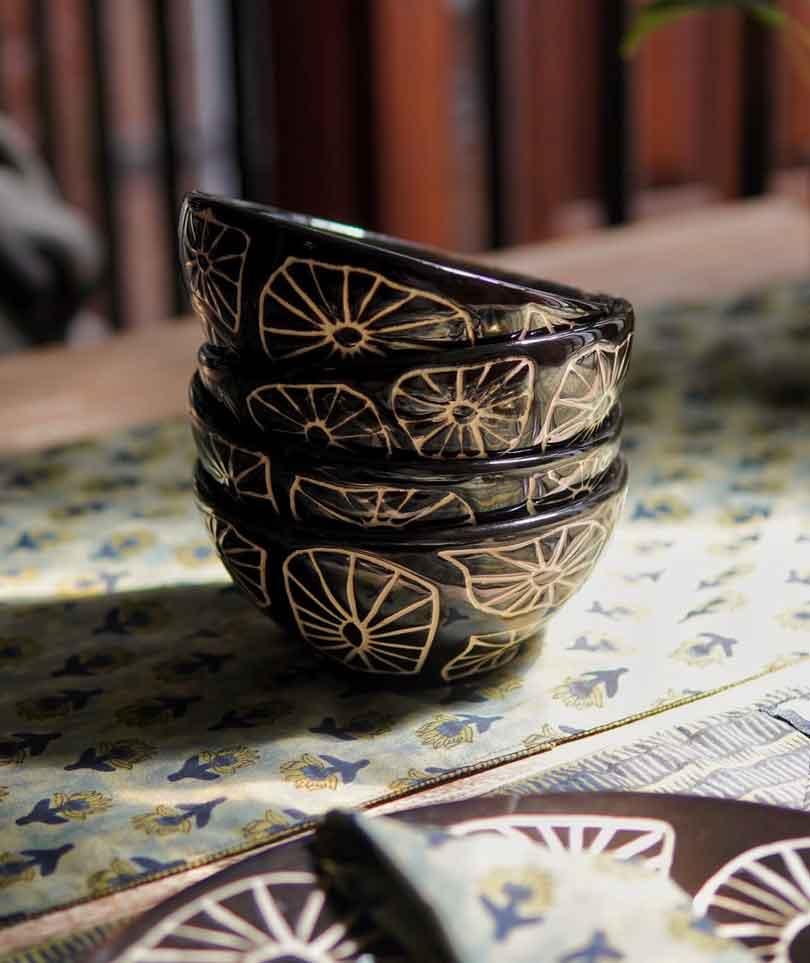
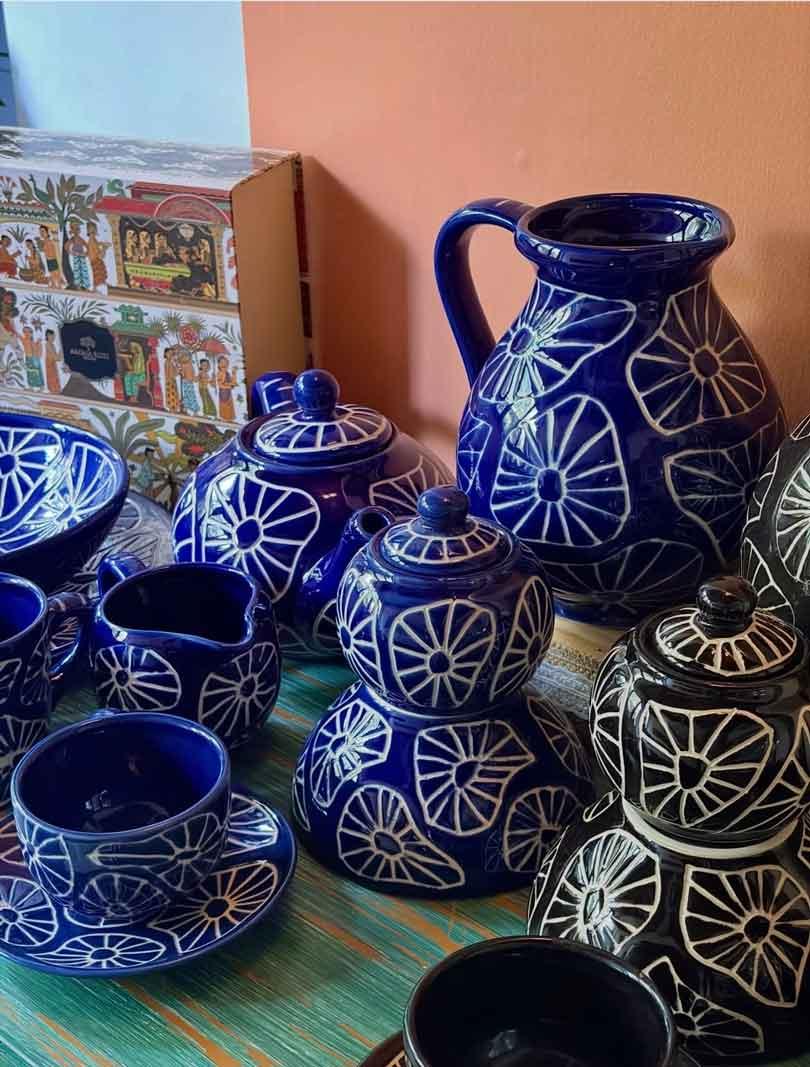
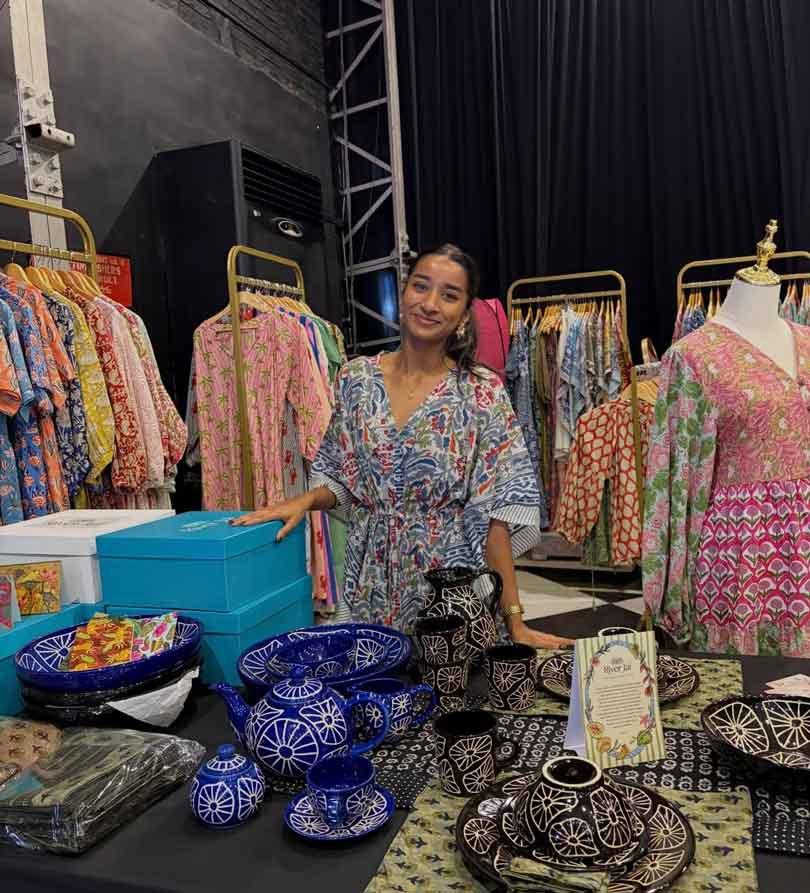
9. You recently started River Jai, with this idea of making everyday things feel like art. Tell me a little about where that idea came from. What was the beginning of River Jai?
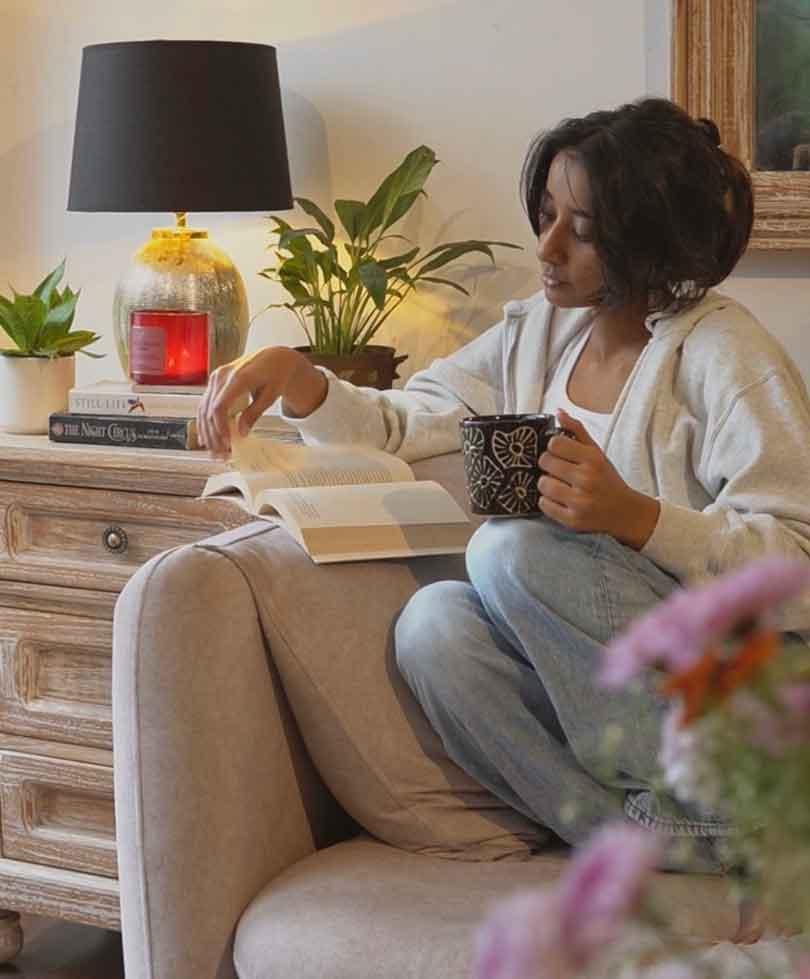
River Jai did technically start this year, but the heart of it has actually existed for the last 14 years. It started when I was just 13, and for five years while I was in school, I used to hand-paint ceramics. I even meet people today who tell me they still have the pieces I created for them in their homes. So, with COVID and my commitments with university, I shifted to more of a digital practice, but that desire to create ceramic pieces was deep inside of me. About 1.5 years ago, I started developing designs, and it was a process of prototyping and experimenting until we came to the conclusion that colour, texture and our heritage stood at the core of the story we wanted to tell with these pieces. Finally, that, paired with the motif of the lotus root, is what started River Jai. But it’s only the beginning, and there’s so much more to come, which we’re very excited about.
10. When you say you want to make something “feel like art”, what does that mean to you?
To me, having something ‘feel like art’ is like what my painting ‘Sandaawa’ did for you. It evokes something and makes you feel or tells you a story without explicitly having to spoon-feed it to you. I think life is beautiful, and to have pieces in your home, things you use every day or things you share with the people you love that make you feel something that goes beyond their functionality makes it so much more beautiful and intentional.
11. You’ve gone from being the person creating the work yourself to also leading creative direction. Do you feel like you’ve found your own visual language yet, or do you think it is still changing as you grow?
It’s a funny thing because I feel like I’m always in a state of learning and growing. I think at this point in time, there’s a distinguishable visual language I can call my own that incorporates a few key elements that have resonated with me and will never leave. Things like the use of vibrant color, texture and also the influence of traditional Sri Lankan painting styles. But I’m sure it’ll only continue to evolve as I learn and grow as an individual, and I’m bound to pick up a few more along the way.
13. Finally, what is something you would really love to create next that you haven’t had the chance to put your mind into yet?
Absolutely! There are always so many ideas in my head. Currently, my focus is with River Jai and my own art journey, so in the immediate future, I have a painting in my head that I’m desperately eager to put on canvas as soon as possible. And with River Jai, we’re actually in the process of developing our next collection, so that is something I’m very excited about doing and getting to share with our community.