Is This 95-Year-Old Woman Really Pole Vaulting?

Florence Meiler
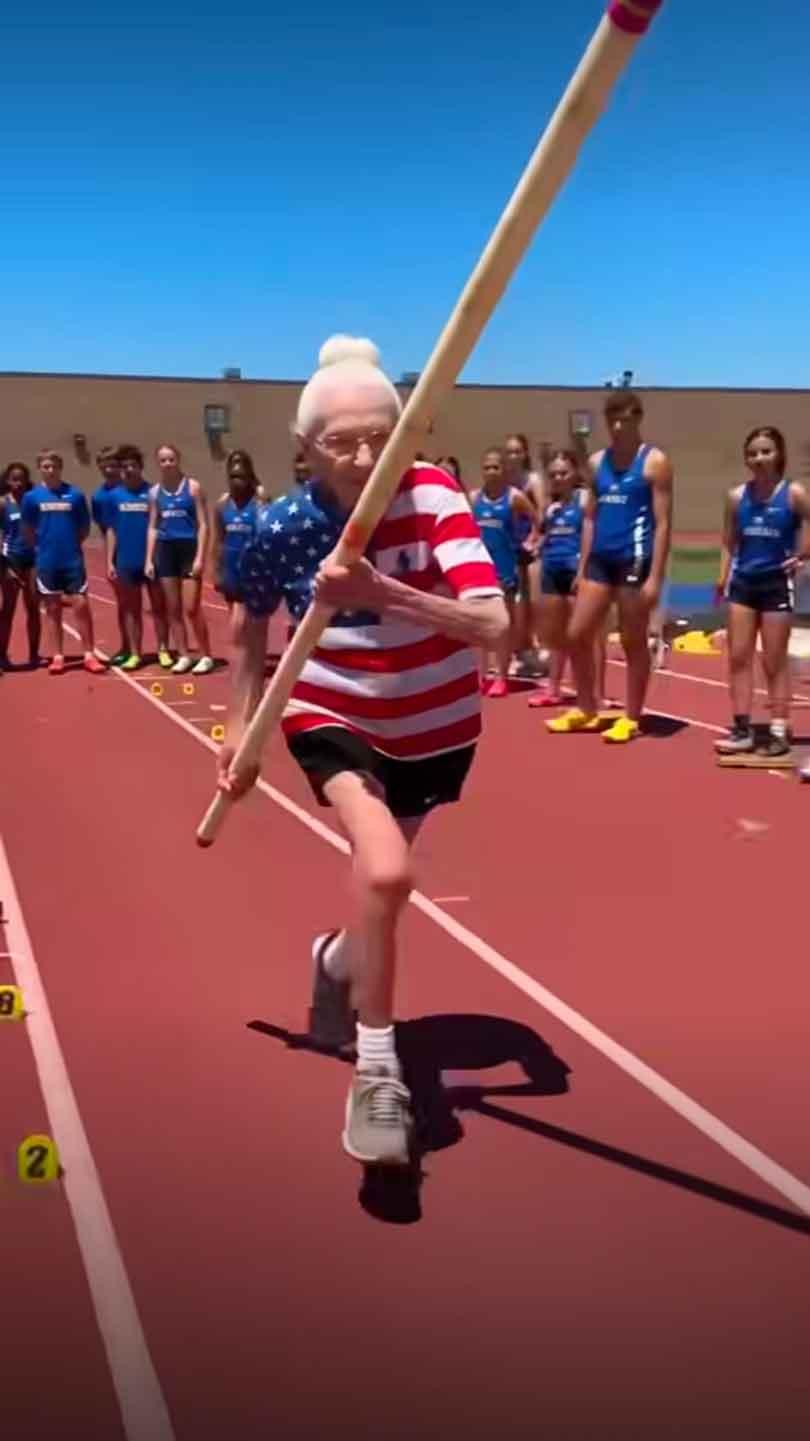
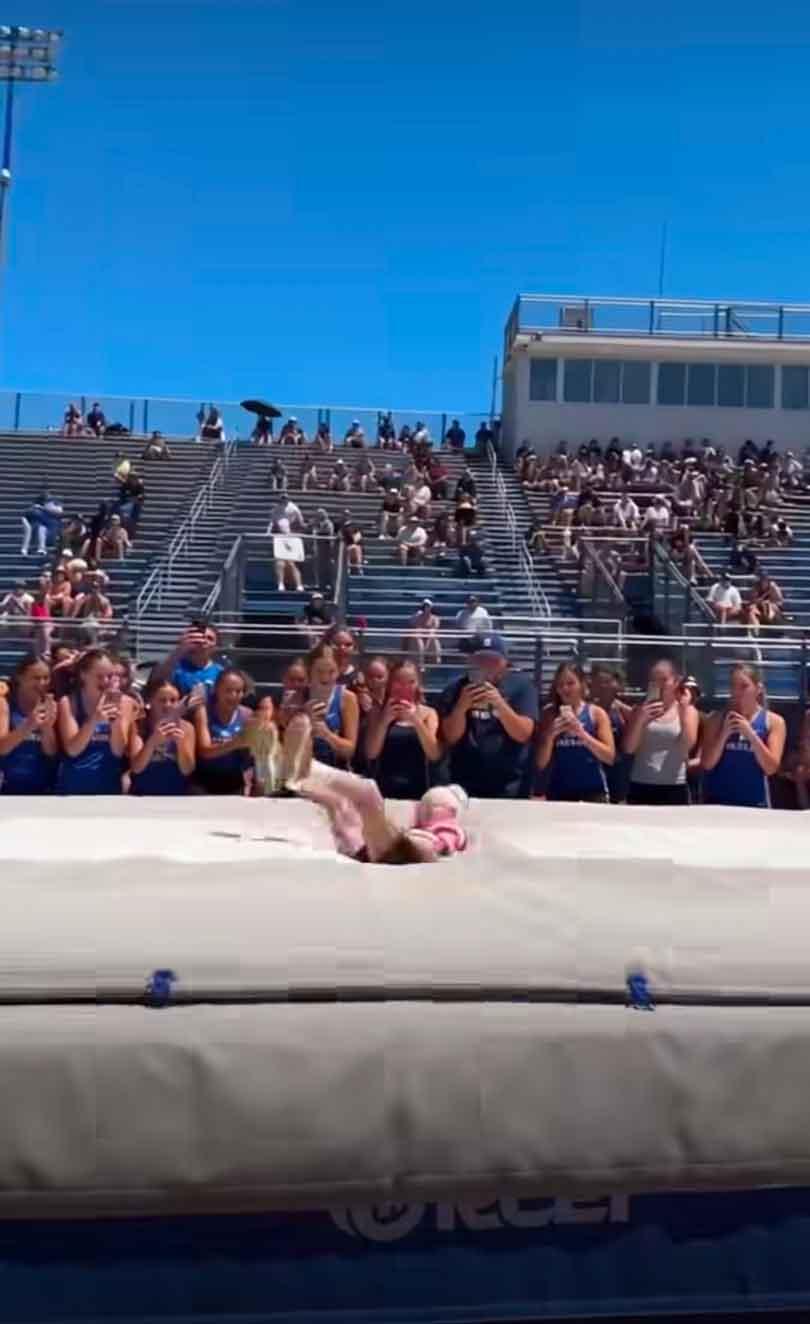
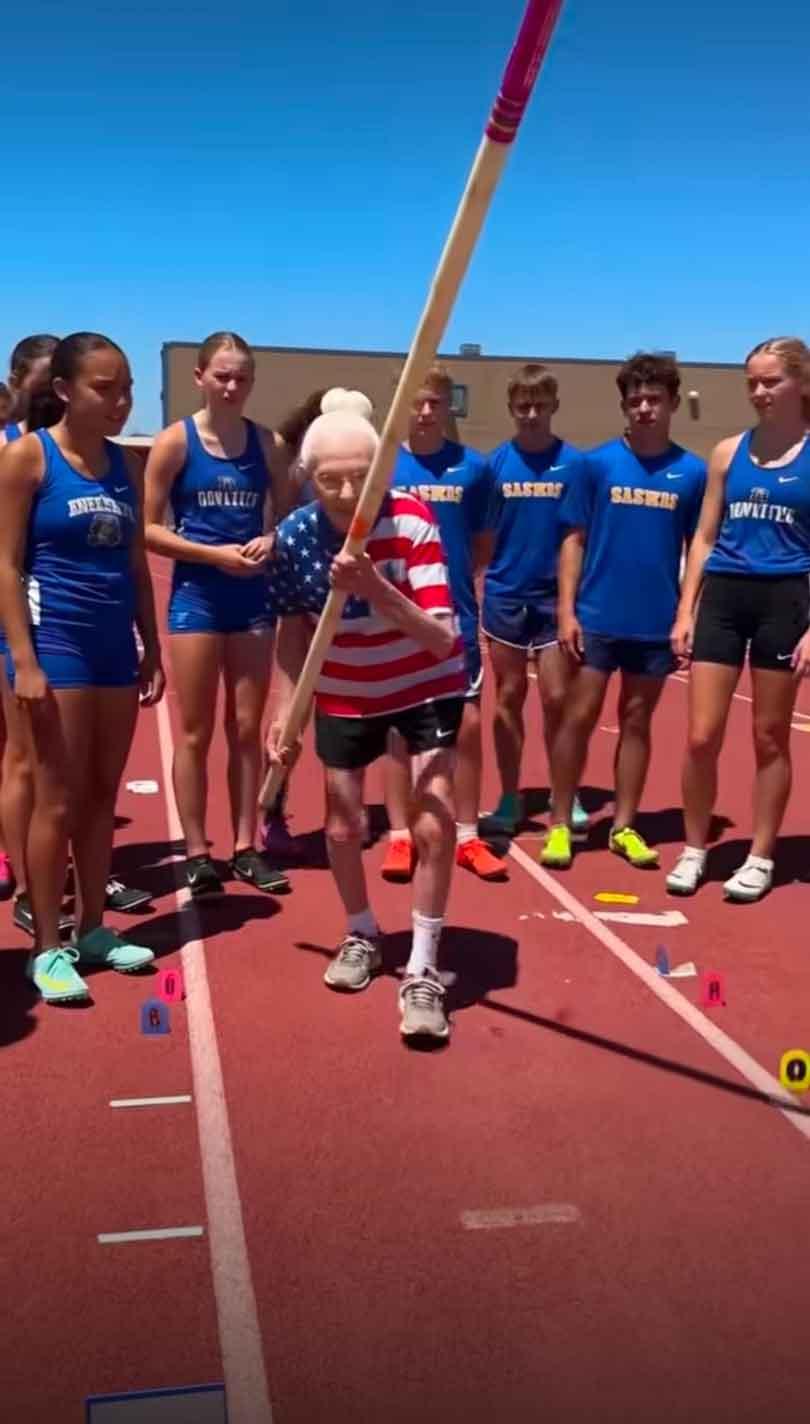
At first glance, the video seems almost impossible. An elderly woman wearing an American flag T shirt, shorts and glasses stands on an athletics track holding a long pole. She looks considerably older than the athletes normally associated with one of track and field's most demanding events, yet she appears calm and prepared for what is about to happen. She begins moving along the runway, taking careful steps before appearing to gather speed. Holding the pole firmly in front of her, she approaches the bar, plants it into the ground and suddenly rises into the air. Her body appears to sail over the bar before she drops safely onto the landing mat. Moments later, she sits upright and laughs as people around the track react to the remarkable performance.
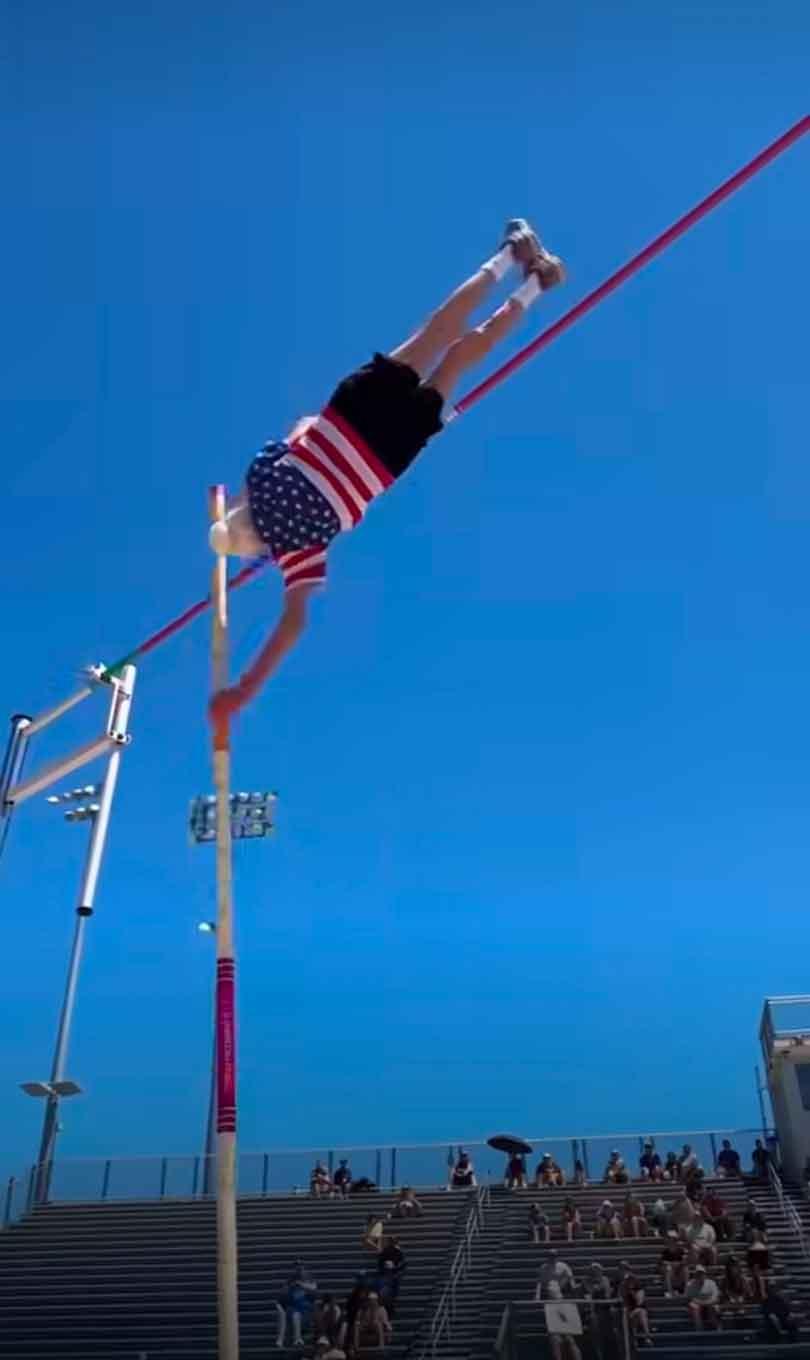
The footage has circulated across social media alongside claims that the woman is 95 years old. Viewers have responded with amazement, celebrating what appears to be an extraordinary display of courage, strength and athletic ability. It is easy to understand the appeal. The idea of someone performing such a physically demanding feat at 95 challenges expectations about ageing and provides exactly the kind of inspirational story people are eager to share. There is, however, one important question behind the extraordinary footage. Did this sporting moment actually happen, or are social media users watching something created using artificial intelligence?
Fact checking organisation CyberPeace investigated the footage and raised serious doubts about its authenticity. In a fact check published on September 11, the CyberPeace Research Wing reported that the video was generated using artificial intelligence rather than documenting a genuine sporting performance. According to CyberPeace, searches for credible reports about the supposed achievement failed to uncover reliable coverage confirming that the event had taken place. That absence is significant considering how unusual the claimed achievement would be. A 95-year-old successfully completing a pole vault could reasonably be expected to attract attention from athletics organisations, specialist sporting publications or news outlets. If the performance had happened during a genuine competition, there might also be evidence beyond one viral video. Official results, photographs, athlete profiles, interviews, reports from organisers or footage recorded by spectators could potentially confirm the event. Instead, investigators found important clues pointing in a very different direction.
CyberPeace reported finding the same footage on a Facebook page called Senior Salute, which describes itself as an AI content creator. According to the organisation, the video was uploaded to the page on September 8 and carried a label identifying it as AI generated content. The account also features similar videos showing elderly people apparently carrying out extraordinary physical activities. This context is important because it can easily disappear as content travels across social media. A video originally published with an AI label can be downloaded and uploaded by another account without that information. It can then be copied again, given a new caption and eventually presented to an entirely different audience as footage of a real event.
CyberPeace also reported using AI detection tools to assess the video. According to its fact check, those tools indicated a high likelihood that artificial intelligence had been used to generate the footage.
Taken together, the original source, the AI content label, the nature of the account and the lack of independent reporting provide substantial reasons to question claims that viewers are watching a real 95-year-old pole vaulter. The story is about much more than one unusual sporting video. It highlights a growing challenge facing millions of people who consume news, entertainment and viral content through social media. Artificial intelligence is becoming increasingly capable of producing footage that resembles something recorded in the real world, making the boundary between genuine and artificial content harder to recognise.
For years, video has been regarded as particularly persuasive evidence. People naturally tend to trust something they can see happening in front of them. Artificial intelligence is changing that assumption because a realistic looking video no longer necessarily requires a real person, a real camera or even a real event. AI generated people can appear to walk, run, smile and interact with their surroundings. Clothing can move with the body, backgrounds can resemble genuine locations and crowds can appear to respond to whatever is happening in front of them. Even camera movement can help create the impression that someone simply took out a phone and recorded an unexpected moment.
The pole-vaulting video is especially convincing because the claim exists somewhere between astonishing and possible. A 95-year-old completing a pole vault sounds extraordinary, but it is not so obviously impossible that everyone would immediately dismiss it. In fact, there are genuine examples of elderly athletes continuing to compete at an impressive level. American masters athlete Flo Meiler, for example, has competed in track and field into her 90s. Her events have included pole vault, sprinting, hurdles and throwing disciplines, and she has earned records and medals through masters athletics. Her achievements demonstrate that advanced age does not automatically prevent someone from competing or accomplishing remarkable sporting feats. Real athletes such as Meiler also demonstrate why viral footage should be investigated carefully rather than dismissed simply because it appears unbelievable. An elderly person participating in pole vault is not automatically evidence of artificial intelligence. Genuine people regularly challenge assumptions about age and physical ability. At the same time, those genuine achievements can make artificial footage more convincing. If viewers know that people in their 90s really have competed in demanding athletics events, another video showing a supposedly 95-year-old pole vaulter can seem plausible. This creates an important distinction between something being possible and something being proven.

That distinction matters because social media encourages people to make decisions about content extremely quickly. A short video may appear while someone is scrolling through their feed with a caption explaining what they are supposedly watching. Within seconds, the viewer may decide to like it, comment on it or send it to someone else. Large numbers of likes and shares can make the footage appear even more trustworthy. When thousands of people have already interacted with a video, viewers may assume that someone else must have verified it. Yet popularity does not establish authenticity. Misleading footage can become popular precisely because people share it before investigating where it came from.
Emotion makes the problem even more complicated. The apparent story of a 95-year-old woman completing a pole vault is uplifting. It suggests determination, courage and a refusal to accept conventional limits associated with ageing.
Those are powerful ideas, and viewers may share the footage because they want to celebrate what they believe the woman has achieved. Positive misinformation can therefore travel just as effectively as frightening or controversial misinformation. A story does not need to make people angry to encourage them to share it without checking. Sometimes hope, admiration and surprise are enough.
Finding the original source of a video is therefore becoming increasingly valuable. If viewers encounter extraordinary footage, looking for the earliest available upload can provide crucial context. The account responsible for publishing it may openly state that it creates artificial intelligence content, or the original post may contain a label that disappeared when the video was copied elsewhere. Independent reporting is another useful clue. When a video supposedly captures an extraordinary public achievement, viewers can search for evidence from reliable sources. In the case of an organised sporting event, there might be official results, information from sporting bodies, photographs, athlete profiles or reports from local media. The absence of such material does not automatically prove that something is false. Smaller events may receive little media attention, and genuine moments can sometimes be captured by only one person. However, when an extraordinary video spreads widely without any independently verifiable information about the person or event shown, there is good reason to investigate further.
AI detection tools can contribute to that process, although they should not necessarily be treated as absolute proof on their own. As artificial intelligence develops, both generation and detection technologies are changing. A stronger assessment considers several pieces of evidence together, including the original uploader, content labels, independent reporting and information about the supposed event. Relying only on visible mistakes may also become increasingly difficult. Some artificial videos contain distorted faces, unusual movements, disappearing objects or other obvious errors. However, as the technology improves, these flaws may become harder to notice, particularly when someone watches a short clip once on a small screen. A synthetic video does not need to survive a detailed examination to become successful online. It may only need to look believable for several seconds. By the time viewers begin questioning it, thousands of other people may already have shared it.
The supposed 95-year-old pole vaulter therefore represents something much bigger than one questionable sporting clip. The footage demonstrates how the relationship between audiences and visual evidence is changing. People increasingly need to consider not only what a video appears to show, but also who created it, where it originated and what evidence exists outside the clip itself. This does not mean every remarkable video should automatically be dismissed as artificial. Doing so could result in genuine achievements being wrongly questioned, particularly when real athletes such as Flo Meiler have already demonstrated that older people can accomplish things that many viewers might initially consider impossible. Instead, the challenge is to remain curious while also demanding evidence. Extraordinary footage can still be enjoyed, admired and investigated, but appearance alone can no longer provide certainty. A convincing video may document an incredible real event, or it may depict a moment that never happened anywhere outside an artificial intelligence system.
According to CyberPeace's findings, the viral pole-vaulting footage falls into the latter category. What appeared to be an extraordinary sporting achievement by a 95-year-old woman instead provides a striking example of how convincing AI generated content can become once it escapes its original context and begins circulating across social media. As artificial intelligence continues to improve, distinguishing genuine footage from artificial creations is likely to become an increasingly important part of navigating the online world. The question viewers must ask is no longer simply whether an extraordinary video looks real. Increasingly, the question is whether there is reliable evidence that what they are watching actually happened at all.