Your Seat at Notre Dame Awaits: Box Office Now Open

By Noeli Jesudas
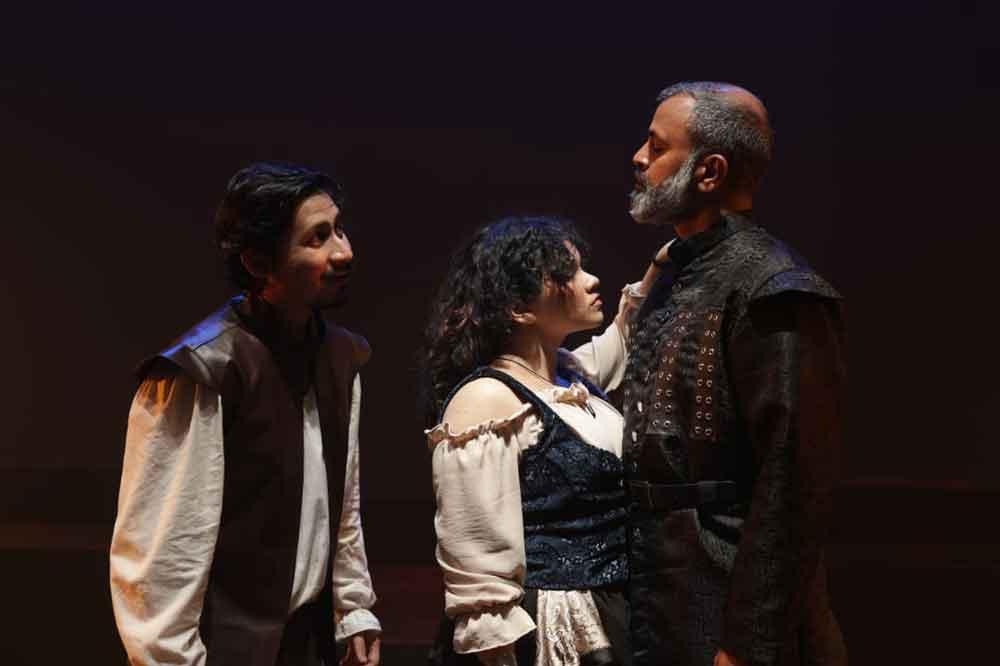
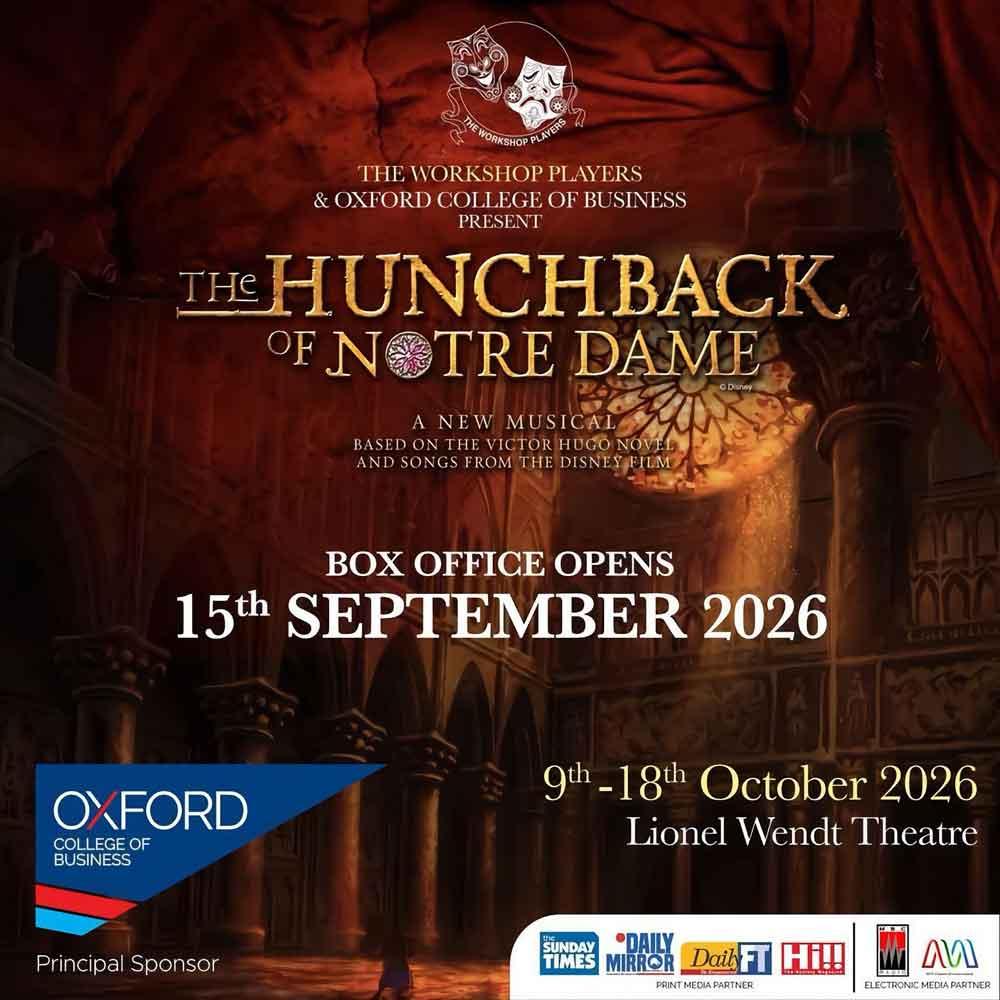
As The Workshop Players approach their 35th year of theatre in Sri Lanka, they are returning to the stage this October with one of their most ambitious productions yet, The Hunchback of Notre Dame. Following the success of productions such as Evita, The Phantom of the Opera, Les Misérables, My Fair Lady and Fiddler on the Roof, the theatre group is scaling up once again with a cast of 75 and a powerful choral element that promises to bring Victor Hugo’s timeless story to life on an impressive scale. Whether you know the story from Hugo’s original novel, Disney’s beloved adaptation, or are encountering the tale for the first time, this production offers a chance to experience The Hunchback of Notre Dame in a distinctly theatrical setting. With the box office now open at The Lionel Wendt Theatre, we speak to the creative minds behind the production, including Surein de S Wijeyeratne [Director], Jerome L. de Silva [Producer & Artistic Director], Sean Amarasekera [President, The Workshop Players], Ayushka Nugaliyadda [Choreorgrapher] and Nishantha Warnakulasuriya [Music & Choral Direction] to find out what audiences can expect from what is set to be one of the group’s biggest productions yet.
Surein de S Wijeyeratne (Director) - For someone who may be unfamiliar with The Hunchback of Notre Dame as a musical, how would you introduce this production?
The Hunchback of Notre Dame is a powerful and beautifully theatrical musical that brings together Victor Hugo’s timeless story with the extraordinary music associated with the Disney film. But it is important to say that this is not simply the film transferred onto a stage. The stage musical takes the story into much deeper and more complex territory, exploring ideas of belonging, prejudice, power, compassion and what it really means to be seen and accepted for who you are. At its heart is Quasimodo, a young man who has spent his life hidden away in the cathedral, looking down at a world he longs to be part of. When his life intersects with Esmeralda and the people of Paris, the story becomes one of love, courage, freedom and the struggle between how society sees us and who we truly are. For me, that is what makes the musical so compelling. It has the scale and spectacle of a great musical, but underneath all of that is a very human story. And with a cast and choir of around 70 performers, we have the opportunity to make the people of Paris themselves an important part of that storytelling, not simply a large ensemble on stage, but a living, breathing community.
Sean Amarasekera (President, The Workshop Players) - For audiences who may already know the Disney version, is there a different side of the story they can expect to discover through this musical?
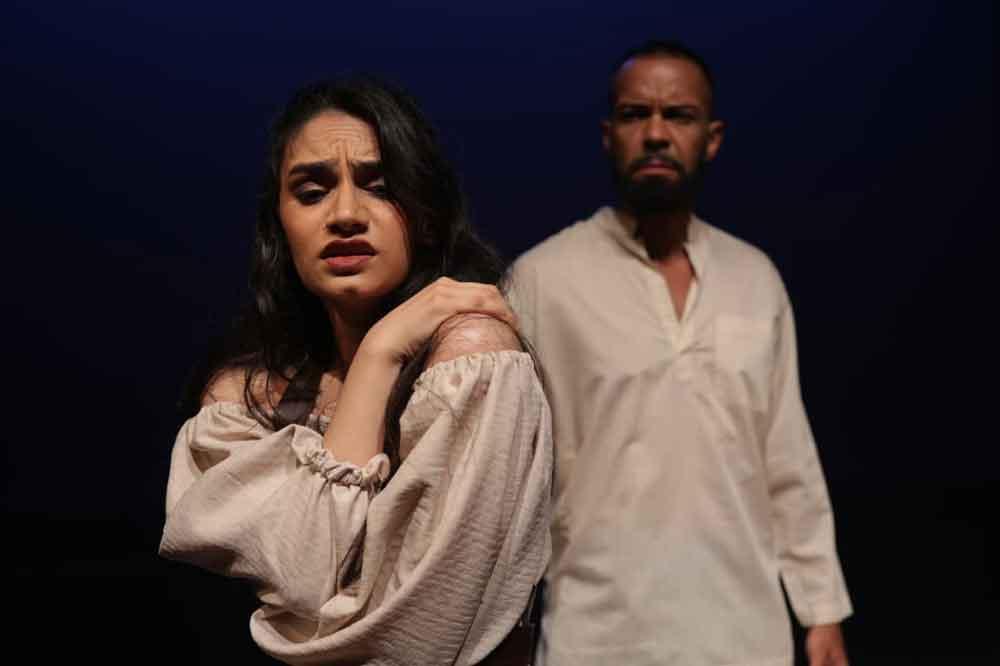
Forget what you saw on the silver screen; this stage musical blows open the story with a completely different heartbeat. While the animated Disney film wraps the tale in fairytale magic and quick, tidy resolutions, this live production dives straight into the messy, beautiful reality of human nature, delivering a version with sharper edges and vastly deeper emotional stakes.
Audiences will discover a grounded, mature world brought to life by Peter Parnell’s theatrical adaptation of Hugo’s source material, which actively embraces the device of "story theatre". Instead of hiding behind traditional curtains and passive scene changes, a fluid ensemble of storytellers remains on stage, step-by-step narrating the action and stepping in and out of characters right before your eyes. By weaving in literal passages from Victor Hugo’s classic novel, this technique pulls you directly into the room. This raw narrative energy is fueled by explosive new music from the legendary duo of Alan Menken and Stephen Schwartz, who expand the score to match the characters' deepest, hidden longings. By replacing animated feature simplicity with vulnerable human hearts and shared, intimate storytelling, it becomes a thrilling, high-stakes experience that completely rewrites everything you thought you knew about this world.
Surein de S Wijeyeratne (Director) - The story takes us back to 15th-century Paris. How have you created that world for a contemporary Sri Lankan audience?
We have approached medieval Paris less as a historical reconstruction and more as a world that the audience can believe in. The research has been important, particularly in understanding the architecture, social structures, religious influence, costumes and traditions of the period, but ultimately theatre has to make that world emotionally accessible. The cathedral of Notre Dame is naturally at the centre of the story, both physically and symbolically. We have therefore created a world in which the cathedral feels like a character in its own right, imposing, beautiful, mysterious and sometimes intimidating. Around it, we see the streets, the squares, the celebrations and the people of Paris. What has fascinated me is how little some of the underlying human dynamics have changed. The setting may be 15th-century Paris, but the questions the story asks are remarkably contemporary: Who gets accepted? Who gets excluded? What happens when people are judged by their appearance or circumstances? Who has power, and how do they use it? And what does it mean to stand up for someone who is different? So, while the visual language takes us to medieval Paris, the emotional world should feel very familiar to a Sri Lankan audience. That connection is essential. I don't want the audience simply to look at another time and place; I want them to recognise something of our own world and ourselves in it.
Ayushka Nugaliyadda (Choreographer) - What has it been like approaching the choreography of a production that moves between intimate character moments and large ensemble sequences?
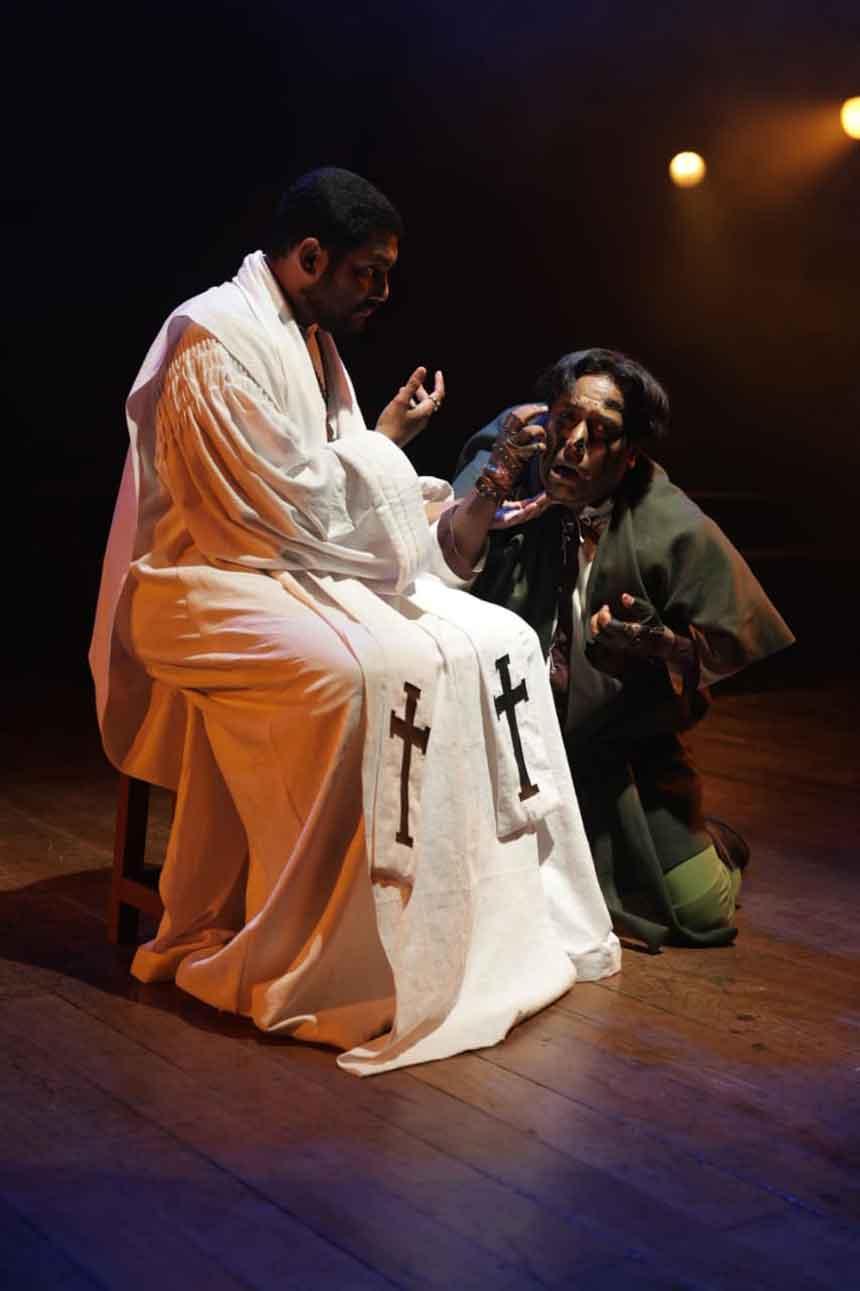
In the musical theatre production of ‘The Hunchback of Notre Dame’, the storyline moves very quickly in taking us through the arcs of the characters. In this regard, the larger crowd and ensemble scenes have been placed strategically in between the more intimate interactions to drive the story forward, while also sometimes serving to provide the audience with a little bit of emotional respite or joy in an otherwise dark production. In this sense, I’ve had to remain cognizant that the choreography couldn’t be just ‘pretty’, but needed to incorporate genuine storytelling, given that the ensemble of the show creates the world around the characters.
It’s been such a pleasure working with such a talented cast to collectively create a movement vocabulary that reflects the world the musical is set in, and we hope you’ll enjoy the energy and heart the cast is delivering.
Nishantha Warnakulasuriya (Music & Choral Direction) - The score is known for its powerful choral quality and almost cathedral-like sound. What makes the music of The Hunchback of Notre Dame so distinctive?
The score is a remarkable piece of theatre music, largely because it draws so heavily from Gregorian and church-inspired choral music, with its modal harmonies, sustained vocal textures and powerful orchestration. The result is a sound that almost feels architectural, creating a sense of the vastness of Notre Dame through the music. The choir is an especially distinctive part of the score. Rather than functioning simply as a musical-theatre ensemble, it often feels like a cathedral choir, commenting on the story and adding a sense of depth and reverence. At the same time, the music remains deeply human. Themes of faith, judgment, freedom and human dignity run throughout the score, while the large choral passages are beautifully contrasted with much more intimate solo writing. It is this combination of the monumental and the deeply personal that makes the score so powerful and unforgettable.
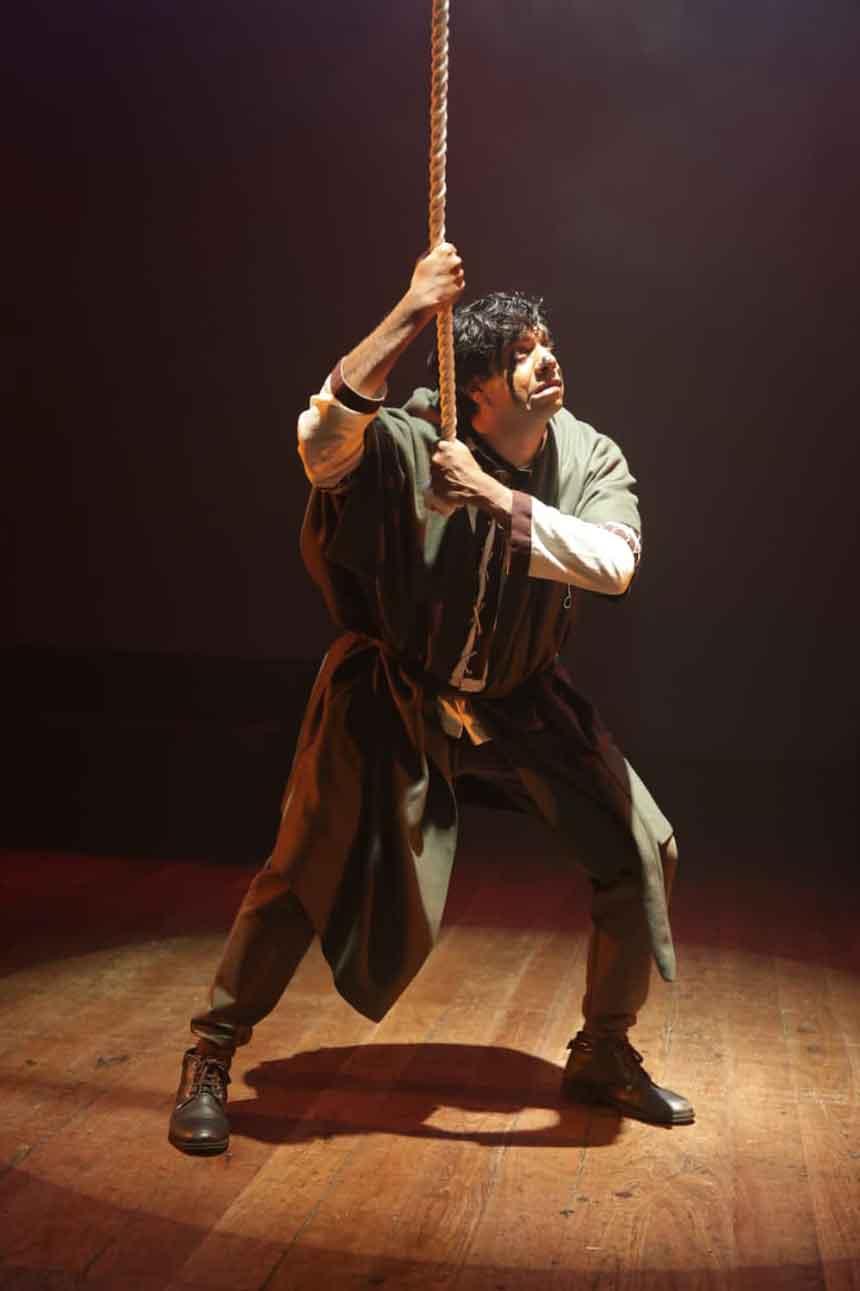
Surein de S Wijeyeratne (Director) - What are some of the visual elements’ audiences should look out for when they enter this world?
The first thing I hope audiences will notice is the cathedral itself. Notre Dame is not merely a backdrop; it is the heart of this story. We have tried to create a visual world in which its presence is felt throughout the production, from its architecture and shadows to the extraordinary bells that are so closely associated with Quasimodo. There is also a strong contrast between the grandeur and order of the cathedral and the energy and unpredictability of the streets of Paris. The Feast of Fools, for example, gives us a completely different visual and theatrical language of colour, movement, masks, celebration and a sense of controlled chaos. The audience should also watch what happens with the 70-member cast and choir. One of the exciting challenges of directing such a large company is not to use them simply to make the production look bigger. They become the people of Paris, the congregation, the crowd, the voice of the city and, at times, almost an extension of the cathedral itself. The movement of the ensemble, therefore, is part of the storytelling. And then there are the smaller details: the use of light and shadow, the gargoyles, the masks, the textures of a medieval city, and the way the architecture frames the characters. There are moments when the stage should feel enormous, and others when everything comes down to one person standing alone beneath the cathedral. Ultimately, I hope audiences will feel that they haven't simply come to watch a musical. For a few hours, they have stepped through the doors of Notre Dame and into the world of Quasimodo, Esmeralda and the people of Paris.
Jerome L. de Silva (Producer & Artisitic Director, The Workshop Players) - If you could give audiences one reason to step into the world of The Hunchback of Notre Dame with The Workshop Players, what would it be?
If you miss The Hunchback of Notre Dame by The Workshop Players for some reason or the other you have only yourself to blame for missing this absolute moving spectacle. When The Workshop Players bring this gothic masterpiece to life, they are not just putting on a play; they are constructing a living, breathing community right in front of you.
---------------------
The Hunchback of Notre Dame Is presented through special arrangement with Music Theatre International (MTI). All authorized performance materials are also supplied by MTI