The AI ’80s Trend Is Great Fun. But What Exactly Are We Giving Away?
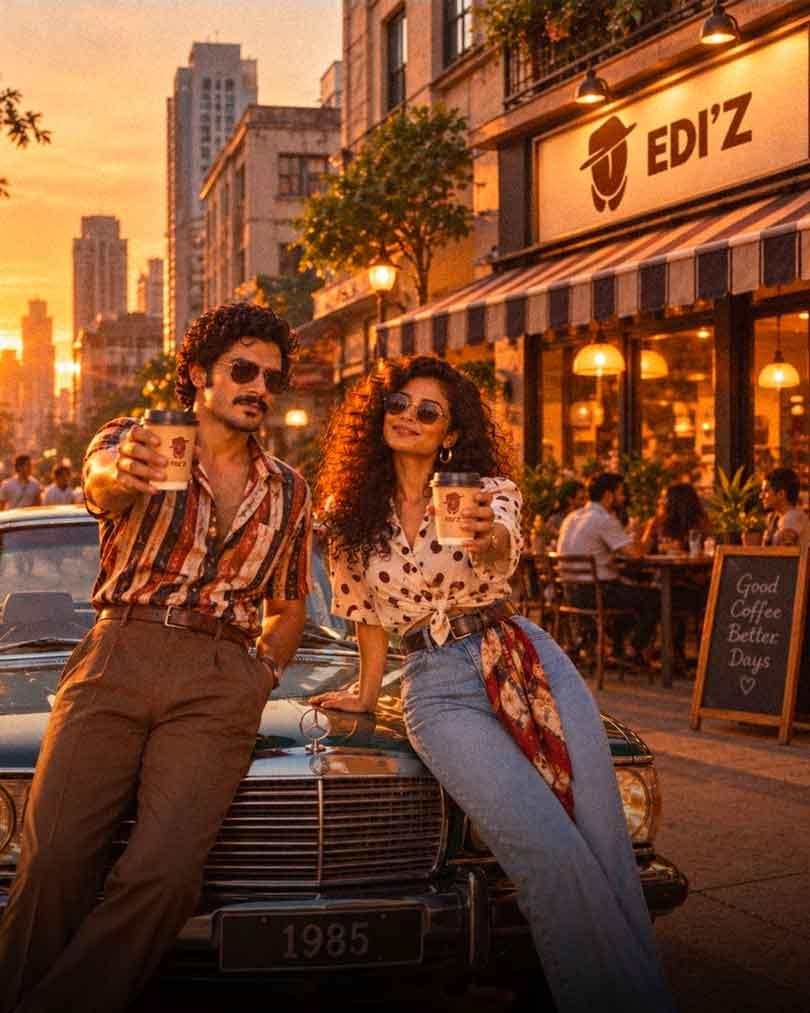
For a generation that documents almost every waking moment in pin-sharp digital photographs, we seem remarkably desperate to look as though we were photographed badly in 1985. Open social media and there we are: enormous hair, questionable knitwear, soft-focus faces, floral curtains, brown furniture and studio lighting with the glow of an ageing family album.
People who were not even alive in the 1980s are suddenly producing photographic evidence of having apparently spent their youth there. It is funny. It is clever. It is nostalgic. It is also slightly strange.
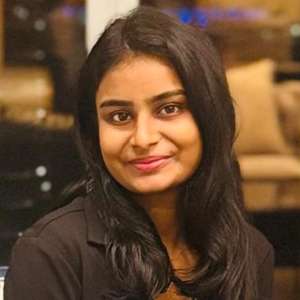
Artificial intelligence can now take an ordinary photograph and manufacture a past for us. Upload a modern image and ask to be transported forty years backwards. Seconds later, out comes something resembling a forgotten photograph discovered in a box beneath the stairs.
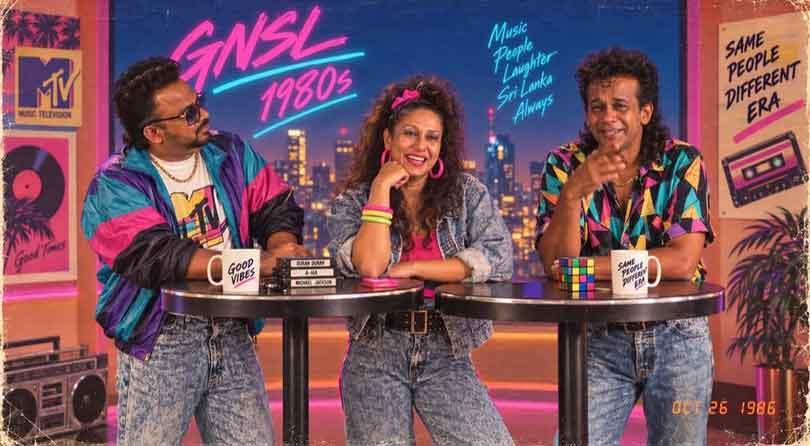
Except nothing in it happened.
There was no camera. There was no photographer. There was no 1985 living room. Nobody chose those clothes or styled that hair. The person in the photograph did not stand there forty years ago.
It is a memory without an event.
That makes the current AI trend fascinating. But another question is hiding behind the oversized hairstyles and nostalgic filters: what exactly are we handing over in exchange for the joke?
Because while everyone is looking at the photograph artificial intelligence gives back, perhaps we should pay more attention to the photograph we gave it.
A VERY CLEVER EXCHANGE
The genius of viral AI trends is that they rarely feel like requests for personal data.
Imagine receiving an unsolicited message from a technology company asking you to send several clear photographs of your face. Perhaps different angles. Maybe a family photograph too.
Who wants these pictures? Where will they be stored? What will happen to them? How long will they be retained? Who can access them? What rights am I granting by uploading them?
“See what you would have looked like in the 1980s.”
Suddenly, we cannot upload the photograph quickly enough.
You provide a photograph. Artificial intelligence provides a transformation. You receive the instant gratification of seeing an alternative version of yourself and then post the result online. Your friends see it. They want one. They upload their photographs. Their friends do the same.
Nobody needs to knock on millions of doors asking for photographs. Users recruit one another. Every result posted on social media becomes an advertisement for the next upload.
That does not mean there is a secret conspiracy behind every viral AI trend. It means we should become more sophisticated about recognising what participation looks like in the age of artificial intelligence.
Perhaps another is image farming.
IS IT A TREND, OR IS IT IMAGE FARMING?
Image farming is deliberately provocative language. It should not be interpreted as an accusation that every AI company is secretly harvesting every photograph for some hidden purpose. Different services have different terms, privacy policies, retention practices and settings, and those can change.
From the platform's point of view, the interaction may be more valuable than a few seconds of amusement. A user has engaged with an AI product, supplied content, experimented with image generation, received an output and perhaps promoted that output publicly.
Uploading an image does not automatically mean surrendering copyright ownership forever. Ownership, licensing, processing, retention and the use of content to improve services are different issues. The precise position depends upon the service and its terms.
How many know what licence they grant when they upload a photograph? How many understand the retention policy? How many know what deletion means in practice?
And therein lies the problem.
THE TREND ENDS. WHAT ABOUT THE IMAGE?
The trend disappears. But we should not simply assume that every piece of data associated with our participation vanishes at precisely the same moment.
Depending on the service involved, uploaded material may be subject to retention periods, backups, security requirements, account controls and other processing rules. A platform may also distinguish between deleting something from the user's view and the technical processes involved in removing data from its systems.
There is no responsible way to claim that every AI platform simply “owns your photographs forever”. That is too crude. The more intelligent concern is almost the opposite: most people do not know what happens.
We routinely agree to complicated terms governing valuable personal material without reading them because the reward is immediate and the possible consequences are distant.
Our face is not.
WHY DOES EVERYONE LOOK THE SAME?
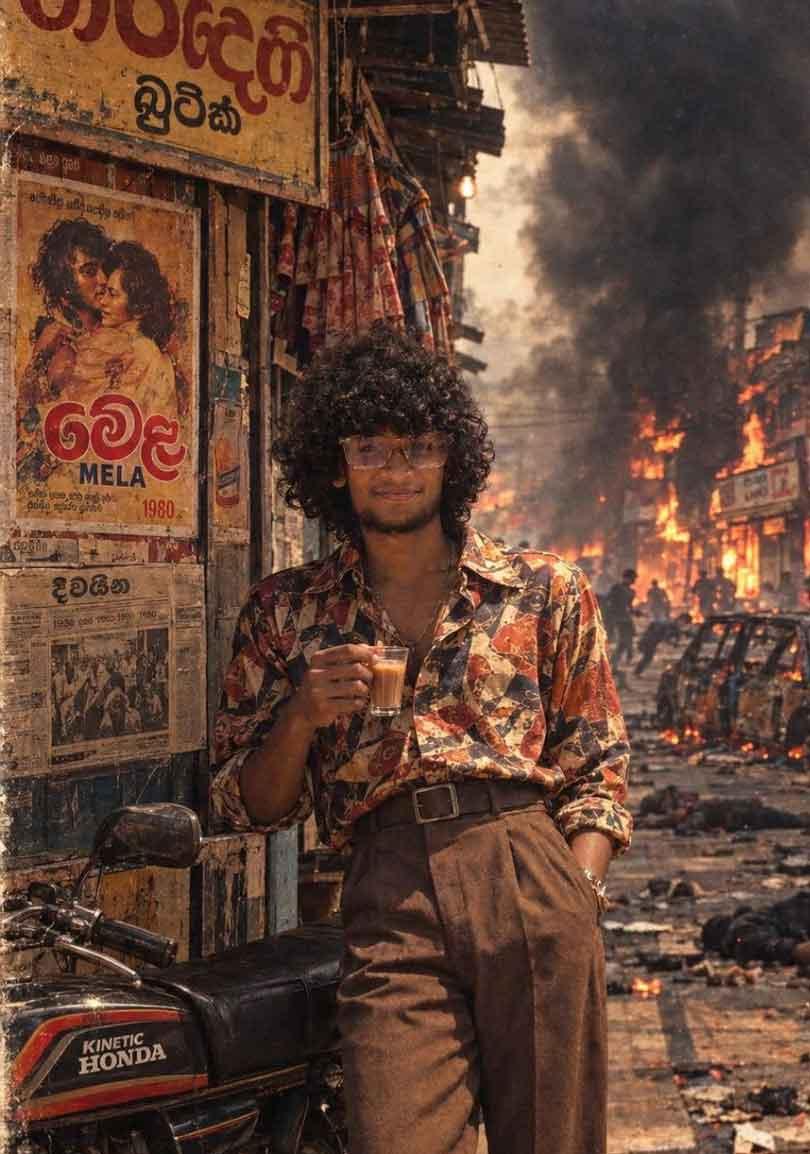
Scroll through enough AI portraits and the repetition becomes difficult to ignore. Different faces appear inside familiar images. The same flattering light. The same perfect skin. The same cinematic gaze. The same immaculate hair. The same manufactured grain.
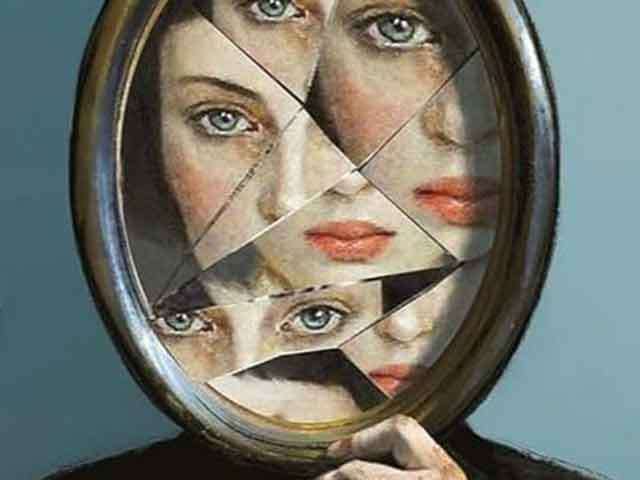
It is mass-produced individuality.
We are promised personalisation on an unprecedented scale, yet many outputs converge towards a recognisable aesthetic. Your photograph is unique because your face is in it. Everything else can feel generic.
The ’80s trend makes this particularly obvious because an entire decade becomes reduced to visual shorthand. Big hair means 1980s. Bold clothes mean 1980s. Brown interiors mean 1980s. Grain means old. Warm lighting means nostalgic.
The decade experienced by a family in Birmingham was not necessarily the decade experienced by a family in Mumbai, New York, Lagos or Colombo. Wealth mattered. Culture mattered. Geography mattered. Class, fashion and family circumstances mattered.
Instead of showing us the past, it can show us a generic contemporary fantasy of the past. And because that fantasy is attractive, polished and instantly recognisable, we accept it.
A FAKE PHOTOGRAPH VERSUS A REAL MEMORY
Perhaps it is slightly out of focus. Your father has his eyes closed. Your mother hates her hair. Someone has been cut in half at the edge of the frame. The wallpaper is appalling and nobody can remember whose house it was.
Yet the photograph possesses something artificial intelligence cannot generate.
It happened.
The photograph then survived. It was printed, placed in an envelope, pushed into an album, forgotten in a drawer and eventually rediscovered decades later.
Its imperfections are not an aesthetic choice. They are evidence of its journey.
An AI image can imitate faded colour, scratches, grain, blur and old-fashioned lighting. What it cannot manufacture is forty years.
Artificial intelligence can create the appearance of nostalgia without the experience from which nostalgia comes.
WHEN YOUR PHOTOGRAPH CONTAINS SOMEONE ELSE
Not every photograph belongs, in a meaningful sense, only to the person uploading it.
A family photograph may contain a partner, parents, siblings or children. A holiday photograph may contain friends. A wedding photograph can contain dozens of identifiable people.
One person may possess the photograph, but everybody visible in it has a stake in what happens to their likeness.
This becomes especially important with children. Adults can make their own decisions about whether an AI-generated portrait is worth submitting. Children cannot necessarily make an informed decision about how their images are processed, retained or used.
It should be, “Would everyone else in this picture mind?”
WE ARE TRAINING OURSELVES TO STOP ASKING
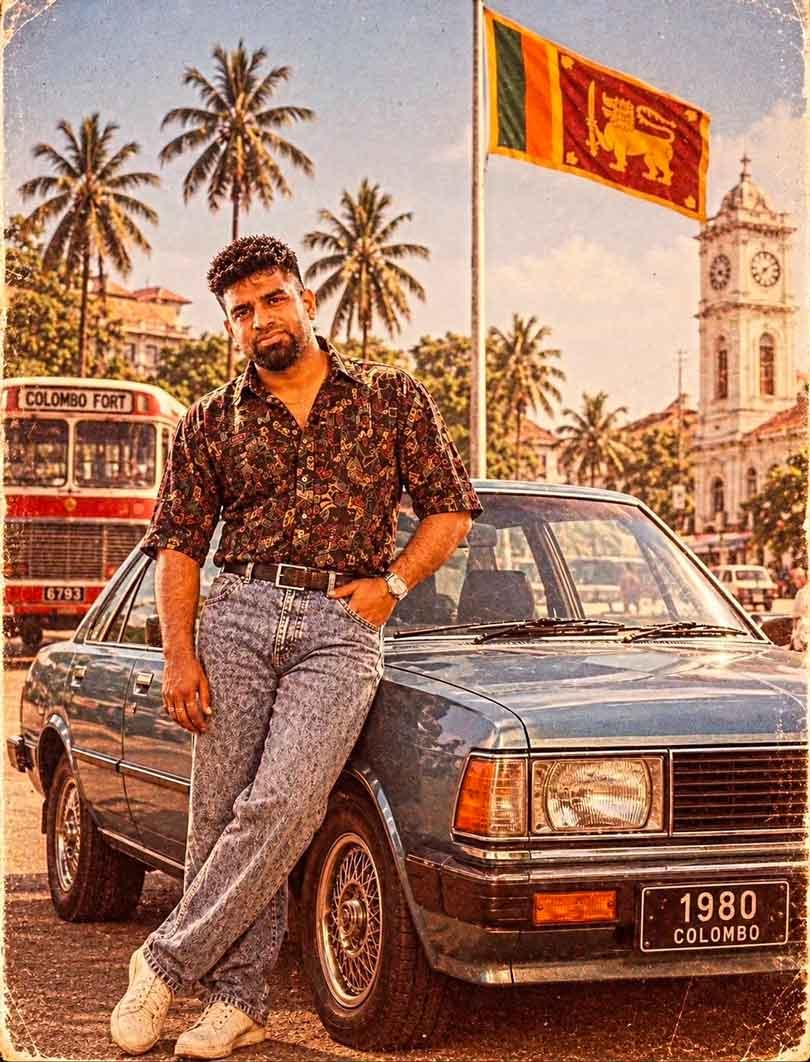
Every successful AI trend teaches us the same behaviour: upload first, enjoy the result, share it, ask questions later, if at all.
The more ordinary the process becomes, the less remarkable it feels to hand photographs, voices, documents and personal information to artificial intelligence systems in exchange for convenience or entertainment.
We simply become less curious.
There is nothing inherently sinister about asking artificial intelligence to imagine you in another decade. It can be creative, entertaining and surprisingly touching. For some people, seeing themselves recreated in the period when their parents were young may even create an unexpected sense of connection.
We can laugh at the photograph and still ask where the original went. We can admire the technology and still read the terms. We can participate without pretending there is no transaction taking place.
Most importantly, we can stop treating every viral invitation to upload personal material as though the word “trend” magically removes the need for questions.
THE PHOTOGRAPH WE SHOULD BE LOOKING AT
There is a final irony in all of this.
We spent decades improving photography. Cameras became sharper. Film disappeared from everyday use. Smartphones began producing images of astonishing quality. Artificial intelligence can now correct lighting, remove unwanted objects and enhance detail almost instantly.
Perhaps that tells us that the things we value most about old photographs were never technical perfection in the first place.
A genuine old photograph becomes precious because time has passed since it was taken. People have changed. Children have grown up. Parents have grown old. Homes have disappeared. Relationships have begun and ended. People pictured in them may no longer be here.
AI can copy the visual symptoms of that passage of time.
It cannot copy the time itself.
So, by all means enjoy the 1980s. Give yourself enormous hair. Put yourself in a questionable jumper. Send the result to your parents and ask whether you would really have survived the decade looking like that.
But before uploading another photograph, ask one additional question.
Not simply, “What will AI turn me into?”
Ask, “What am I giving it?”
Because the ’80s trend will disappear. The internet will become bored. Social media will find its next obsession and millions of carefully generated retro portraits will sink into forgotten feeds.
The images we supplied to create them are another matter, governed by terms and systems most users will never examine closely.
Perhaps this really is just a bit of fun. Perhaps “image farming” is too cynical a description.
Look how little persuading we required.