WHAT IF THE THINGS IN MY ROOM COULD SPEAK?
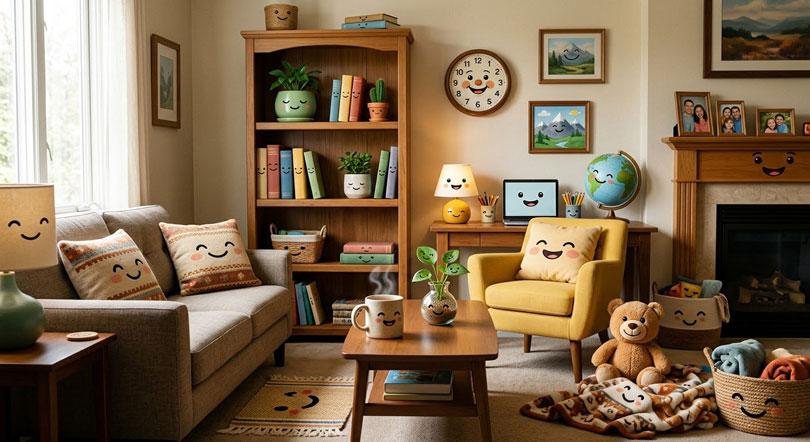
Have you ever looked around your room and wondered what your belongings would say if they could speak? Imagine waking up one morning to find your alarm clock complaining about being ignored, your wardrobe criticising your fashion choices, and your phone demanding compensation for the overtime it has been working. What seems like an ordinary bedroom could quickly become the most chaotic meeting room imaginable. If the things in my room could speak, I am certain they would have a lot to say. After all, they have witnessed my daily routines, embarrassing moments, dramatic decisions and promises that I have made to myself but conveniently forgotten. They have seen me at my best, at my worst, and at times when even I would prefer not to remember what happened. And honestly, I am not sure I would be ready for their honesty. The first item to speak would undoubtedly be my alarm clock. It has spent countless mornings attempting to wake me up, only to be silenced with a single, impatient tap. “Seven o’clock,” it would announce proudly. “Five more minutes,” I would reply, barely opening one eye. “YOU SAID THAT FIVE TIMES ALREADY!”
I imagine my alarm clock would eventually develop a serious attitude problem. It would probably remind me that it has been doing its job faithfully while I continue to treat its warnings as optional suggestions. It might even start ringing earlier out of revenge. The worst part is that it would have evidence to support every complaint. There would be no negotiating with an object that has witnessed every failed attempt at waking up early. Perhaps the solution would be to apologise to my alarm clock. However, knowing myself, I would probably ask it to forgive me after another five minutes of sleep. If the alarm clock were the villain, my bed would be the accomplice. It would defend me with absolute confidence. “She is not lazy,” my bed would argue. “She is tired. You have no idea how much she has been through.” Of course, my bed would conveniently ignore the fact that I sometimes climb into it intending to rest for ten minutes and emerge an hour later, having accomplished absolutely nothing.
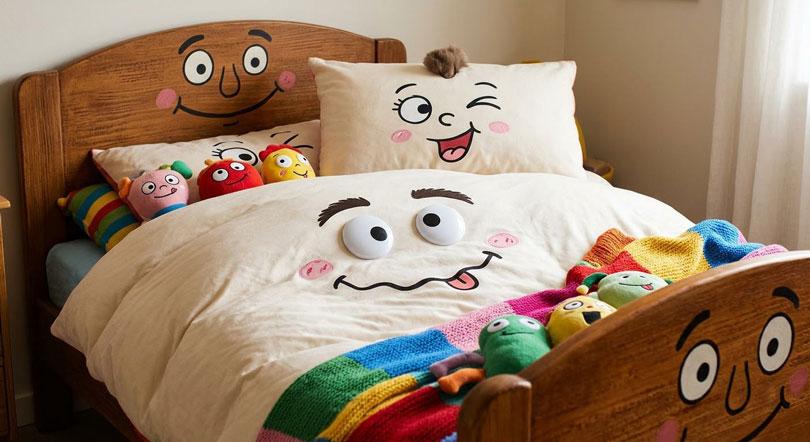
It would also reveal one of my greatest secrets: I have spent an impressive amount of time lying down while mentally planning an entirely new life. From becoming more organised to developing a healthier routine, I have created countless versions of myself without actually leaving the mattress. My bed would probably consider itself a motivational speaker. Unfortunately, its primary message would always be, “Stay a little longer.” And I would listen. Next would come my wardrobe, which has been silently judging me for years. “You have nothing to wear?” it would ask, its doors swinging open dramatically. “You have enough clothes to dress an entire neighbourhood!” I would immediately become defensive. “That is completely different. I have nothing suitable to wear.”
My wardrobe would laugh. Not politely, either. It would produce a list of clothes I had forgotten existed, outfits I had worn once, and items I had purchased because they looked wonderful in a shop but questionable under the lighting of my bedroom. It might even expose the truth about my shopping habits. Apparently, buying something new does not automatically create more outfit options. It simply introduces another decision to make on an already stressful morning. Then there is the chair in the corner of the room, which has become a temporary home for clothes that are neither clean enough for the wardrobe nor dirty enough for the laundry basket. My wardrobe would probably call it a disgrace.
The chair, however, would defend itself. “At least I am useful,” it would say. “Unlike you, I actually support her decisions.” At this point, my room would no longer feel like a peaceful personal space. It would resemble a live debate programme. If there were one object I would desperately want to silence, it would be my phone. It knows everything. It knows how many times I have checked my notifications, how long I have spent scrolling through social media, and how frequently I have opened an application without remembering why I opened it in the first place. “You picked me up to check the time,” it would announce. “Forty minutes later, you are watching a stranger organise a refrigerator.” I would insist that I was simply taking a break. My phone would respond by presenting my screen-time report to the entire room. That would be the end of my reputation.
It would also reveal every unfinished message, every screenshot I had forgotten about, and every online shopping item sitting in my cart while I repeatedly convinced myself that I did not need it. Worse still, my charger would join the conversation. “Do you know how many times I have saved your life?” it would ask. The phone would nod dramatically. “And yet she still waits until I reach one per cent before looking for it.” Their complaints would be difficult to argue with. Some relationships are built on trust, loyalty and mutual respect. Mine with my phone appears to be built entirely on a charging cable. My mirror would probably be the most dangerous member of the group. Unlike my friends, who might politely tell me that I look fine, my mirror would have no obligation to protect my feelings. It would comment on the outfit I had changed three times, the hairstyle I had attempted after watching a tutorial, and the confidence with which I had declared myself ready before noticing something completely different. “Are we going out,” it would ask, “or are we conducting another wardrobe experiment?” I would threaten to cover it with a towel. It would reply, “You can hide me, but you cannot hide the fact that you are already late.” The mirror would also remind me that confidence does not always arrive at the same time as a good hair day. Perhaps that would be its one useful contribution to the conversation.

After all, not every reflection needs to be perfect. Sometimes, the best thing we can do is laugh at ourselves, accept the situation and get on with the day. My notebook would have a different complaint. It would be deeply offended by my enthusiasm for planning. Its pages would be filled with ambitious to-do lists, inspiring quotations, personal goals and beautifully organised plans that had survived approximately one afternoon. “Remember when you said this week would be different?” it would ask. I would look away.
“Remember when you promised to write everything down and follow the schedule?” Silence. “And what about that brilliant idea you had last month?” At this point, even my pen would shake its head. The notebook would argue that it deserves better than being opened only when I feel motivated. It has been waiting patiently to become part of a productive routine, while I continue to confuse writing down a task with completing it. Perhaps the notebook would be right. Planning is useful, but a list cannot complete itself simply because it has been written in neat handwriting. I would promise to turn over a new leaf. The notebook would sigh. It has heard that one before. By now, the situation would be completely out of control. My alarm clock would be filing a complaint, my bed would be defending my sleeping habits, my wardrobe would be exposing my shopping decisions, and my phone would be presenting evidence of my screen time. Even the dustbin might have something to say about my habit of leaving small pieces of paper on the desk instead of throwing them away immediately.
The curtains would complain about never being opened early enough. My desk would demand that I remove the unnecessary items occupying its surface. My water bottle would question why it was purchased with such good intentions but often remained untouched. I would stand in the middle of the room, surrounded by objects that had apparently formed a committee to discuss my personal shortcomings. “Is there anything you people actually appreciate about me?” I would finally ask. For a moment, the room would fall silent. Then my bed would speak. “She comes back to us every day.” My notebook would add, “And she keeps trying, even when things do not go according to plan.” My mirror would soften its tone. “She may not always feel confident, but she still shows up.” Even my phone might admit that, despite all the scrolling, it has helped me stay connected to people who matter.
Suddenly, the conversation would feel less like an intervention and more like a reminder that ordinary objects can tell extraordinary stories about our lives. Perhaps the most surprising thing about a talking bedroom would not be the complaints. It would be the memories.

Every object would have witnessed a different part of my life. My desk would remember the nights I worked towards something important. My mirror would remember the days I needed a little encouragement. My bed would remember the moments I needed rest, and my notebook would hold the evidence of dreams I was still trying to achieve. Even the smallest objects might carry memories that I had forgotten.
A photograph could remind me of a person I missed. An old gift could bring back a conversation that once made me happy. A book I had abandoned halfway through might remind me of a time when I was excited to learn something new. If these objects could speak, they would not simply describe my habits. They would tell the story of who I have been, what I have experienced and how I have changed. Of course, I would still prefer it if my phone kept my screen-time report private. If the things in my room could speak, I suspect the first few hours would be entertaining, embarrassing and mildly terrifying. I would probably spend the rest of the day defending myself against objects that had been silently collecting evidence for years. But perhaps their voices would also teach me something useful. They might remind me to be more organised, take better care of my belongings, spend less time scrolling and follow through on the promises I make to myself. Until that day arrives, I suppose I should appreciate the silence. After all, my alarm clock has not yet resigned, my wardrobe has not officially filed a complaint, and my notebook is still willing to give me another chance. For now, that is enough. Although, tomorrow morning, if my alarm clock rings a little louder than usual, I might have to consider the possibility that it has finally had enough.