The Brain’s Energy Economy
An emerging scientific theory suggests that chronic stress may disrupt the way the brain produces, regulates and distributes energy, potentially revealing a biological connection between psychological distress, psychiatric disorders and systemic disease.
The human body possesses an extraordinary capacity to adapt to adversity. When confronted with danger, uncertainty or prolonged psychological pressure, it initiates a coordinated physiological response designed to preserve survival. Hormones are released, metabolic activity changes, cardiovascular function adjusts and the brain reorganizes its priorities to accommodate immediate demands. Yet the biological mechanisms that allow humans to withstand stressful circumstances may also contribute to disease when repeatedly activated. Chronic stress has long been associated with depression, anxiety, cardiovascular disorders, metabolic dysfunction and inflammatory conditions, but the precise mechanisms connecting these seemingly distinct illnesses remain incompletely understood. A developing field of research in mitochondrial psychobiology is now examining whether the answer may lie in one of biology's most fundamental requirements: energy.
At Columbia University's Mitochondrial Psychobiology Group, researchers have been investigating how psychological experiences interact with cellular metabolism and physiological regulation. Among the emerging theoretical approaches is the allostatic triage model of psychopathology, commonly referred to as the ATP Model. Discussed by researcher D. Parker Kelley and developed in work published in Neuroscience & Biobehavioral Reviews in 2025, the model proposes that chronic stress may alter the allocation of energetic resources within the brain, potentially contributing to psychiatric symptoms and physical disease. Rather than considering stress solely as an emotional experience or hormonal disturbance, the framework examines how prolonged metabolic demands may force the brain to priorities certain biological functions while compromising others. This proposition offers a possible explanation for why psychological distress can produce consequences extending far beyond conscious emotional experience.
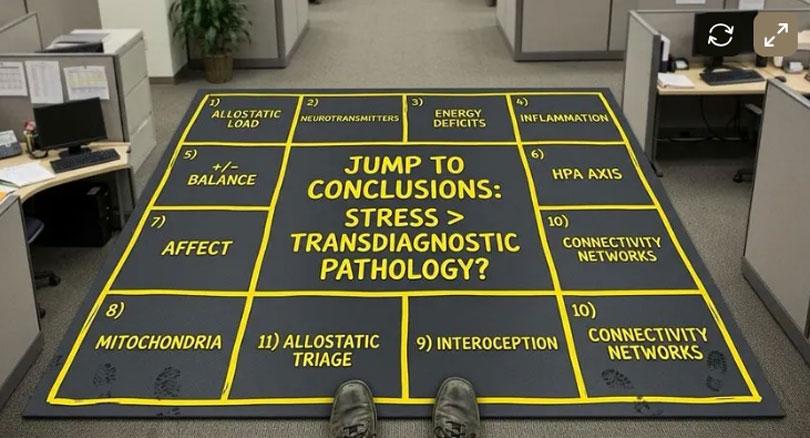
Understanding this hypothesis requires examining the energetic foundations of human physiology. Every biological process, from maintaining cellular membranes to transmitting electrical signals between neurons, requires a continuous supply of usable energy. Much of this energy is transferred through adenosine triphosphate, or ATP, a molecule essential to cellular function. Mitochondria generate substantial quantities of ATP through oxidative phosphorylation, a process involving electron transport and the establishment of an electrochemical gradient across the inner mitochondrial membrane. The brain is particularly dependent on continuous energy availability. Although it constitutes approximately two percent of adult body mass, it consumes roughly twenty percent of the body's resting energy expenditure. Maintaining neuronal electrical gradients, facilitating synaptic communication and supporting cellular maintenance collectively impose considerable metabolic demands. Consequently, changes in energy availability or metabolic efficiency may have important implications for neurological function.
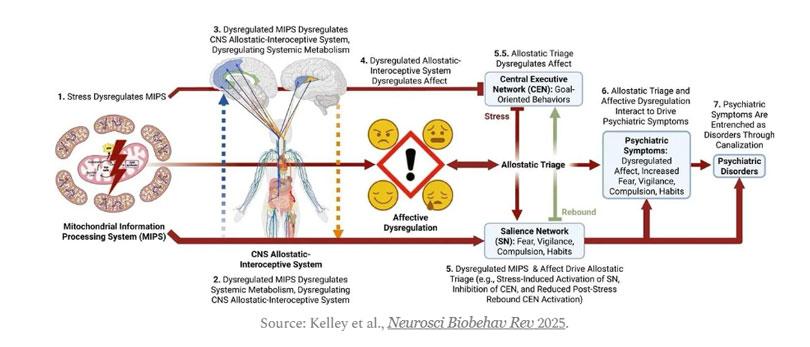
The ATP Model builds upon this fundamental biological constraint by proposing that stress becomes particularly consequential when metabolic demands exceed the body's adaptive capacity to meet them. Historically, physiologist Hans Selye characterized stress as the nonspecific response of the body to demands placed upon it. Contemporary researchers have expanded this understanding by distinguishing physiological challenges that promote adaptation from those that overwhelm regulatory mechanisms. Not every demanding experience is biologically harmful. Exercise, intellectual stimulation and other challenging activities can temporarily increase energy expenditure while supporting beneficial physiological adaptations. Within the ATP Model, however, stress is defined more specifically as an increase in metabolic demand that exceeds the adaptive increase in energy-transformation capacity generated by the stress response. The distinction is significant because it positions stress not simply as an external event, but as a relationship between energetic requirements and the organism's capacity to satisfy them.
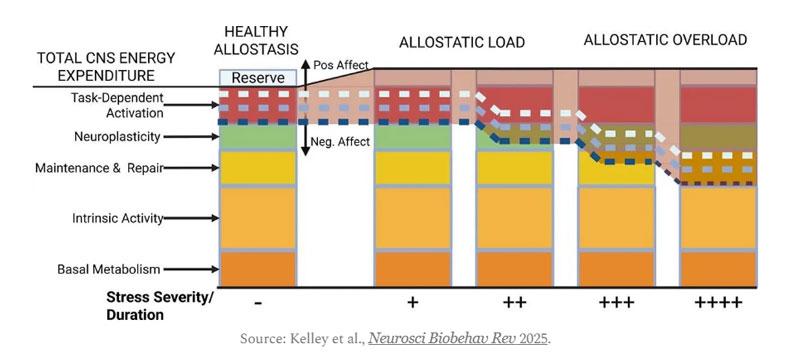
Central to this relationship is allostasis, the process through which the body anticipates changing circumstances and adjusts its physiological systems to maintain functional stability. When an individual perceives a threatening situation, the sympathetic nervous system and hypothalamic-pituitary-adrenal axis coordinate responses that increase the availability of metabolic resources. Adrenaline facilitates rapid physiological adjustments, while glucocorticoids such as cortisol influence glucose metabolism, immune regulation and numerous other processes. These responses are essential for managing immediate challenges. However, sustained activation may contribute to allostatic load, the cumulative physiological burden associated with repeated or prolonged adaptation. Research discussed within the energetic model of allostatic load suggests that chronic glucocorticoid exposure can promote hypermetabolic conditions, increasing energy expenditure as the organism attempts to accommodate persistent demands. Such changes may reduce metabolic efficiency and increase vulnerability when additional stressors arise.
Under these circumstances, the brain may face competing physiological requirements that cannot all be accommodated equally. The ATP Model describes the resulting redistribution of resources as allostatic triage. In principle, energy may be directed towards processes supporting immediate responses to environmental demands, while relatively fewer resources remain available for functions associated with cellular repair, neural maintenance and neuroplasticity. This does not imply that the brain possesses a literal reservoir from which energy is mechanically transferred between independent compartments. Rather, the framework proposes that changes in metabolic regulation and neural activity may alter the relative energetic support available to different functional systems. The central hypothesis is that prolonged exposure to energetically demanding circumstances could produce persistent changes in the organization of brain function, with consequences for cognition, emotional regulation and behavior.
Mitochondria occupy an important position within this proposed relationship. Although traditionally described as cellular powerhouses, mitochondria participate in considerably more than ATP synthesis. They contribute to calcium regulation, redox signaling, metabolic communication and processes involved in cellular survival. Their function is responsive to hormonal and environmental conditions, making them plausible mediators between psychological experiences and physiological changes. Stress-related neuroendocrine activity may influence mitochondrial processes, while alterations in cellular metabolism may affect the conditions under which neurons and other cells operate. Mitochondrial psychobiology investigates these reciprocal interactions, exploring how psychological experiences become associated with measurable biological changes. Nevertheless, mitochondrial dysfunction cannot presently be considered a universal explanation for psychiatric disorders. Depression, anxiety and related conditions involve multiple interacting genetic, developmental, environmental and neurobiological mechanisms. The energetic framework is therefore best understood as a potential contribution to this complexity rather than a replacement for established explanations.
An especially intriguing component of the ATP Model concerns the relationship between bodily energy regulation and emotional experience. The framework draws upon neuroscientist Lisa Feldman Barrett's work on allostasis, active inference and interoception. Interoception refers to the sensing and interpretation of physiological information originating within the body, including signals associated with cardiovascular activity, respiration and internal metabolic conditions. Within predictive models of brain function, the nervous system continually generates expectations about bodily requirements and environmental circumstances, comparing incoming information with those predictions and adjusting physiological responses accordingly. Emotional experience is closely associated with these processes because the brain's interpretation of bodily conditions contributes to affective states. Consequently, changes in metabolic regulation may influence not only physical functioning but also how individuals experience and respond to their surroundings.
The ATP Model extends this theoretical relationship by proposing that altered energetic states may influence the distribution of resources among functional brain networks. Particular attention is given to the salience network, which participates in identifying behaviorally relevant stimuli, and the central executive network, which supports working memory, planning, attention and cognitive control. Under prolonged stress, the model suggests that energetic regulation may increasingly favor neural processes associated with threat detection and vigilance, potentially reducing the relative resources available to networks responsible for executive functioning. Such a shift could help explain why individuals experiencing persistent stress sometimes report heightened alertness alongside difficulties concentrating, making decisions or regulating emotional responses. However, while altered network functioning has been observed across psychiatric conditions, the proposed causal relationship between competitive energy allocation and these changes remains to be experimentally established.
The consequences may extend beyond temporary disturbances in cognition. The brain continuously modifies its organization through neuroplasticity, the capacity of neural connections and circuits to change in response to experience. Repeated neural activation can strengthen particular patterns of communication, supporting learning and adaptation. Yet these mechanisms can also reinforce responses that become maladaptive under changing circumstances. If chronic stress repeatedly activates networks associated with vigilance, fear or compulsive behavior, the ATP Model proposes that neuroplastic changes may progressively consolidate these patterns. Meanwhile, reduced engagement of systems supporting cognitive flexibility and behavioral regulation could make it increasingly difficult to interrupt them. This process, sometimes described as canalization, offers a possible mechanism through which initially adaptive responses become persistent features of psychological distress. Importantly, neuroplasticity also supports recovery, and the existence of established neural patterns does not imply that they are irreversible.
The model may also contribute to understanding why psychiatric disorders frequently coexist with physical illnesses. Depression and anxiety have complex, bidirectional associations with cardiovascular disease, metabolic disorders and inflammatory conditions. These relationships involve numerous mechanisms, including immune signaling, endocrine activity, autonomic regulation, sleep disturbances and behavioral influences. An energetic interpretation suggests that persistent physiological demands may affect several interconnected systems simultaneously, potentially contributing to overlapping patterns of dysfunction. Because the brain and body continuously exchange metabolic, hormonal and immune signals, disturbances arising within one system can influence others. Nevertheless, these associations do not demonstrate that energy scarcity is the common cause of all stress-related diseases. Establishing such relationships requires evidence capable of distinguishing energetic mechanisms from other biological and environmental explanations.
Despite its conceptual appeal, the ATP Model remains a developing scientific hypothesis rather than an established clinical explanation. Its underlying principles draw upon substantial research in stress physiology, mitochondrial biology, affective neuroscience and neural network organization, but the proposed sequence linking chronic metabolic demand, energetic redistribution and specific psychiatric symptoms requires further validation. Longitudinal investigations, metabolic neuroimaging and carefully controlled experimental studies may help determine whether predicted changes in energy allocation occur and whether they contribute causally to disease. Researchers must also establish whether these mechanisms differ between individuals, psychiatric conditions and environmental circumstances. Ultimately, the importance of the model lies in its capacity to generate testable questions about the biological consequences of sustained adversity. If supported by future evidence, it could contribute to more integrated approaches to understanding mental and physical health.