Alice Weidel and Sarah Bossard: A Love Story Full of Contradictions.
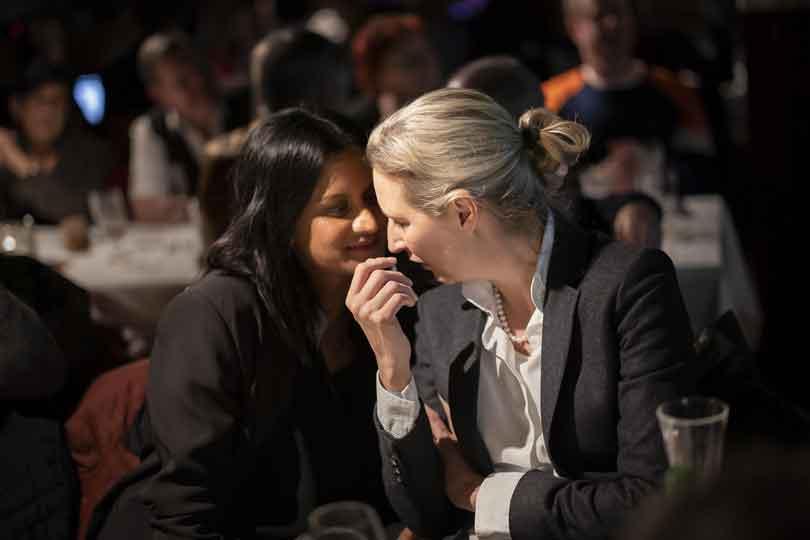
Alice and her Partner, Sarah
In politics, private lives are often treated as background noise. In the case of Alice Weidel and Sarah Bossard, however, the private and the political seem almost impossible to separate. Alice Weidel is one of the most recognisable figures in German politics. As a leading figure of the Alternative für Deutschland, she has built her career in a party known for its hard-line positions on immigration, national identity and the traditional family. Then there is the family she goes home to.
Weidel shares her life with Sarah Bossard, a Swiss filmmaker with Sri Lankan roots. Together they are raising two sons in Switzerland. It is a family that, at first glance, appears strikingly different from the image many people associate with Weidel's party. That contrast has fascinated the German and Swiss press for years. Yet Bossard is more interesting than the simple label of ‘Alice Weidel's wife’ suggests. Born in Sri Lanka, Bossard was adopted as a baby by a Swiss couple and grew up in Switzerland. She later entered the film industry, working behind the scenes on Swiss productions. Her professional world has often been culturally liberal and socially progressive. Some productions she worked on dealt with subjects such as migration, asylum and unconventional families. Her personal views have also sometimes appeared far removed from the politics surrounding her partner. Bossard has publicly spoken in favour of the rights of LGBTIQ families and transgender people. Her social media presence has at times shown a woman comfortable in cultural spaces that would hardly be regarded as natural AfD territory. And yet the relationship has endured.
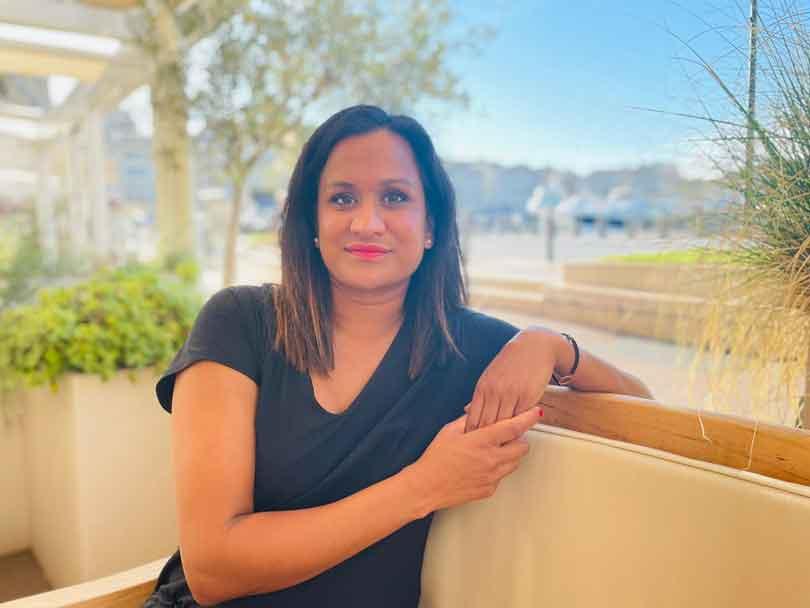
Sarah Bossard
The two women have reportedly been together since around 2009. Their partnership therefore predates Weidel's rise to national prominence and even her membership of the AfD. One story about the beginning of Weidel's political career gives Bossard an unexpectedly important role. According to Weidel's own account, she once spent a party complaining at length about the European Union. Bossard eventually became tired of listening. Instead of boring everyone with political tirades, she essentially told her partner, she should go and do something about it herself. Weidel did. In 2013 she joined the newly founded AfD. If Weidel's recollection is accurate, one of the most consequential political careers in modern Germany was nudged into existence by an argument between two partners at a party. The AfD of 2013, however, was not the AfD of today. It began primarily as a Eurosceptic movement. Over the following years immigration, Islam, national identity and cultural questions became increasingly central to the party.
As Weidel's political profile grew, Bossard's life inevitably changed with it. People who had known the couple in Switzerland began discovering that the woman they had encountered privately was becoming one of Germany's best-known right-wing politicians. Former acquaintances have described their surprise at the contrast between the couple's social environment and Weidel's politics. According to published reports, people from Bossard's film world also struggled with the association once they learned who her partner was. The couple eventually settled with their children in the area of Einsiedeln in Switzerland, famous for its Benedictine monastery and Alpine landscape. Weidel has described Switzerland as the place where she can recover from the pressures of political life in Berlin.
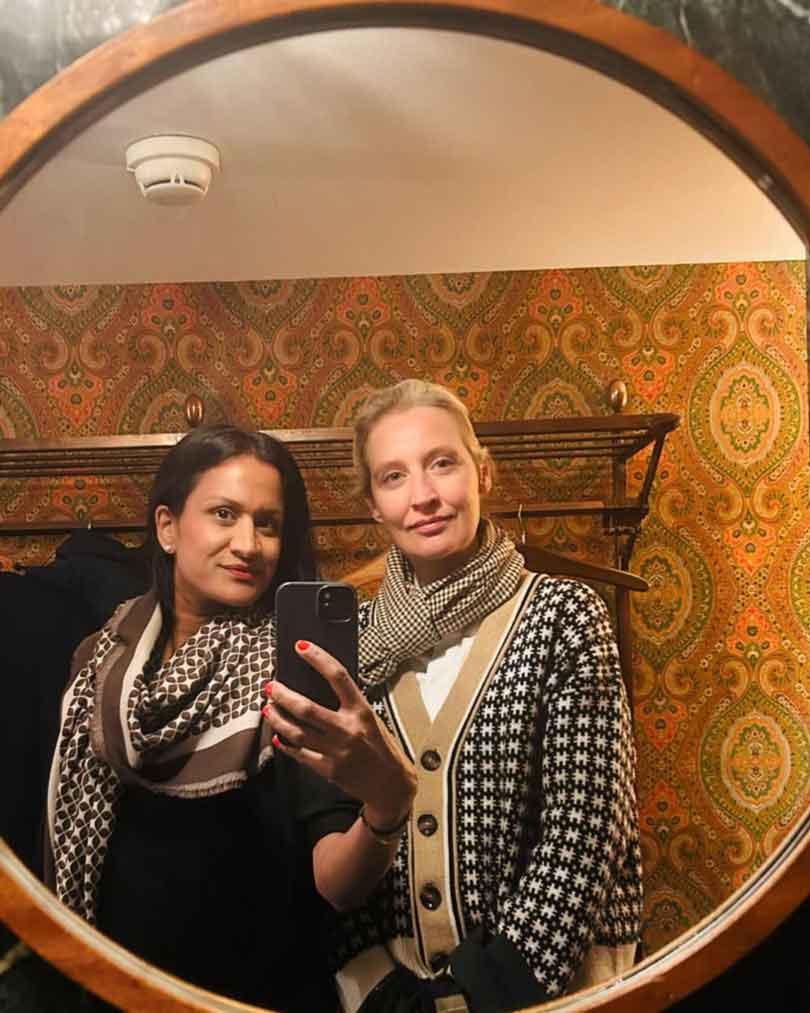
Alice Weidel and Sarah Bossard
There is something almost cinematic about the arrangement. In Berlin, Weidel stands beneath television lights and delivers speeches about Germany, borders, migration and national identity. Hundreds of kilometres away, family life continues in a Swiss town, with Bossard and their children. The contradictions have made the family irresistible to political commentators. Weidel is a woman leading a party whose grassroots have endorsed a definition of family centred on father, mother and children. She lives in a same sex partnership. Her partner was born outside Europe and adopted into Switzerland. Weidel has become one of Germany's most prominent advocates of dramatically stricter migration policies. Bossard has worked in a creative industry frequently associated with liberal politics. Weidel leads a party that regularly attacks what it considers progressive cultural elites. But describing their relationship as nothing more than hypocrisy would also be too simple. Human beings rarely organise their private lives according to party manifestos. Weidel herself has resisted the suggestion that her sexuality should dictate her politics. She has presented her family as precisely that, her family, rather than as a political statement. When confronted with the apparent contradiction, she has previously argued that family exists wherever there are children. Bossard is more elusive. She does not regularly explain her relationship to journalists, nor has she turned herself into a political celebrity. That silence leaves outsiders attempting to answer a question that perhaps only two people can genuinely answer.
WHAT DO ALICE WEIDEL AND SARAH BOSSARD TALK ABOUT AT HOME?
Do they argue about immigration? About the AfD? About LGBT rights? About the films Bossard has worked on? Or, after the cameras are gone and the political arguments have finished, do they talk about exactly the same things as millions of other couples: children, school, work, dinner and who forgot to buy something? Perhaps that is why their relationship remains so intriguing. Politics encourages us to place people into neat categories. Left and right. Liberal and conservative. Insider and outsider. Traditional and modern. Alice Weidel and Sarah Bossard refuse to fit comfortably into those boxes. One became one of the most powerful figures on Germany's nationalist right. The other is a Swiss filmmaker, born in Sri Lanka, who has inhabited cultural circles far removed from the stereotypical AfD world. They have nevertheless built a life together that has lasted through political transformation, public scrutiny and controversy. Whatever one thinks of Alice Weidel's politics, there is a curious lesson in that private story. Ideologies demand consistency. People rarely provide it.