THE NEW FACES OF FASHION: SOUTH ASIA TAKES THE RUNWAY
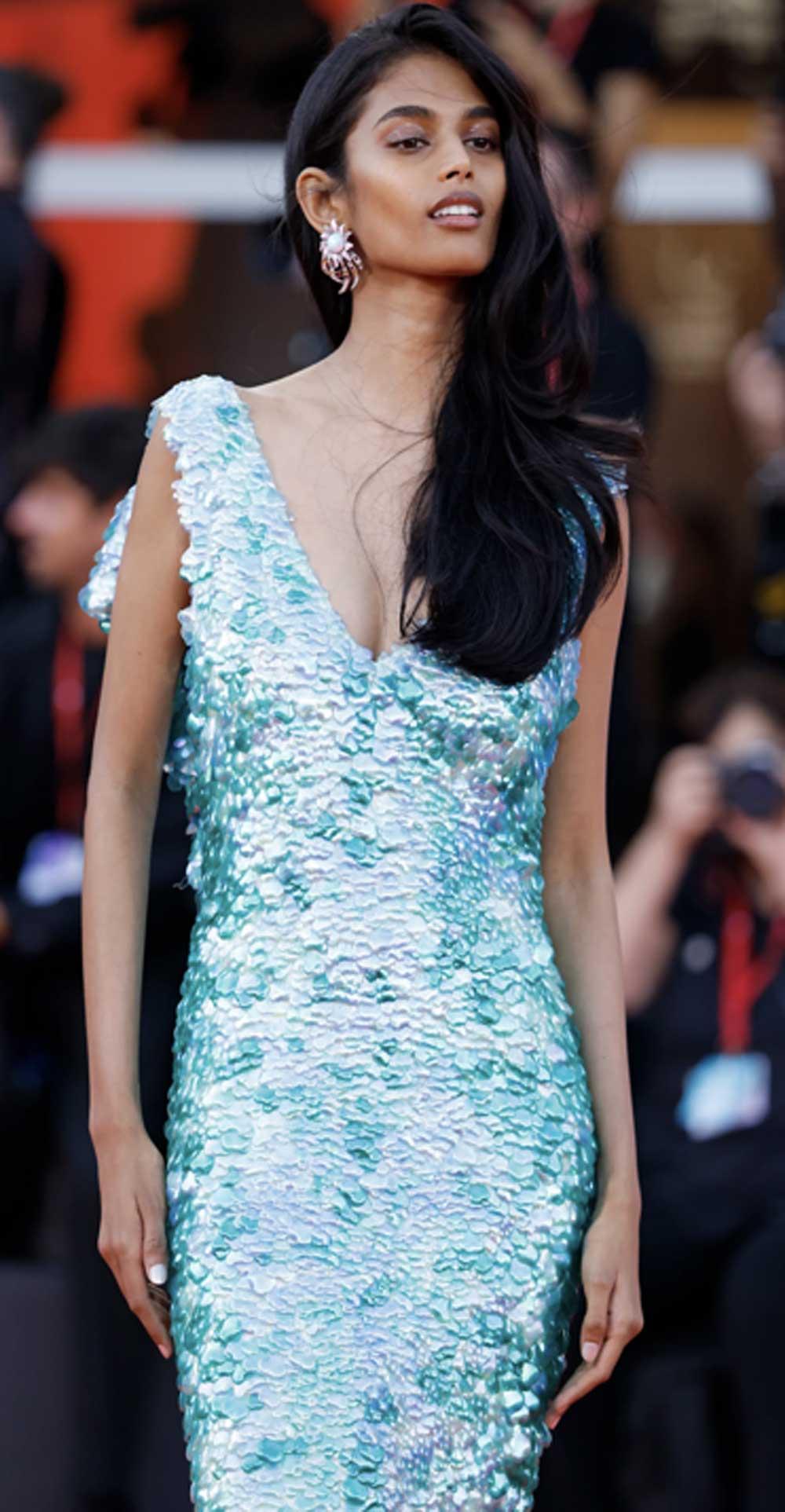
Bhavitha Mandava
For decades, the international fashion industry has been celebrated for its ability to discover beauty in unexpected places. Yet, despite its global influence, the faces dominating the world's most prestigious runways have not always reflected the diversity of the women who admire, consume and contribute to fashion. From Paris to Milan, London to New York, the industry has historically maintained a relatively narrow understanding of what a supermodel should look like. Today, however, that image is beginning to change, and South Asian women are increasingly finding themselves at the centre of the conversation.
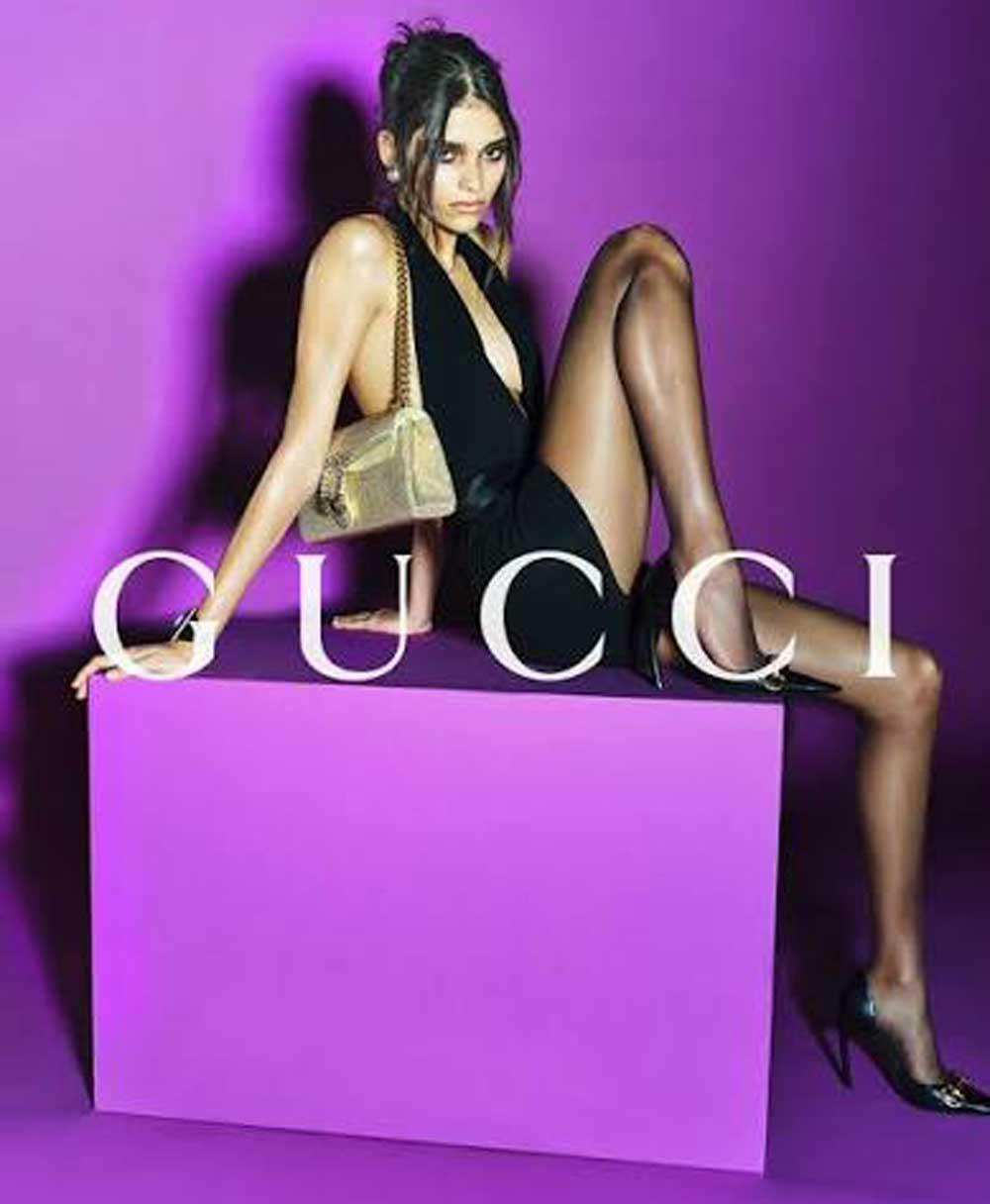
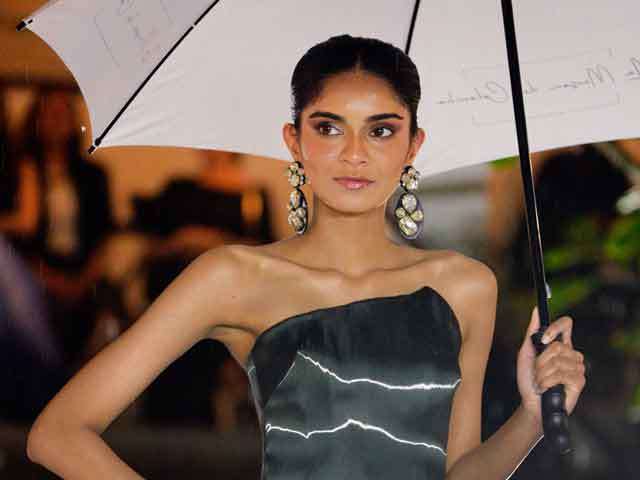
Over the past few weeks, some of fashion's most recognisable stages have welcomed a growing presence of South Asian models. From Chanel's Spring/Summer 2027 presentation in Paris to the extravagant spectacle of the Victoria's Secret Fashion Show in Los Angeles, models of Indian and Sri Lankan heritage have been making their mark. While these appearances represent significant individual achievements, collectively they suggest something much more interesting: a fashion industry gradually broadening its understanding of beauty, identity and representation.
Perhaps one of the most significant moments for Sri Lankan fashion came on 18 October, when 19-year-old Elina Gunawardana became the first Sri Lankan model to walk the Victoria's Secret runway. Appearing alongside internationally recognised names including Gigi Hadid, Bella Hadid and Adriana Lima, Elina brought Sri Lankan representation to a platform that has long been synonymous with the global supermodel phenomenon. What makes her achievement particularly exciting is that it is not an isolated success. Having already walked for fashion houses including Dior, Jacquemus, Coperni and McQueen, alongside appearing on the cover of Vogue Netherlands, Elina represents a generation of South Asian models whose careers are being built within the international fashion industry itself. For Sri Lanka, a country with an established garment manufacturing industry and a developing fashion identity of its own, seeing a young Sri Lankan woman command such a visible international stage feels especially meaningful.
The same Victoria's Secret runway also welcomed Indian model Ravleen Varghese, who made her debut with two appearances during the show. Originally from Kerala, Varghese's journey from studying fashion design in Delhi to walking one of the world's most recognisable runways is a reminder of how opportunities are expanding beyond traditional modelling capitals. British-Indian model Neelam Gill, meanwhile, returned for her third consecutive Victoria's Secret appearance, reinforcing the importance of South Asian visibility becoming a consistent presence rather than a one-off celebration.
There is something particularly powerful about seeing these women together within the same show. For so long, South Asian representation in Western fashion has been treated as an exception, with individual models frequently celebrated as groundbreaking simply for being present. Yet when several women of South Asian heritage appear on the same international runway, the narrative begins to shift. Their presence becomes less about novelty and more about belonging.
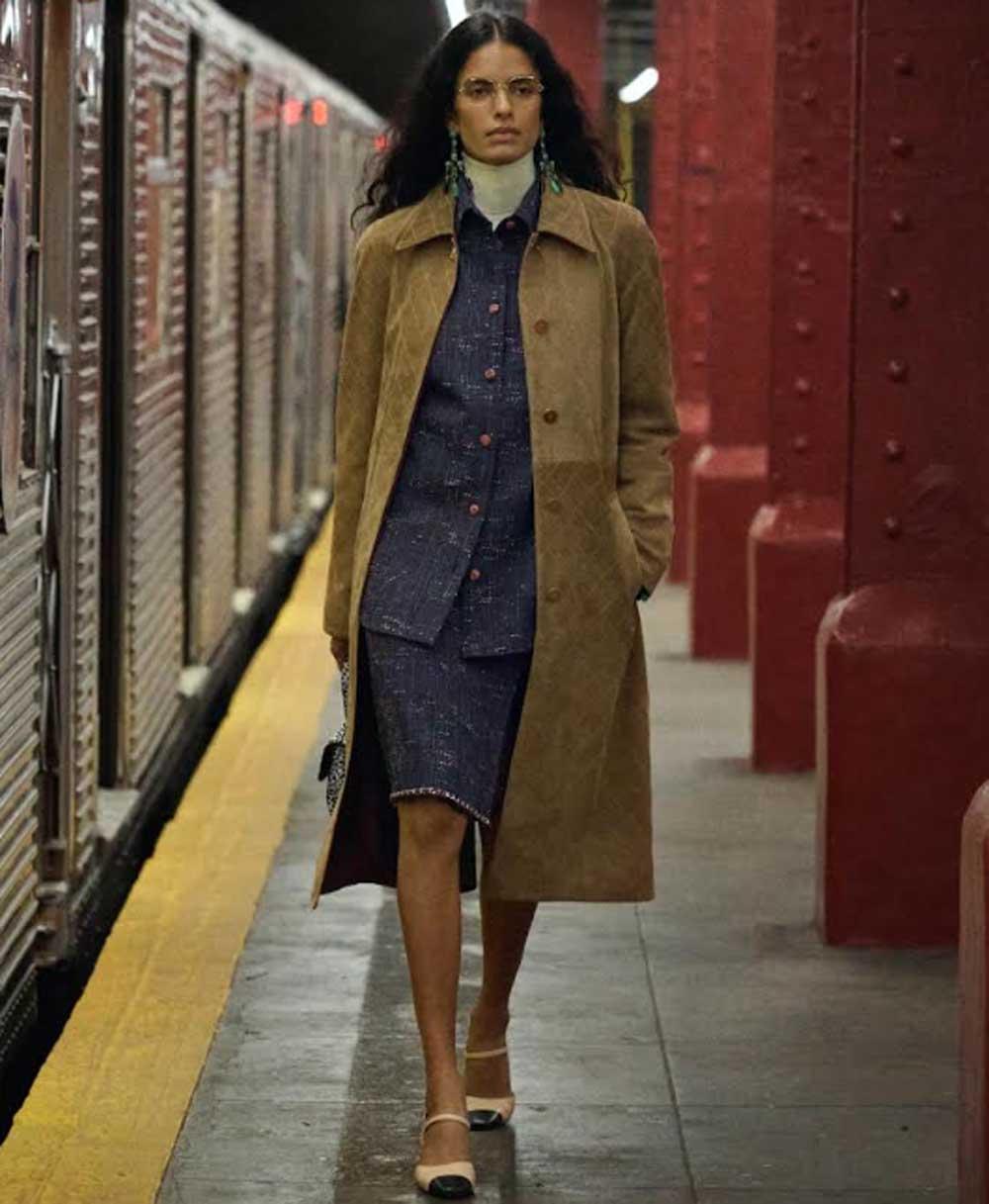
Earlier this month, a similar moment unfolded in Paris during Matthieu Blazy's Spring/Summer 2027 collection for Chanel. Among the models walking through the Grand Palais were Bhavitha Mandava, Lakshmi Menon and Mona Bhujel, each presenting a distinctly different interpretation of the house's evolving aesthetic. Mandava appeared in a sculptural black dress adorned with dramatic floral detailing, while Menon brought a softer elegance in pistachio green and pearl-white tones. Bhujel, meanwhile, wore a playful combination of sheer fabrics, checks and florals.
What struck me about these appearances was not simply the number of South Asian models on the runway, but the fact that they were not confined to a particular aesthetic or cultural narrative. They were there to represent Chanel's creative vision, just as any other model would be. Their heritage was part of who they were, but it did not dictate the clothes they wore or the roles they occupied within the collection.

This distinction is important. True representation does not necessarily require a model to wear clothing inspired by her cultural background. In fact, one of the clearest indications of progress is when a South Asian woman can walk for a French luxury house, wear an entirely contemporary European design and be recognised first and foremost for her talent and presence.
Of course, South Asian women are not newcomers to international fashion. Long before today's conversations surrounding inclusivity and representation, models such as Anjali Mendes, Ujjwala Raut and Lakshmi Menon were establishing careers within an industry that offered far fewer opportunities to women of colour. Mendes became a longstanding muse and house model for Pierre Cardin, while Raut walked for some of the world's most influential designers. Menon later became internationally recognised through her work with houses including Hermès, Givenchy and Chanel.
Their achievements are essential to understanding the current moment. The success of today's emerging models should not be mistaken for the industry's first discovery of South Asian beauty. Rather, it reflects the continuation of a journey that began decades ago, often through the determination of women who had to navigate an industry in which they were frequently the only person who looked like them.
Growing up as an Indian girl, I never quite saw myself reflected in the women walking the world's most famous runways. Like so many young girls, I grew up watching the Victoria's Secret Fashion Show, admiring the elaborate wings, glamorous outfits and larger-than-life personalities of the models. There was always that unspoken tradition of choosing your favourite Angel, the one you wanted to be, or perhaps more importantly, the one you thought looked most like you.
For me, that usually meant choosing a brunette with tanned skin. It was the closest resemblance I could find. I never really questioned it at the time, because that was simply what the fashion industry looked like. The women were undeniably beautiful, and I admired them just as much as anyone else, but there was always a slight distance between the beauty I was seeing on screen and the features I recognised in myself.
Looking back, I realise how accustomed we had become to searching for even the smallest similarities. A similar hair colour, a slightly warmer complexion, perhaps a feature that reminded us of ourselves. We were finding ways to identify with women who, for the most part, did not share our heritage. And while there is absolutely nothing wrong with admiring beauty that looks different from your own, there is something quite different about seeing someone who genuinely reflects a part of your identity.
Which is why this year's runways have felt particularly special to me.
Watching South Asian models walk for Victoria's Secret, Chanel and some of the world's most prestigious fashion houses, I have found myself experiencing something I rarely did growing up: recognition. For the first time, I can look at these women and see a little of myself in them. Not because we look identical, or because all South Asian women share the same features, but because there is a familiarity that goes beyond having dark hair or a similar complexion. There is a shared heritage, a cultural connection and a sense of belonging that I had not previously associated with these particular stages.
And I imagine that feeling is shared by countless young girls across India, Sri Lanka, Pakistan, Bangladesh and the wider South Asian diaspora. What I find particularly interesting is that these models are not being presented as representatives of an Indian-inspired collection or a celebration of South Asian culture. They are simply walking the runway, wearing the same collections and occupying the same spaces as some of the industry's most established faces. Their heritage is not the theme of the show; it is simply part of who they are.
To me, that is what makes this moment so significant. South Asian beauty is no longer being acknowledged only within the context of South Asian fashion. It is increasingly being recognised as part of the wider international fashion landscape.
But there is something different about seeing several South Asian faces appearing across major fashion shows within the same season. Rather than celebrating one woman as an exception, we are beginning to see a wider presence. And perhaps that is where real progress lies: not simply in opening the door for one individual, but in making space for many.
It also makes me think about the young girls watching these shows today. The ones who, just as I did, will choose their favourite model and imagine themselves in her place. Except now, some of those girls will not have to search for the closest resemblance. They might see someone who shares their heritage, their complexion or features they recognise from the women in their own families.
That may seem like a small thing in an industry concerned with clothes, beauty and glamour, but I think it matters enormously. Fashion has always shaped the way we see ourselves, whether we realise it or not. The images we grow up admiring become part of our understanding of beauty, confidence and what is possible.
I also hope this is more than a momentary shift in casting. The true measure of progress will be whether these women continue to appear in international campaigns, on magazine covers and in long-term relationships with the world's leading fashion houses. Representation should not be something that arrives for a season before disappearing when the industry moves on to its next fascination.
For now, however, I cannot help but feel excited by what we are seeing. Not because South Asian beauty has suddenly become worthy of recognition, but because the industry is beginning to reflect a much wider range of the women who have always loved and participated in fashion.
And perhaps what makes this moment most meaningful to me is how ordinary I hope it will one day become.
When I was younger, I chose the Victoria's Secret model who looked the closest to me. Today, a young Indian or Sri Lankan girl watching that same runway might not have to make that compromise at all.
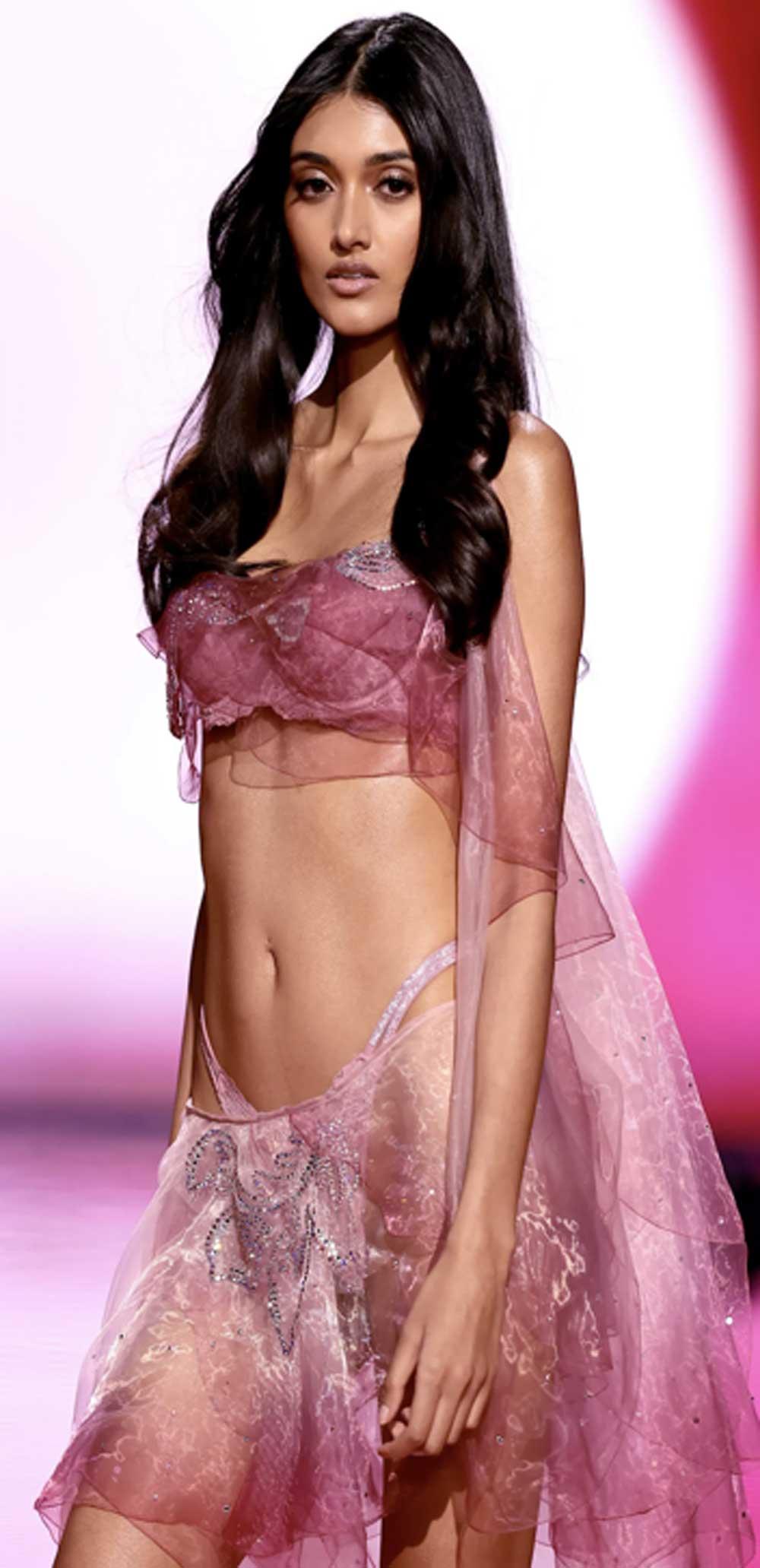
Neelam Gill