FASHION PROMISED CIRCULARITY. WHO WILL FINANCE IT?

There is something wonderfully reassuring about a circle. It suggests continuity, a way back, an ending that need not be final. In fashion, it has become the shape of a better future: yesterday’s shirt becoming tomorrow’s fabric, discarded clothing returning as valuable material. But somewhere between the collection box and the new garment stands a less photogenic reality. Somebody must pay for the journey. Behind every promise to close the loop are machines, buildings, workers, electricity bills and years of uncertainty.
A report published on October 6 by Accelerating Circularity brings that uncomfortable question into focus. Systemic Bankability of Textile-to-Textile Recycling examines thirteen recycling technology variants against twelve financial risk factors, within a developed-market, European-leaning context. Its concern is whether projects can attract commercial financing on terms they can sustain. That distinction matters. A process may demonstrate that old textiles can become new material while the business needed to perform that transformation remains difficult to fund.
For readers outside the language of finance, the problem is straightforward. Imagine being asked to lend money to build a recycling plant. You would want to know where its discarded textiles will come from, whether their quality will be consistent, what processing will cost and who will buy the output. You would also want some confidence that those buyers will remain customers after the excitement surrounding the opening ceremony has faded. Environmental usefulness alone cannot tell a lender how the loan will be repaid.
This is the gap the report describes: projects requiring more money than early funding can comfortably supply, while remaining insufficiently proven for conventional infrastructure lenders. Crucially, it identifies barriers surrounding the technology, including uncertain demand, cost differences and the risks of operating a first commercial plant. It also concludes that capital grants alone cannot resolve these systemic obstacles. Paying towards construction does not settle the question of what happens when the factory opens its doors.
Consider the difference between a brand saying it supports recycled fibres and agreeing to purchase them for several years. The first can appear in a sustainability presentation. The second enters the purchasing budget and shapes commercial decisions. It gives a producer something more dependable than encouragement. The report identifies firm, multiyear purchasing commitments as a particularly important action available to brands and retailers. Circularity begins to look different when its promises must survive a conversation with the buying department.
Here, fashion encounters a question of responsibility that cannot be answered through material innovation alone. How much uncertainty should the recycler carry? How much should belong to the brand that wants the recycled fibre? What role should government play when the environmental benefits extend beyond the immediate commercial return? Leaving these questions unanswered allows each participant to wait for another to move first. The resulting delay can then be described as a shortage of innovation, even when the unresolved issue is who will accept the risk.
There is also a question about the price against which recycled material is judged. A buyer comparing two fabrics can see their quoted costs. That comparison does not necessarily include the wider consequences of extracting resources, producing pollution or managing discarded clothing. If environmental ambition is expected to compete entirely within purchasing decisions organized around the lowest immediate price, its room to operate will remain narrow. We cannot reasonably demand a different outcome while treating the commercial rules that produced the existing one as untouchable.
Public support deserves consideration, but it deserves scrutiny too. Where public money helps establish recycling infrastructure, the public should be able to understand what it receives in return. Support could be tied to credible environmental performance, transparent reporting, decent employment and evidence that recovered material is actually finding a useful market. A subsidized facility should be assessed through its operation over time. Its announcement, however impressive, is only the beginning of the story.
Equally, brands should be asked to explain how their circularity commitments influence purchasing. What proportion of an ambition is supported by contracts? Are suppliers being offered enough predictability to invest? Who bears additional costs when specifications change? These are less glamorous questions than the launch of a capsule collection, but they reveal whether environmental commitments have entered the ordinary machinery of a business. A target becomes meaningful when someone has authority, resources and an obligation to help deliver it.
The conversation must also reach beyond the largest companies. Independent designers and smaller labels cannot individually finance industrial recycling systems or guarantee enormous purchasing volumes. Their participation will require arrangements suited to their scale: shared services, accessible material supplies and opportunities to combine demand. Otherwise, circularity risks developing as an infrastructure available chiefly to those already powerful enough to negotiate favourable terms. A transition that excludes smaller businesses would overlook precisely the diversity of practice that fashion claims to celebrate.
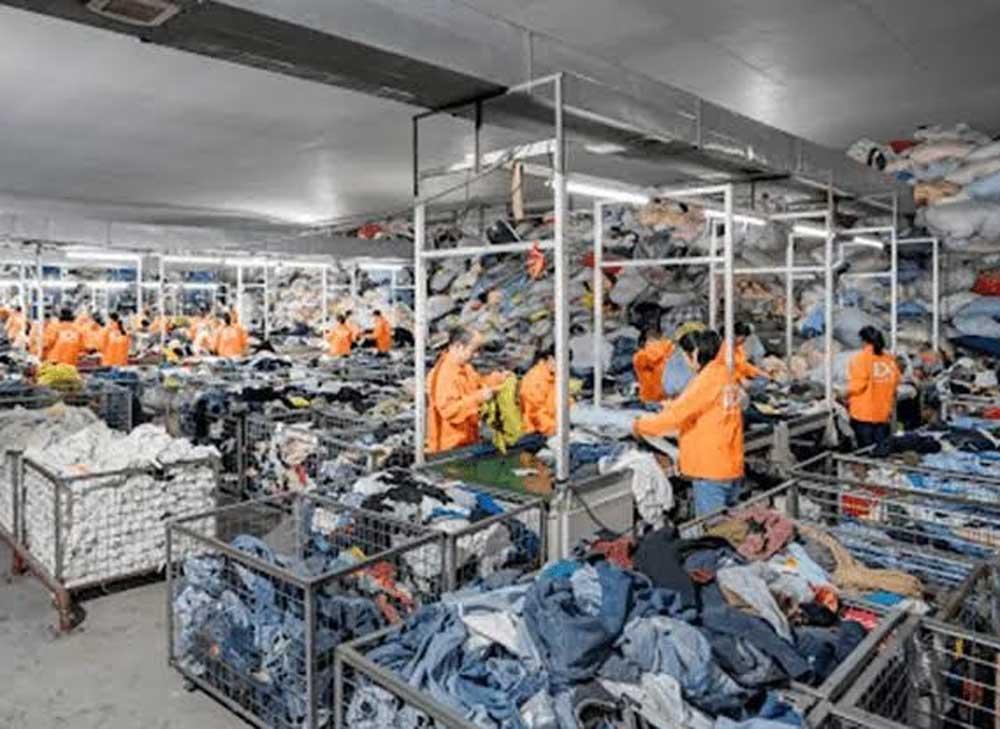
We should remember the people whose work makes circulation possible. Collecting, sorting, checking and preparing discarded textiles are activities requiring time, knowledge and care. It is easy to discuss a future recycling plant as a technological achievement while allowing the work feeding that plant to disappear into a background category called waste management. Any serious financing conversation should ask whether the system can support fair payment throughout its operation. A material cannot be responsibly recovered through a business model that depends on making labour invisible.
Yet there is a danger in allowing the financing debate to become the whole discussion. Recycling is one part of circularity. Keeping a garment in use, repairing it and avoiding unnecessary production also deserve attention. A successful recycling system would still need materials, energy and transport. Its existence would not make unlimited clothing production environmentally harmless. The promise that something might be recovered later must never become permission to manufacture it carelessly today.
That creates a necessary tension. Recycling businesses need dependable supplies to operate, while a responsible fashion system should seek to prevent avoidable waste. Investment should therefore be considered alongside longer product use, repair and better production decisions. We should question any model whose commercial success requires an endlessly expanding mountain of discarded clothing. The purpose of recovering value is surely to reduce our demand for fresh resources, rather than create another economic reason to keep the disposal cycle growing.
Perhaps the most useful change this debate offers is a better set of questions. When a company announces a circular collection, we can ask what supports the claim beyond that product. Which services and facilities are being paid for? Which purchasing commitments extend beyond a pilot? How are risks shared, and whose work is recognised? Such questions move the discussion towards decisions that can be examined. They give circularity substance beyond the reassuring shape printed on a label.
Fashion has become fluent in describing the future it wants. Financing asks how seriously it intends to pursue that future when doing so requires patience, shared responsibility and expenditure today. The circle will acquire meaning through contracts honoured, workers paid and facilities kept operating long after the launch photographs have been filed away. Until then, the most revealing question may be the least fashionable one: when the bill for circularity arrives, who has actually agreed to pay?