THE WORLD IS RUNNING OUT OF CLEAN WATER. AND FASHION IS DRINKING MORE THAN ITS SHARE.
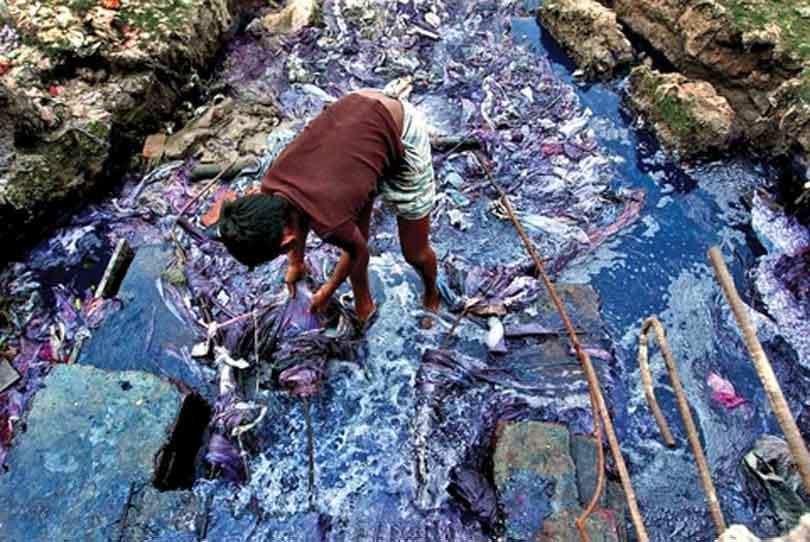
Some time ago, I read a haunting observation: if you want to know fashion’ s next trending
colour, you do not need access to expensive trend-forecasting software. Just look at the rivers
running through the textile-producing regions of the Global South. Their waters, stained by the
dyes of the season being manufactured, may reveal what will soon appear in shop windows
thousands of miles away. We talk about fashion’s carbon footprint. We talk about textile waste, landfills and overconsumption. But beneath the colours, prints and perfectly washed denim lies another environmental crisis that receives far less attention: water. The clothes hanging quietly in our wardrobes have a water story, and increasingly, it is a story the fashion industry can no longer afford to ignore.
There are few things on Earth more ordinary than turning on a tap. We wash our faces, make tea, shower, cook and fill a glass when we are thirsty. Water feels permanent because, for many of us, it has always been there. Yet clean, accessible freshwater is not infinite. Rivers are under
pressure, groundwater reserves are being depleted, droughts are intensifying in many regions,
and pollution is making existing water sources unusable. Climate change is worsening the
problem, but so are our systems of production and consumption. Hidden inside that story is an
industry we rarely associate with thirst: fashion. When we look at a dress, we see fabric, colour, silhouette, craftsmanship and price. What we do not see is water. Yet water exists almost everywhere in the life of a garment. It is used to grow natural fibres such as cotton, and in washing, bleaching, dyeing, printing and finishing textiles. Then, once the garment enters our wardrobes, we continue using water every time we wash it.

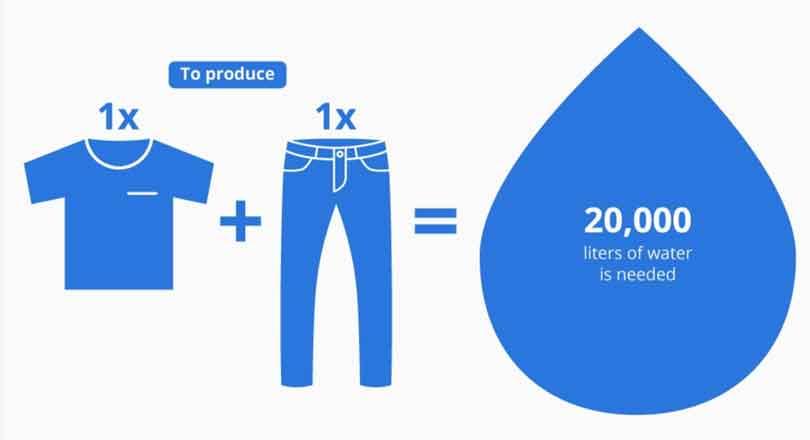
Fashion does not simply consume water. It can also leave that water polluted. Cotton illustrates the problem particularly well. The fibre itself is not inherently the villain; where and how it is cultivated matters enormously. In water-stressed regions, heavily irrigated cotton can place extraordinary pressure on rivers and groundwater. One widely cited estimate suggests that producing a single cotton T-shirt can require around 2,700 litres of water, although the real footprint varies significantly according to climate, rainfall, irrigation and farming practices. The important point is that something appearing cheap and lightweight on a shop rail can carry a considerable invisible water footprint. Cotton cultivation can create another problem too. Conventional agriculture may rely on pesticides and fertilisers. When poorly managed, these chemicals can travel through agricultural runoff into streams, rivers and groundwater. Fashion's water footprint therefore begins before fabric exists. It can begin in the field, where decisions about irrigation, fertilisers, pesticides and soil management determine what happens to the surrounding watershed. Perhaps one of the most haunting warnings comes from the Aral Sea.
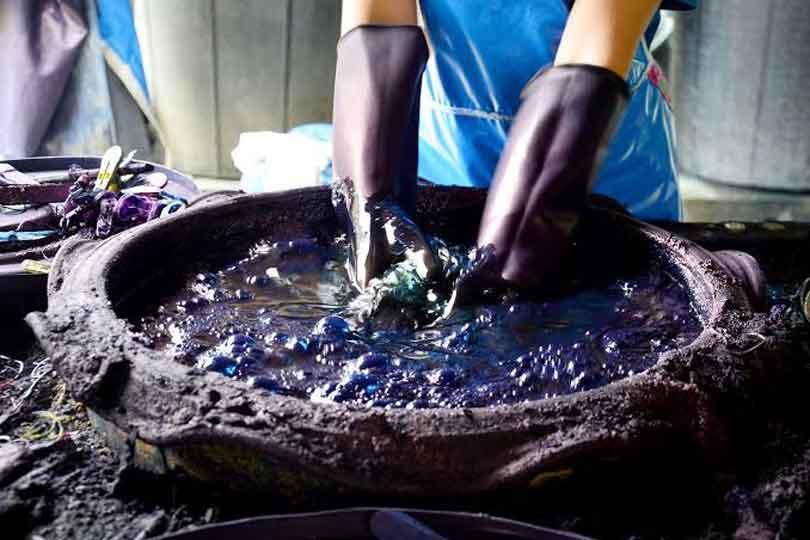
Once one of the world's largest inland bodies of water, it was devastated after rivers feeding it were diverted during the Soviet era for irrigation, particularly for cotton agriculture. Over decades the sea dramatically shrank, fisheries collapsed and exposed lakebed contributed to contaminated dust. Fashion did not single-handedly destroy the Aral Sea; the disaster involved agricultural policy, political decisions and enormous irrigation projects. But its history remains a powerful warning about what happens when fibre production is pursued without respecting ecological limits. And then comes colour. The blue of our jeans, the black of a dress, the green of a shirt and the perfectly faded finish of denim do not simply appear on fabric. Textile dyeing and finishing can involve dyes, salts and numerous processing chemicals alongside substantial quantities of water.
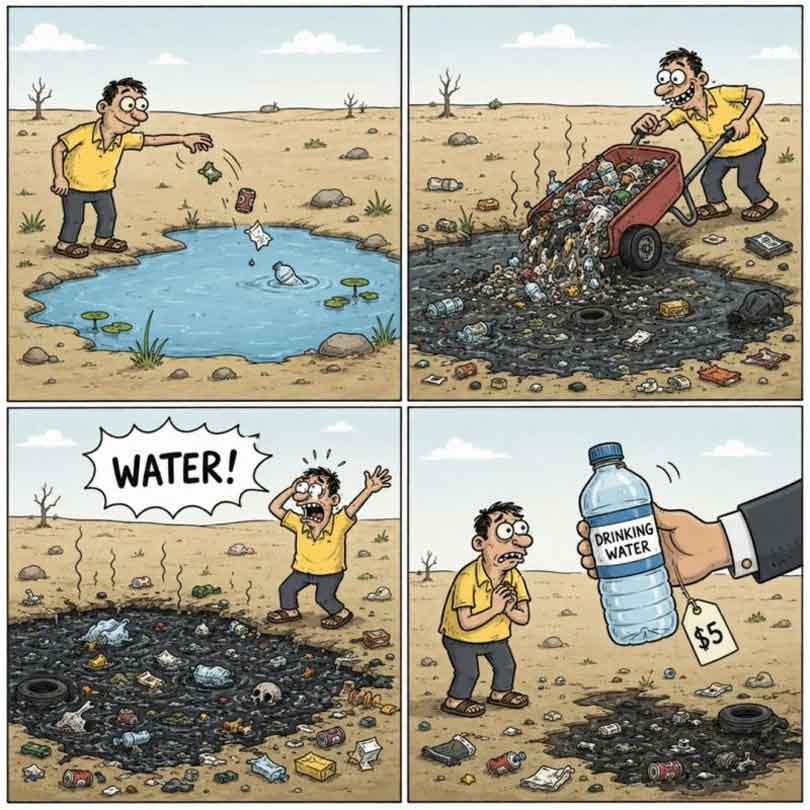
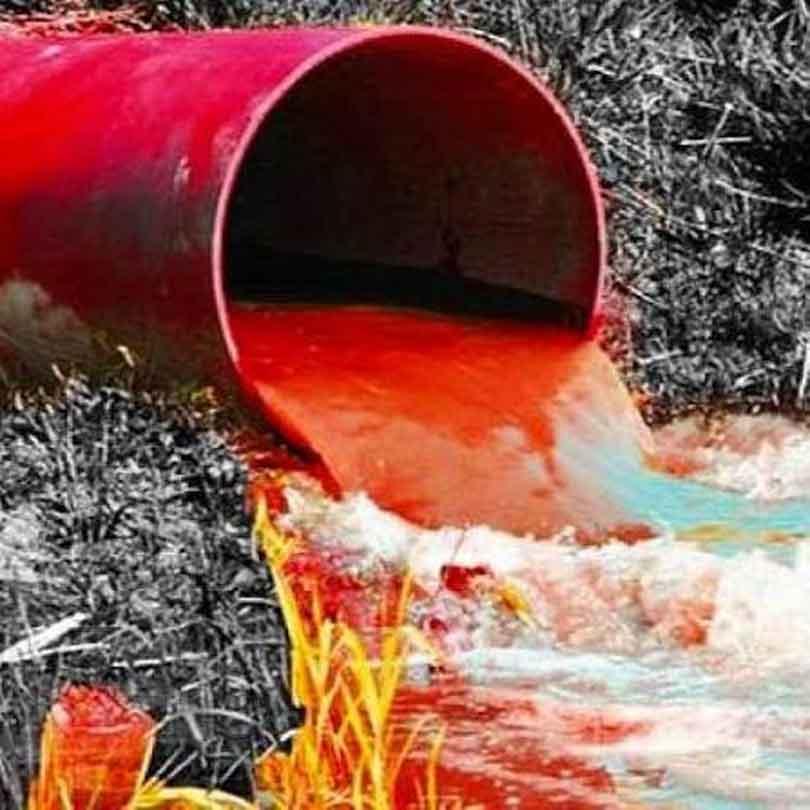
Some processes may involve or release hazardous substances, including certain heavy metals, depending on the chemistry and controls involved. Where chemical management and wastewater treatment are inadequate, these pollutants can travel beyond factory walls and into rivers and freshwater systems. The scale is extraordinary. The European Parliament cites an estimate that textile production is responsible for around 20% of global clean-water pollution, primarily because of dyeing. It is a startling figure because colour is one of the things we celebrate most about fashion. The brilliant red dress, deep indigo denim or perfectly printed silk may carry a pollution story invisible in the finished garment. The issue is particularly severe where wastewater infrastructure or enforcement is inadequate. Textile manufacturing is concentrated across major production regions in Asia and elsewhere, and communities downstream from industrial areas can bear the consequences when effluent is discharged without sufficient treatment. Contaminated water can damage aquatic ecosystems and threaten water used by surrounding communities and agriculture. This distinction matters. We often discuss water consumption as though water simply disappears. But using water and contaminating water are different environmental problems. A river may physically contain water while being too polluted to safely support drinking, farming or healthy ecosystems.
Water scarcity and water pollution therefore become intertwined. Once a freshwater source is severely contaminated, the amount of usable water effectively becomes smaller. Then there is a form of pollution happening much closer to home. Every time synthetic garments made from materials such as polyester, nylon and acrylic are washed, they can shed tiny plastic fibres. The European Parliament reports that a single laundry load of polyester clothing can release around 700,000 microplastic fibres. Wastewater treatment captures many fibres, but not necessarily all of them, and inadequate wastewater systems increase the likelihood of their reaching aquatic environments. The European Environment Agency estimates that between 200,000 and 500,000 tonnes of microplastics from textiles enter the global marine environment annually. This means fashion's relationship with water does not end when we leave the shop. It continues
inside our washing machines. Fast fashion intensifies almost every part of this problem because its model depends on enormous volumes, rapid turnover and short garment lifespans. Even when individual garments become more efficient to manufacture, those improvements can be overwhelmed if companies simply produce more. A brand may announce that it has reduced water consumption per garment by 20%, but if it simultaneously doubles production, what has actually happened to its overall water footprint?
This is the uncomfortable mathematics of sustainability. We cannot talk seriously about fashion's environmental impact without talking about volume. Clothes are increasingly treated as temporary content rather than durable objects. We buy for holidays, photographs, parties, seasons and micro-trends. Something becomes aesthetically “old” long before it becomes physically unusable. Every garment discarded after a handful of wears represents resources consumed for an unnecessarily short life. Water grew its fibre. Water processed it. Water coloured it. Human hands made it. But the answer is not to stop loving clothes. Fashion is culture, identity, artistry, memory and joy. The question is whether we can continue loving fashion through a system requiring the planet to endlessly produce more of it. There are better possibilities. Rain-fed and regenerative agriculture can reduce pressure in appropriate fibre systems. Better irrigation can improve cotton production. Responsible chemical management and effective wastewater treatment can prevent pollutants from entering waterways.
New dyeing technologies can reduce water demand. Designers can work with existing textiles,
deadstock and lower-impact processes. Brands can manufacture fewer, better garments and
design them to remain desirable beyond a single season. Regulation is beginning to move too. Europe is developing a broader framework intended to make textiles more durable, repairable and circular, while measures are also targeting waste, microplastics and the destruction of unsold clothing. But regulation alone cannot compensate for endless growth in production. Sustainability cannot simply become a cleaner way of manufacturing disposable fashion. Consumers have power, although responsibility should never be dumped entirely onto the person standing in front of a clothing rack. We can buy less frequently wear garments longer, repair what we own and wash clothing only when necessary. But governments must enforce
water-quality standards. Manufacturers must treat wastewater. Brands must understand what
happens throughout their supply chains. And fashion businesses must stop presenting efficiency improvements as environmental victories while ignoring the sheer volume of clothing being produced. Because eventually, the water question forces fashion to confront something much larger than fashion.
A €10 T-shirt feels cheap when we believe its cost is €10. That price does not tell us whether
groundwater was depleted, pesticides entered a river, polluted wastewater left a dye house or
microscopic plastic fibres will eventually travel from our washing machine towards the ocean.
Cheap fashion is often only cheap because someone, somewhere else, is paying a cost we cannot see. We have spent decades looking at clothing and asking: How much does it cost? Perhaps the question we should be asking is: What did it cost? Because clean water is not simply another raw material available to fashion. It is the basis of life. And no dress, T-shirt, pair of jeans or passing trend should ever be worth more than that.