The Hidden Politics of Getting Dressed.
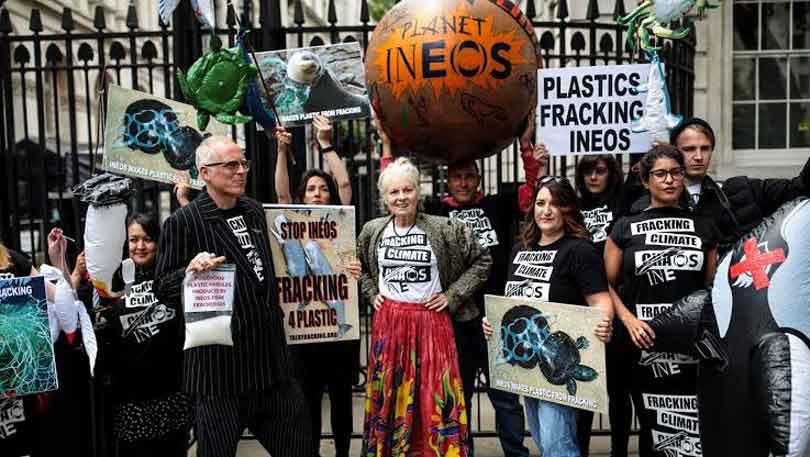
There is a sentence people often say when conversations about fashion become serious: “I don’t really care about fashion.” Sometimes it is said almost proudly, as though not caring about clothes places someone outside a superficial system of trends, labels and appearances. “I just wear whatever is comfortable.” “I don’t think about what I put on.” “Fashion isn’t important to me.” Yet whether we participate consciously or not, clothing remains one of the first languages we speak. Before we introduce ourselves, before anyone knows our education, politics, profession, personality or values, they see us. And, fairly or unfairly, they begin reading us. We are told not to judge a book by its cover precisely because human beings have always done exactly that.
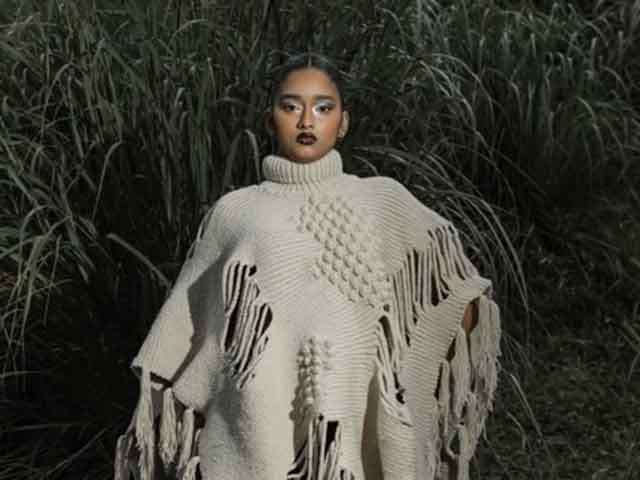
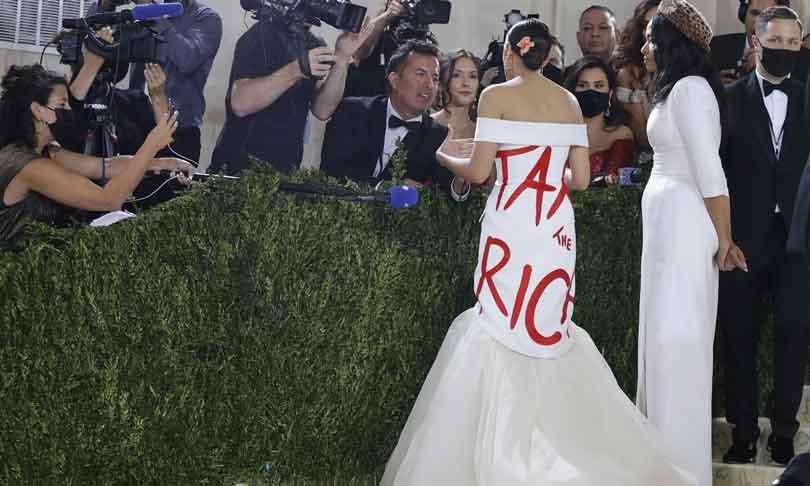
Clothing communicates long before words arrive. A uniform can establish authority before its wearer says a sentence. A tailored suit can suggest professionalism, wealth or conformity. A school uniform communicates belonging. A religious garment may communicate faith or community. A band T-shirt can announce cultural allegiance. A luxury handbag can signal status. A torn pair of jeans can mean poverty in one context and expensive fashion in another. Even the person who deliberately rejects trends is making a sartorial statement. The refusal to participate in fashion can itself become a fashion identity. We may not care about fashion, but fashion exists within a society that cares enormously about what bodies look like, how they are dressed and what those clothes are assumed to mean.
This is where fashion stops being merely about clothes and becomes political. Politics is not confined to parliaments, elections and political parties. Politics is also about power: who has it, who does not, who makes the rules, whose labour is valued, whose appearance is considered respectable, whose culture is celebrated and whose is dismissed. Clothing has always existed inside those structures. Throughout history, rulers have regulated what certain classes could wear. Dress has separated aristocrats from workers, colonisers from the colonised, men from women, insiders from outsiders. Clothing has been used to impose obedience, but it has also been used to resist it.
Colonialism provides one of the clearest examples. European colonial expansion did not simply move armies, administrators and commodities around the world. It also exported ideas about civilisation, beauty, modesty, class and “proper” dress. Indigenous clothing practices were frequently viewed through a colonial hierarchy in which European appearance represented modernity and local dress represented backwardness. Western clothing became connected to education, government employment, social advancement and proximity to colonial power. The consequences did not simply disappear when colonial flags came down. Across many formerly colonised societies, the business suit remains a symbol of professional authority, while traditional clothing can still be treated as ceremonial, informal or somehow less appropriate for certain institutions. We should ask ourselves why.
Colonialism also transformed the material foundations of fashion. Cotton, dyes, silk, indigo and other textiles were entangled with imperial trade, plantation economies, forced labour and the extraction of resources from colonised lands. Britain’s textile industrialisation, for example, cannot be understood entirely separately from colonial India, which was simultaneously a source of raw materials, a market for British manufactured textiles and home to sophisticated textile traditions of its own. Fashion history is therefore not simply a charming chronology of changing hemlines and silhouettes. It is also a history of land, labour, trade, empire and wealth accumulation.
And perhaps the most uncomfortable part of this history is how familiar its architecture can still look today. The empire may have changed form, but the geography of extraction has not entirely disappeared. Much of the world’s clothing continues to be consumed in wealthier countries while production is concentrated in lower-income countries across Asia and elsewhere. The contemporary garment supply chain stretches across borders: cotton grown in one country, yarn spun in another, fabric woven or dyed somewhere else, garments stitched somewhere else again, before the finished product travels thousands of kilometres to a shop or doorstep. The glamorous fashion image presented to the consumer can be remarkably distant from the human beings who made the garment.
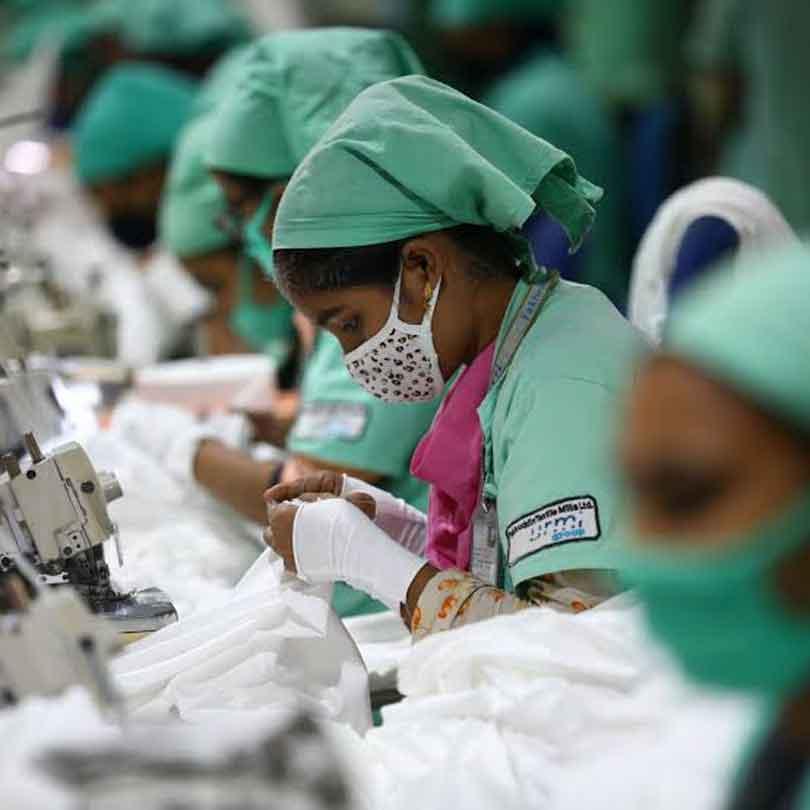
Those human beings are overwhelmingly women. Estimates commonly place women at around 80% of the global garment workforce, although the exact proportion varies across countries and parts of the supply chain. Many are women of colour in countries such as Bangladesh, Cambodia, Vietnam, India and Sri Lanka. This matters because fashion's labour system cannot be separated from gender, race, geography and economic inequality. The person buying a five-dollar T-shirt and the person sewing it occupy very different positions in the same economic system. One experiences fashion primarily as consumption and choice; the other may experience it as wages, production targets, overtime, workplace conditions and the difference between financial survival and insecurity.
There is a cruel contradiction here. Fashion sells women empowerment while depending heavily on the underpaid labour of women. Advertising tells women that clothing can make us independent, confident, desirable and powerful, while somewhere further down the supply chain another woman may have very little power over the conditions under which that clothing is produced. A slogan about feminism printed on a T-shirt means very little if the woman who stitched it cannot earn a dignified living. Empowerment cannot exist only at the point of sale. If fashion wants to speak the language of equality, it must examine the distribution of power throughout its entire supply chain.
Fashion is political at the consumer end too, because clothing has never been judged equally on everybody. The same garment can be interpreted differently depending on the race, gender, class, age or body of the person wearing it. What is called “minimalist” on one person may be called “plain” or “poor” on another.
What is praised as “bohemian” when adopted by a luxury fashion house may have been dismissed as ethnic or unsophisticated when worn by the culture from which it originated. Fashion has an extraordinary ability to remove an object from its cultural context, rename it, photograph it beautifully and suddenly assign it greater economic value.
That is why conversations about cultural appropriation are often more complicated than simply asking whether one culture is “allowed” to wear something belonging to another. The deeper question is power. Who receives recognition? Who earns the money? Who is described as innovative? Who becomes invisible? There is a difference between cultural exchange, which has enriched clothing for centuries, and extracting aesthetics from communities while excluding those communities from the prestige and profit their traditions generate. Appreciation requires curiosity about origin. Collaboration requires credit. Respect requires recognising the people behind the aesthetic.
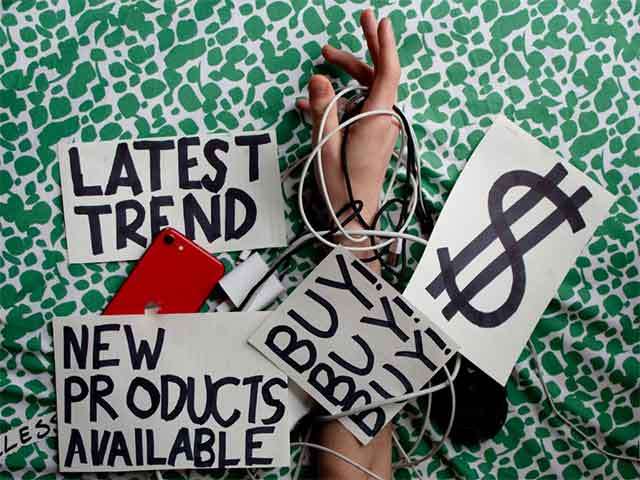
Our wardrobes are also political because they are environmental. Fashion requires land, water, energy, chemicals and raw materials. Clothes must be manufactured, packaged and transported, and eventually many are discarded. The climate crisis is not experienced equally either. Communities that have contributed least to global emissions are often among those most vulnerable to floods, heat, drought and other forms of climate disruption. Once again, questions of clothing become questions of power. Who enjoys the cheap product? Who absorbs the environmental cost? Who profits? Who cleans up the waste?
None of this means that getting dressed each morning should become an exhausting moral examination. Nor does it mean that individual consumers should carry responsibility for solving structural problems created by multinational corporations, trade systems and governments. We should be particularly careful about turning sustainability into another privilege, where people with limited incomes are shamed for buying affordable clothing while enormously powerful companies escape scrutiny. Fashion needs stronger regulation, responsible purchasing practices, living wages, transparency and accountability. Individual action matters, but systemic change matters enormously too.
Yet our individual relationship with clothing is not meaningless. Every time we choose to repair rather than replace, wear something for another year, buy second-hand, support a craftsperson, question an impossibly cheap price or learn who made our clothes, we interrupt the idea that clothing should be endlessly disposable. The most political wardrobe is not necessarily the most expensive or perfectly sustainable one. It may simply be the wardrobe of someone who has begun paying attention.
Perhaps that is ultimately why fashion deserves to be taken seriously. Clothes sit directly at the intersection of identity, economics, gender, race, labour, culture, climate and power. They can tell stories of colonisation and resistance, exploitation and craftsmanship, conformity and rebellion.
A garment can carry the hands of a woman we will never meet, fibres grown on land we will never see and traditions inherited through generations whose names will never appear on its label.
So, when someone says, “I don’t care about fashion,” perhaps the answer is not to convince them to care about trends. Trends are the least interesting part of this conversation. The real invitation is to look beyond the seams. Ask where our ideas of respectable dress came from. Ask why some clothes communicate power while others do not. Ask who grew the fibre, dyed the fabric and stitched the garment. Ask why the people who make fashion are so often invisible while the people who sell it become celebrated. Ask who profits, who pays and whose stories have been edited out.
Because whether we care about fashion or not, we get dressed every day. And in a world where clothing carries histories of empire, systems of labour, environmental consequences and powerful ideas about identity, getting dressed has never been entirely neutral. Fashion speaks before we do. The question is whether we are willing to listen to everything it is saying.