A Transparent Polluter Is Still a Polluter
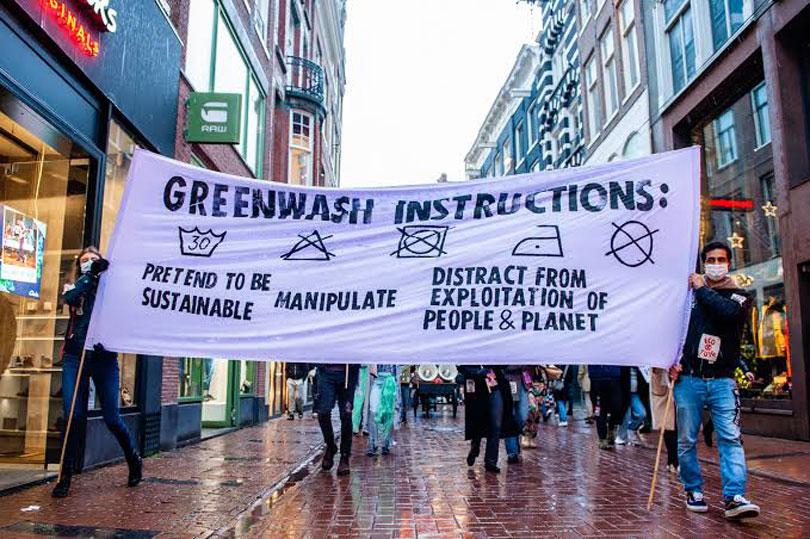
In recent years, the fashion industry has become remarkably good at talking about climate change. Sustainability reports have grown thicker, climate targets have become more ambitious, and brand websites now contain carefully designed pages explaining carbon footprints, preferred fibres, renewable energy and responsible sourcing. Shoppers are invited to scan QR codes, trace supply chains and explore the environmental credentials of individual garments. At first glance, it appears that fashion has finally entered an age of accountability. Yet behind this expanding architecture of disclosure lies an uncomfortable truth: knowing more about fashion’s environmental impact does not necessarily mean that the impact is being reduced.\
Fashion Revolution’s What Fuels Fashion? 2025 report examines the climate and energy disclosures of 200 of the world’s largest fashion brands and retailers. It looks at areas including accountability, decarbonization, energy procurement, climate financing and the transition away from fossil fuels across supply chains. But Fashion Revolution makes an important distinction: the report measures transparency, not sustainability. A high score means that a company publishes more information. It does not automatically mean that the company produces less, pollutes less or treats the people making its clothes more fairly.
This distinction is frequently lost in public conversations about responsible fashion. Transparency is often presented as though it were evidence of progress. A company publishes the location of its suppliers, so it appears ethical. It releases an emissions target, so it appears climate conscious. It announces that a percentage of its polyester is recycled, so it appears circular. But disclosure tells us what a company is willing or required to reveal. Climate action tells us what the company is actually changing. The two may overlap, but they are not the same.
A transparent polluter is still a polluter. A company can publish detailed emissions data while its total emissions continue to rise. It can disclose hundreds of factories while placing those factories under impossible price and delivery pressures. It can announce a distant net-zero target while continuing to increase the number of garments it manufactures every year. Transparency may allow us to see the damage more clearly, but visibility alone does not repair it.

This is particularly important because the climate impact of fashion is concentrated largely within its supply chain. The brightly lit retail store or beautifully designed website is only the final stage of a long, energy-intensive process. Fibre must be grown or extracted, spun into yarn, woven or knitted into fabric, dyed, finished, cut, sewn and transported. Many of these processes take place in countries where electricity grids remain heavily dependent on coal, gas or other fossil fuels. Yet suppliers are often expected to finance the transition to cleaner machinery and renewable energy while brands continue negotiating for lower prices.
A fashion company may publish a decarbonization strategy, but who is paying to implement it? If a brand demands solar-powered factories, more efficient dyeing systems and improved waste treatment without offering longer contracts, fairer prices or financial support, its climate ambition becomes another cost transferred down the supply chain. The brand receives the reputational benefit, while the manufacturer carries the financial risk. Real climate action therefore cannot be measured only by targets. It must also be measured by investment, purchasing practices and the distribution of responsibility.
There is another problem that sustainability reports often avoid: production volume. A brand may reduce the carbon impact of each garment while producing millions more garments. This allows it to announce an improvement in “emissions intensity”, the pollution associated with each product or unit of revenue, even when its total climate footprint remains unchanged or increases. It is the environmental equivalent of making each bucket slightly smaller while continuing to pour more buckets of water into an overflowing bath.

Global fibre production continues to grow, and the industry remains deeply reliant on virgin fossil-based synthetic fibres. Textile Exchange reported that recycled fibres represented only 7.6 per cent of global fibre production in 2024. Most of that recycled material was polyester made from plastic bottles, while fibres created from pre- and post-consumer textiles remained below one per cent of the global market. Fashion speaks confidently about circularity, yet less than one per cent of its fibres come from recycled textile waste. The language has moved much faster than the system.
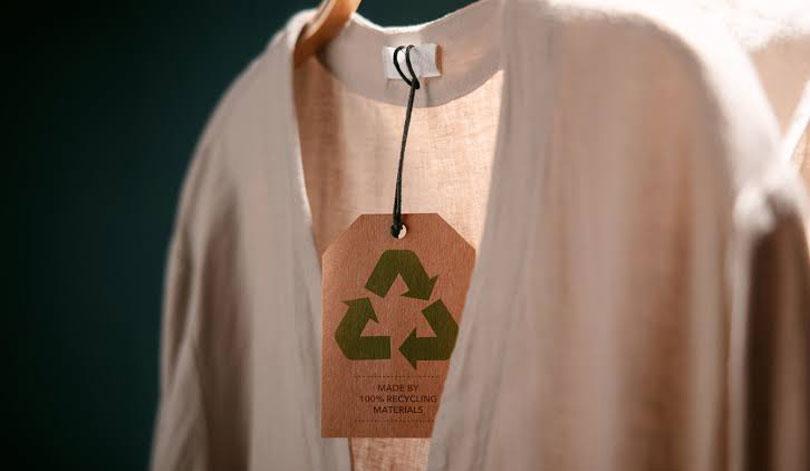
Even the phrase “recycled” can create an impression far greater than the reality. A garment may contain a small proportion of recycled fibre while still being blended with virgin synthetic materials. It may be difficult or impossible to recycle again. A shoe advertised as recycled may contain only selected recycled components. Consumers see one reassuring word and imagine an entirely circular product. The environmental claim may not be completely false, but it can still conceal more than it reveals.
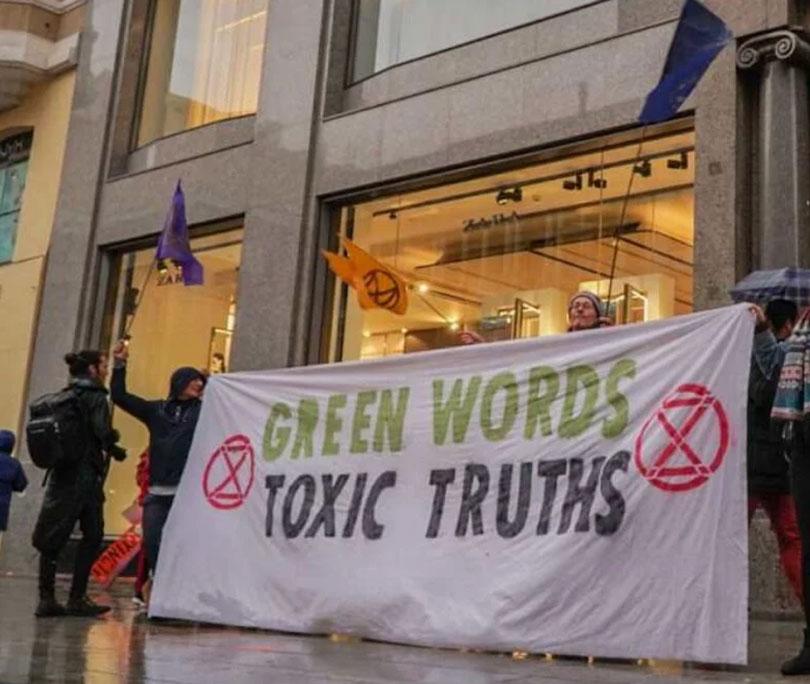
This is why transparency without clarity can become another form of greenwashing. Companies may disclose enormous amounts of information in formats that ordinary consumers cannot understand or compare. A 150-page sustainability report filled with technical terminology is not necessarily meaningful accountability. Data can illuminate, but it can also overwhelm. If companies choose convenient measurements, omit production volumes or highlight small pilot projects while burying rising total emissions, transparency becomes carefully managed visibility.
None of this means transparency is unimportant. We cannot hold companies accountable for what we cannot see. Supplier lists can help trade unions and campaigners identify where garments are made. Emissions data can reveal whether climate promises are being fulfilled. Public targets create evidence against which future performance can be measured. Transparency is essential, but it is the starting line, not the finish line.
The danger arises when fashion companies receive praise simply for publishing the information that should already be available. We would not congratulate a factory merely for disclosing how much polluted water it released into a river. We would expect it to stop polluting the river. In the same way, the success of a fashion brand’s climate strategy should not be judged by the elegance of its sustainability report but by measurable reductions in absolute emissions, fossil-fuel use, virgin material consumption and unnecessary production.
Consumers also need protection from being made responsible for interpreting corporate climate data alone. Most people do not have the time or expertise to investigate lifecycle assessments, certification systems and supply-chain emissions before buying a shirt. Governments and regulators must establish clear definitions, comparable reporting standards and enforceable rules for environmental claims. A sustainable choice should not require detective work.
More importantly, the conversation must move beyond helping consumers choose between slightly different products. The central climate question is not simply whether we should buy the “responsible” version of another garment. It is why fashion’s business model still depends on convincing us that what we already own is inadequate. An industry cannot endlessly accelerate production and then ask recycled packaging, carbon offsets and collection bins to carry the burden of its environmental conscience.
True climate action would look less glamorous than a sustainability campaign. It would mean producing fewer unnecessary garments, designing clothes to last, paying suppliers enough to invest in clean energy, eliminating fossil fuels from manufacturing and disclosing absolute emissions alongside production volumes. It would mean setting targets for the next few years rather than making distant promises for 2040 or 2050. It would also mean accepting that perpetual growth in material consumption is incompatible with a finite planet.
Transparency gives us the information needed to ask harder questions. But information without transformation is only a description of the crisis. Fashion does not need more beautifully communicated promises. It needs evidence that emissions are falling, production is becoming more responsible and the people carrying the cost of transition are being supported.
The industry should continue telling us what it is doing. But after years of targets, reports and sustainability slogans, we must stop confusing disclosure with achievement. The real measure of climate leadership is not how clearly a company explains its footprint. It is how decisively that footprint is shrinking.