IN CONVERSATION WITH NIROSHA JAGODAARACHCHI
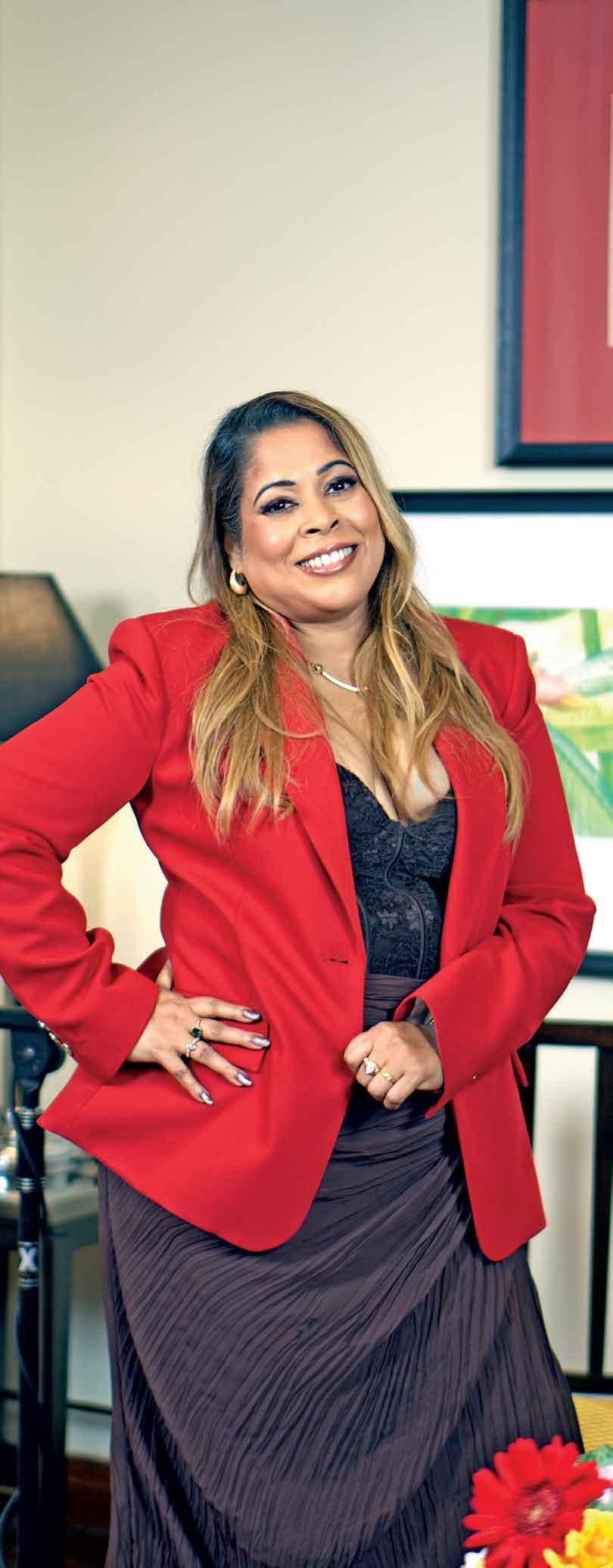
In a conversation on Fame Game, hosted by Kumar de Silva and Rozanne Diasz, entrepreneur Nirosha Jagodaarachchi spoke about her private nature, family life, business journey, views on beauty standards, local brands, fashion, sustainability and the importance of financial independence for women.
Q: You are known for being a very private person. Why have you chosen to maintain such a private life?
A: I think it has been me from the very beginning. I have always been very introverted. There was a time when I aspired to be a very big celebrity. I wanted popularity and I wanted people to talk about me. That was something I wanted a long time ago. But later, I realized that it was not really me. I felt that I would have to project myself as somebody I was not. I eventually decided that I would rather be myself. I am very careful about maintaining my privacy. My public profile is separate from my personal life, and I am comfortable with that. My friends know me personally, but what the public sees is the profile I choose to present. Even my circle of friends is very small. I do not have a lot of friends, and I have been that way for a long time. I think the more friends you have, the more things become known. I prefer having a small circle of people whom I trust and cherish.
Q: How would you describe yourself as a mother to your two daughters?
A: I think I am okay. I consider myself quite a cool mother because I have one Gen Z daughter and one millennial daughter. I have tried to be friendly with them, and, in many ways, I am more like a friend to them than a very strict mother. We are very close and discuss a lot of things, including secrets. I enjoy that relationship with them.
Q: Where does their father fit into this equation? Is he the more serious and protective parent?
A: He is a protective father, and the girls are much closer to me. I also like to keep different aspects of our lives separate. Privacy is important to me, so I try to maintain that balance.
Q: Did you influence your daughters when they were choosing their partners or deciding on their careers?
A: No. I support my daughters in their careers, relationships and personal lives without imposing rules on them. I believe they are capable of making their own decisions, and I am always there to guide and support them while respecting who they are.
Q: Was it difficult to balance motherhood and running a business when your daughters were young?
A: It was not easy. I was running a business when they were small, so balancing everything was difficult. Perhaps I was not always able to do everything perfectly, but I tried to give them good guidelines. Ultimately, they have grown into good people.
Q: How is the business doing at present?
A: Very well. We were growing before COVID19, but the pandemic brought that growth to a pause. Now, after the pandemic and the recession, we are growing again both locally and internationally. We are expanding into Middle Eastern countries and exploring markets in neighbouring countries and Australia. After previously importing cosmetics from these markets, we are now looking at entering those markets ourselves.
Q: What is your position on whitening creams and products that promote lighter skin?
A: We are strictly against promoting whitening or the idea that people need to have white skin. We prefer to celebrate and work with natural skin tones, including brown and tan tones, rather than promoting fairness simply for the sake of being fair. We believe in appreciating and complementing the different natural skin tones of Sri Lankans.
Q: Do you think influencers are now more effective than traditional media when it comes to influencing consumers?
A: There are both advantages and disadvantages. One of the questions we have to ask is how much we can actually believe an influencer when they are being paid to promote something. There can be a question of authenticity. If someone is being paid to promote a product, it does not necessarily mean that they genuinely use or believe in it. Influencing can certainly be a good career path, but I believe influencers also have to follow certain ethical standards.
Q: When you choose an influencer to work with, what do you look for?
A: We look at authenticity. The influencer should actually use our products. It should not simply be about being paid to promote something. They should genuinely experience the product and like it. That is why we give our influencers a starter kit and look at whether they actually engage with the products.
Q: Do you personally use only the products from your own portfolio?
A: Yes, all the time. If, for example, we did not have a particular sunscreen in our portfolio, I might have used another product. But the moment that product becomes available under our portfolio, I switch to our own sunscreen. If I have the same product available within our portfolio, I do not use something else.
Q: How involved are you in developing the products?
A: I am very involved in product development. We participate in conferences, workshops and seminars to understand developments in chemistry, biochemistry and areas such as peptides. While I am not a chemist, I work closely with our team of scientists and chemists and contribute my ideas. We also study the market and use competitor products to make comparisons, which helps us understand what is already available before developing something new.
Q: How do you view competition from other local companies producing similar products?
A: I would actually like to see more good brands coming into the market. Competition stimulates the industry. If the market does not have good standards and everyone is operating at a low level, there is less motivation to improve. I would like to see more premium and high-quality brands entering the market because that encourages everyone to raise their standards. I do not see good competition as a threat. I see it as an opportunity.
Q: Do you think Sri Lankan consumers are becoming more accepting of local brands?
A: Yes. I think consumer perception is changing. People are becoming more interested in local brands. There has been a change in the way people look at locally made products. Having a good local brand has almost become a trend, but the important thing is that the brand must maintain its standards. If someone has been using a leading international brand and can find an equivalent product made locally to the same standard, they are likely to consider buying the local product. That perception is changing, and I think that is positive.
Q: Apart from cosmetics and business, what other interests do you have?
A: I love dressing up and I love fashion. The industry naturally gives you an opportunity to enjoy fashion and glamour. There was a time when I really wanted that kind of glamour and stardom. But COVID19 changed my understanding of life. After COVID19, I had time to pause and think about what it really means to be a human being rather than simply being a fashion personality or fashionista. I started thinking more about the purpose of life. That led me in a different direction. I became more interested in being mindful and insightful rather than focusing only on being a fashion personality. I also meditate and go on retreats. Around twice a year, I attend meditation programmes lasting about seven or eight days. During those retreats, I completely disconnect from my phone, computer and family and concentrate on the experience.
Q: Do you repeat clothes?
A: I think we should repeat clothes. I do not have an issue with repeating specific outfits. It is also better for the environment. I feel it is a waste to buy a good piece of clothing; wear it once and then simply throw it away. Some clothes may not be suitable to donate, especially certain designer or highly styled pieces. In those cases, I prefer to recycle or upcycle them. For example, if a long dress has sleeves, I might have the sleeves removed or change the length and turn it into something different. I have someone who helps me with that kind of recycling. I like the idea of giving a piece of clothing another life.
Q: How important do you think it is to support local designers and brands?
A: I think we should encourage them. There is a lot of talent in Sri Lanka that remains hidden or unexplored. We need to give local talent the support and opportunities they deserve. There are people who can produce very good products, but they need encouragement and a market.
Q: What is your view on women entering business and becoming successful, sometimes even surpassing men in their fields?
A: I fully support women who want to start businesses and build careers. I support them one hundred percent, whether they want to enter middle management, senior management or entrepreneurship. One of the problems we have is the lack of female participation in middle and senior management. We need more women in those positions. In our own company, around 70% of the workforce is female, and there is also good female representation in middle management. I believe women should be encouraged to participate in every area of business and industry.
Q: Do you believe financial independence is important for women?
A: Absolutely. I believe women should be financially, socially and emotionally independent. I always tell my daughters not to give up their careers simply because they get married. There can still be situations where a woman is told that she should stay at home and look after the children because her husband does not want her to work. I tell my daughters that they should have their own careers, their own income and their own independence. If someone cannot work in a traditional career, there may be other options. She can start a business from home based on her talents. The important thing is not to let your abilities slip through your hands. If you have a talent, you should try to develop it and make something out of it.