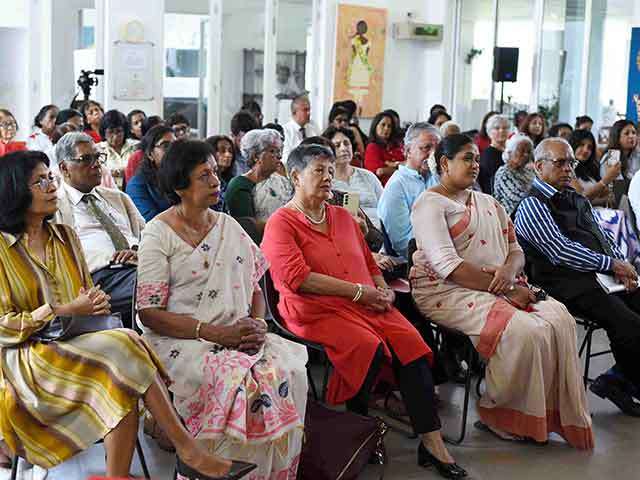
Sri Lanka Has Had Enough Division. Our Future Must Be Shared.
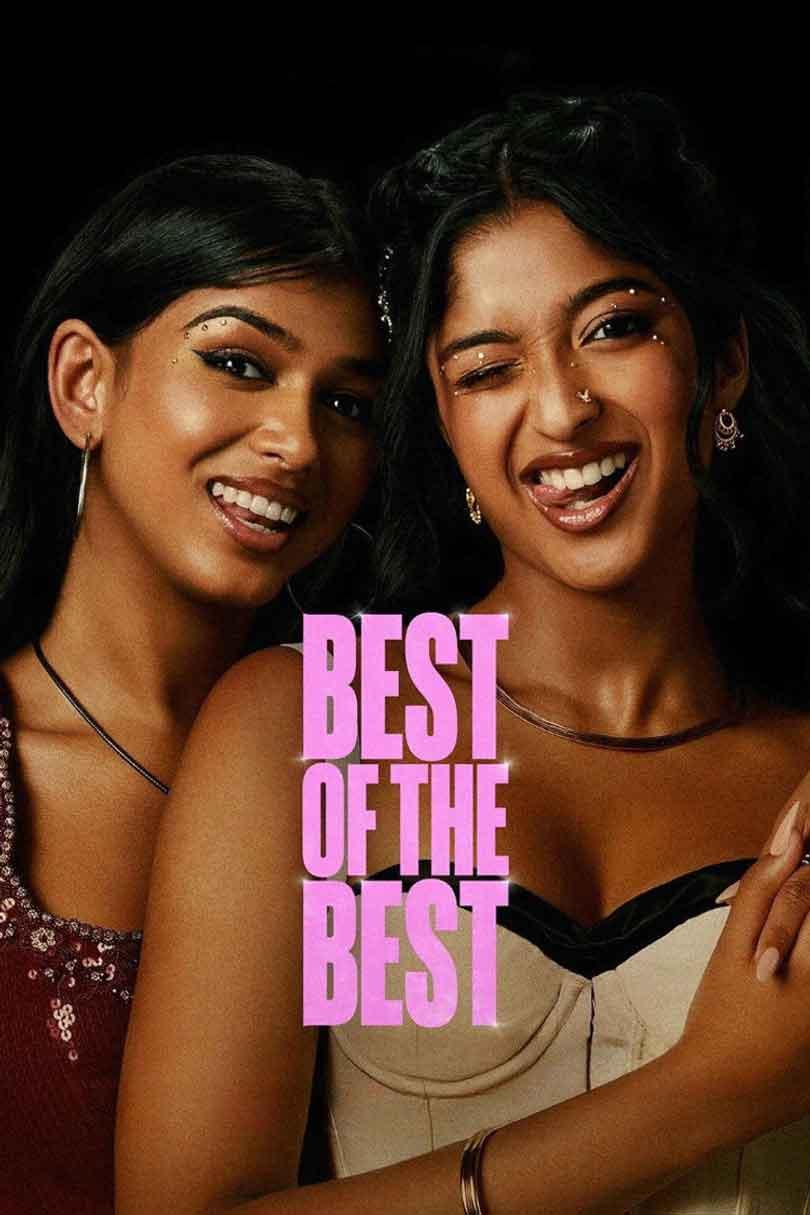
Sometimes a single sentence in a film becomes bigger than the film itself. Netflix’s Best of the Best, the new comedy starring Maitreyi Ramakrishnan and Priyanka Kedia and co-written by Hasan Minhaj and Prashanth Venkataramanujam, arrived as a colourful celebration of friendship, dance and the South Asian experience in America. Netflix describes it as the story of two childhood friends who join UCLA’s competitive Bollywood fusion dance team and discover how demanding that world can become. Yet one piece of dialogue has generated an altogether more serious conversation.
Early in the film, Maya, played by Ramakrishnan, tells her friend, “I know guys throw themselves at you like you’re the last flight out of Kabul, but this has got to be a new record?” The joke has been widely criticised because the Kabul evacuation was not an abstraction. It invokes the desperate scenes of August 2021, when Afghans crowded Kabul airport as the Taliban returned to power. Some clung to an aircraft and fell after it took off. For people whose families experienced those events, the imagery represents fear, displacement and death rather than a convenient metaphor for romantic attention. Criticism of that line is therefore understandable. Comedy is allowed to approach difficult subjects, but audiences are equally entitled to say when they believe a joke has turned someone else’s suffering into a punchline.
There is, however, another controversy surrounding Best of the Best, and it requires considerably more care. Ramakrishnan was born and raised in Canada to Tamil parents from Sri Lanka. She has spoken repeatedly about identifying culturally as Tamil and nationally as Canadian. Years before this film, she explained publicly that she did not regard Sri Lankan as her national identity, saying that Canada was her country while Tamil was her culture. During discussions surrounding Best of the Best, that question of identity became part of the film itself. Ramakrishnan has explained that she was uncomfortable with simply having Maya say that she was “Tamil Sri Lankan.” The dialogue eventually became: “I’m Tamil. My family’s from Sri Lanka.” That distinction clearly matters to her.
It also matters deeply to some members of the Tamil diaspora who share similar histories of displacement and who regard their Tamil identity as distinct from a Sri Lankan national identity. Tamil organisations in Britain and Canada have publicly supported Ramakrishnan amid the controversy. Other Sri Lankans see the matter differently. For them, the idea that people whose families come from Sri Lanka should reject a common Sri Lankan identity can reopen wounds that the country has spent years attempting to overcome. Those competing feelings deserve to be discussed without turning another generation of Sri Lankans against one another. Sri Lanka has already paid an unbearable price for division.
The civil war between the Sri Lankan state and the Liberation Tigers of Tamil Eelam (LTTE) lasted from 1983 until 2009. The LTTE fought for a separate Tamil state in the north and east of Sri Lanka. It remains a proscribed terrorist organisation in the United Kingdom, whose government states that the organisation was responsible for acts of terrorism including suicide attacks and assassinations. The crimes and abuses committed by the LTTE cannot simply be erased from the history of the conflict. Civilians were murdered. Suicide bombings devastated families. Children were recruited. During the final stages of the war, credible investigations found that the LTTE prevented civilians from leaving areas under its control and fired upon some attempting to escape.
Acknowledging those facts, however, cannot mean ignoring credible allegations concerning the conduct of the Sri Lankan state. The responsibility of a government is fundamentally different from that of an armed separatist organisation. A state has an obligation to protect its citizens, irrespective of whether they are Sinhala, Tamil, Muslim, Burgher, Sindhi, Malay, Buddhist, Hindu, Christian, or anything else. That obligation becomes even more important during war. United Nations investigations and subsequent human rights reporting have documented credible allegations of grave violations by Sri Lankan government forces, particularly during the final stages of the conflict. They have also documented serious violations committed by the LTTE. Accountability cannot be credible when the suffering of one community is recognised while another community’s suffering is dismissed.
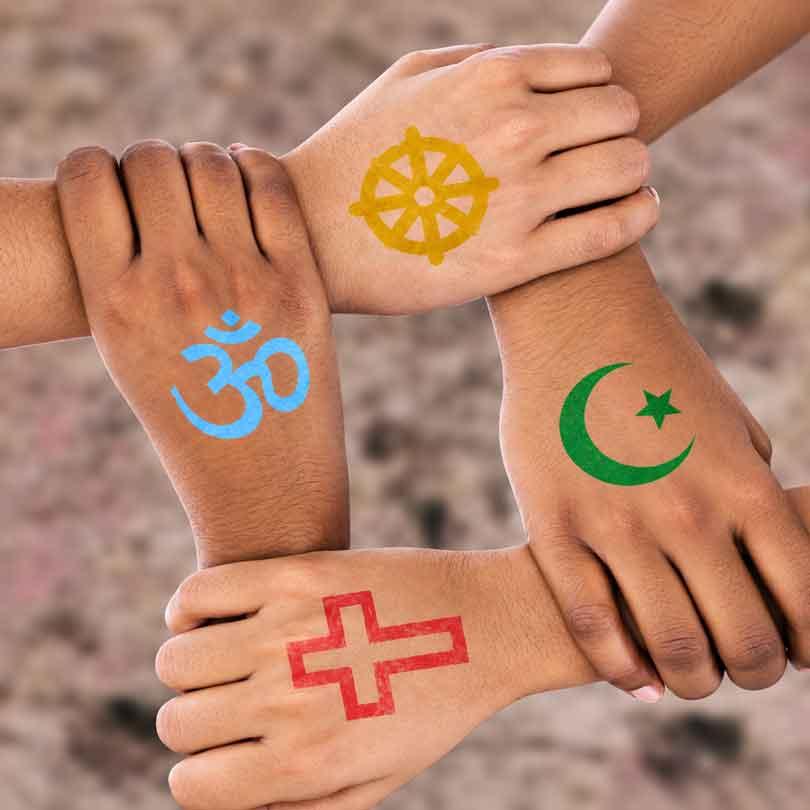
Sri Lanka therefore does not have to choose between condemning the LTTE and recognising Tamil suffering. It can do both. It can honour soldiers and still ask difficult questions about the conduct of the state. It can remember victims of LTTE terrorism while also remembering Tamil civilians who died. It can acknowledge the fears of the Sinhala community without dismissing the grievances of Tamils. It can recognise the suffering of Muslims who were expelled and displaced during the conflict. It can listen to families who are still searching for answers about missing relatives. None of these truths needs to cancel another. That is precisely why the present controversy surrounding Ramakrishnan should not become another excuse for communal hostility.
Some of the reaction against her has gone far beyond disagreement. Reports have documented social media campaigns encouraging people to give Best of the Best one-star ratings because of the controversy surrounding her identity. IMDb subsequently displayed a notice indicating that its system had detected unusual voting activity on the title. Reports have also described racist and misogynistic abuse directed at the actress. That behaviour should not represent Sri Lanka. One can disagree profoundly with another person’s conception of identity without abusing her.
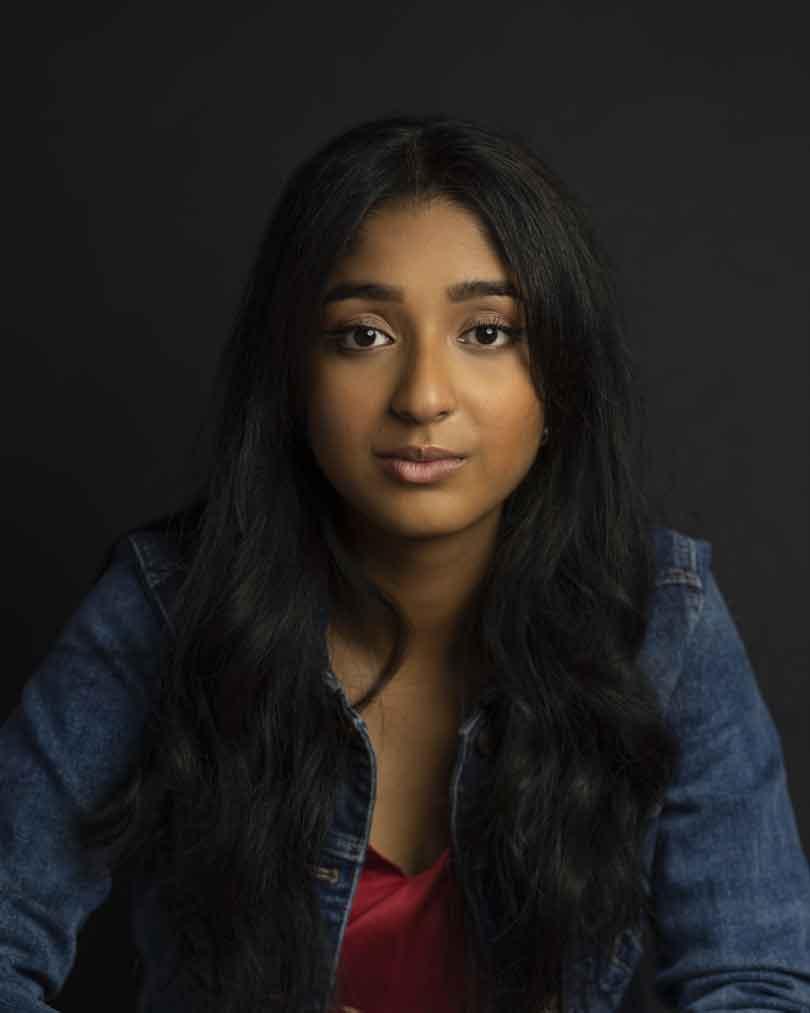
Indeed, Sri Lankan voices have made precisely that argument. Filmmaker Asoka Handagama defended Ramakrishnan’s right to understand and describe her identity in her own way. Jaffna District MP Ramanathan Archchuna, meanwhile, called for an end to racist comments and argued that Sri Lankans should recognise the achievements of people of Sri Lankan origin regardless of ethnicity. There is wisdom in separating disagreement from hatred. Ramakrishnan is entitled to describe herself as she chooses. Identity is personal, particularly for children of refugees and migrants whose relationship with their parents’ homeland can be complicated by trauma. Sri Lankans are equally entitled to articulate another aspiration: that the island’s future should be built around a common country in which ethnic identity does not determine who belongs. Those two ideas do not require online warfare.
The Sri Lanka that deserves to emerge from its history is not a country in which Tamils must become less Tamil, Sinhalese less Sinhala, Muslims less Muslim or Burghers less Burgher in order to belong. Unity should not require cultural erasure. A Tamil Sri Lankan should be able to speak Tamil, celebrate Tamil culture and remember Tamil suffering without being regarded as an enemy of the state. A Sinhalese Sri Lankan should be able to remember victims of LTTE attacks without automatically being branded hostile to Tamils. A Muslim Sri Lankan should not have to choose between religious identity and national belonging. A Burgher should not be treated as an historical footnote. The island belongs to all of them. The challenge is to create a Sri Lankan identity spacious enough to contain these different histories. That is more difficult than demanding conformity, but it is also more meaningful.
Nearly two decades after the war ended in May 2009, Sri Lanka has an opportunity that previous generations did not have. Young Sinhalese and Tamils can meet without checkpoints and battle lines separating much of the country. Members of the diaspora can return and encounter an island dramatically different from the country their parents left. Tourism brings people into areas once associated internationally almost exclusively with war. But physical peace alone is not reconciliation. Reconciliation requires the courage to remember without teaching another generation to inherit our enemies. It requires Sri Lanka to confront credible allegations concerning the past rather than imagining that national unity depends upon silence.
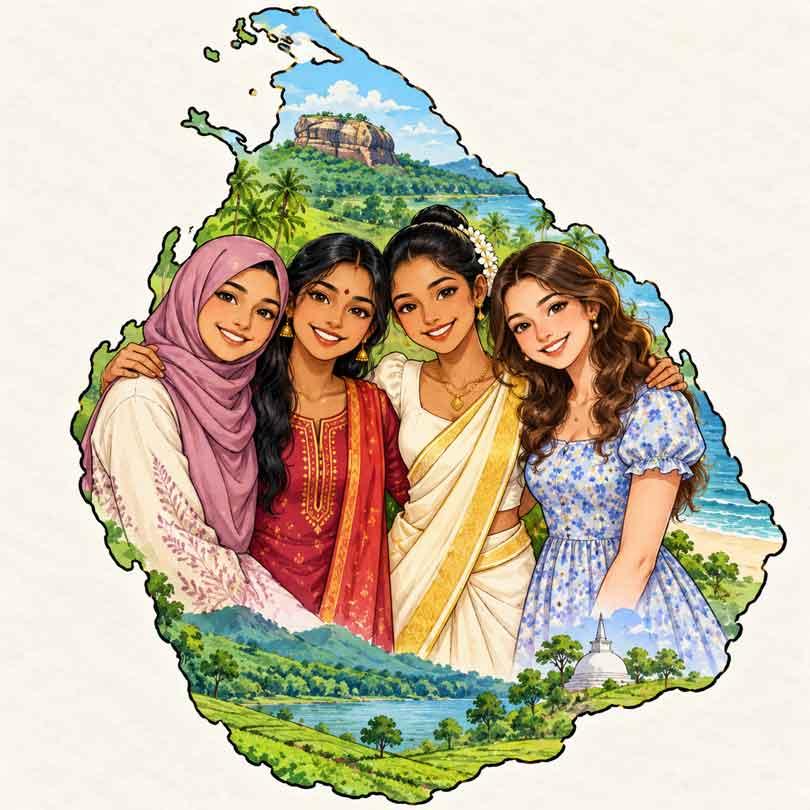
It also requires rejecting the romanticisation of political violence. The documented atrocities of the LTTE cannot be excused merely because legitimate Tamil grievances existed, just as abuses by state forces cannot be excused merely because the government was fighting a proscribed terrorist organisation. There is room for justice and unity in the same country. There must be. That is perhaps the larger lesson hidden beneath the controversy surrounding a Netflix comedy. The Kabul joke deserves scrutiny because other people’s trauma should be approached with humanity. Afghan suffering does not become less serious because it appears in a comedy. The same principle should apply to Sri Lanka. Tamil trauma deserves humanity. Sinhala trauma deserves humanity. Muslim trauma deserves humanity. Every civilian life deserves humanity. And disagreement about Maitreyi Ramakrishnan’s identity should never become permission for racial abuse, misogyny or collective hatred. Sri Lanka has experienced enough of that language and knows where it can lead.
Ramakrishnan may define herself differently from how some Sri Lankans would define her. Members of the Tamil diaspora may have profoundly different relationships with the island from people who continued living there throughout the war and its aftermath. Those differences are real. Pretending otherwise accomplishes nothing. But Sri Lanka’s future cannot be built by demanding that everyone remember the past in exactly the same way. It can be built by agreeing on something more fundamental. Never again should ethnicity determine whose life matters. Never again should a child inherit a war because of the language spoken at home. Never again should political disagreement make neighbours enemies. And never again should Sri Lanka allow the dream of belonging to become the property of only one community. Sinhala, Tamil, Muslim, Burgher and every other community have contributed to the story of this island. The country does not become weaker by recognising those identities. It becomes stronger when every one of them can say, without fear and without surrendering their culture, that there is room for them here. Sri Lanka cannot rewrite the thirty years of conflict that devastated generations of families. It can decide what it does with the years ahead. The most meaningful answer to division is not another argument about who owns Sri Lanka. It is the determination to build a Sri Lanka in which everyone belongs.