Monster: The Lizzie Borden Story Netflix Turns America’s Most Infamous Murder Mystery Into Addictive Television.
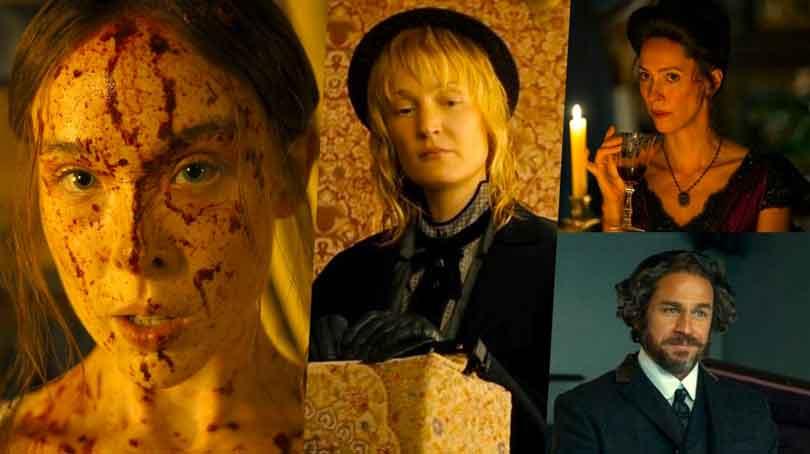
More than 130 years after Andrew and Abby Borden were found brutally murdered inside their Massachusetts home, the name Lizzie Borden can still send a chill down the spine. She was accused, tried and acquitted, yet history never truly released her. Instead, Lizzie became something far stranger than a defendant in an unsolved murder case. She became a legend, a nursery rhyme, a symbol of female violence and one of the most enduring mysteries in American criminal history. Now Netflix has opened the door of the Borden house once again, and what waits inside is bloody, provocative, seductive and extremely difficult to ignore.
Monster: The Lizzie Borden Story is the fourth instalment of the Monster anthology from Ryan Murphy and Ian Brennan, and anyone expecting a restrained historical drama should abandon that expectation immediately. This is Gothic horror dressed in Victorian clothing, a psychological drama soaked in blood and a deliberately provocative interpretation of a woman whose story has been debated for generations. Across eight episodes, the series takes the known facts surrounding Lizzie Borden and builds a far more imaginative account of what might have happened behind the closed doors of one of America’s most notorious homes.
At the centre of everything is Ella Beatty, who gives Lizzie a fascinating combination of vulnerability, resentment, desire and menace. It would have been easy to portray Borden as a conventional horror villain, particularly because popular culture has already transformed her into an axe wielding monster. Beatty chooses something much more interesting. Her Lizzie can appear fragile and constrained one moment, then disturbingly detached the next. She seems constantly to be observing the people around her, measuring the limits of the world she inhabits and quietly searching for an escape from it.
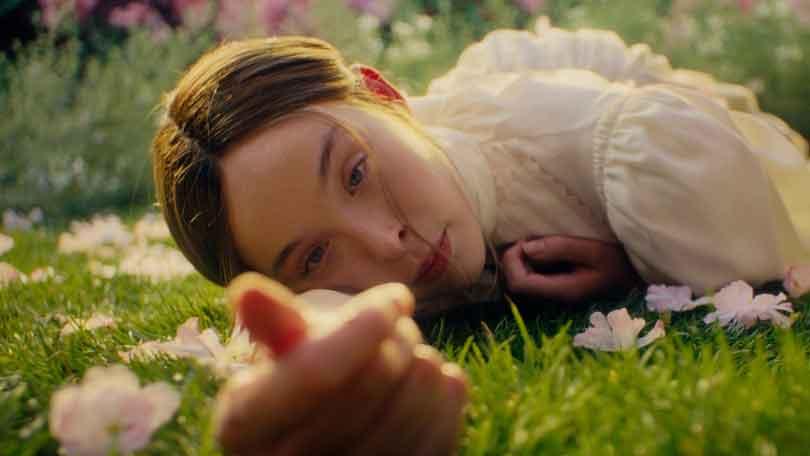
That sense of imprisonment becomes one of the strongest elements of the series. The Borden home may appear respectable from the outside, but Monster presents domestic life as claustrophobic and suffocating. Reputation matters enormously. Obedience is expected. Female desire is controlled. Independence seems tantalisingly close but remains difficult to reach. Gradually, the house begins to feel less like a home and more like a beautifully decorated prison. The tension comes from wondering what might happen when someone living inside that prison finally decides that its rules no longer matter.
The historical events are extraordinary enough without television embellishment. On the 4th of August 1892, Andrew Borden and his wife Abby were found murdered in their home in Fall River, Massachusetts. Andrew was Lizzie’s father and Abby was her stepmother. Suspicion settled on Lizzie, who was eventually arrested and tried for the killings. In June 1893, however, a jury acquitted her. No one else was ever convicted, leaving behind a mystery that has survived for well over a century. That acquittal is essential to remember while watching Monster. Despite the famous rhyme that turned Lizzie into a cultural icon, it has never been legally established that she murdered Andrew and Abby Borden. The series is therefore not revealing the solution to a solved crime. It is constructing its own dramatic answer to an unresolved mystery. Relationships, motivations, conversations and events are fictionalised, expanded or rearranged, sometimes considerably, in order to create the story viewers, see on screen.
Curiously, knowing that can make the series even more fascinating. Monster constantly encourages the viewer to wonder where history ends and invention begins. After an episode, it is tempting to start investigating whether a shocking conversation really happened, whether a relationship actually existed or whether an extraordinary scene has any foundation in the historical record. Often, reality differs considerably from the television version, but the genuine Borden case is so strange and full of unanswered questions that the facts can be almost as compelling as the fiction.
Vicky Krieps plays Bridget Sullivan, the Borden family’s Irish maid, known as Maggie in the series. Her presence becomes enormously important to this interpretation of Lizzie. The relationship between the two women provides intimacy, danger and emotional tension, allowing the programme to explore Lizzie’s sexuality alongside her growing frustration with the restrictive world surrounding her. Bridget Sullivan was a real person who worked for the Borden family and was present at the house around the time of the murders, but Monster goes considerably beyond established history when imagining the nature of her relationship with Lizzie.
Krieps brings intriguing unpredictability to the role. There is warmth between the women, but also the persistent feeling that boundaries are being crossed and consequences are approaching. Their connection becomes part of the programme’s broader fascination with forbidden desire and the dangers of living in a society obsessed with respectability. It also gives Beatty someone against whom her version of Lizzie can reveal emotions that would otherwise remain hidden beneath Victorian manners.
The supporting cast is equally impressive. Charlie Hunnam plays Andrew Borden, Rebecca Hall portrays Abby Borden, Billie Lourd appears as Lizzie’s sister Emma and Jessica Barden takes on the role of actress Nance O’Neil. Sarah Paulson also appears as Aileen Wuornos, a casting choice that initially seems almost impossible to connect with a story about a nineteenth century murder mystery.
The appearance of Wuornos demonstrates just how far Monster is prepared to travel beyond the boundaries of conventional historical drama. Wuornos killed seven men in Florida between 1989 and 1990 and was executed in 2002, so there is obviously no historical encounter between her and Lizzie Borden. Instead, the programme uses Wuornos to explore its larger fascination with women associated with extreme violence and the way such women can become cultural objects of fear, fascination and mythology. The connection is thematic rather than historical, something viewers should remember as the series becomes increasingly adventurous with its storytelling.
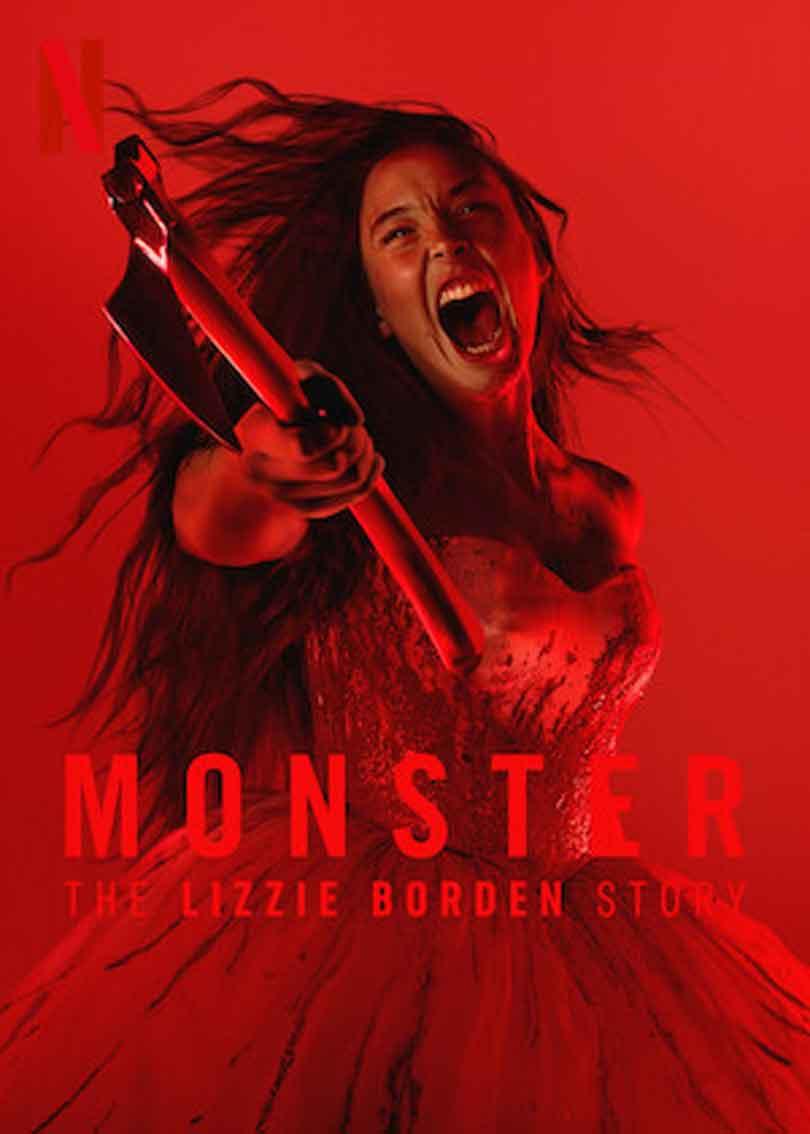
This is where Monster reveals its larger ambition. It is not satisfied simply to ask whether Lizzie murdered her father and stepmother. It wants to understand why society remains fascinated by women who kill, why certain crimes become legends and how public obsession can transform a real human being into a character who bears increasingly little resemblance to the person who actually lived.
Lizzie Borden is a remarkable example of that transformation. The real woman was acquitted, but popular culture effectively convicted her anyway. Generations of people who know almost nothing about the trial can still recognise the famous rhyme about Lizzie taking an axe. The rhyme itself is inaccurate, including its exaggerated description of the number of blows inflicted on the victims, yet its version of events became embedded in popular memory.
Monster understands the power of that mythology and exploits it enthusiastically. At times, the series seems less interested in discovering the real Lizzie than in examining the frightening figure generations have created from her. The result has a dreamlike quality in which history, horror, fantasy and psychological interpretation begin to merge. It can be excessive, but it is seldom predictable.
Visually, the series is often stunning. The Victorian interiors, elaborate costumes, atmospheric lighting and carefully composed images create a world that feels simultaneously elegant and oppressive. There is beauty almost everywhere, but it rarely feels comforting. The polished rooms, immaculate clothing and outward respectability seem to conceal something rotten underneath. The Borden household looks respectable enough to satisfy society, while the camera continually suggests that something dangerous is growing beneath its carefully maintained surface.
Then comes the blood. Monster is extremely graphic, and viewers sensitive to violence should know what they are entering before pressing play. This is not a traditional period drama in which the worst events conveniently happen outside the camera’s view. The programme repeatedly confronts its audience with disturbing imagery, sexuality, physical violence and bodily horror. The contrast between beautiful Victorian surroundings and sudden brutality becomes part of the series’ identity.
That appetite for excess will not appeal to everyone. The programme can be sensational, and its fascination with sex and violence occasionally threatens to overpower the more thoughtful ideas it is attempting to explore. Monster rarely chooses subtlety when spectacle is available. Yet there is another side to that excess. This is television designed to provoke a reaction. It can be unsettling, frustrating and outrageous, sometimes within the same episode, but it is rarely dull. For audiences who enjoy dark psychological drama, Gothic horror and heightened true crime adaptations, that unpredictability is part of the attraction.
The series becomes particularly interesting when it explores expectations surrounding women in Lizzie’s world. The Borden murders horrified nineteenth century America partly because the possibility of a respectable woman committing such brutality collided with contemporary assumptions about femininity and domestic life. Monster uses that tension to construct its fictional Lizzie, presenting rage beneath manners, desire beneath respectability and rebellion beneath obedience. It asks not only whether this woman could kill, but what might happen when someone who feels controlled by family and society begins imagining freedom at any cost.
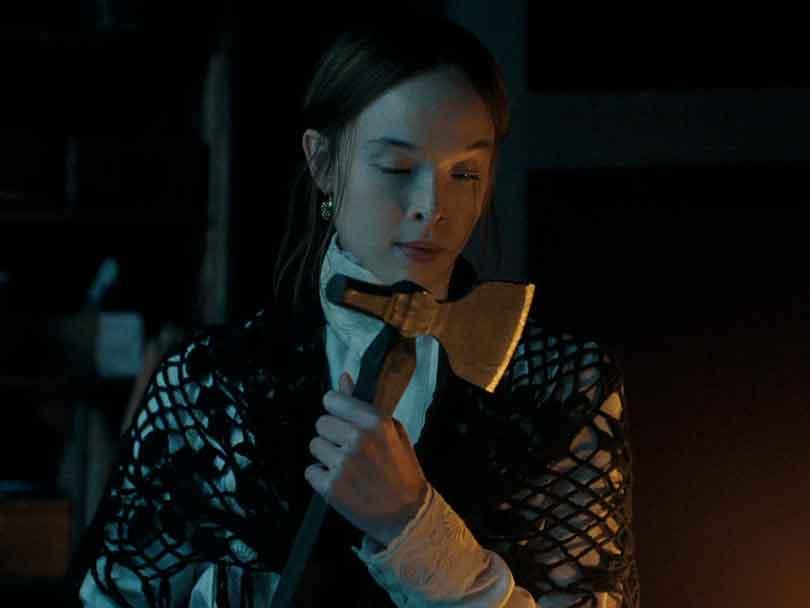
Viewers should resist accepting that psychological portrait as historical truth. We cannot know precisely what the real Lizzie thought or felt before the murders. Monster fills those gaps dramatically and often boldly. Its treatment of actress Nance O’Neil is a useful example. O’Neil and Lizzie really did know one another, but their friendship belongs to a later period of Lizzie’s life. The programme reshapes chronology and circumstances to incorporate the relationship into its dramatic interpretation. This willingness to alter history matters because Monster can feel extremely persuasive. Convincing performances, sumptuous production design and recognisable historical figures can create the impression that we are watching events as they actually happened. We are not. The series is best approached as dark historical fiction inspired by real events rather than a documentary reconstruction. Once that distinction is understood, it becomes much easier to appreciate what the programme is attempting to achieve.
Ella Beatty remains crucial to making that ambition work. Whatever excess surrounds her, she gives the series an emotional centre. There is something magnetic about watching her Lizzie navigate fear, resentment, desire and rebellion. Beatty can make silence feel threatening, and some of her strongest moments arrive when very little is being said. Her performance also encourages curiosity about the real woman behind the mythology, which may be one of the series’ greatest achievements.
There is something appropriate about the controversy surrounding another retelling of this case because controversy has followed Lizzie Borden for more than a century. She was acquitted, yet suspicion survived. She lived for decades after the trial, yet the events of one August morning became her permanent identity. Even today, her name remains inseparable from murders that prosecutors failed to prove she committed.
Monster: The Lizzie Borden Story does not resolve that contradiction. Instead, it dives into it and emerges with a lavish, gruesome and unapologetically theatrical interpretation. True crime enthusiasts will find plenty to investigate after each episode, horror fans will appreciate its darker impulses and viewers who enjoy complicated psychological dramas may find themselves drawn into Lizzie’s increasingly unsettling world. Most importantly, Monster understands the irresistible ingredient at the heart of the Borden story: uncertainty. More than 130 years later, we still cannot enter that house on the 4th of August 1892 and know with absolute certainty who murdered Andrew and Abby Borden. We can examine the evidence and debate theories, but the final answer remains beyond our reach.
Netflix fills that silence with a provocative answer of its own. It may not be history’s answer, and viewers should never confuse the two, but it makes for compelling television. Monster: The Lizzie Borden Story is bloody, sensual, disturbing, visually impressive and deliberately excessive. It transforms one of America’s most famous murder mysteries into a dark psychological nightmare about family, desire, repression, violence and the extraordinary power of a reputation that refuses to die. Perhaps that is why Lizzie Borden remains such perfect material for television. The jury delivered its verdict in 1893, but the world never stopped putting her on trial. More than a century later, Netflix has done it again, and once you enter the Borden house, you may find it surprisingly difficult to leave.
Monster: The Lizzie Borden Story is streaming on Netflix.