Confrontations: Maya Karunaratne on Memory, Identity and Becoming
By Marian de Silva
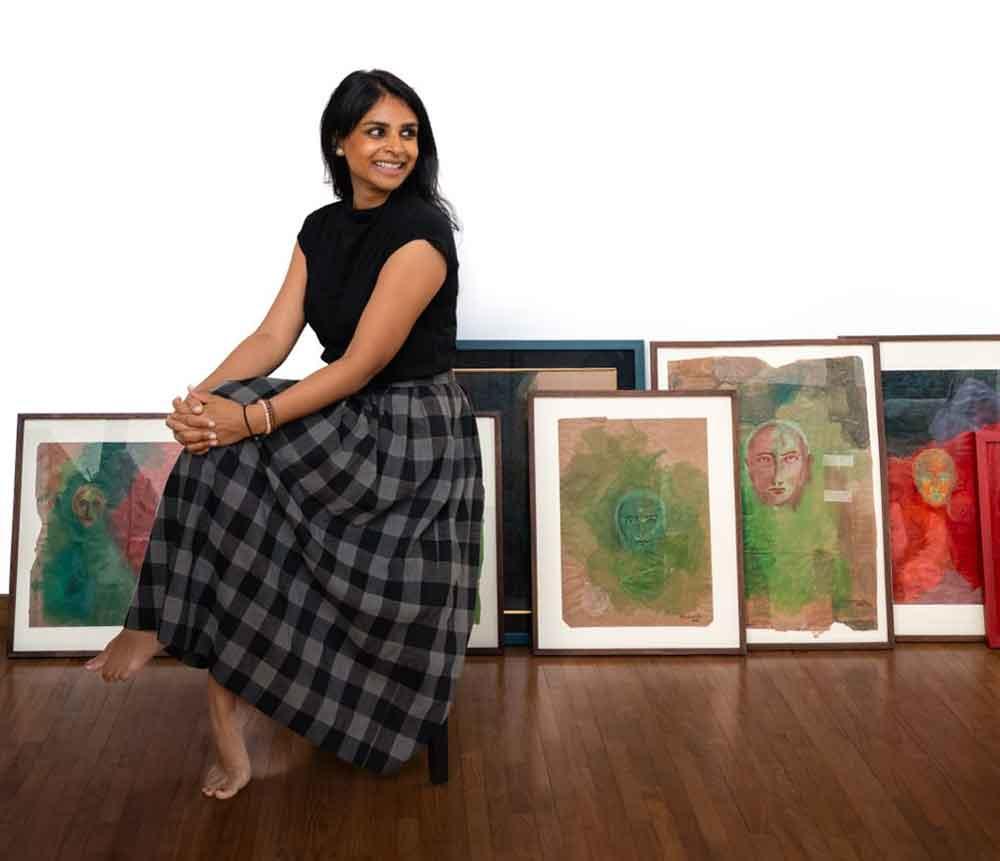
There are some confrontations we spend years avoiding. The confrontation with grief, with expectations, with the versions of ourselves we have learnt to perform for everyone else. For American-Sri Lankan artist Maya Karunaratne, the canvas became a place where those confrontations could finally take shape. Her debut exhibition, Confrontations, is not simply a collection of faces, memories and discarded materials. It is an intimate excavation of everything that sits beneath the surface, from inherited expectations and cultural identity to grief, vulnerability and the quiet courage of becoming more honest with oneself.
1. You hold an MSc from the London School of Economics and have built a career in international development and policy. How does analysing large-scale systemic social issues compare to visually dismantling personal cognitive dissonance on a canvas?
In my professional work, we are trained to focus on communities, systems, policy and, overall, the needs of others. Art allows me to do almost the opposite. It gives me the space to look inward and explore conflicting emotions, identities and expectations. My art does embrace the same values that guide my work in policy development, including empathy, intention and responsibility.
2. Exhibiting a debut collection titled Confrontations is a bold declaration. What felt more daunting: stepping into the public eye as an artist, or literally drawing faces to confront your personal fear of judgement?
I can easily be my own harshest critic, so both were daunting. The fear of judgement was very real, and exhibiting the work became a confrontation with that fear in itself. Putting the work out there felt vulnerable, but as someone who loves collecting and experiencing art myself, I also understand how subjective it is. That helped me accept that the work does not need to resonate with everyone in order to be meaningful.
3. As an American-Sri Lankan artist, your work grapples with contrasting cultural values and inherited expectations. How do these dual identities negotiate space when deciding which emotions to silence and which to unspool on paper?
Having lived experience in both cultures has exposed me to different ways of moving through the world. Growing up in the US taught me to speak up and advocate for myself, while inherited expectations placed greater emphasis on how one is perceived, which can create a habit of self-editing. Art became a space where I could be authentic, in almost a quiet form of rebellion. It allowed me to express darker emotions without filtering them and, through that process, gradually find more light.
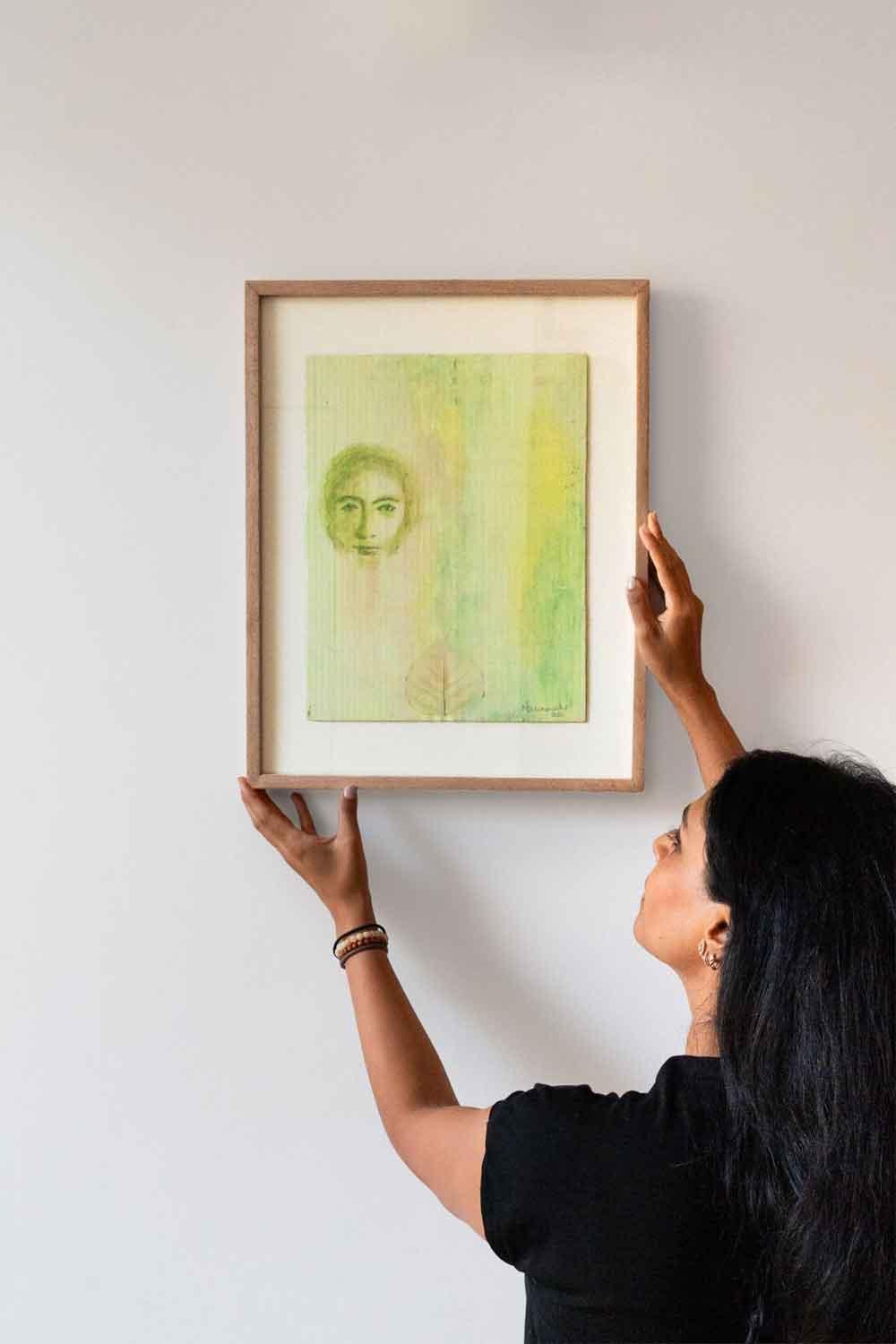
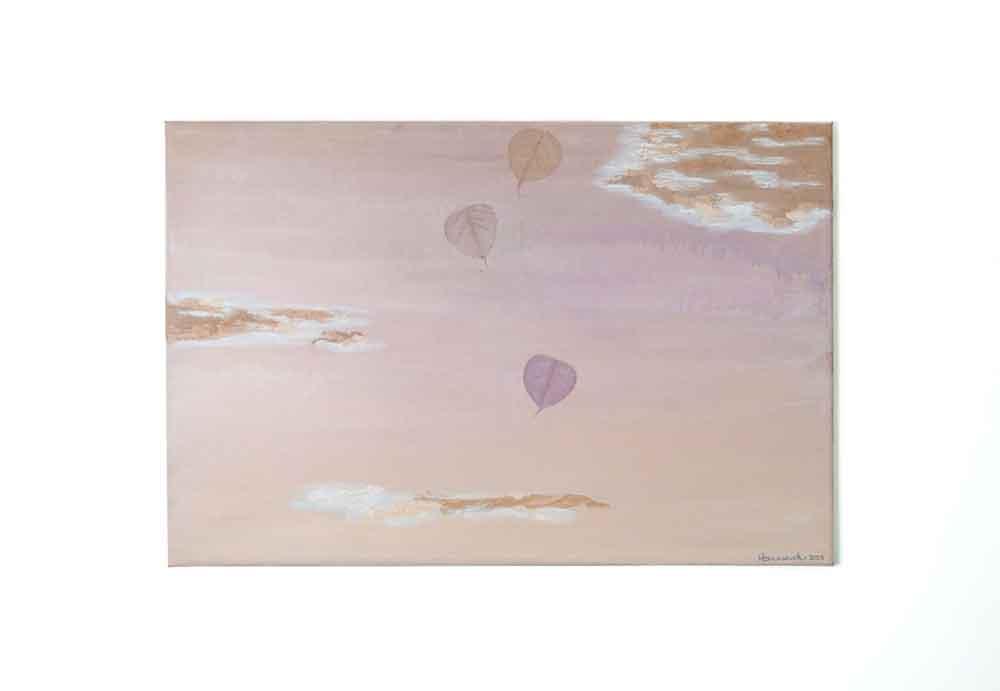
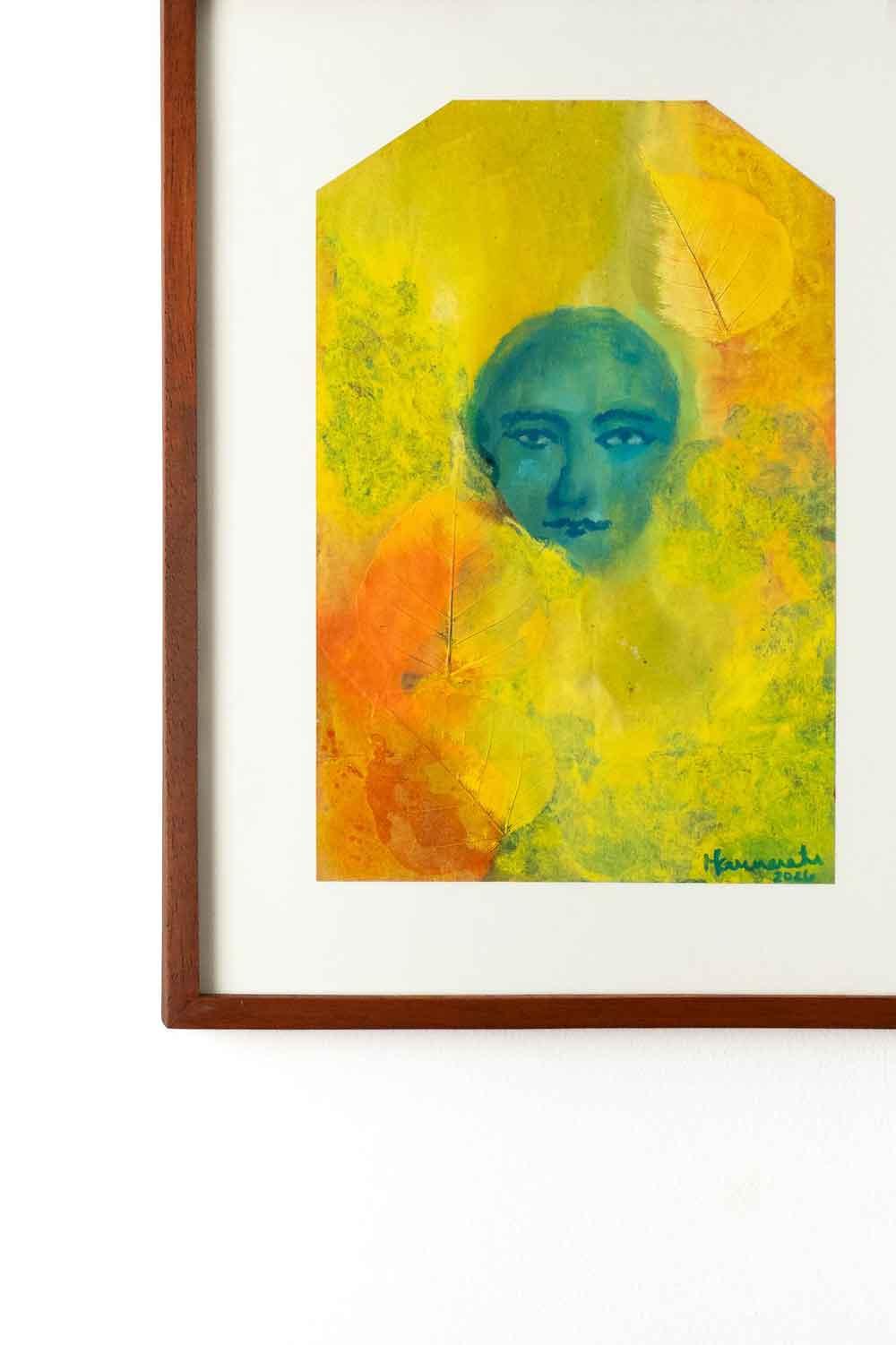
4. You frequently begin a blank canvas with the outline of a bodhi leaf as a guiding, protective force. Is this initial ritual a spiritual anchor, a grounding meditation, or an artist’s creative remedy for overcoming the intimidation of the blank page?
For me, the bodhi leaf is a familiar symbol of calm. I’m not particularly religious, but I’ve always felt a sense of peace around my paternal family’s Buddhist identity. I find the leaf beautiful and appreciate what it represents for so many people. Starting with the bodhi leaf helps soften the intimidation of a blank canvas.
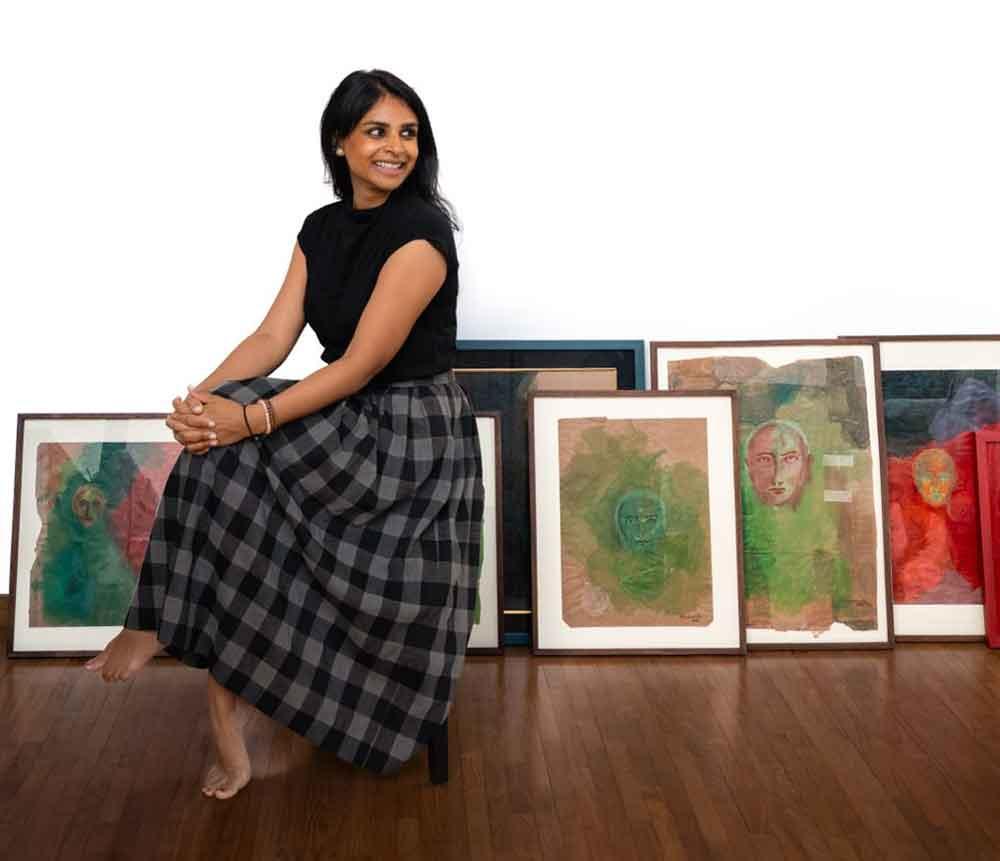
5. Your practice repurposes discarded brown paper, used envelopes, packaging and cardboard. Does this choice stem from your professional background in sustainability, or is there a deeper psychological satisfaction in finding beauty and emotional resonance in things society discards?
It’s definitely connected to my belief in sustainability, but there’s also something more instinctive about it. Maybe it’s the millennial urge to never throw anything away! I’m drawn to things that may be overlooked or dismissed but still hold potential. There’s something optimistic about giving a discarded material another purpose. The idea extends beyond objects, as people, too, can be underestimated or judged too quickly.
6. Your centrepiece artwork, The Boy Who Could Have Been, carries both a striking visual presence and a deeply poignant title. What narrative sits behind this piece, and what does he represent in this broader journey of emotional honesty?
The Boy Who Could Have Been is probably the most personal work in the exhibition, and one I nearly chose not to show. It represents my late brother and was created quite early in my process of confronting difficult experiences from my past. For me, the piece holds not only the loss of him, but the loss of the life he might have lived. Including it became an important part of acknowledging how that grief shaped me and my family, rather than leaving it unspoken.
7. Works such as Archi's Sewing Machine, Jambu and Asoka Mal ground themselves in intimate Sri Lankan references. How do these specific everyday memories interact with your broader, abstract themes of personal healing?
These works are rooted in vivid childhood memories of summers at my father’s hometown estate in Rambukkana: eating jambu straight from the trees, learning to sew on my grandmother’s old Singer machine, and seeing Asoka flowers throughout the garden, a favourite of my revered grandfather, Asoka.
They are also done on elephant dung paper from neighbouring Pinnawala, where we went often. For me, these works are about the importance of positive and formative memories alongside the more difficult ones.
8. Much of your practice confronts the role performed for others versus the inner truth. If the entire Confrontations gallery space had an auditory dimension, would the collection sound like a quiet whisper, a cathartic shout, or something in between?
I actually think it would be closer to silence, or perhaps a charged silence. The visual work already carries so much emotional energy that adding sound feels overwhelming. The silence gives the viewer space to sit with what is happening beneath the surface.
9. You have two companion pieces titled Where I Stand and Where I Stood. What shifted in your internal landscape between the present tense of standing and the past tense of having stood?
The distinction was very intentional. Where I Stood reflects an earlier point where external expectations carried more weight, while Where I Stand represents a graduation to a more confident perspective, shaped by stronger boundaries and greater self-assurance.
10. Amidst dozens of works on canvas and upcycled paper, Pillar of Strength, an acrylic piece on a traditional clay pot, is marked as “Not for Sale”. What makes this particular object so essential or irreplaceable to your personal storyline?
Pillar of Strength is very sentimental to me. When I stepped away from full-time work, I finally had more space to explore art seriously. After I expressed this to my uncle, he surprised me for my birthday with a bare clay pot he had brought all the way from Kandy. He wanted me to paint it. That encouragement meant a lot. I called it Pillar of Strength because of its shape, but also because family can be a source of support. It was an incredibly thoughtful gift, so it was never something I could sell.
11. Series titles like Echoes, Surfacing, Residual Memory and Coming to Light suggest a process of unravelling. How much of your studio practice is meticulously deliberate, and how much is letting the raw medium dictate what surfaces?
I rarely know exactly what the work will become when I begin. Some pieces come together quickly; others I return to over weeks or months, adding, removing and reworking until they feel complete. Even then, I sometimes wonder whether a piece is ever truly finished.
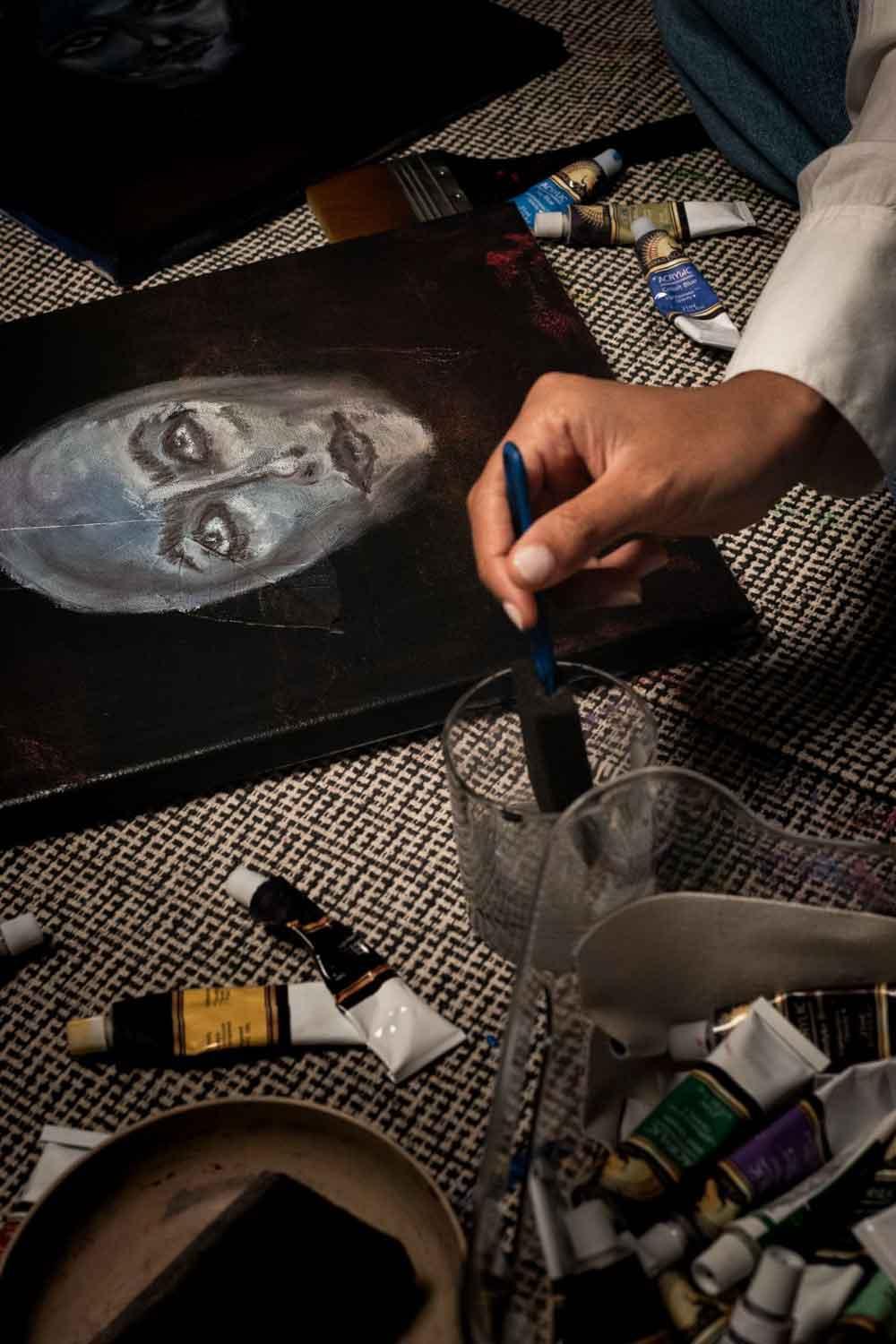
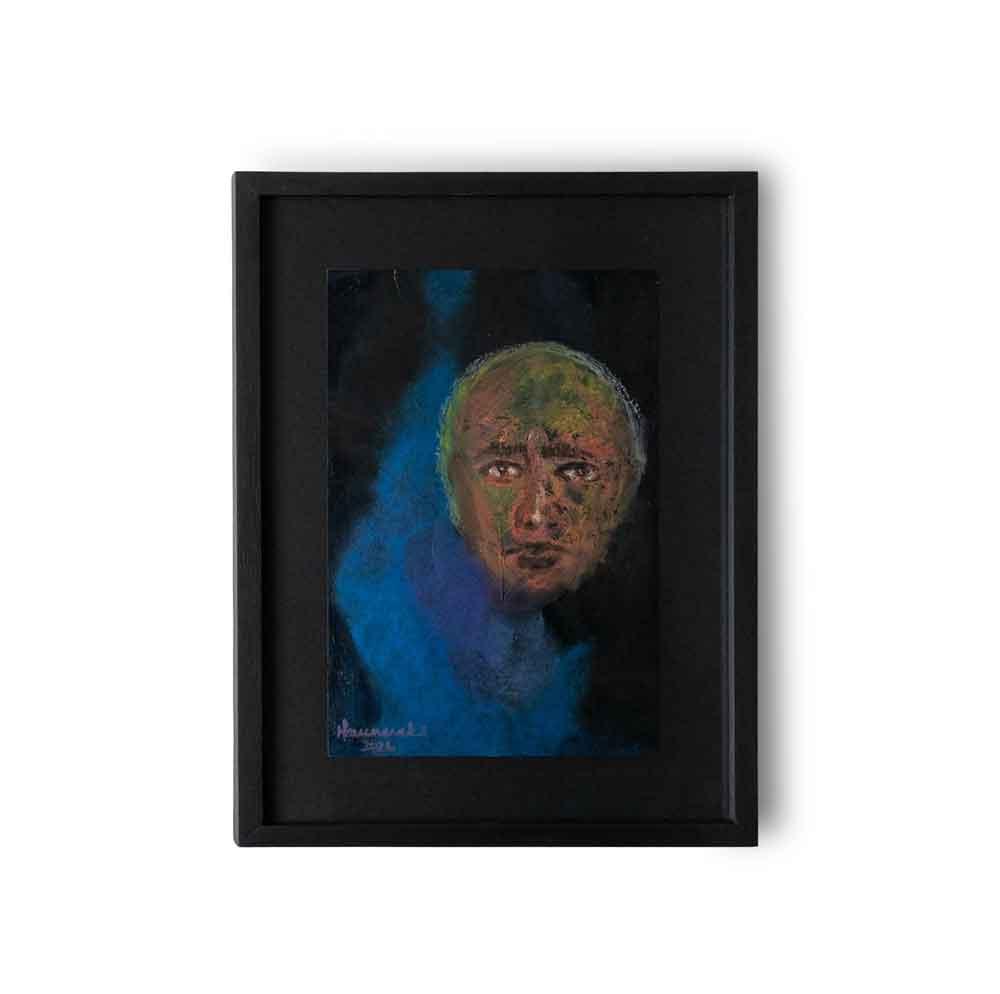
12. Portraiture and figurative work demand a high degree of exposure. When you complete a face and look back at it, whose gaze are you ultimately meeting: the viewer's, an inherited memory, or your own?
The faces are not intended to represent anyone in particular; they tend to emerge intuitively as I work. For me, they become emotional presences rather than portraits. Looking back at them can provoke feelings I hadn’t consciously planned, which is part of what made drawing faces so confronting in the first place. They represent visibility, vulnerability and the discomfort of being seen. I think the gaze ultimately becomes a kind of mirror, for me and for the viewer, reflecting back whatever emotion, memory or tension each person brings to the work.
13. Your artist statement notes that your work reflects a value of “quiet responsibility and defiant optimism”. In a world often weighed down by cynicism, how does the act of making art help sustain that sense of defiance?
For me, “defiant optimism” comes from choosing to see potential where it might easily be missed. That is part of why I’m drawn to upcycled materials. There is something hopeful in that act of transformation. Making art becomes a way of resisting cynicism by having the confidence to be authentic, speak your truth, protect your boundaries, and still believe in beauty, growth and possibility.
14. Visitors walking through the Harold Peiris Gallery navigate works ranging from pastels to massive canvases. How does changing the scale of a piece alter the intensity of the confrontation you share with the audience?
Essentially, scale gives art presence and asks the viewer to really stand before it. But I don’t think impact necessarily depends on size. Some of the smaller works can feel more intimate, almost as though they draw the viewer in closer.
15. Now that Confrontations has brought your private space of reflection into the public sphere, what is the next emotional or artistic boundary you feel ready to tackle?
I am excited to continue my work and really want to explore the themes of freedom and femininity next, touching on what it means to move forward with a stronger sense of self.
------------------------------
As Maya looks towards exploring freedom and femininity in her future work, there is a sense that Confrontations was never really about reaching an ending. It was about creating enough space to begin again, with stronger boundaries, greater self-assurance and a willingness to remain hopeful. Thank you, Maya, for allowing us into that deeply personal space and for sharing not only the stories behind the works, but the courage, memories and emotions that made them possible.