IN CONVERSATION WITH GERALD SOLOMONS
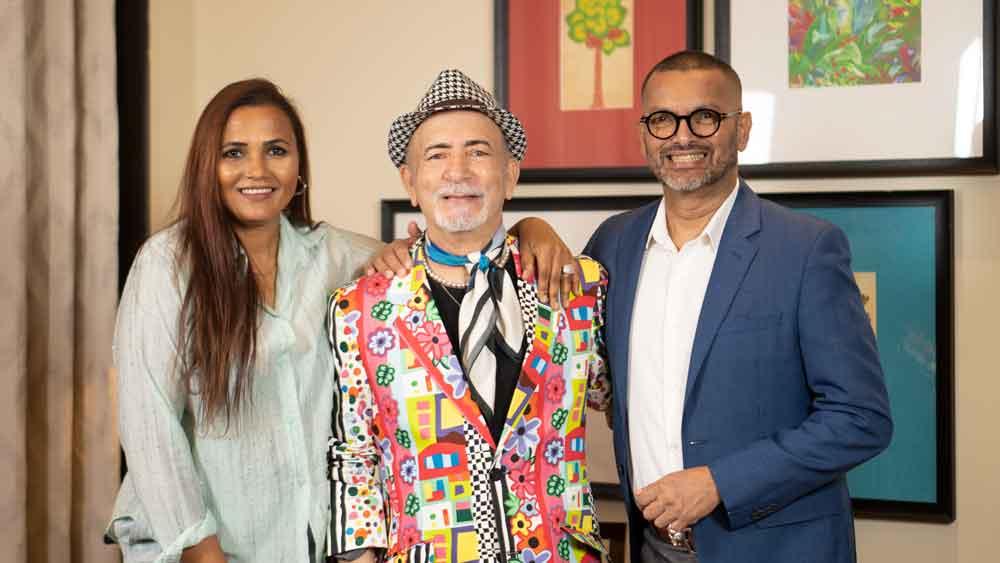
FAME GAME BY THASMINA SOOKOOR
In a conversation on Fame Game, hosted by Kumar de Silva and Rozanne Diasz, veteran hairdresser Gerald Solomons reflected on his long career, his early training, changing hair trends, the importance of client relationships and the lessons he has learned from working with generations of clients.
Q: What inspired you to name your salon Chagall rather than after yourself?
A: I chose Chagall because I like his art and I think it is different. I wanted the salon to be different as well. Chagall is different, his art is different, and I liked the idea of having a name that stood out.
Q: You began your career with Moira Muthukrishna. Tell us about that journey.
A: Yes, I began with Moira Muthukrishna. She was a wonderful teacher and a fabulous person. I learned a great deal from her, and not only about hairdressing. I think I learned more about how to deal with people, how to deal with a client and how to treat the client. That is more important than simply being a good hairdresser. The relationship with the client is extremely important.
Q: With so many chemicals and treatments being used on hair today, are people harming themselves in the long term?
A: You have to be careful, but I do not think the hair is damaged as much as people make it out to be. The main thing is to be careful with what is being used. With colour, especially, you have to be careful when it comes to the scalp.
Q: There are concerns about hair colouring and serious health effects. How do you look at that as a hairdresser?
A: Part of it is true, and Sri Lankan women colour their hair far too often. Some colour their hair every two weeks or every 10 days, and many do it themselves. At the salon, we have colouring products with fewer of the chemicals people are concerned about. We charge a little more, but for someone who colours their hair regularly, we recommend using those products. I am very careful with colour and chemical products on the scalp. You have to be. The modern approach is to use as few chemical products as possible.
Q: When did you first realise that you wanted to become a hairdresser?
A: I was always thinking about it when I was around 12 to 14 years old. Between those ages, I was deciding what I wanted to do.
Q: Was your first client your mother, as often happens with young hairdressers?
A: No, it was not my mother. It was an aunt of mine. I remember one of my first experiences as a hairdresser. When I was shampooing a client, I brought her up from the basin and noticed that one of her eyelashes had come out. I thought, “Oh my God, what happened?” I did not know that people wore false eyelashes. I was very young and naive.
Q: How did your professional journey begin after that?
A: I started with Moira as an apprentice. We studied in the morning and worked in the salon in the afternoon. The training took around nine months to a year. It was hairdressing only. There was no beauty training. The syllabus came from England, from the Morris School of Hairdressing. Moira was a very big name at the time. She was very famous and did a lot of bridal work, and I used to help her.
Q: You then went overseas. Where did your career take you?
A: I went to Australia, then to London and later to Hawaii, where I worked for a while. I opened salons in Sydney and New Zealand as well. Sydney became an important place for me after leaving Sri Lanka. From Sydney, I went to New Zealand, then London and other places.
Q: After building a career overseas, why did you decide to return to Sri Lanka?
A: The war was going on while I was doing all this. I decided that when the war was finished, I would come back to Sri Lanka and give a little of what I had learned. I wanted to give something back to the Sri Lankan boys and girls. I have not opened a school, although I had wanted to. But I have given many young people employment. A lot of the young boys and girls who worked for me are now in their 30s and are doing very well. Many of them have become well known and well liked as hairdressers. I think Sri Lankan boys and girls learn very quickly. They are very fast learners.
Q: How did you manage hair colouring before all the products available today?
A: We had one or two colours. Black, brown and a few blondes. Blonde was not very popular. We used to have a lot of people from the diplomatic community as clients, and they were often blond. They used to bring their own colours because they could get them from England and elsewhere. Those colours were not readily available here. We managed with black and brown and whatever else we could find. Even the towels were washed by hand. The capes were washed by hand. At the end of the day, we had to wash everything and hang it up.
Q: You have seen many changes in fashion. Are some of those old fashioned styles now coming back?
A: Yes. I have been looking at social media and seeing many old-fashioned things coming back. Everything seems to come back. I look at some of the styles now and think, “God, I have done that. I have done this,” many years ago. Razor cutting has become fashionable again. The mullet has also returned.
Q: Do you think the standard of hairdressing education in Sri Lanka has improved?
A: Yes. There are some schools that are really good here. They may not be as good as overseas, but they are very good and they teach well. As I said, young Sri Lankan hairdressers learn very quickly. Many of our young boys and girls have also won competitions overseas. With what we have, we are doing a very good job.
Q: Is the difference between Sri Lankan and overseas hairdressers mainly about resources and exposure?
A: Yes. Overseas, they have more resources and more exposure. They have everything available to them. Hairdressers in London, Paris and Rome are fabulous. But considering what we have here, Sri Lankan hairdressers are doing a very good job.
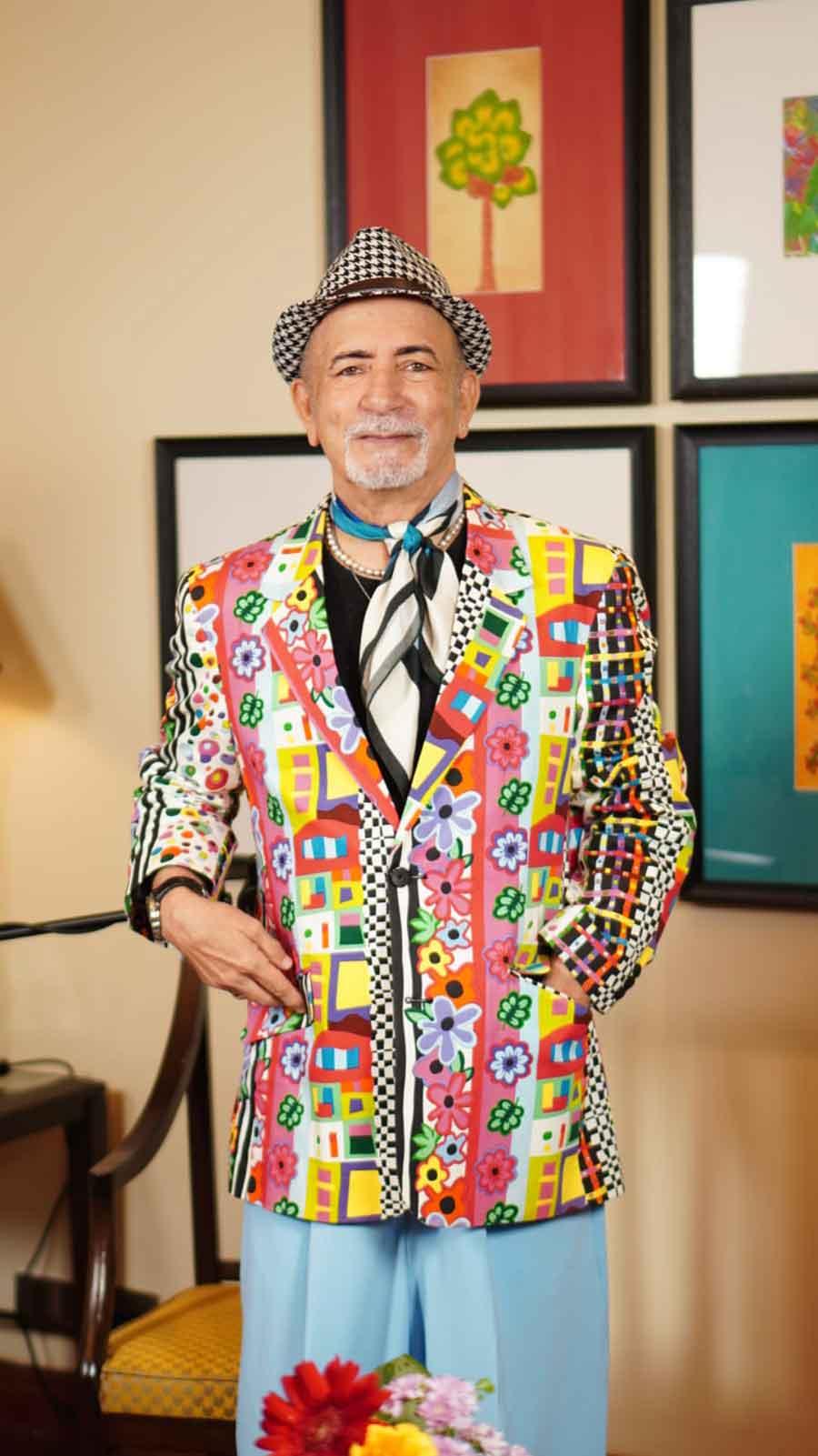
Q: People often associate you with a distinctive sense of style. Have you ever been called eccentric?
A: Yes, a lot of people think I am a little bit mad. I like being different. What I wear is for me, not for anybody else. I do not care what people say. When you are young, other people's opinions can affect you. But when you get older, you begin to think, “This is my life. I own it.” Let people talk. Nothing really hurts me now. I am beyond that.
Q: With so many hairdressers in Sri Lanka today, have you ever felt outdated?
A: Never. I will never feel outdated because I do not consider myself outdated. I am there to teach the young ones and help those who are good become better. If I were outdated, they would not look at me or trust me. As long as you are willing to learn, you are alive.
Q: You have had some memorable clients over the years. Is there one client who stands out?
A: Anusha David is one of them. We have had many arguments about her hair. She has very big hair, and I want her to look nice, so we disagree about it. But I love her and she is a very kind person. I do not agree with everything she does, and I tell her. We fight about her hair, but she usually gets her way. At the end of the day, I have decided that the client is always right.
Q: Have you experienced any unusual incidents with clients during your career?
A: There have been many. Once, a Chinese girl came in for a haircut and, halfway through, said she wanted to leave. She got up and walked out. She paid and left. I do not know why. Perhaps she simply did not like me. I asked someone who was there and was told that she was like that. I was upset for about five minutes and then forgot about it.
Q: What should a good salon teach its staff beyond hairdressing?
A: They should teach them how to look after the client. Open the door. Take the client's jacket. Make sure the client is looked after. See the client to the door when they leave. Hairdressers here are taught about haircuts, but there should be more emphasis on client service. There is not enough after service. You should also check with clients and see how they are maintaining their hair. Looking after the client should be part of the job.
Q: Why did you never move into beauty treatments as well as hairdressing?
A: I believe hairdressing and beauty are two different subjects. I do not believe that you can be both. Beauty treatments have become very advanced, and younger people are learning about newer treatments such as oxygen treatments. A hairdressing salon is also noisy, with blow dryers and music. A beauty salon should be calmer. I think beauty should be separate, or perhaps in a different area. I do not agree with combining the two in the same environment.
Q: Finally, what are the biggest challenges facing someone who wants to open a salon today?
A: It depends on how well you are trained. Skill is number one. There are salons opening everywhere and many do not remain open for very long. But skill is what matters. Everybody can do a blow dry. Sri Lankan boys and girls are fabulous at blow drying. They are very good and can straighten almost anything. But there is much more to hairdressing than simply doing a blow dry. You need skill and proper training.