Why Do We Pretend Not to See People We Know in Public?
Marian de Silva
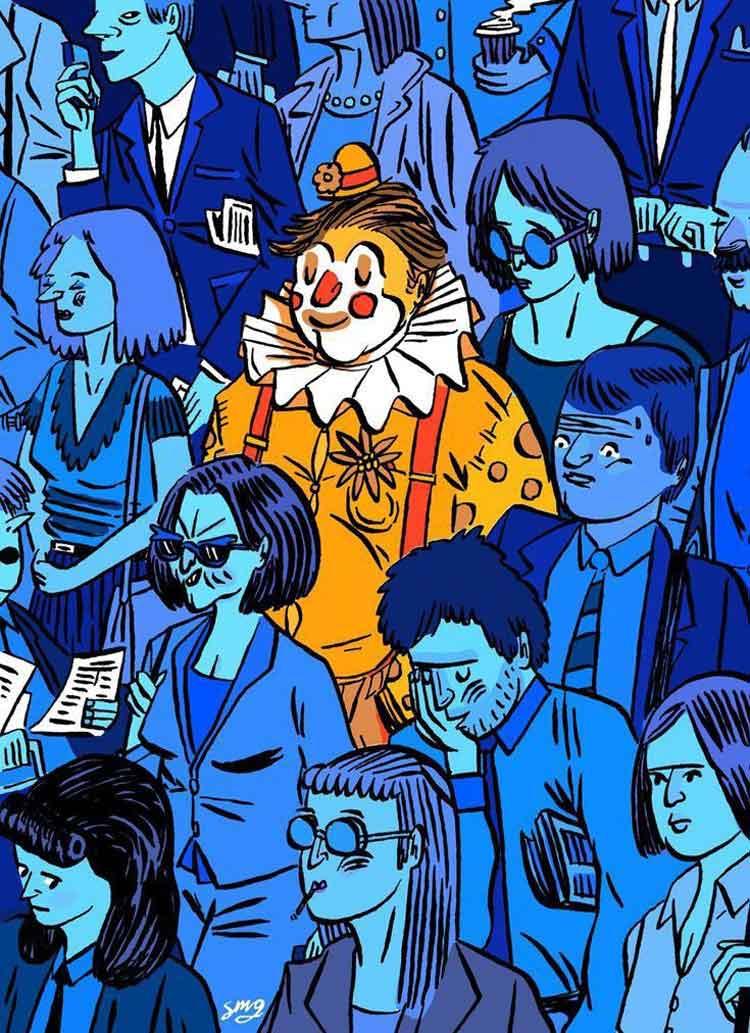
There is a peculiar little performance many of us have perfected without ever being taught. You are walking through a supermarket, a shopping mall, a restaurant, an airport or perhaps the painfully familiar streets of your own neighbourhood when you spot someone you know. Your eyes meet for approximately half a second. And then you look away. Suddenly the ceiling becomes fascinating. Your phone requires urgent attention. The packet of biscuits in your hand deserves an unusually detailed inspection. You may even develop the extraordinary ability to become deeply interested in a wall. You have seen them. They have seen you. You both know it. And yet, somehow, you are now strangers. It is one of the strangest pieces of social theatre we perform in everyday life.
Pretending not to see someone we know is rarely about not recognizing them. Quite the opposite. Recognition is usually the entire problem. The moment we identify someone; a tiny social calculation begins. Do I say hello? Will they stop? Will we have to talk? Do they expect me to talk? What if they are with someone? What if I am with someone? What if I look terrible? What if they ask what I am doing here? What if we have not spoken in three years and now, we have to pretend we have maintained a perfectly normal relationship? Suddenly a simple human encounter has become a diplomatic summit. The funny thing is that saying hello should be easy. “Hi.” “Hi.”
“How are you?” “Good. You?” “Good.” “Nice seeing you.” “You too.” Done. Yet somehow the possibility of this microscopic conversation can make perfectly functioning adults behave as though they are evading international arrest. Perhaps that is because seeing someone unexpectedly in public is different from seeing them in a context where interaction is expected. When you meet a colleague at work, you have already entered the social script. When you see your neighbour outside their house, there is an established expectation of acknowledgement. When you meet a friend for coffee, conversation is the entire point.
But seeing someone unexpectedly removes the script. Now you have to decide what relationship you actually have. And that can be surprisingly uncomfortable. There are people we know but do not really know. Former classmates. Old colleagues. Friends we slowly stopped speaking to. Someone we once dated. Someone we used to be inseparable from. A person whose Instagram stories we still watch despite having not exchanged a meaningful sentence in two years. Someone we know through someone else. Someone who knows a version of us we would rather keep in the past.

Public encounters expose the awkward middle ground between intimacy and anonymity. Online, we have developed a remarkably efficient way of maintaining relationships without actually maintaining them. We can like someone's birthday photograph without wishing them happy birthday. We can watch their holiday videos without speaking to them. We can know that they changed jobs, moved house, got engaged, adopted a dog or travelled to Japan without having had a real conversation with them in years. Social media allows us to remain informed about people from whom we have emotionally disappeared. Then one afternoon, we see them in person. Suddenly the strange arrangement collapses. You know what they have been doing, but you do not know how they are. That is a very peculiar form of familiarity.
Perhaps this is why former friends can be among the hardest people to acknowledge. A stranger requires nothing from you. A close friend requires conversation. But a former friend occupies an uncomfortable category where history exists without a current relationship. You cannot simply say, “Hello, stranger.” You are not strangers. You know too much.
You remember birthdays, arguments, secrets, inside jokes, embarrassing photographs and versions of each other that no longer exist. Perhaps you once knew exactly what they were thinking. Now you are calculating whether a wave would be appropriate.
So, you look away. Sometimes the person we avoid is not someone we dislike. Sometimes we avoid people precisely because we once cared about them. There is a strange vulnerability in unexpectedly encountering someone from your past. You are not prepared. There is no carefully chosen outfit, no rehearsed update on your life, no emotional warning. You may be carrying groceries in old clothes, rushing somewhere, having a terrible hair day or simply not feeling like the person you were when they knew you. And there is something oddly frightening about being seen by someone who remembers an earlier version of you.
We spend enormous amounts of time constructing the present version of ourselves. We choose photographs carefully. We decide what stories to tell. We edit our social media feeds. We develop careers, relationships and identities that make sense to us now.
Then someone from school appears in the cereal aisle. And suddenly you are seventeen again. This is particularly true with people who knew us before we became whoever we are now. The childhood friend who remembers your ridiculous phase. The former teacher who remembers you when you were terrified of public speaking. The ex who remembers the person you were before you learned how to set boundaries. The old colleague who remembers the job you desperately wanted to forget. Being recognised is not always flattering. Sometimes it feels like being caught by history. There is also a hierarchy hidden inside these encounters.

We are more likely to acknowledge people we perceive as socially equal or important to us. We may eagerly greet the friend we are proud to be seen with, while awkwardly avoiding someone we believe will ask for something. We may suddenly become extremely enthusiastic when we encounter someone influential, successful or attractive, while pretending not to notice someone whose company we no longer value.
That is less about shyness and more about social status. Human beings are remarkably sensitive to social positioning. We notice who acknowledges whom. We notice who walks past whom. We notice who gets a hug and who receives a polite nod. Even seemingly insignificant public interactions can communicate something about relationships, belonging and importance. Sometimes we avoid people because we do not want to be associated with them. That is an uglier truth.
There are people we would happily speak to in private but hesitate to acknowledge in front of others. There are friendships we hide because they no longer fit the image we want to project. There are relatives we avoid because family history has made every conversation complicated. There are people we have outgrown but still feel guilty about abandoning. And sometimes we simply do not want to talk. This should not require a psychological dissertation. One of the strangest things about social etiquette is the assumption that seeing someone automatically creates an obligation to interact with them. It does not.
- You can be tired.
- You can be anxious.
- You can be busy.
- You can be emotionally drained.
- You can simply not have the energy for a conversation.
Not every avoidance is cruelty.
Sometimes you are walking through a shop thinking about something else and do not want to stop. Sometimes you have had a horrible day. Sometimes you are carrying your own private problems and the idea of making cheerful small talk feels exhausting. There is a difference between deliberately snubbing someone and quietly choosing not to engage. The problem is that we often cannot tell which one has happened. That ambiguity is what makes these encounters so funny. Imagine two people walking towards each other. Person A thinks, “I hope they don't see me.”

Person B thinks exactly the same thing. Both look down. Both later think, “They ignored me.” Neither wanted to offend the other. We are capable of creating entire emotional conflicts out of two people being socially awkward at the same time. Then there is the phenomenon of pretending to be busy. The phone becomes our greatest accomplice.
We suddenly need to read a message that does not exist. We open an app without knowing why. We scroll through the same screen three times. We become fascinated by a notification from a bank we have ignored for six months.
Anything is preferable to eye contact. The phone has given us the perfect modern escape hatch from spontaneous human interaction. It allows us to construct the appearance of occupation without having to admit the truth. “I don't want to talk to you.” Sounds rude. “I was just checking something on my phone.” Perfectly acceptable. Technology has not merely changed how we communicate. It has changed how easily we can avoid communicating. And yet, perhaps the most interesting part of this strange behaviour is what happens afterwards. We think about it. We replay the encounter.
- “Did they see me?”
- “Did I look rude?”
- “Should I have said hello?”
- “Why didn't they say anything?”
- “What if they think I ignored them?”
We can spend considerably longer thinking about a five-second encounter than we would have spent actually having the conversation. This is because social interactions rarely end when the physical encounter ends. Our brains continue editing them. We analyse facial expressions, tone, timing and body language. We invent explanations.
- Maybe they were offended.
- Maybe they were embarrassed.
- Maybe they did not recognise me.
- Maybe they have something against me.
- Maybe they are just weird.
- Maybe, quite simply, they were buying toothpaste and wanted to be left alone.
We are terrible at remembering that other people have inner lives as complicated as ours.
Perhaps this is why unexpected encounters can be so revealing. They remind us that relationships are not as neatly categorised as we like to believe.
- There are people who were once everything and are now almost strangers.
- There are strangers who become friends.
- There are friends who become acquaintances.
- There are acquaintances who somehow become family.
- There are people we avoid despite loving them.
- There are people we greet warmly despite barely knowing them.
And there are people we have absolutely no desire to speak to again yet somehow continue encountering in the most inconvenient places. Life is full of unfinished social sentences. Perhaps we should become a little less dramatic about them. Not every ignored greeting is an insult. Not every avoided conversation is evidence of hatred. Not every awkward glance requires interpretation. Sometimes people simply do not know what version of themselves to bring into an unexpected encounter.