Curious Facts: When a Day Lasts Longer Than a Year
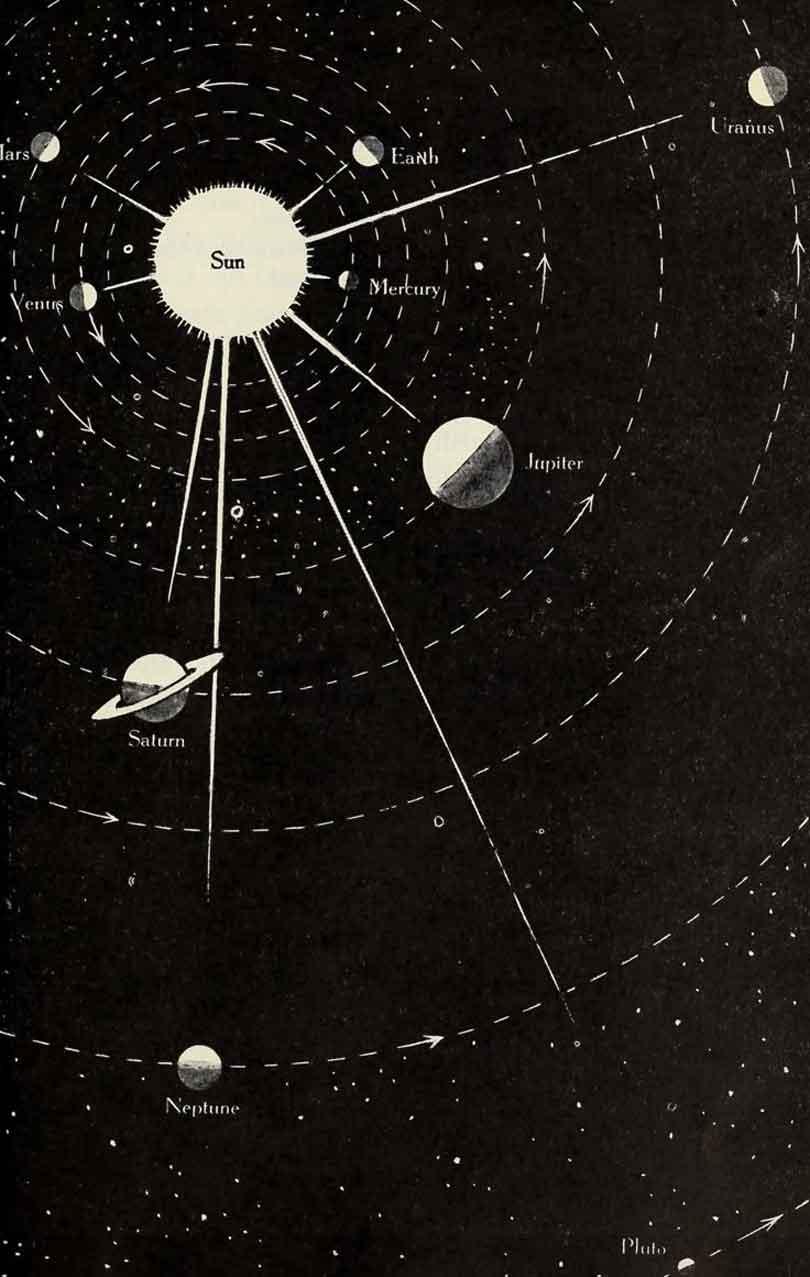
What if you woke up one morning and were told that you had an entire year before the next sunrise?
On Earth, that sounds completely impossible. A day is the time it takes our planet to rotate once on its axis, while a year is the time it takes Earth to complete one journey around the Sun. One takes approximately 24 hours, while the other takes about 365 days. We have grown so accustomed to this rhythm that the idea of a day lasting longer than a year feels almost like something from science fiction.
Yet, millions of kilometres away, there is a planet where this strange idea is reality.
Welcome to Venus. The second planet from the Sun, Venus, is often described as Earth's twin because it is similar to our planet in size, mass and overall rocky composition. But beneath that familiar appearance is a world that behaves very differently from our own. Among its many peculiarities, Venus has one of the most fascinating facts in our Solar System: a single Venusian day is longer than a Venusian year.
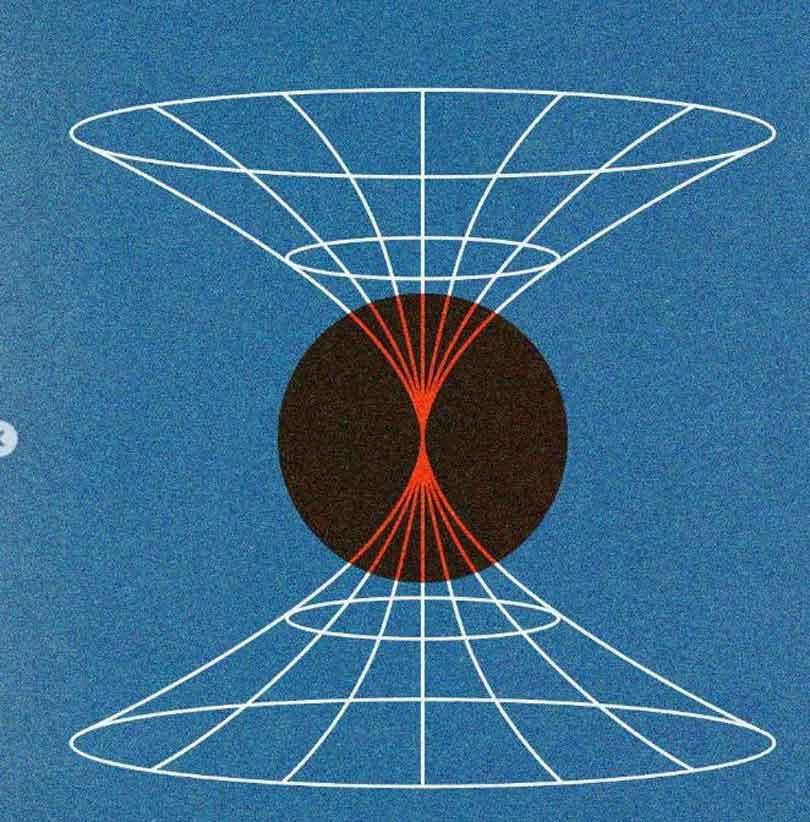
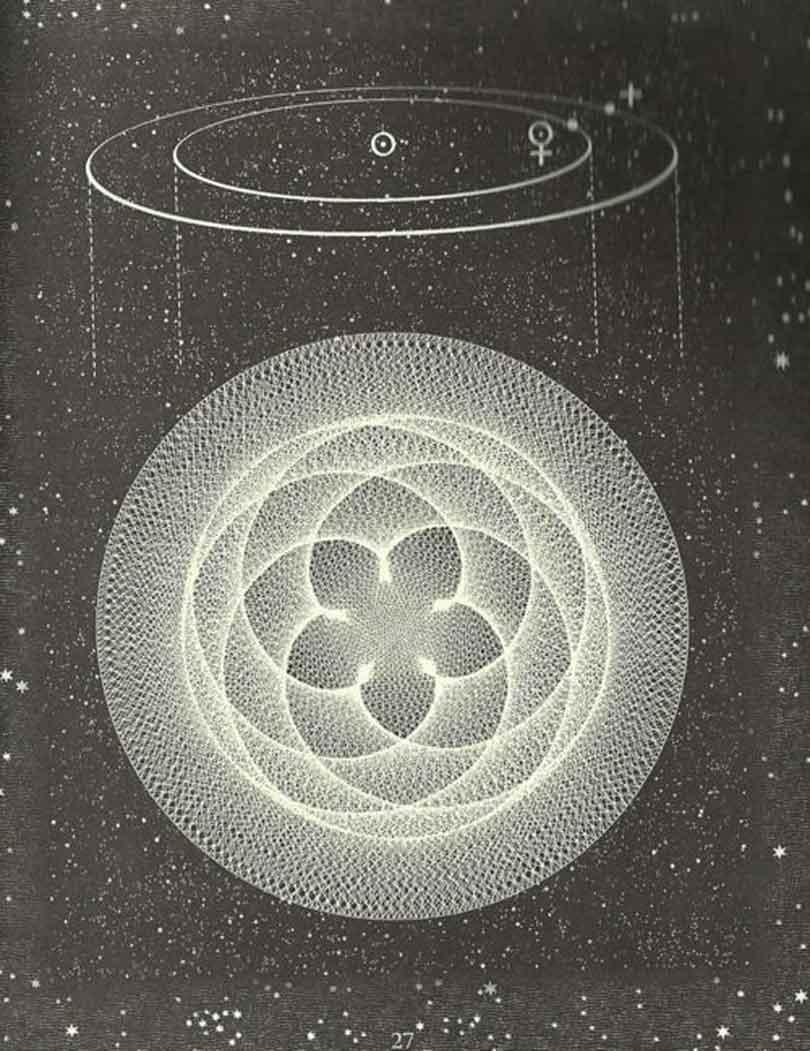
To understand why, we first need to understand what scientists mean by a "day" and a "year". A planet's year is determined by its orbit. In simple terms, it is the amount of time the planet takes to travel once around the Sun. Venus moves around the Sun much faster than Earth does because it is considerably closer to it. One Venusian year lasts approximately 225 Earth days.
A planet's day, however, is determined by its rotation. This is the time it takes for the planet to spin once around its own axis. Venus rotates extraordinarily slowly. One complete rotation takes approximately 243 Earth days. That means Venus manages to complete an entire trip around the Sun before it has finished spinning once.
Think about that for a moment. If you could somehow stand on the surface of Venus, you would be waiting nearly eight Earth months for the planet to complete one rotation. Meanwhile, Venus would have already completed its entire orbit around the Sun.
And Venus does not simply rotate slowly. It rotates in the opposite direction to Earth and most of the other planets in our Solar System. This is known as retrograde rotation. On Earth, the Sun appears to rise in the east and set in the west. On Venus, the opposite would happen. The Sun would appear to rise in the west and slowly travel across the sky before setting in the east.
There is, however, an interesting distinction that makes the story even stranger.
The 243 Earth days refer to Venus completing one rotation relative to the distant stars, known as a sidereal day. But if you were actually standing on Venus and watching the Sun move across the sky, the time between one sunrise and the next would be about 117 Earth days. This happens because Venus is rotating backwards while simultaneously travelling around the Sun. The two motions work against each other, producing a solar day that is considerably shorter than its rotational period. So, technically, there are two different ways of talking about a "day" on Venus. But whichever definition you use, the planet remains extraordinarily unusual.
Imagine the experience.
You wake up and the Sun appears in the western sky. You watch it slowly move overhead. You have breakfast. Months pass. Seasons on Earth come and go. Somewhere on Earth, people celebrate birthdays, graduate from school, start new jobs and perhaps even fall in love and get married. Meanwhile, you are still experiencing the same incredibly long Venusian day. Eventually, after roughly 117 Earth days, the Sun would disappear below the horizon. You would then experience approximately another 117 Earth days of darkness before sunrise came again.
And that is only the beginning of the strange things about Venus. Although Venus is not the closest planet to the Sun, it is the hottest planet in our Solar System. Its average surface temperature is around 464 to 467°C, hot enough to melt lead. Mercury, despite being closer to the Sun, does not hold the record because it has a much thinner atmosphere and therefore cannot trap heat in the same way Venus does.
The culprit is Venus's incredibly thick atmosphere.
The atmosphere is composed mostly of carbon dioxide, with clouds containing sulphuric acid. Carbon dioxide is a greenhouse gas, meaning it can absorb and retain heat. On Venus, this greenhouse effect has become extreme. Heat becomes trapped beneath the dense atmosphere, creating a runaway greenhouse effect that has turned the planet into a scorching world.
The pressure at Venus's surface is equally terrifying. It is roughly 93 times the pressure at sea level on Earth. NASA compares the experience to being subjected to the pressure found roughly 930 metres beneath Earth's oceans.
So, although Venus is sometimes called Earth's twin, it is more like a warning about how different two worlds can become. The comparison is particularly interesting because Venus and Earth share several similarities. Venus is only slightly smaller than Earth and has a similar rocky composition. Both planets have atmospheres and evidence of geological activity. Both formed in the same general region of the Solar System, from similar building materials.
Yet today, their environments could hardly be more different.
Earth has vast oceans, breathable air and temperatures that allow an enormous variety of life to flourish. Venus has an atmosphere so dense and hot that a spacecraft landing on its surface has to survive extraordinary conditions. The planet's surface contains volcanoes, mountains and vast plains, all hidden beneath thick clouds.
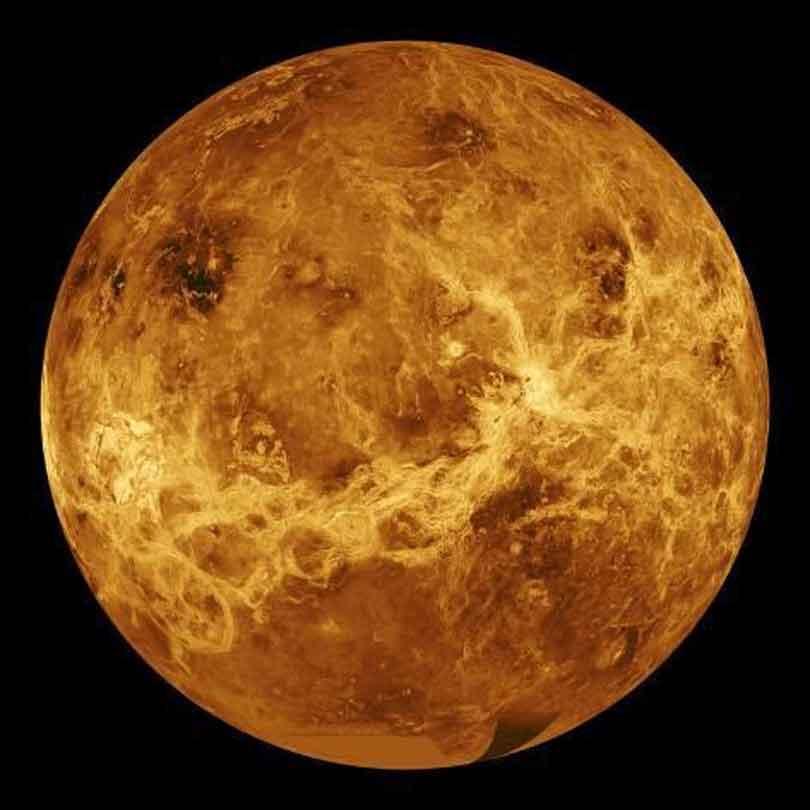
The mystery of Venus does not stop with its extreme climate. Scientists are also interested in why it rotates so strangely. For a long time, astronomers struggled to determine how quickly Venus actually rotated. The planet's thick clouds hide its surface, making it impossible to simply watch identifiable surface features move across the planet as astronomers can do with Mars or Jupiter. Earlier observations produced wildly different estimates for the length of its rotation.
The breakthrough came with radar.
In 1961, radar signals were bounced off Venus from NASA's Goldstone facility in California. Scientists analysed the returning signal and discovered that Venus was rotating incredibly slowly and in the opposite direction to Earth. Later radar observations refined the measurement to approximately 243 Earth days. That discovery transformed Venus from a bright point in the night sky into one of the Solar System's great mysteries.
Even today, scientists are interested in understanding exactly how Venus ended up with such an unusual rotation. Researchers have proposed different mechanisms involving the planet's formation, interactions with the Sun, its atmosphere and gravitational influences. The details of Venus's rotational history remain an active area of planetary science.
Perhaps the most poetic part of this curious fact is that Venus does not merely have a long day. It has a day that challenges our very understanding of time. On Earth, we tend to think of a day as small and a year as large. A day is something we experience repeatedly, while a year feels like a much longer cycle. Birthdays arrive once a year. Seasons change throughout a year. We measure our lives in years because they represent such a significant passage of time.
On Venus, the relationship is reversed. The planet can complete its journey around the Sun before it completes one rotation. It is a reminder that time itself is not experienced in exactly the same way everywhere in the Solar System. There is no universal cosmic clock that makes every planet follow Earth's rhythm. Each world has its own rotation, orbit and relationship with the Sun. So, the next time a day feels unbearably long, remember Venus. Somewhere beyond Earth, beneath clouds of sulphuric acid and an atmosphere of crushing carbon dioxide, a planet is slowly turning on its axis. It takes about 243 Earth days to complete that rotation. In the meantime, it has already travelled around the Sun.
Curious fact: Venus takes approximately 225 Earth days to orbit the Sun, but about 243 Earth days to rotate once on its axis. In other words, on Venus, a day is longer than a year. And perhaps that is what makes curious facts so wonderful. Sometimes, the universe does not need to invent something impossible to surprise us. It simply has to show us what is already there.