In Conversation with Mignonne Fernando
Fame Game by Thasmina Sookoor
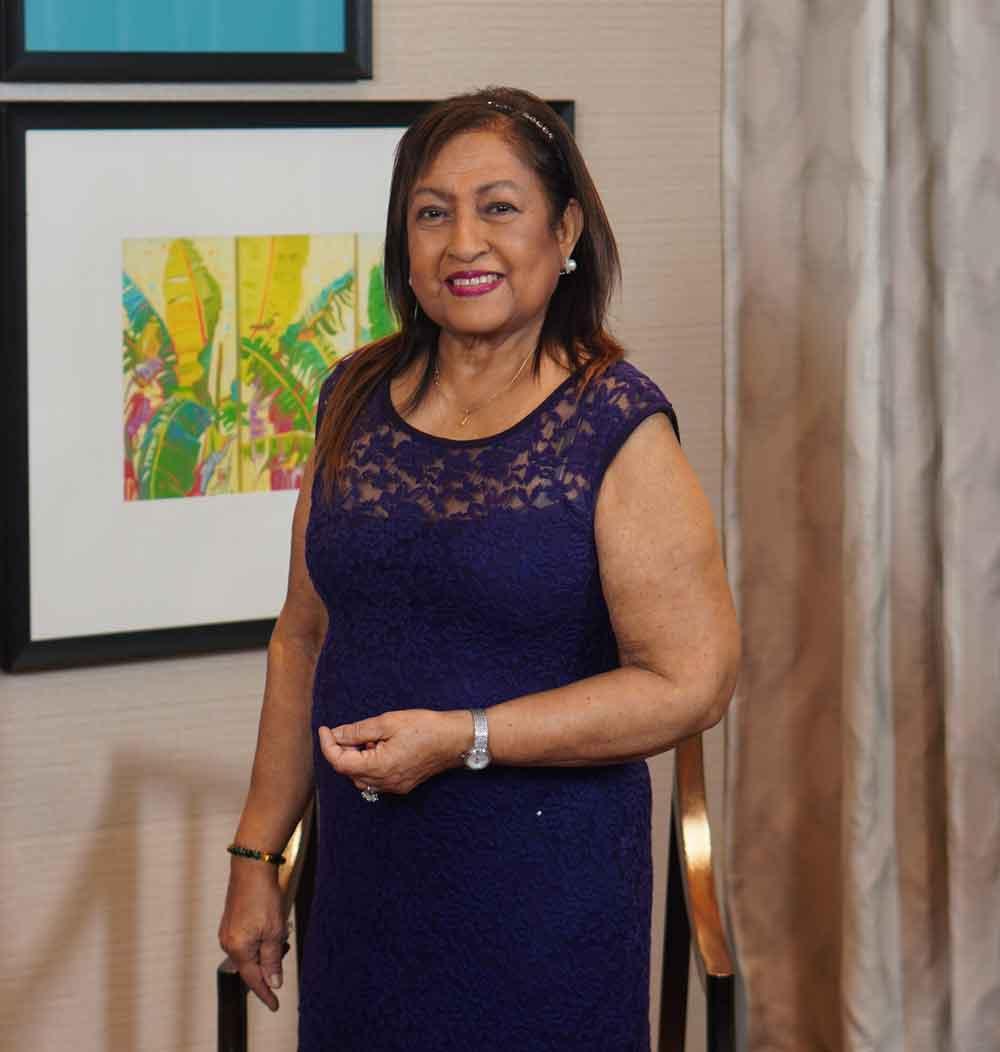
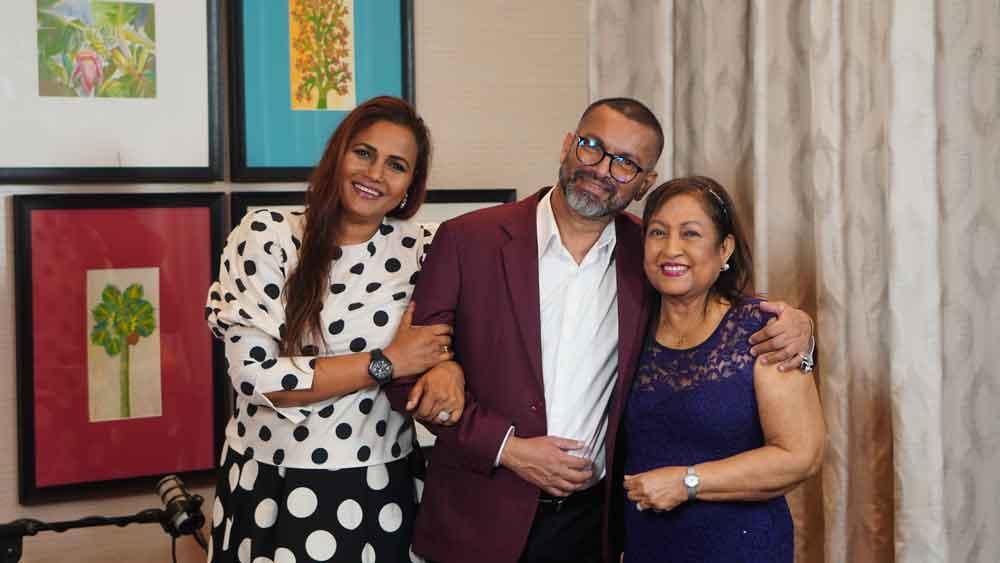
Veteran musician and composer Mignonne Fernando reflects on her remarkable journey in music in a conversation with Kumar de Silva and Rozanne Diasz on “Fame Game”, sharing memories of her career, the people who shaped her, and the importance of keeping creativity authentic.
Q: If you had to sum up your entire life in one sentence, what would you say?
A: I was fortunate to do the things I wanted in life, and I am grateful to God for bringing Tony and the Jetliners into my life, giving me the opportunity to turn my dreams into reality. From then on, I gave my heart and soul to music. I am also grateful to my mother, whose love for music helped nurture my passion from an early age.
Q: How did the Nalal Patil become part of your identity?
A: The Nalal Patil became part of my identity during the foreign concerts I was selected for. While the Indian performer would wear a saree, I chose the Kandyan saree and Nalal Patil to create a distinct Sri Lankan identity. Over time, it became a recognizable part of my appearance and fascinated many people.
Q: One of your songs remains popular at weddings even today. What inspired you to write it?
A: That song did a great deal for me. I wrote it as a trilogy in 1972. I wrote the English words myself, while the Sinhala words were by Karunaratne Abeysekera. I also composed the melody and did the arrangement.
The trilogy followed different stages of a girl's life. It began with “Dan Nivadu Kaale”, when children are going to school, followed by “Jeevithe Wasanthe” as they become teenagers, and then “Mangala Mohotha” or “Kedalle Athivu Kirilli” in marriage.
Sometimes songwriting happens because something simply inspires you. For example, “Proud to Be Sri Lankan” came to me after I saw a beautiful image of Sri Lanka from the Blue Planet exhibition in Washington. I went home and decided that I was going to write something about it. The result was a song that, to me, reads almost like a poem about Sri Lanka.
Q: Have you always been a writer? Did you write while you were at school?
A: I did a lot of writing from an early age. My great grandfather was a poet, so perhaps some of that was in my genes. I also enjoyed putting music to poems by writers such as Charles Lamb. My mother encouraged me to write my own work, which inspired me to begin composing. I wrote my first composition when I was eight years old.
Q: If you had been born in today's era, where social media can make almost anything go viral, do you think you would have become a bigger star?
A: I really do not know. I think the challenges we faced made us work harder and create more. We did not have all the facilities available today. Perhaps that difficulty made the achievement more rewarding.
Q: What was life like after the Jetliners era?
A: I was with the Jetliners until almost 2000. The third generation of the Jetliners was based in Hong Kong, where we worked with Filipino musicians. We had a resident orchestra and many other musicians whom we could call upon. One of the things I enjoyed most about my contract at the Regent was the variety. I could meet with clients, ask them what they wanted to hear and then arrange the appropriate musicians. We had around 16 bands that we could call upon for different requirements. I was later made music director, which gave me the opportunity to work on a variety of projects. I remember working with Karl Lagerfeld. He wanted something very abstract for a fashion event, where Naomi Campbell and other models were involved. He wanted the music to have an almost space like quality. I went to the piano and created something unusual and abstract, with no fixed timing, moving from one idea into another. He liked it so much that he asked for the music to be played throughout the event. I played that kind of music for around an hour and a half, and I was paid US$20,000 at the time. But the financial reward was not the only satisfying part. The variety of the work was what made it exciting. I could be performing for Japanese guests who wanted disco music one day and working in a completely different environment another day.
Q: Do you plan to compose and write new music in the future?
A: If something comes to me, I will write it. I do not sit down and decide that I am going to write a song. It happens when I suddenly get a feeling or an idea that I want to express.
Q: How do you feel when younger singers perform your songs? Do you think they are doing justice to them?
A: I think they are doing their best, and I appreciate that. What I do not like is when they fail to mention the composer or acknowledge the copyright. There have been instances where a DJ has recorded a performance of one of my songs at a wedding and then uploaded it. Other people then play that recording even though the original version is already available on YouTube. In such cases, I have had to ask YouTube to remove the recording. I do not have a problem with people interpreting my music. What matters is that the appropriate rights and acknowledgements are respected.
Q: Do you give everyone permission to commercially perform or record your songs?
A: No. Permission depends on the circumstances. For example, I gave special permission for one of my songs to be recorded and performed at the World Choir Games. They won a gold medal and came second in the world, so that was something I was happy to support.
I believe that when a song is performed professionally, it can also be interpreted in different ways. There have been many different interpretations of my songs, and some have been very creative. I have not sought copyright payments for people singing certain songs at weddings. However, once a song is taken into a recording studio and commercially recorded, that is different. Permission is required for that kind of use.
Q: With all the experience you have gained, have you ever felt the need to share your knowledge with younger musicians?
A: Sharing knowledge is important to me, and I have conducted workshops and sessions for young musicians. Through songs such as “Paradise Boy”, I have explained how a composition is structured and the importance of having a particular line or idea that stays with the listener. Every good song has something that touches the heart, but with today’s focus on recording quickly and producing one song after another, I am not sure young musicians always take the time to find that special element.
Q: Have you ever forgotten your own lyrics, considering that you have such a large repertoire?
A: No, not really. I have performed a repertoire of around 700 songs, so there are systems in place to help musicians. The bands and larger orchestras I work with have books containing the songs. Each song is numbered. Instead of announcing the full title every time, I can simply call out the number, and the musicians know what is coming next.
Q: Is there an unforgettable moment from your years of performing that still stays with you?
A: One of the most memorable moments happened in the mezzanine lounge at the Regent in Hong Kong. A Japanese gentleman came up to me and tried to request “Are You Lonesome Tonight?”, but because of the way he pronounced his words, I could not understand the request at first. Eventually, I realised what he was asking for. He gave me a US$20 tip, and I sang the song for him. While I was singing, he became very emotional and started crying. Afterwards, he thanked me and asked me to sing it again. I told him it was perhaps a little late for another performance. Another memorable experience involved a group of American Jewish women who came to the hotel because we were going to provide music for a dance. They asked me to sing a Jewish song, and I performed “Hallelujah”. A German food and beverage manager objected to the song because it was being performed in a public area. I explained that I had sung it because the client had requested it. The incident was shocking to me because, as a musician, I was accustomed to responding to requests from clients and audiences.
Q: Have you collaborated with artists from today's generation?
A: Yes. I collaborated with Iraj on “Island Song”. I arranged it in a style that he liked, and he added rap to the middle. The song is available on YouTube, and I also won the Radio Television Hong Kong Contest in Hong Kong with it.
Q: What advice would you give young musicians who are working in an industry where technology can create music almost instantly?
A: Young musicians should not depend entirely on technology for composition and creativity. Technology can enhance music, but the original idea should come from the individual. Creativity takes time, and musicians should allow ideas to develop naturally rather than rushing the process. With so many musical ideas available online, it is important to create something authentic that comes from within and reflects your own expression. That is what allows music to stand the test of time.
Q: After such a long and varied career, what does music ultimately mean to you?
A: Music has been something I have given my heart and soul to throughout my life. It has taken me to different countries, introduced me to different people and allowed me to experience a wide range of cultures and musical styles.