PRASL’S NEW EXECUTIVE BOARD TO DRIVE STRATEGIC TRANSFORMATION OF SRI LANKA’S PUBLIC RELATIONS INDUSTRY.
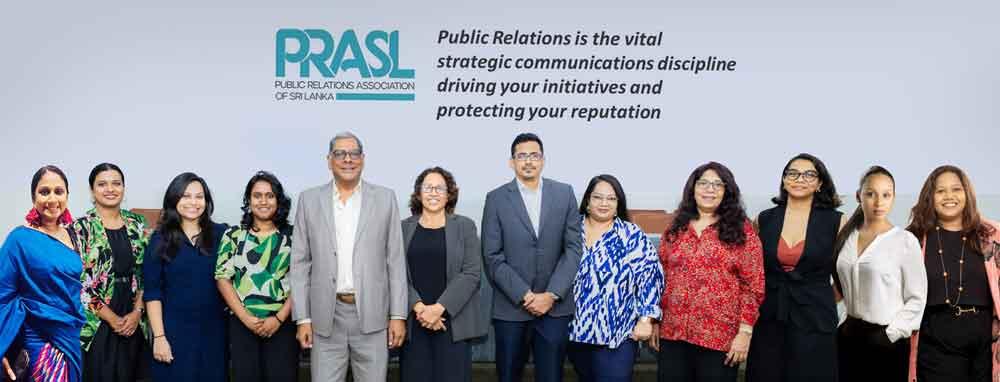
PRASL’s FY26-27 Executive Board. From L to R: Rashmi de Silva, Randima Lahirunie, Aruni Perera, Dinali Ruhunuhewa, Nimal Gunewardena, Shehara de Silva, Ashan Jayatilaka, Nadiya de Lanerolle, Uma Rajamantri, Christine Seneviratne, Nevindee Amarasinghe, Anushika Kamburugamuwa. Advisors to the Board: Rezani Aziz & Ashan Kumar.
By: Thasmina Sookoor
The Public Relations Association of Sri Lanka (PRASL) has reaffirmed its commitment to transforming the country's public relations industry into a strategic communications discipline, following the election of its new Executive Board at the Annual General Meeting (AGM) held on Monday, the 12th of October. Nimal Gunewardena was re-elected President of the Association, leading a Board comprising both experienced and newly elected members who will continue implementing the strategic direction established at the previous AGM. The Association's renewed vision seeks to reposition public relations beyond its traditional association with publicity, media relations and event management, establishing it as "The Vital Strategic Communications Discipline that Drives Initiatives and Protects Reputation." Addressing members and industry partners, Nimal emphasised the urgent need for the profession to evolve in response to technological disruption, changing media consumption patterns and increasingly complex reputational challenges.
Repositioning Public Relations in a Changing World
Highlighting the profound transformation of the communications landscape, Nimal observed that digital platforms, social media and artificial intelligence are fundamentally reshaping how organisations engage with stakeholders and manage public perceptions. Traditional mainstream media is increasingly competing with online platforms, while audiences now consume much of their information through smartphones and other handheld devices. The proliferation of citizen journalism, coupled with the rapid spread of misinformation, disinformation and fabricated news, has introduced unprecedented reputational risks for businesses, institutions and governments. Artificial intelligence presents another significant development, offering opportunities to enhance communications effectiveness while simultaneously creating challenges relating to employment, authenticity, credibility and public trust. Against this backdrop, Nimal called upon communications professionals to strengthen their strategic capabilities and evolve into trusted advisers on risk and reputation. He stressed that the industry's future depends on its ability to demonstrate measurable value to organisational leadership, influence decision-making and help institutions navigate increasingly unpredictable operating environments. By positioning themselves as strategic partners rather than merely publicity providers, public relations practitioners could secure greater recognition within corporate boardrooms and government institutions.
Financial Recovery Strengthens Association
The AGM also highlighted a significant improvement in PRASL's financial position, with the Association successfully reversing losses recorded during the preceding two years. Nimal reported that within six months, PRASL had generated a sufficient surplus to establish an interest-bearing account for the first time in its history. The turnaround was attributed primarily to renewed membership engagement, systematic collection of outstanding subscriptions, recruitment of new members and revenue generated through a successful professional education initiative. The improved financial position provides a stronger foundation for expanding the Association's programmes and advancing its strategic priorities.
Professional Education Takes Centre Stage
Professional development remains a cornerstone of PRASL's transformation agenda, reflecting the Association's commitment to equipping communications practitioners with contemporary knowledge and practical skills. A major achievement during the period was the successful delivery of a Certificate Course in Public Relations and Corporate Communications, conducted in collaboration with the Sri Lanka Press Institute. The programme brought together 16 senior industry professionals who shared their expertise, practical insights and real-world case studies across 20 specialised topics. Nineteen young working professionals enrolled in the course, seeking to broaden their understanding of public relations and strengthen their professional competencies.
The programme concluded with a comprehensive, multifaceted examination and graduation ceremony, with the majority of successful participants achieving Merit or Distinction grades. Participant feedback demonstrated encouraging levels of satisfaction. According to the Association's evaluation, 84% indicated that the course had met or exceeded their expectations, while 100% considered its content relevant to their professional needs. Additionally, 74% stated that they would recommend the programme to others. Building on this response, PRASL intends to repeat the Certificate Course in early 2027. The Association is also developing an expanded professional education portfolio, including specialised masterclasses conducted by local and international trainers, customised corporate training programmes and a higher-level Diploma qualification delivered through potential local or international partnerships. These initiatives are intended to create structured learning pathways for communications professionals at different stages of their careers.

Strengthening Industry and Academic Partnerships
PRASL has also continued strengthening its collaboration with the University of Kelaniya under an existing Memorandum of Understanding. Through this partnership, the Association contributed industry lecturers and guest speakers to the University's BA (Honours) and external Diploma programmes, helping bridge the gap between academic learning and professional practice. PRASL additionally participated in the National Public Relations Summit 2026, which brought together representatives from academia and the communications industry to exchange knowledge and discuss emerging professional developments. The Association provided recommendations to support curriculum updates, ensuring greater alignment between academic programmes and the evolving requirements of the profession. It also facilitated internship opportunities for students, enabling them to gain practical workplace exposure and develop industry-relevant skills. Looking ahead, PRASL expects to explore further collaboration with the University on international academic programmes, conferences and other professional development initiatives.
Promoting Ethics and Professional Accountability
Another important element of PRASL's strategic agenda is the promotion of ethical conduct and greater accountability across the communications industry. The Association plans to actively advance a Code of Ethics developed to guide professional practice and responsible corporate behaviour. PRASL intends to encourage public relations agencies, communications consultancies and corporate organisations to formally adopt the Code and demonstrate their commitment to professional standards. A proposed Trust Mark will recognise subscribing organisations that commit to these principles, providing a visible indication of their support for ethical communications practices. The initiative is designed to strengthen confidence in the profession and reinforce the importance of integrity, transparency and responsible stakeholder engagement.
Supporting National Development and Government Engagement
PRASL is also seeking to expand its contribution to national development by demonstrating how strategic communications can support government initiatives and international engagement. As part of this effort, the Association organised an evening discussion titled "Taking Sri Lanka to the World." The event featured Sri Lankan-born international scholar and diplomat Professor Patrick Mendis, alongside a panel of three experienced professionals involved in foreign direct investment. The panel included the Chairman of the Port City Economic Commission, a former Chairman of the Board of Investment and a private sector chief executive specialising in foreign investment. The discussion provided an opportunity to explore Sri Lanka's international positioning and the importance of strategic communication in attracting investment and strengthening the country's reputation. Looking ahead, PRASL plans to establish a dedicated Public Affairs and Government Relations position to strengthen engagement with public institutions and promote greater recognition of the value of professional public relations within government.
Building a More Strategic Profession
With a renewed leadership mandate, improved financial stability and an expanding portfolio of professional development and industry engagement initiatives, PRASL enters its next phase with a clear strategic focus.
Under Nimal’s continued presidency, the Association aims to raise professional standards, strengthen industry credibility and establish public relations as an essential management discipline. Its overarching ambition is to ensure that communications professionals are recognised not simply for generating publicity, but for helping organisations build trust, manage risk, protect reputation and successfully advance strategic initiatives. The newly elected Executive Board will now be tasked with translating this vision into sustained progress for Sri Lanka's public relations profession.