AZERBAIJAN’S HIJAB RESTRICTIONS SPARK PROTESTS, ARRESTS AND A GROWING DEBATE OVER RELIGIOUS FREEDOM.
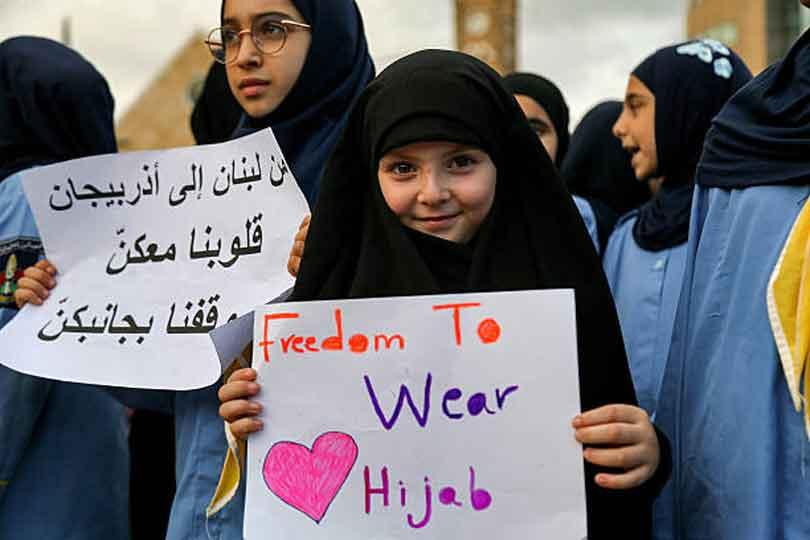
Azerbaijan is facing a growing controversy over religious freedom after new school dress regulations resulted in Muslim girls being turned away from classrooms and female teachers facing restrictions on wearing the hijab. The measures have triggered demonstrations, student boycotts, arrests and an unusually public disagreement with neighbouring Turkey. At the centre of the dispute is a fundamental question: can a government committed to secular education prevent children from attending school because they wear religious clothing?
The controversy began with amendments to Azerbaijan’s education regulations in September 2026. On the 21st of September, the government adopted Resolution No. 309, tightening requirements for uniforms in state schools. The rules prohibit additional clothing considered inconsistent with established school uniforms or the secular principles governing public education. Although the legislation does not explicitly mention the hijab, school administrators have interpreted its provisions as grounds for excluding girls who cover their hair for religious reasons.
A separate decision introduced on the 6th of October established dress requirements for teachers, extending the controversy beyond pupils. Reports subsequently emerged of female teachers being instructed to remove their headscarves or face professional consequences. By the 12th of October, enforcement of the new regulations had prompted protests in several parts of the country, including the capital, Baku, and communities in southern Azerbaijan.
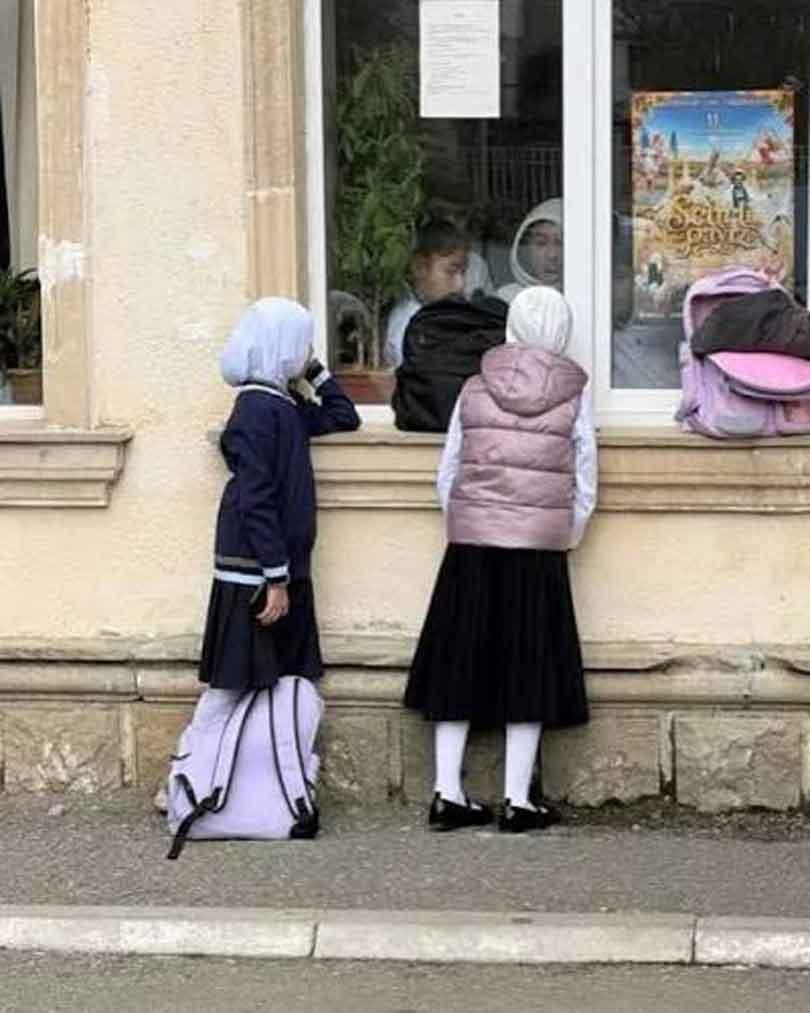
For affected families, the consequences have been immediate. Parents have described taking their daughters to school only to be informed that they cannot enter classrooms unless they remove their headscarves. Videos circulating online have shown distressed pupils outside educational institutions, while classmates have reportedly boycotted lessons in solidarity. Boys have also participated in demonstrations supporting girls excluded under the regulations.
The situation has raised particular concerns because education is compulsory in Azerbaijan. Families who believe wearing the hijab is a religious obligation now face a difficult choice between complying with school authorities and maintaining their religious practices. Critics argue that access to education should not depend on surrendering an expression of religious identity, particularly when the clothing concerned does not inherently prevent a student from participating in lessons.
In a media interview, Gulmira Aslanova, a parent in Baku said administrators at School No. 172 had instructed her to send her daughter without a headscarf. She challenged the restrictions by referring to constitutional protections for religious freedom and education. Similar complaints have been reported from Jalilabad, demonstrating that the controversy extends beyond the capital. Teachers have also described the personal consequences of the policy. Zahra Hasanova told Al Jazeera that she had been informed she could no longer wear her hijab at school. She explained that wearing the headscarf was a personal decision and that removing it should likewise remain her choice. Her account illustrates how the regulations affect not only students but also women whose professional responsibilities are now being placed in conflict with their religious convictions.
Azerbaijan is a predominantly Muslim country, with approximately 96% of its population identifying as Muslim. Nevertheless, the republic maintains a strongly secular constitutional system shaped partly by its Soviet history. Article 18 of the constitution separates religion from the state and establishes the secular character of public education. At the same time, Article 42 protects the right to education, while Article 48 guarantees freedom of conscience.
These constitutional principles have become central to the disagreement. Supporters of the regulations argue that public schools should maintain a neutral environment in which all children follow the same dress requirements. Elnara Akimova, a lawmaker from the ruling New Azerbaijan Party, has defended the measures by arguing that children's developing beliefs can be influenced by their families and surroundings. From this perspective, uniform regulations are intended to protect secular education and reduce external pressures on pupils.
Opponents reject the suggestion that secular education necessarily requires the exclusion of religious clothing. They distinguish between a state institution promoting a particular religion and an individual exercising personal religious freedom within that institution. In their view, allowing a student to wear a headscarf does not transform a secular school into a religious establishment. Instead, excluding the student risks turning religious neutrality into a restriction on individual belief. The disagreement has intensified because the regulations themselves do not expressly prohibit hijabs. This has left considerable responsibility with individual schools and their administrators. Critics argue that such ambiguity creates uncertainty for families and opens the possibility of inconsistent enforcement. It also raises questions about whether schools are applying a clearly defined legal prohibition or adopting restrictive interpretations of broader uniform requirements.
As demonstrations spread, the government's response attracted further scrutiny. On the 12th of October, Azerbaijan's Interior Ministry announced that 37 people had been detained in connection with incidents surrounding enforcement of the dress regulations. Authorities accused individuals of confronting school staff, damaging property and attempting to disrupt public order. Criminal proceedings were opened under Article 233 of the Criminal Code, which addresses the organisation of activities disrupting public order or active participation in them. However, independent activists and media organisations reported considerably higher detention figures. Some accounts suggested that more than 200 people had been detained during protests in Baku. The distinction between peaceful demonstrations and alleged acts of violence is important. Azerbaijani authorities have cited public disorder and damage to property in explaining their response, while human rights organisations have warned that peaceful protesters must not be punished for expressing opposition to government policy. On the 16th of October, Amnesty International called on Azerbaijan to reverse the restrictions and release individuals detained solely for peacefully exercising their rights. The organisation said preventing girls from attending school because they wear hijabs was discriminatory and incompatible with protections for education, religious freedom and expression. It also raised concerns about reported detentions involving parents and activists. Among the cases highlighted by Amnesty was that of Shahizyar Huseynova, whose husband reported that she had been detained after protesting her daughter's exclusion from school in Baku. Amnesty also expressed concern about activist Ilkin Huseynov, who had established an initiative connecting volunteer teachers with children affected by school exclusions.
He was reported missing after leaving his home with unidentified individuals on the 14th of October. Subsequent local reporting indicated that he had received administrative detention, although the circumstances of his disappearance and detention remained a matter of concern.
Reports of difficulties accessing Instagram and TikTok added another dimension to the controversy. Social media had become an important means of circulating footage of school exclusions and organising public responses. Users reported disruptions, while questions emerged about whether access restrictions were connected to the demonstrations. The authorities had not provided a clear public explanation establishing the cause of the reported disruptions, making it important to distinguish documented access problems from allegations about government intent.
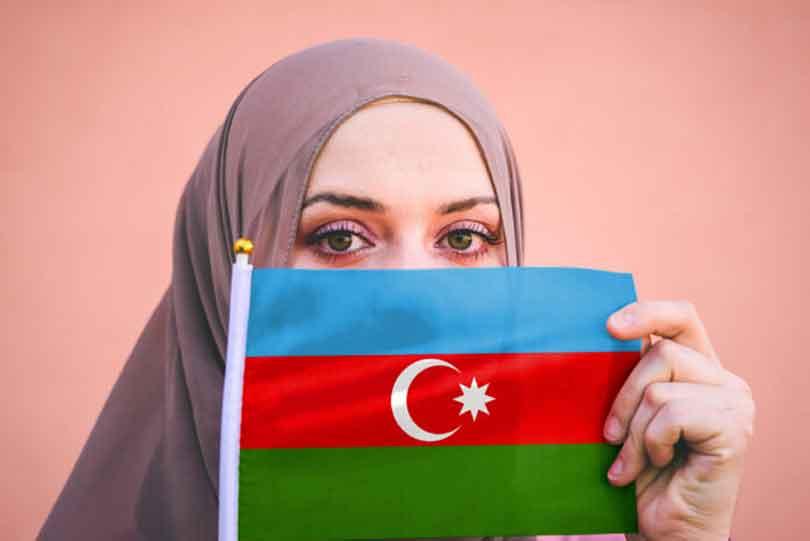
The dispute has also exposed differences between Azerbaijan and Turkey, two countries whose governments frequently emphasise their close political, cultural and strategic relationship. Turkish presidential adviser Oktay Saral publicly criticised the exclusion of headscarf-wearing students and called for the decision to be reversed. Azerbaijan's ruling party responded by condemning his intervention as inappropriate interference in the country's domestic affairs.
The disagreement is particularly notable because Turkey experienced its own prolonged struggle over Islamic headscarves in educational institutions. For decades, restrictions affected women attending universities and working in public institutions. Many of those restrictions were gradually removed during the governments of President Erdoğan. Consequently, the developments in Azerbaijan have revived memories of an earlier period when Turkish women faced barriers to education and employment because of their religious clothing. Demonstrations outside Azerbaijan's diplomatic premises in Istanbul further illustrated how the issue has crossed national borders. Yet the disagreement should not automatically be interpreted as a fundamental breakdown in relations between the two countries. Their strategic partnership remains extensive, even as public criticism has exposed contrasting approaches to religious expression and secular governance.
Azerbaijan's relationship with religion is also influenced by its geographical position beside Iran. Although both countries have substantial Shia Muslim populations, their political systems differ considerably. Iran maintains an Islamic republic in which women face compulsory hijab requirements, while Azerbaijan operates a secular state with extensive government oversight of religious activity. Some observers have linked Azerbaijan's restrictive approach to concerns about religious movements and foreign influence, although these interpretations should not be confused with a proven explanation for the latest regulations.
The current controversy is not unprecedented. In 2010, restrictions involving headscarves and school uniforms prompted demonstrations in Baku, followed by further disputes in subsequent years. The recurrence of the issue indicates that Azerbaijan has struggled for more than a decade to reconcile its model of secular education with the religious practices of some citizens.
International scrutiny of Azerbaijan's religious freedom record also predates the latest protests. The United States Commission on International Religious Freedom recommended in its 2026 annual report that Azerbaijan remain on the United States State Department's Special Watch List because of severe religious freedom violations. The present dispute has therefore emerged against a broader background of concerns about state restrictions on religious activity and freedom of expression.
As of 20th of October 2026, the school regulations have not been reversed, and uncertainty remains over the number of people still detained. The government continues to defend secular educational standards, while affected families and human rights advocates challenge the exclusion of pupils and teachers. The eventual resolution may depend on whether the authorities clarify the regulations, change their enforcement or reconsider the restrictions altogether. Ultimately, the controversy concerns more than the hijab itself. It raises questions about the limits of state authority, the meaning of secularism and the responsibilities of public institutions towards citizens whose beliefs differ from official expectations. For the girls who have been turned away from classrooms, however, the issue is immediate and practical. Their education has become entangled in a national argument about religion and identity, leaving families waiting to discover whether their daughters can return to school without being required to abandon a visible expression of faith.