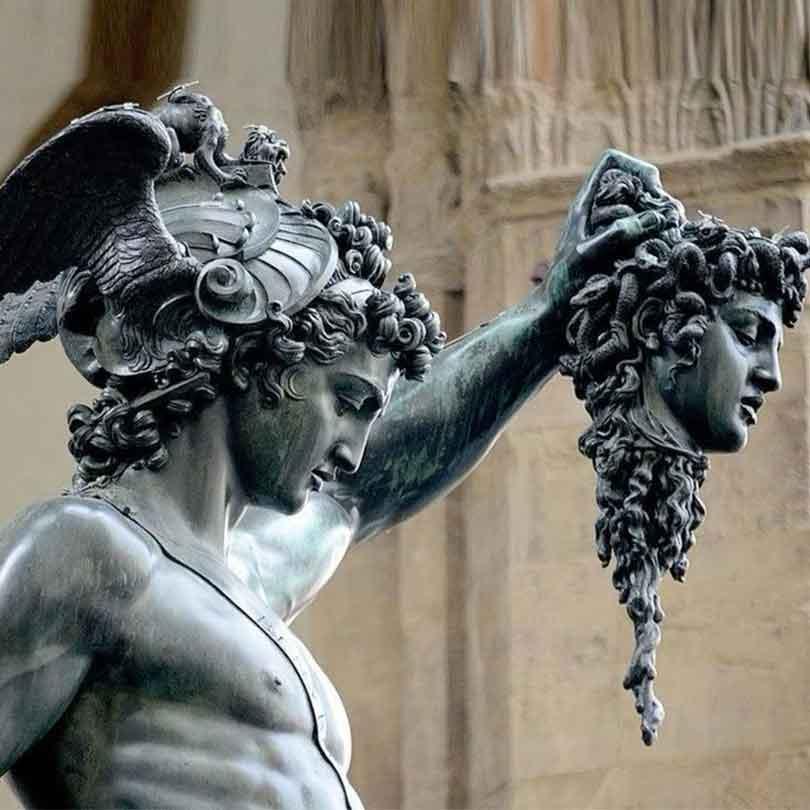
MEDUSA WAS NEVER THE VILLAIN
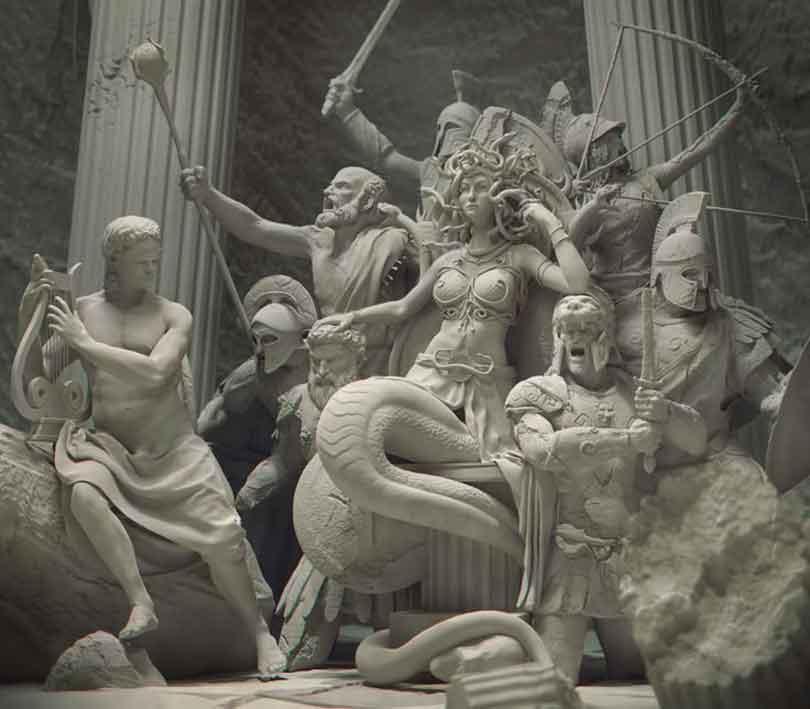
She is remembered by many as one of the most feared creatures in Greek mythology: the monstrous, snake-haired woman who turned everyone to stone just by glancing at them. A monster whose death was the triumph of a hero. Yet beneath the surface of Medusa’s story lies another one, far more tragic than one is led to believe. Although there are many different interpretations of her story, one of the most recognizable versions of her transformation was spread by Ovid, a Roman poet, through his epic Metamorphoses.
Before the Gorgon
Contrary to popular belief, Medusa was not born a monster. She was actually once a remarkably beautiful young woman, renowned for her magnificent hair. Her beauty attracted the attention of Poseidon, the God of the Sea. In Ovid’s account, Poseidon, so taken by her beauty, then assaulted her while she was praying to the Greek Goddess Athena inside the temple of Minerva. What happened next would change Medusa’s life forever. Rather than placing the blame on the one who assaulted her, Athena directed her fury towards a clearly shaken Medusa. One would assume the poor girl would be shown at least an ounce of sympathy or protection from the almighty Goddess she was so devoted to, but Athena transformed Medusa entirely. Her hair, once admired for its beauty, had become the mass of living serpents, and her face acquired the power to turn any living being to stone with just one look. And there she was, now a gorgon, brutally cursed for life by the very Goddess she consistently sought refuge in.
A Curse so Cruel
The heart of Medusa’s cruel transformation was loneliness, as the curse did far more than just change her appearance; it also completely isolated her from the rest of humanity. She could no longer exist amongst other people as she once did, and even the sheer possibility of being loved, understood, or even accepted became entangled with the very thing that made her feared. Her isolation not only stemmed from her changed appearance but also from the fact that her existence had become so dangerous. An ordinary woman who once existed amongst the living like anyone else became a prominent figure that people approached only with fear, if they even dared approach her at all.
So, how much of her monstrosity belonged to her, and how much had been imposed on her? Her appearance was terrifying. Her gaze? Deadly. But these were the consequences of the transformation, not evidence that she had always been evil. Maybe the cruelest part of her curse was that it made the world see what she had become, leaving little to no room to remember who she had been before.
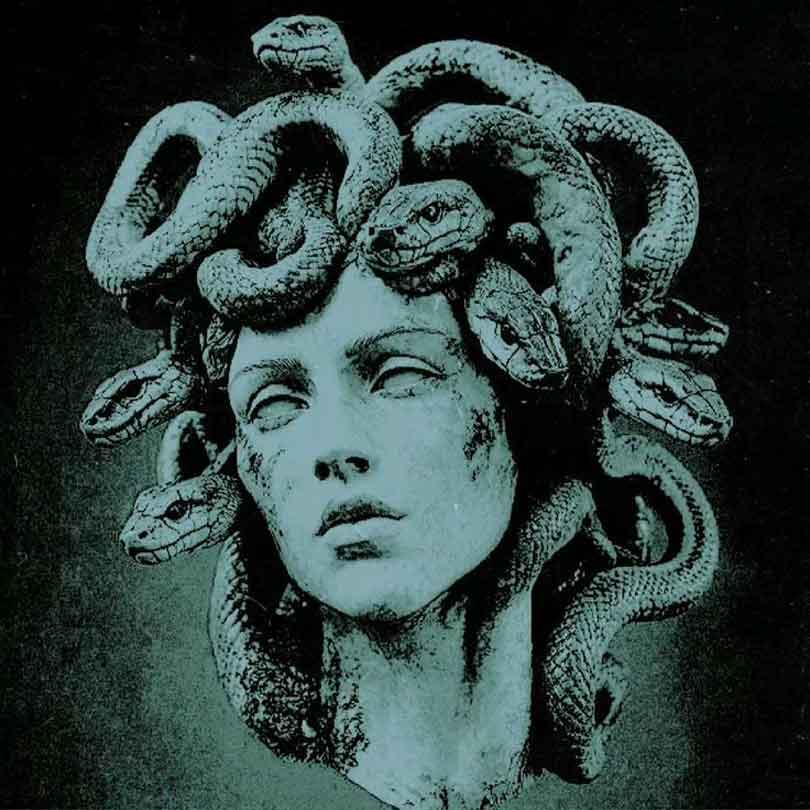
While she is still mostly associated with villainous stereotypes, her story did not begin with an act of evil on her part at all. It began with something that happened to her. She did not choose for her body to become the source of fear nor for her existence to become a danger to everyone around her, which is honestly, profoundly tragic, considering that fear was the sole element that everyone associated her with.
Death is Unfair
Medusa’s story might have ended in obscurity, but Greek Mythology had other plans. Perseus, Zeus’ son, was tasked with bringing back Medusa’s head to prove he was a suitable fit for the throne. Many thought this was a suicide mission because, unlike any other ordinary opponent, Medusa could kill with a simple look. A direct confrontation would mean instant death. However, Perseus was not sent into the darkness without help.
In the familiar myth, he received divine assistance and equipment, including winged sandals, a curved blade, a special pouch to carry Medusa’s head in, and even a reflective shield given to him by Athena herself. Using the shield to observe Medusa’s reflection without looking at her directly, Perseus approached her while she slept. He swung the blade across her neck, and she was beheaded in an instant.
From the perspective of a hero, he had defeated a monster feared by everyone who met her. From an alternative perspective, a woman who had already lost her former life was killed while she slept, and her death was celebrated as a victory. There was no great battle where Medusa was given the opportunity to defend herself, nor was there a conversation in which she could voice out her side of the story.
Her Power Outlived Her
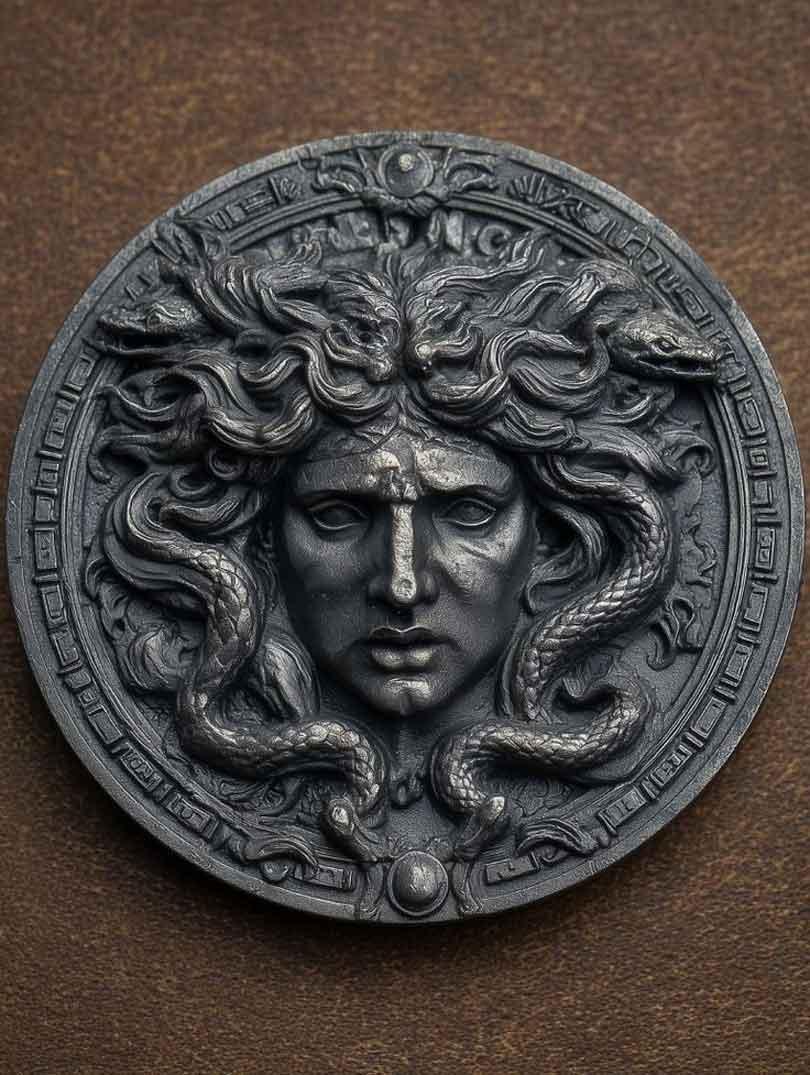
Even today, many centuries after the first myths were told, Medusa still continues to be a prominent figure in the lives of many, appearing in paintings, literature, sculptures, and even tattoos, with her face becoming one of mythology’s most recognizable images.
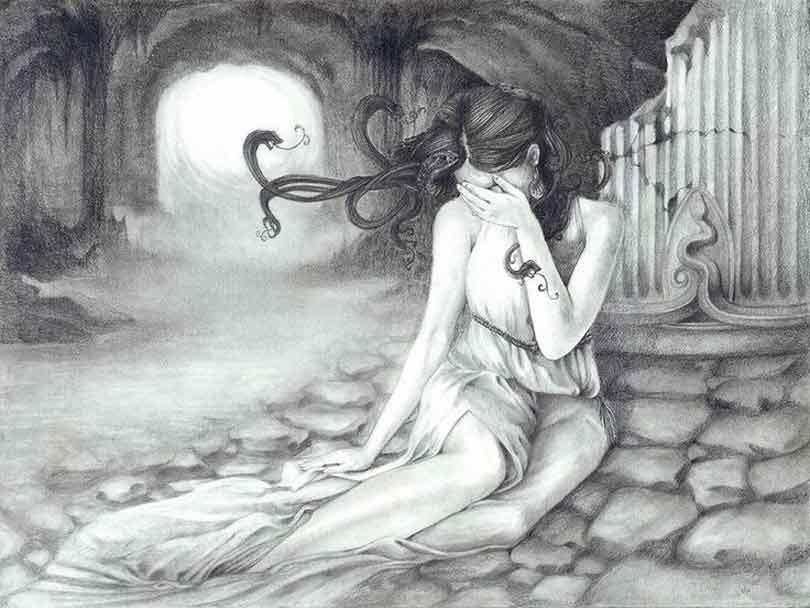
Many modern interpretations of Medusa also now view her as a symbol of female suffering, rage, and resistance, and she has also become a representative for people who have been blamed for something they never did. Her transformation speaks to the cruelty of having an identity imposed upon you by circumstances that you never chose in the first place.
Nevertheless, this does not mean that every interpretation of Medusa must portray her as entirely innocent or that every act committed by someone who has suffered should be excused. Her myth instead invites us to look at the circumstances that could surround an individual before reducing them to a single judgement. When her name is heard, many still remember the snakes. They remember the deadly gaze. The legend still remains as frightening as ever. But now, perhaps we could look beyond them, because before she became a warning, Medusa was just another woman. A woman whose life was transformed by forces far beyond her control. A woman who was violated for her beauty and killed for her ugliness. A person who had a life before she became a legend.