Riots in France: The Deepening Crisis of Social Unrest, Inequality and Public Trust.
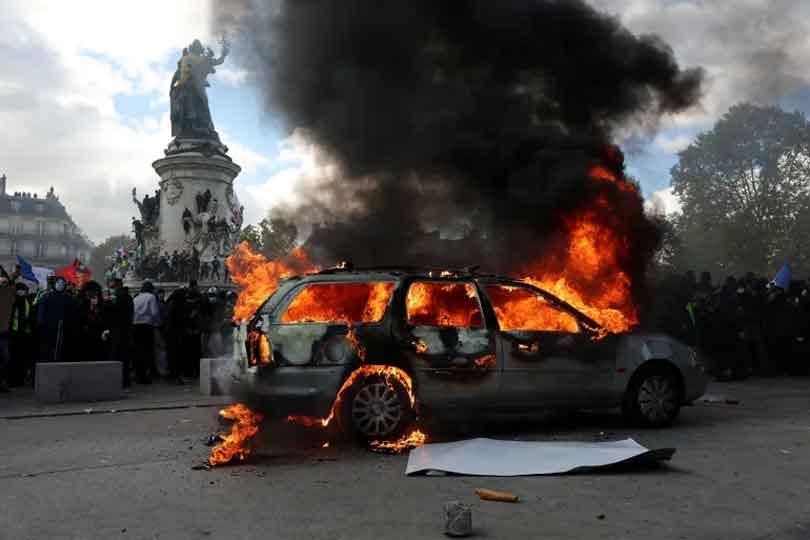
France has a long history of public protest, but the riots that have erupted across the country in recent years have exposed divisions that go far beyond ordinary political disagreement. From burning vehicles and attacks on public buildings to violent confrontations between demonstrators and police, periods of unrest have raised serious questions about inequality, policing, immigration, national identity and the relationship between citizens and the French state. Although the immediate causes of individual disturbances differ, the underlying tensions reveal a society struggling to reconcile its republican ideals of liberty, equality and fraternity with the experiences of communities that feel excluded from those promises.
One of the most significant episodes of recent unrest occurred in June 2023, following the fatal police shooting of 17-year-old Nahel Merzouk in Nanterre, a suburb west of Paris. Nahel, a French teenager of Algerian and Moroccan descent, was shot during a traffic stop on the 27th of June. Video footage of the incident circulated rapidly on social media, contradicting aspects of the initial account that suggested the officer had faced an immediate threat from the moving vehicle. The footage triggered widespread anger, particularly among young people in working-class suburbs where accusations of discriminatory policing and excessive force had already damaged trust in law enforcement.
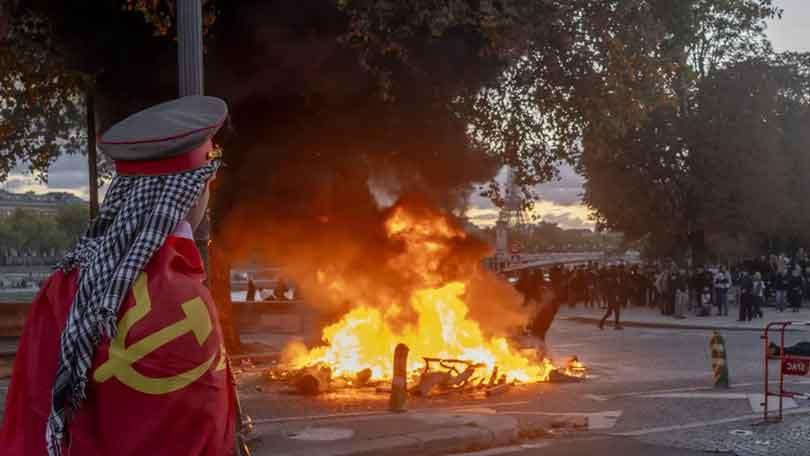
Within days, disturbances spread beyond Nanterre to Paris, Marseille, Lyon, Lille, Toulouse and numerous smaller towns. Cars were set alight, shops were looted, public buildings were attacked and police officers faced fireworks and other projectiles. Schools, libraries, municipal offices and transport infrastructure were among the facilities damaged. The violence prompted an extensive security response, with tens of thousands of police officers and gendarmes deployed across the country. Thousands of people were arrested as authorities attempted to restore order.
The scale of the destruction was considerable. French insurers estimated that the unrest generated hundreds of millions of euros in insured damage, while local authorities faced substantial repair costs. Small businesses suffered broken windows, stolen merchandise and interrupted trading. Public transport services were disrupted, and residents of affected neighbourhoods sometimes found themselves unable to access essential facilities. The destruction was particularly painful in disadvantaged communities, where damaged schools, libraries and municipal buildings were often among the few accessible public resources.
The riots also revived memories of the nationwide disturbances of 2005, which followed the deaths of two teenagers, Zyed Benna and Bouna Traoré, who were electrocuted while hiding in an electrical substation after fleeing police in Clichy-sous-Bois. Those events produced nearly three weeks of unrest and prompted the French government to declare a state of emergency. The similarities between 2005 and 2023 were striking. Both episodes began with the deaths of young people during encounters involving police, both spread through disadvantaged suburban neighbourhoods, and both revealed longstanding grievances about discrimination, unemployment and social exclusion.
However, describing these disturbances simply as expressions of poverty would overlook the complexity of their causes. France has an extensive welfare system, publicly funded education and healthcare, and legal protections intended to promote equality.
Nevertheless, access to opportunity remains uneven. Some suburban districts experience persistently high unemployment, limited economic mobility, inadequate housing and difficulties connecting residents with employment centres. Young people in these areas may encounter obstacles that are less visible in prosperous urban districts, including discrimination associated with their names, addresses or perceived ethnic backgrounds.
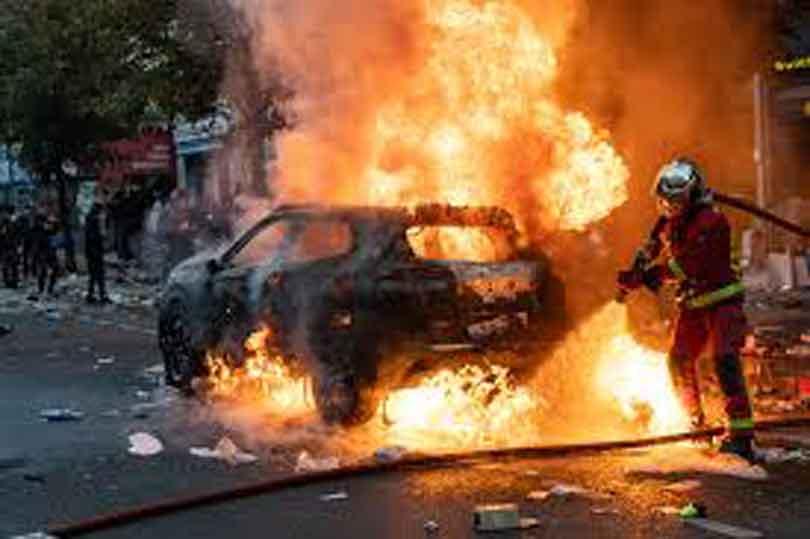
Policing has become one of the most contentious aspects of this debate. Human rights organisations and researchers have documented concerns about discriminatory identity checks, particularly affecting young men perceived as Black or Arab. French police authorities maintain that officers must be able to intervene in dangerous situations and protect the public, often under difficult circumstances. Police unions have also emphasised the risks officers face from violent attacks and organised criminal activity. Yet critics argue that aggressive policing can deepen hostility in communities where residents already feel unfairly targeted.
The legal framework governing police use of firearms has also attracted scrutiny. A 2017 law clarified circumstances in which officers may use their weapons, including certain situations involving vehicles whose occupants refuse to comply with orders and pose a threat to life or physical safety. Critics have questioned whether the law provides sufficiently clear safeguards, while defenders argue that officers require effective legal protection when confronting genuine danger. The death of Nahel intensified demands for greater accountability, improved training and more transparent investigations into police shootings.
Social media played a major role in the speed and geographical reach of the 2023 riots. Videos of the shooting, confrontations and destruction circulated across platforms including Snapchat, TikTok and X. These networks helped spread information and mobilise public attention, but they also facilitated the circulation of misleading footage, rumours and inflammatory messages. French authorities accused some online activity of encouraging violence and discussed measures to limit the spread of harmful content. Such proposals generated concerns about freedom of expression and the risks of granting governments excessive control over digital communication during periods of civil unrest.
France's political leadership faced the difficult task of condemning violence while acknowledging the grievances that helped fuel public anger. President Emmanuel Macron called for calm and defended the need to restore public order. His government mobilised additional security personnel and sought cooperation from local authorities and families. Opposition parties offered sharply different interpretations. Figures on the political right emphasised law enforcement, criminal responsibility and the need for tougher penalties. Politicians on the left placed greater emphasis on police accountability, discrimination and the social conditions experienced by residents of marginalised neighbourhoods.
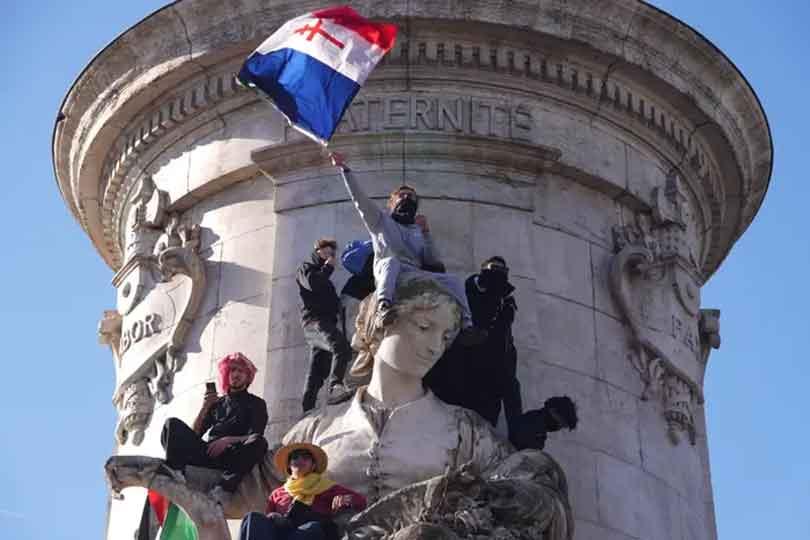
These competing interpretations reflected a broader political divide. For some French citizens, the riots demonstrated an unacceptable breakdown of respect for public institutions and the rule of law. They pointed to attacks on firefighters, police stations, schools and businesses as evidence that violent offenders were harming the very communities they claimed to represent. Others argued that the violence, while unjustifiable, could not be understood without examining decades of failed integration policies and unresolved tensions between law enforcement and sections of the population.
Immigration and national identity became particularly sensitive subjects. France's republican model traditionally emphasises a common national citizenship rather than formal recognition of separate ethnic communities. In principle, all citizens possess equal rights regardless of their origins. In practice, debates continue over whether this universalist approach adequately addresses discrimination and unequal opportunities. The backgrounds of some participants in the disturbances became a focus of political commentary, although the involvement of individuals from immigrant families does not establish immigration as a single or sufficient explanation for the unrest. Many residents of affected neighbourhoods condemned the violence and worked to protect their communities.
France's experience also demonstrates the importance of distinguishing riots from peaceful demonstrations. The country has a powerful tradition of strikes, marches and organised political protest. The Yellow Vest movement, which began in 2018 in opposition to rising fuel costs and broader economic pressures, developed into a nationwide challenge to government policy and perceived inequality. Demonstrations against pension reforms in 2023 likewise brought large numbers of people onto the streets. Although some of these protests involved serious clashes and property damage, the overwhelming majority of participants in mass demonstrations were not engaged in rioting. Treating all forms of public dissent as equivalent risks obscuring important differences between democratic protest, civil disobedience and criminal violence.
The latest unrest, however, has introduced another major chapter in France's continuing struggle with social and political instability. On the 17th of October 2026, nationwide demonstrations against rising living costs, deteriorating public services and poor educational conditions descended into serious violence in several major cities. The protests followed weeks of student mobilisation over teacher shortages and inadequate school facilities, particularly in working-class suburbs around Paris. What began as a campaign focused on education expanded into a broader expression of dissatisfaction with economic conditions and government priorities.
The demonstrations attracted enormous crowds. According to Interior Minister Laurent Nuñez, approximately 550,000 people participated nationwide, while the CGT trade union estimated attendance at 800,000. Most demonstrators marched peacefully, but violent groups attacked police, looted shops and damaged public buildings. In Limoges, the historic town hall was severely damaged by fire. In Marseille, demonstrators broke into the city hall, while in Lyon the tourist office was set ablaze. Paris experienced extensive vandalism, looting and confrontations between police and groups of protesters. The consequences were severe. Authorities reported more than 2,400 arrests during the unrest, while hundreds of police officers sustained injuries. One demonstrator died after suffering a cardiac arrest during protests in Paris. Serious injuries among protesters also prompted criticism of police tactics, particularly the use of explosive crowd-control devices. Investigations into allegations of police violence added another dimension to an already difficult security situation. These developments demonstrated how quickly legitimate demonstrations can become overshadowed by destruction, fear and allegations of excessive force.
The government's response reflected the seriousness of the crisis. Prime Minister Sébastien Lecornu acknowledged failures in intelligence gathering and police deployment, while Interior Minister Nuñez faced criticism over the authorities' inability to protect city centres.
Localised curfews were introduced in affected areas, including restrictions directed at minors. On the 20th of October, the government announced plans to reinforce police with military personnel ahead of further demonstrations scheduled for the following Saturday. Officials argued that extraordinary security measures were necessary to prevent renewed destruction, although the deployment of troops also raised questions about proportionality and civil liberties. Political accusations intensified as France approached its 2027 presidential election. Government figures blamed radical far-left groups and opportunistic criminals for much of the violence. However, analysts cautioned that the disturbances could not be attributed confidently to one political organisation or social group. Claims connecting the unrest primarily to immigration or religion were not supported by the available evidence. The distinction matters because unsupported accusations can deepen social divisions without explaining the economic grievances, policing controversies and criminal behaviour involved.
The economic consequences extend beyond the immediate costs of repairing damaged buildings. Businesses affected by looting may face lost revenue, higher insurance expenses and uncertainty about future operations. France is also confronting difficult public finances, with pressure to control government spending while maintaining education, healthcare, transport and other essential services. These competing demands create a political dilemma. Spending reductions may intensify public dissatisfaction, while increased expenditure can complicate efforts to stabilise government debt.
The events have also attracted attention beyond France. Demonstrations over living costs, education and economic insecurity have occurred in other European countries, including Italy, Portugal and Belgium. Although their political circumstances differ, these movements reflect wider concerns about affordability, public services and confidence in government institutions. France's unrest therefore belongs to a broader European debate about whether established political systems are adequately responding to economic pressures and public expectations.
The central challenge facing France is not simply how to prevent another night of rioting, but how to address the conditions that repeatedly produce profound public dissatisfaction. Effective policing, impartial justice and protection of public property remain essential responsibilities of the state. Equally important are credible efforts to improve educational opportunities, reduce discrimination, strengthen economic mobility and rebuild confidence in public institutions. Security measures may contain immediate disorder, but they cannot independently resolve longstanding grievances. France's republican tradition rests on the principle that citizens should enjoy equal dignity, opportunity and protection under the law. The recurring outbreaks of unrest reveal the distance that can exist between those ideals and everyday experiences. The violence of October 2026 has once again exposed that divide, while also demonstrating the enormous human, economic and political costs of allowing distrust to deepen. Whether France emerges from this crisis with stronger institutions and greater social cohesion will depend on its ability to defend democratic order without neglecting the legitimate concerns of the people it serves.