In Conversation with Vasugy Jegatheeswaran. 50 Years of Bharatanatyam, Tradition and Legacy
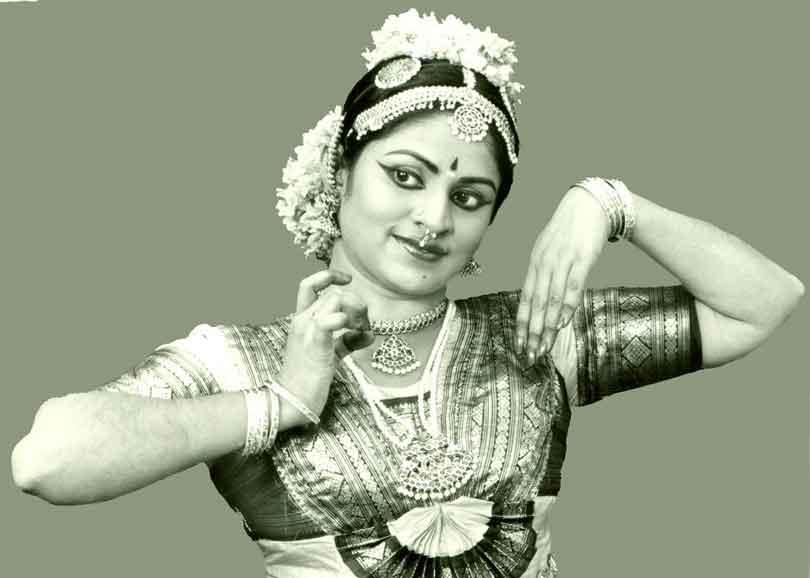
For five decades, Vasugy Jegatheeswaran has been dedicated to Bharatanatyam and the teaching of this traditional art form. She founded Natya Kala Mandhir in 1976 and has since trained generations of students, with more than 150 completing their Arangetrams. As the institution marks its Golden Jubilee, Vasugy reflects on her journey, her mother’s influence and the legacy she hopes to pass on. We spoke with Vasugy Jegatheeswaran about her journey, the influence of her family, her students, the importance of preserving Bharatanatyam and what this milestone means to her.
Let’s take a look at the conversation we had with Vasugy.
You founded Natya Kala Mandhir in 1976. What was the vision you had when you first started, and how has that vision evolved over these 50 years?
Actually, my mother was a Bharatanatyam dance teacher and a Carnatic music teacher. I had a very good opportunity to learn everything from my mother, while my father was also an artist who worked for the Sri Lanka Broadcasting Corporation. They gave me their full support. I started my dancing classes under my mother, and on September 19, 1976, I had my Arangetram. After my Arangetram, my mother handed over Natya Kala Mandhir to me, and from that particular day, I started running it myself. I am still conducting classes today. But I never thought that I would continue for 50 years. That was not my vision at the beginning. I was a Bharatanatyam dancer, not a teacher. I was very young and did not have much experience. Whenever I got the opportunity to perform, I used to perform with my mother, and that gave me a lot of encouragement at the beginning of my artistic journey.
Bharatanatyam has been such a significant part of your life. What first drew you to the art form, and what made you decide that teaching it would become your life's work?
It is a nice question because, as I mentioned, it was very much part of my family background. Even my brother and sister learned Bharatanatyam. They were also fond of the arts. For me, it was almost like a lullaby. When I woke up in the morning, I used to listen to Carnatic music and songs. It was a very divine way of growing up, and I started my classes from a very young age. I thought I had to continue this art because Bharatanatyam is our tradition. In the Tamil community, families have always valued learning dance, music or another form of art alongside schooling. Some children choose sports, while I chose Carnatic music and Bharatanatyam.
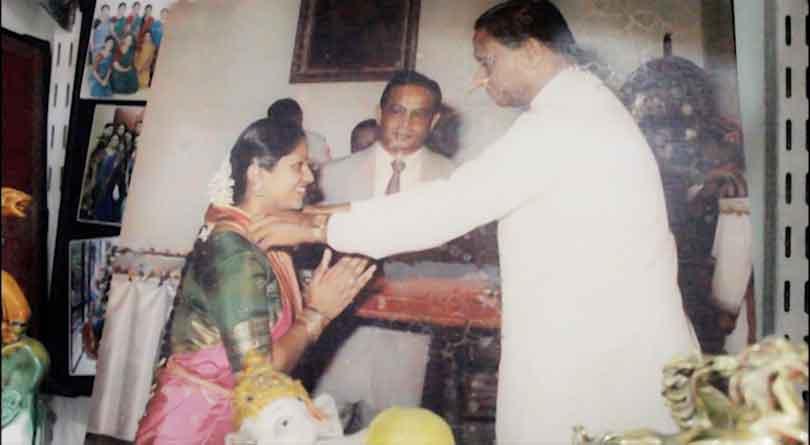
Natya Kala Mandhir has trained generations of students. When you watch a student who once entered your class as a child eventually perform an Arangetram, what goes through your mind?
I started dancing at the age of three, and later I did my Bharatanatyam Arangetram. Over the last 50 years, many students have also joined at a very young age, sometimes around five. Parents bring their children to learn Bharatanatyam, and they begin with the fundamental steps and basic foundation of the art form. Every year, we have an annual show and dance examinations. The students are trained not only for examinations but also for performances. As they learn and perform, we can identify students who are talented and who may be able to continue in this field in the future. When a student joins, we cannot immediately decide how dedicated they will be or how well they will perform. Everything is in the teacher's hands to guide them, but the students also have to learn properly and put in the effort.
You have guided more than 150 students through their Arangetrams. Is there a particular student or moment that remains especially close to your heart?
Nearly 153 students have completed their Arangetrams over the last 50 years. My first Arangetram student was in 1984 because the students need a certain period of training before they are ready for an Arangetram. My mother was extremely important in this journey because she guided me when I was starting out. I did not have experience, and I did not know how to conduct an Arangetram. She was the person who trained me. For an Arangetram, we select more advanced items because it is a solo performance and the dancer has to demonstrate their talent. Over the years, I have seen so many talented children. Some are very good in Nritta, which is the footwork and pure dance, while others are strong in Abhinaya, expressing emotions through the dance. Some are equally good at both. As teachers, we understand their strengths and choreograph accordingly. During my journey, I have seen around 153 students complete their Arangetrams. Some of them are now dance teachers themselves. They learned at Natya Kala Mandhir and have gone on to continue the art not only in Sri Lanka but around the world. In my own family, my brother's daughter, my niece, also learned Bharatanatyam and completed her Arangetram. She will also be performing in the Golden Jubilee production.
Natya Kala Mandhir is celebrating its Golden Jubilee this year. Looking back from 1976 to today, what is the one achievement that makes you feel most proud?
First of all, I have to thank my parents because they are the people who brought me into this field. Whatever I have achieved over these 50 years, I owe a lot to them. My mother was a very hardworking artist and a true artist. I am very happy that she gave me such a big responsibility, and I believe I have carried forward this traditional dance form in the correct way. Over the years, I have also had opportunities to create and perform different productions. I never planned many of these opportunities, but they came to me because of the art.
I was able to perform at different events and even travelled to places such as Chidambaram, where we performed a Natya Samarpanam during Shivaratri. I have received many opportunities through this art, and I am thankful to God for giving me this beautiful divine art form to practice and continue.
The Golden Jubilee production is titled Potsabai. What does this production mean to you personally, and why did you choose this concept for such an important milestone?
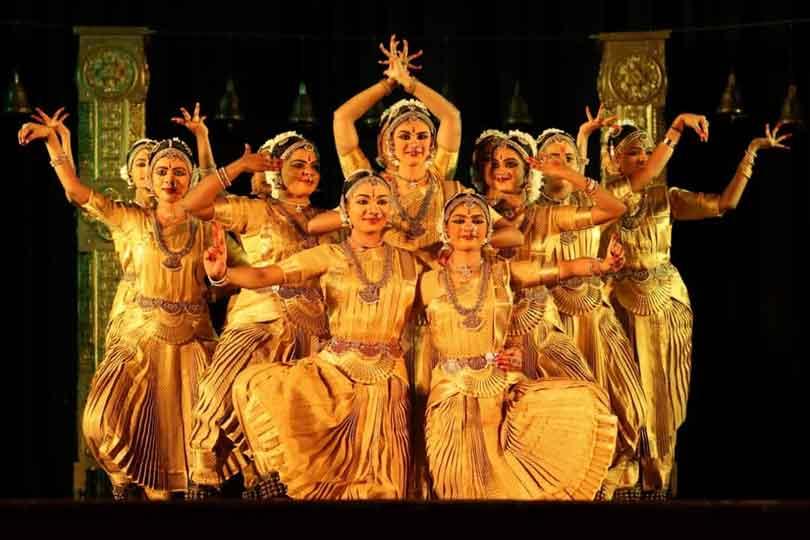
This is my Golden Jubilee, marking 50 years of continuing my art. I selected the name Potsabai because I felt it suited the Arangetram and the nature of this celebration. More than 50 girls will be performing in Potsabai, and for me, it represents a divine stage and an important celebration of this journey. I hope the name will be suitable for the performance and the significance of this milestone.
What can audiences expect from Potsabai that they may not have experienced in a Natya Kala Mandhir production before?
Potsabai is a Golden Jubilee celebration. Natya Kala Mandhir has presented many stage shows throughout the last 50 years, and I also celebrated the Silver Jubilee 25 years ago. But this time, we are bringing together students from different generations. The present students are very young, and they will have the opportunity to perform alongside senior students who have been learning Bharatanatyam for more than 30 years. Some of these senior students are travelling from Australia, London, Canada and India to take part in the performance. For me, it is a reunion. Past students are coming together, and in some cases, both mothers and daughters from two generations will be performing. I hope it will be a privilege for everyone to be part of Potsabai.
If you could speak to the young Vasugy who began her journey in 1976, what would you tell her today?
This is a very divine art. The younger generation has to work with dedication, devotion and determination. Without these qualities, it is difficult to continue in this art. When I started in 1976, I was very young. I did not know what I was going to do or where the journey would take me. But step by step, I learned many things. The journey gave me a lot of experience. We were brought up in a very disciplined way, and through the years, I learned to understand what is good and what is not. I am always connected with the youth as well. They give me a youthful mentality and expose me to the vision and ideas of the new generation. I have learned many things from my students while also giving them this divine art. I hope they will carry it forward and that it will continue from one generation to another.
Today, children have so many distractions and interests competing for their attention. What do you think Bharatanatyam can offer a young person that goes beyond simply learning to dance?
For sure, it is a divine art. First of all, students have to learn it in the correct way. It is not simply something to do casually; it is a traditional art form, and they have to learn it properly. They should also select good gurus and teachers who can train them correctly. Nowadays, children are very busy. They have education and many other responsibilities. Bharatanatyam can give them a different kind of experience. It is also good exercise, both mentally and physically. When they come for dancing classes, they work very hard, and they enjoy the process. It is not only about performing; even the regular classes can give them something meaningful. For me, it gives them a divine mind and their own sense of satisfaction.