SUJATA ASSOMUL: FASHION, CULTURE AND THE ART OF STAYING CURIOUS.
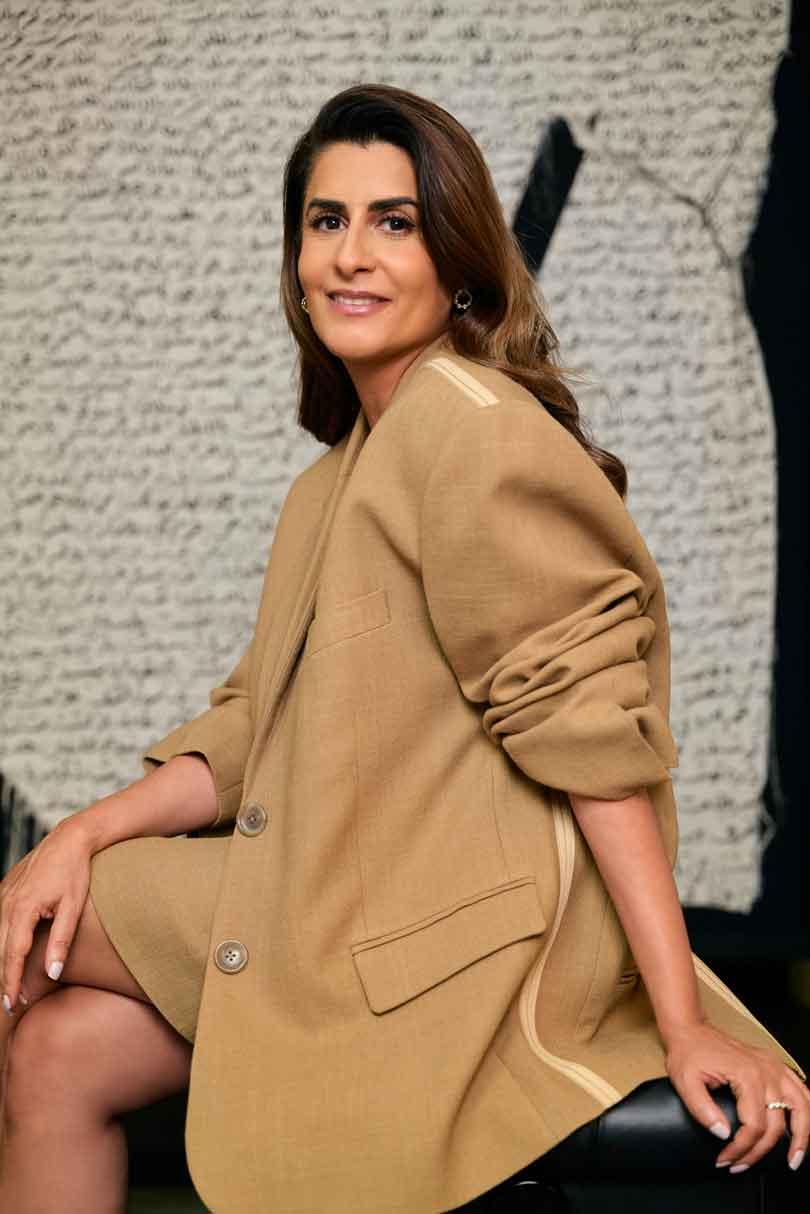
I was first introduced to Sujata Assomul through Nonita Kalra, Chief Creative Officer at the Times of India, and the introduction felt particularly special because Sujata was someone I had admired from afar for years. I diligently followed her on Instagram, drawn to her intelligence, her instinctive style and, above all, the seriousness with which she approaches fashion. We finally met for a light brunch at 108 Brasserie in Marylebone, on one of those London days made for long conversation. What a delight it was to sit across from someone whose work I had followed for so long and discover that the woman behind the incisive commentary was every bit as engaging in person. Sujata is warm, curious, opinionated and wonderfully informed. Our conversation moved effortlessly between London, India, Dubai, journalism, luxury, cinema, age, identity and the future of South Asian fashion. This is the story of a woman who has spent three decades understanding fashion not simply as clothing, but as culture.
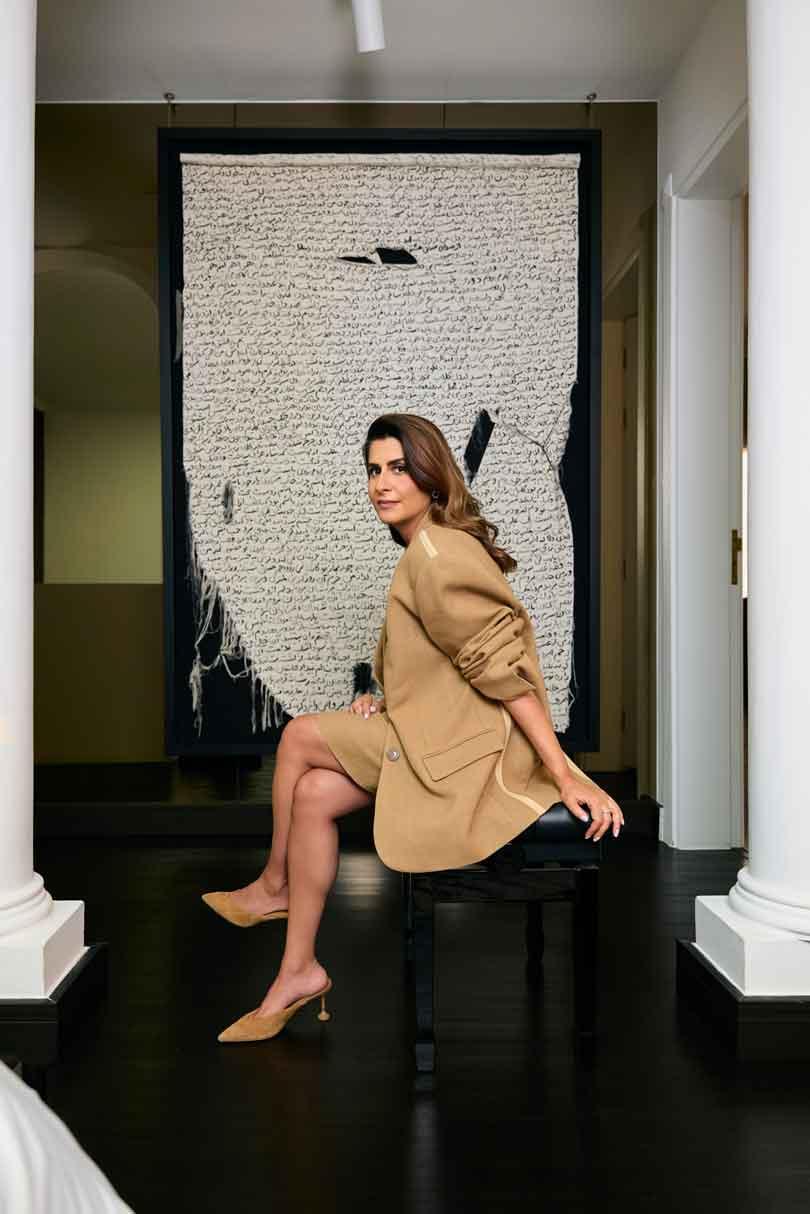
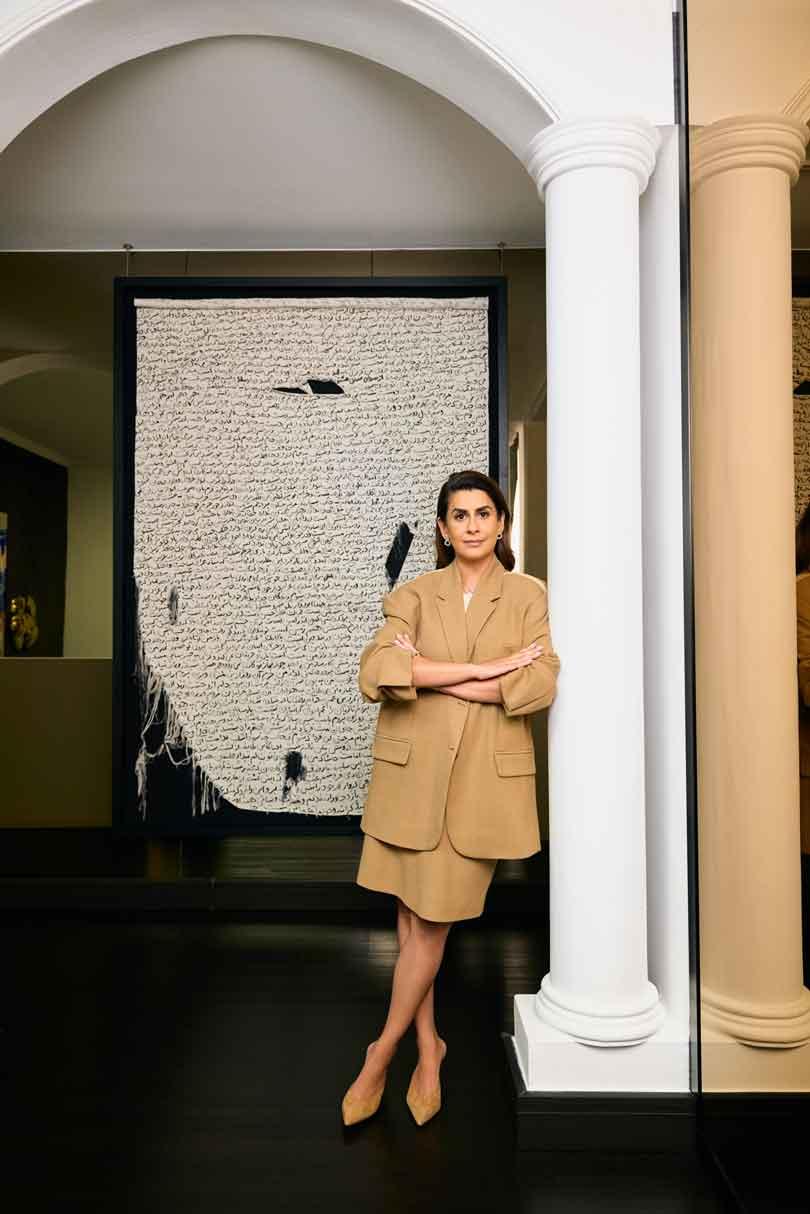
Sujata’s career makes that perspective particularly compelling. London born and raised, she began her professional journey in journalism before becoming one of the influential voices chronicling the emergence of modern Indian fashion. Her career has included ELLE India, the Indian Express and Verve, and she became the founding Editor in Chief of Harper’s Bazaar India, launching the title into a market whose luxury and fashion landscape was undergoing profound change. She has also crossed the traditional divide between editorial and industry, working in communications for Gucci, Bottega Veneta and Jimmy Choo in India. More recently, from Dubai, her work has stretched across journalism, moderation, luxury commentary and cultural conversations, with contributions to publications including Vogue Business, the Financial Times, Vogue India and Harper’s Bazaar Arabia. It is an unusually panoramic career, one that has allowed her to observe fashion from the newsroom, the front row, the corporate office and, increasingly, the global stage.
You grew up in London, studied in New York, built much of your career in India and now live in Dubai. Where does home begin for you?
I grew up in London and spent the first 21 years of my life there. I then came to India for a year of work experience, returned to London and eventually moved back to India, where I built a large part of my career. Later, I moved to New York to study fashion at the Fashion Institute of Technology. Today I live in Dubai, where my parents have also been based for many years. My academic background was actually journalism. I did my MA at City University in London, with politics as my main focus. When I first arrived in India, I began as a business journalist before moving towards fashion. Living in London, India, New York and Dubai has given me different cultural lenses. Fashion is no longer confined by geography. It exists within a global conversation, but every place interprets it differently. That ability to understand different markets and cultures has probably been one of the greatest assets of my career.
Before fashion entered the picture, was journalism always the ambition?
The signs were there very early. I was completely fascinated by news as a child. I watched Newsround on the BBC, and I was the sort of 11- or 12-year-old who would happily sit through serious current affairs programmes. History and politics fascinated me. I wanted to understand why things happened, who the people behind events were and what larger forces shaped the world around them. Journalism therefore felt quite natural. At the same time, I loved costume history. There was even a point when I considered becoming a museum curator. Eventually I realised that fashion journalism brought all these interests together. Fashion contains history, politics, economics, culture, identity and storytelling. There is also an irony in my becoming a journalist because I am dyslexic. When I was younger, journalism was one of the careers people suggested might be difficult for me. Perhaps that made me more determined. Sometimes being told something will be difficult makes you want it even more.
Was there a particular moment when fashion stopped being simply about clothes and became a serious subject for you?
Absolutely. It happened after I moved to India. I attended an Ensemble fashion show where different designers were presenting Indian craft traditions. I started learning about zardozi, chikankari and the histories behind these extraordinary techniques. Suddenly I understood fashion differently. This was not merely about what somebody was wearing. It was about heritage, craftsmanship, identity, community and history. That was an important turning point because my instinct as a journalist had always been to look for the story behind the obvious story. Indian fashion gave me an extraordinary landscape in which to do that. India has such a profound relationship with textiles and dress. Once you understand that, it becomes impossible to dismiss fashion as frivolous. Clothing can tell you about trade, politics, colonialism, gender, social aspiration, religion, geography and changing ideas of identity. That intellectual dimension is what really drew me in.
What did growing up in London teach you about style?
My earliest understanding of style came from watching the women around me, particularly my mother and her friends. These were women who could wear beautiful Indian saris on the bus or the Tube and then dress in Western fashion, from Jaeger to Yves Saint Laurent. What fascinated me was that they never appeared to see these as contradictory identities. There was an ease to the way they moved between cultures. I think that stayed with me. I have never believed that personal style should require you to choose one identity over another. In fact, the most interesting wardrobes are usually those that reveal the different places, cultures, memories and experiences that have shaped a person. London itself encouraged that way of thinking because it has always been a city where different communities and subcultures coexist. Style can be incredibly individual here.
Why was studying fashion in New York important when you were already a working journalist?
I felt that if I was going to write seriously about fashion, I needed to understand the industry from inside. Studying at FIT was transformative. New York allowed me to see fashion as both creativity and business. While I was there, I also worked part time as an image consultant, which taught me something very important about the psychological power of clothes. You see how clothing affects confidence, how people perceive themselves and how others respond to them. Fashion can alter the way somebody enters a room. New York is particularly fascinating because personal style operates almost as a language. People communicate something about themselves before they have even spoken. I was also exposed to retail, branding, fashion weeks and the commercial mechanics of the industry. It helped me understand that fashion is not a decorative extra. It is a huge economic and cultural ecosystem.
You started in broadsheet journalism. What did newspapers teach you that glossy magazines could not?
I strongly believe journalists benefit enormously from newspaper experience. In a newspaper, fashion has to exist alongside politics, economics, business and international affairs. If you want a fashion story to be taken seriously, you have to explain why somebody who is not obsessed with fashion should care about it. That discipline stayed with me. You learn to look beyond what is fashionable and ask what a story tells us about society, economics, politics, culture or changing consumer behaviour. I still approach fashion that way. I do not see it as existing separately from the rest of the world. I also love the rhythm of newspapers. There is always another story. Perhaps because I began around political and business journalism, I still wake up and watch BBC World News. That curiosity about what is happening beyond fashion is essential. You cannot understand fashion properly if you are uninterested in the world producing it.
People often imagine fashion journalism as front rows, beautiful clothes and glamorous parties. What are they missing?
A lot of steaming clothes. People see the shows, dinners, travel and beautiful images and assume that is the job. There is certainly glamour, but there is an enormous amount of work behind it. If you are editing a magazine, you might be conceptualising stories, commissioning writers, organising shoots, selecting clothes, solving production problems and sometimes literally steaming garments and putting them onto racks. In newspapers and digital journalism, the deadlines simply do not stop. You are researching, interviewing, writing, editing and constantly thinking about what the next story should be. The glamorous part is highly visible. The discipline is not. Good fashion journalism requires curiosity and preparation. You have to understand the designer, the business, the history, the cultural context and the audience. A beautiful photograph may appear effortless, but very little in publishing actually happens effortlessly.
What attracted you from newspapers into magazines?
Harper’s Bazaar itself was enormously attractive to me because I had grown up in England knowing the title. I always admired the fact that Bazaar understood fashion as something larger than clothing. It was about women, culture, confidence, personal style and the times we were living through. When the opportunity came to launch Harper’s Bazaar India with the India Today Group, it felt like an extraordinary combination. You had the heritage and international authority of Bazaar alongside one of India’s leading media organisations. The challenge was to create something international in outlook but genuinely connected to the Indian woman. I never wanted an Indian edition to feel like a Western magazine with a few Indian pages inserted. The Indian woman has a very particular relationship with clothes. Her wardrobe can contain saris, tailoring, international luxury, Indian designers, jewellery and extraordinary inherited pieces. That complexity needed to be celebrated.
What was the greatest challenge in launching Harper’s Bazaar India?
At that point fashion in India was still not always regarded as a serious industry. People understood its glamour and aspiration, but they did not necessarily recognise it as an economic force or a significant cultural industry. That frustrated me because India has one of the richest textile histories anywhere in the world. We have centuries of weaving, embroidery, jewellery, craftsmanship and extraordinary traditions of dress. Fashion is embedded in India’s cultural language. So, part of what we wanted Bazaar to communicate was that Indian fashion belonged within the global conversation, not as a lesser version of Western fashion but as something with its own history, confidence, creativity and point of view. The timing was exciting because the industry itself was changing. Designers were becoming brands, organised retail was growing and Indian consumers were becoming increasingly confident about mixing international and Indian fashion.
Did you feel you were launching a magazine or participating in the construction of an industry?
We genuinely felt we were helping build an industry. What was wonderful about that period was that editors working at competing publications could also be friends. We understood that while we competed for readers, advertising and stories, all of us benefited if Indian fashion became stronger. I remember having dinner during fashion week with Priya Tanna, who launched Vogue India. Glenda Bailey, then Editor in Chief of Harper’s Bazaar in the United States, came over and was surprised to find the editors of Bazaar India and Vogue India having dinner together. Priya made a wonderful comment about coming from the land of Gandhi and believing in harmony. That captured the mood. Yes, there was competition. But there was also a sense that Indian fashion needed advocates, institutions, buyers, journalists, photographers, stylists and strong magazines. We were all contributing to an ecosystem.
What remains most vivid when you look back at those Harper’s Bazaar years?
I am proud that we understood the uniqueness of the Indian woman’s wardrobe. An Indian woman can move from an heirloom sari to a contemporary cocktail sari, from a beautifully cut suit to a little black dress without feeling she has changed identity. That fluidity fascinated me. I am also proud that we explored India’s historic influence on international fashion. One of our early shoots looked at Dior’s relationship with India and at the way Indian textiles and aesthetics had entered the vocabulary of European couture. We featured Ujjwala Raut in that story, which felt particularly meaningful because it allowed us to make the point visually. India did not suddenly enter the international fashion conversation in the twenty first century. Its textiles, techniques and aesthetics had been travelling globally for centuries. Our job was to remind readers of that history while showing how contemporary India was evolving.
You have worked in editorial and inside luxury brands, including Gucci, Bottega Veneta and Jimmy Choo. What did crossing that divide teach you?
It gave me a much more complete understanding of the ecosystem. As an editor, your instinct is editorial. You ask what the story is, why it matters culturally and whether your audience will care. Working with brands teaches you to understand another perspective. You see how brands think strategically, how they communicate, what they are trying to build and how carefully identity is constructed over time. It also made me understand the importance of maintaining a distinction between editorial credibility and commercial relationships. There must be a clear line. Journalism depends on trust. At the same time, understanding both sides can make conversations more intelligent. Fashion is an interconnected business. Editors, designers, retailers, brands, communications teams and consumers all exist within the same ecosystem, but they have different responsibilities.
Indian cinema has historically had enormous influence on fashion. Which moments stand out for you?
Cinema has been one of India’s greatest fashion storytellers. Before India had an organised modern fashion industry, cinema was where millions of people encountered aspiration and style. I would not choose one defining costume moment because every generation has its own. Haré Rama Haré Krishna and Zeenat Aman captured that wonderful collision of Western counterculture, bohemian dressing and Indian sensibility. For my generation, Dil Chahta Hai was significant because the clothes felt urban, contemporary and believable. The characters looked like people young Indians might actually know. Then you have films such as Jodhaa Akbar, where costume sends us back into history. Neeta Lulla’s work demonstrated what happens when research, craftsmanship and cinema meet. Indian cinema has continually reflected the way India dresses, but it has also accelerated change. It can take an emerging aesthetic and make it part of the national imagination almost overnight.
Having lived across Britain, India and the Middle East, how differently do these markets understand fashion?
Every market sees fashion through its own history. India’s perspective is shaped by textiles and craft, but also colonialism, independence, liberalisation, globalisation and digital culture. There is this fascinating conversation between heritage and modernity. Britain has a different vocabulary. There is tailoring, Savile Row, punk, subculture and a great tradition of individualism. British style can have a certain nonchalance. Something does not have to look perfectly polished to be fashionable. Dubai and the wider Middle East fascinate me because the region simultaneously looks forward and backwards. Dubai is extraordinarily cosmopolitan and has developed a sophisticated luxury ecosystem, yet regional traditions of modest dressing, jewellery, craftsmanship and textiles remain important. The most interesting fashion happens where these histories meet contemporary life. Ultimately, wherever you are, fashion is filtered through culture, history and identity.
You began covering Indian fashion in the 1990s. Has India finally become the global fashion force people predicted?
It has taken longer than many of us imagined, but yes, I think we are witnessing something important. What excites me most is the confidence. When I began covering Indian fashion, many designers worked from small studios and sold through a limited number of multibrand stores. Today designers have flagship stores, sophisticated organisations, international stockists and global audiences. Indian designers are also participating much more confidently in the international fashion calendar. Rahul Mishra and Gaurav Gupta have established strong visibility around Paris couture. Dhruv Kapoor has shown in Milan. Sabyasachi has built extraordinary international recognition. The real transformation is not simply that Indian consumers buy more luxury. It is that Indian creativity itself is increasingly understood as luxury. That distinction matters enormously. India should not be seen only as a market where international brands sell products. It should be recognised as a source of design, craftsmanship, ideas and globally relevant creative businesses.
Has the traditional separation between editorial and commercial interests become harder to protect?
I come from a generation brought up with the idea of church and state. Editorial and commercial were supposed to remain separate. The reality today is more complicated because the economics of media have changed dramatically. Editors are expected to understand events, marketing, partnerships, social media, intellectual property and commerce alongside journalism. But the fundamental principle cannot disappear. People come to a publication because they trust its voice and point of view. If a commercial relationship destroys that trust, you have damaged the very thing that made the publication valuable. Commercial partnerships themselves are not necessarily the problem. The issue is whether they compromise editorial integrity.
An editor’s job has become much broader. Producing the magazine can almost feel like one component among events, digital content, social media, partnerships and new formats. But journalism must remain at the centre. Without credibility, everything surrounding it becomes less valuable.
How dramatically has the business infrastructure around Indian fashion changed?
Completely. In the 1990s, fashion was still a small business in India. Designers might work from apartments, garages or tiny studios and take collections to a handful of multibrand stores. Today successful designers have professional teams, flagship boutiques and much more sophisticated businesses. There is also a completely different retail infrastructure. India has luxury malls, ecommerce, concept stores and international department store interest. Large corporate groups have recognised that Indian fashion is serious business and have invested in Indian designers and creative companies. That matters because infrastructure and creativity can strengthen each other. When designers have access to capital, professional management, retail networks and international distribution, they have more opportunity to build businesses capable of surviving beyond the personality of the founder. Creative talent has always existed in India. What is changing is the ecosystem around that talent.
Your own career has moved through newspapers, magazines, communications, consulting, moderation and digital platforms. Was becoming a multi hyphenate deliberate?
It evolved naturally. Today everyone has to understand that platforms change. If you insist that you are only a print journalist or only a digital journalist, eventually the world may move around you. For me, the constant has always been journalism and writing. That is the thread connecting everything I do. It could be an article, a panel conversation, consultancy, social media, conference programming or moderating a discussion. The format changes, but the way I approach information remains rooted in journalism. I often think about water. Water moves into different glasses and takes different shapes, but it remains water. That is journalism for me. You have to remain agile and curious enough to learn new formats without surrendering your point of view. Relevance does not mean chasing every new platform. It means understanding how to adapt while knowing what should never change.
Do you think journalists now have to become personalities as well as writers?
There is certainly greater visibility attached to journalism today. Social media means readers often know the journalist as well as the publication. They know what you wear, where you travel, what you think and which issues matter to you. That can be useful because journalism has always depended on trust, and people increasingly follow individual voices they trust. But personality cannot replace substance. The reason somebody should follow a journalist is ultimately because that person brings knowledge, curiosity, access, analysis or perspective.
I enjoy Instagram and the immediacy of social media, but I still think of myself fundamentally as a journalist. The platform should serve the work rather than the work becoming an excuse to serve the platform. The challenge is remaining recognisable and personal without becoming more interested in your own image than the story you are supposed to be telling.
What part of your work gives you the greatest pleasure today?
Increasingly, I enjoy programming conversations, putting together talks and summits and then moderating those discussions. There is something very satisfying about bringing people with different perspectives into a room and creating the conditions for a meaningful conversation. It uses many of the same skills as journalism. You research your subject. You understand the people involved. You listen carefully. You recognise when an answer opens an unexpected door and you know when to follow it. A good moderator should not simply move mechanically through prepared questions. You have to listen. Perhaps that is what continues to excite me about journalism after all these years. The medium changes, but curiosity remains the engine. There is always another person to meet, another perspective to understand and another story that complicates what you thought you knew.
You speak very openly about being 53. Why is saying your age important to you?
Because fashion still has a deeply complicated relationship with women and ageing. Women have historically been encouraged to conceal their age, particularly when they work in fashion or media. I have never understood why getting older is something we are supposed to apologise for. Change begins when people refuse to participate in that embarrassment. I am 53 and proud of it. I have experience I did not have at 23. I understand myself better. I have a career behind me and, I hope, plenty still ahead. Visibility matters. If women who remain active and relevant hide their age, how do we change the perception that relevance belongs only to youth? I would like younger women to enter this industry without believing there is an invisible expiry date attached to them. Age should add to your story rather than diminish it.
Has getting older changed the way you dress?
Of course. Your relationship with everything changes as you grow older, so why should fashion be different? I know myself much better now. I am less interested in trends simply because they are trends and much more interested in what genuinely works for me and gives me pleasure. Ironically, I may also be more willing to push boundaries because I care less about what other people think. There is tremendous freedom in self-knowledge. If I like something and want to wear it, I wear it. I do not spend enormous amounts of time wondering whether somebody will consider it age appropriate. For me, style today is about knowing who you are. That does not mean becoming conservative or predictable. Quite the opposite. When you stop dressing for approval, fashion can become fun again.
If you could sit opposite the younger Sujata beginning her career, what would you tell her?
I do not think I would change very much because I learned from the mistakes as much as the successes. But I would probably tell myself to be a little more patient. I was quite impulsive when I was younger. If something was not working, my instinct could be to move on quickly. With hindsight, perhaps I would have stayed with certain situations longer and understood that not every career decision has to happen immediately. At the same time, I would not want to remove that impatience completely. It was connected to curiosity, ambition and my willingness to take risks. So perhaps the advice is to learn the difference between impatience and instinct. Be patient enough to allow things to develop but never become so comfortable that you stop listening to the voice telling you when it is genuinely time to move.
What does the rise of Indian fashion mean for neighbouring creative markets such as Sri Lanka?
India itself took decades to establish international recognition, so the first thing I would say is that there is no shortcut. Sri Lanka has extraordinary creative talent and a distinctive textile and cultural heritage. The opportunity is to build on that identity rather than trying to imitate another market in order to appear international. There is now much greater global awareness of South Asian design, which potentially creates opportunities for the whole region. But Sri Lanka has its own story within that broader South Asian narrative. The important thing is to build strong brands, businesses and points of view at home. International recognition becomes more meaningful when it grows from a clear identity rather than from an attempt to satisfy what you imagine an international consumer wants. The world already has enough imitation. What it is looking for is specificity.
Finally, what is the most important lesson South Asian designers should remember when dreaming of becoming global?
Do not be in too much of a hurry to become international. There is an obsession with having a global footprint, but being present internationally is not the same as building a successful international brand. First become meaningful at home. Understand your customer. Build a solid business. Know your point of difference. Understand why somebody in another country should choose you when they already have thousands of options. There is a lovely Hindi saying, ‘Ghar ki murgi daal barabar.’ Essentially, we often fail to value what is directly in front of us. That applies beautifully to fashion. Sometimes we become so focused on being recognised elsewhere that we neglect the audience, ecosystem, crafts and cultural capital on our own doorstep. South Asian designers should absolutely think globally. But the strongest international brands usually possess a very clear sense of where they come from. You do not become global by erasing your roots. Very often, your roots are precisely what give the rest of the world a reason to notice you.