Rahul Mishra: The Poetry of Couture, the Power of Culture and Why His Journey Has Only Just Begun.
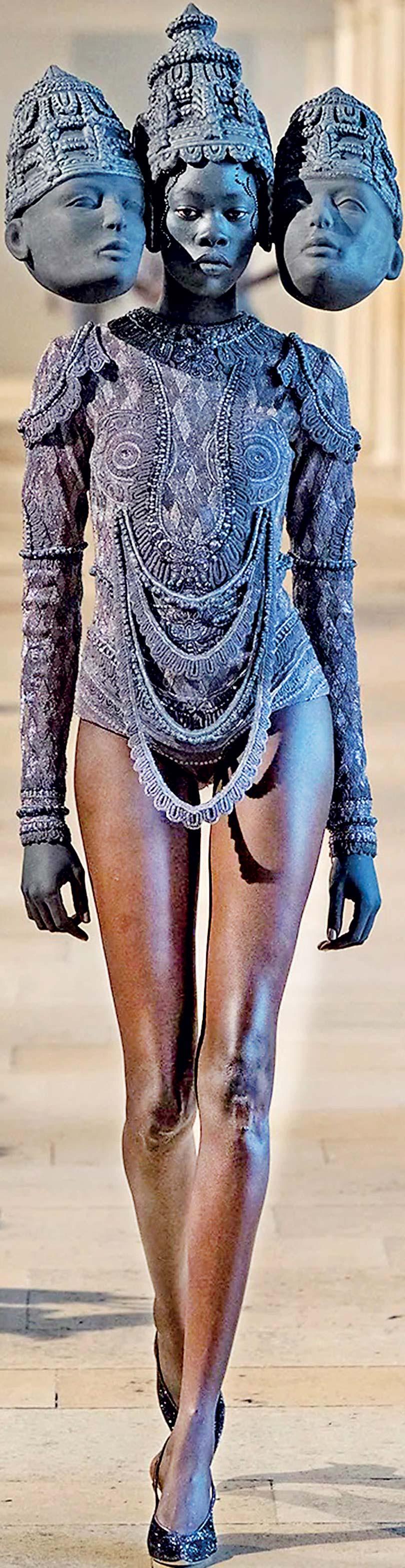
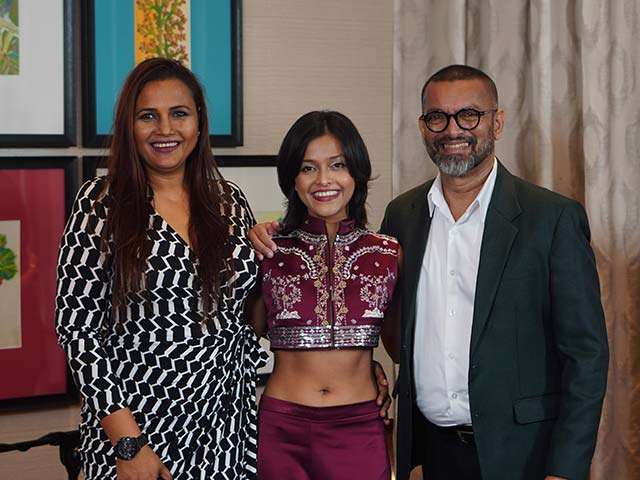
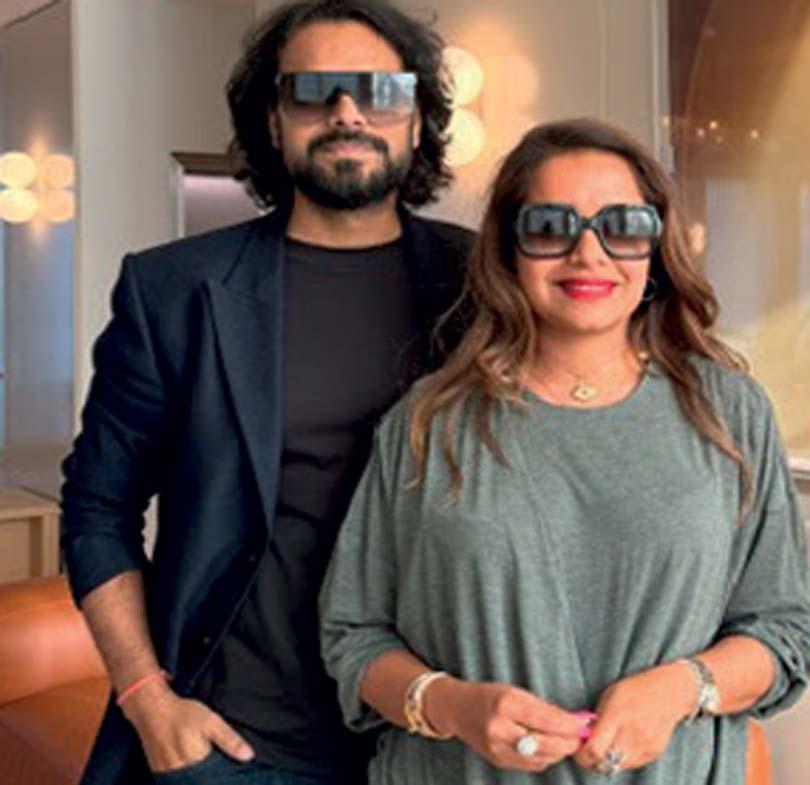
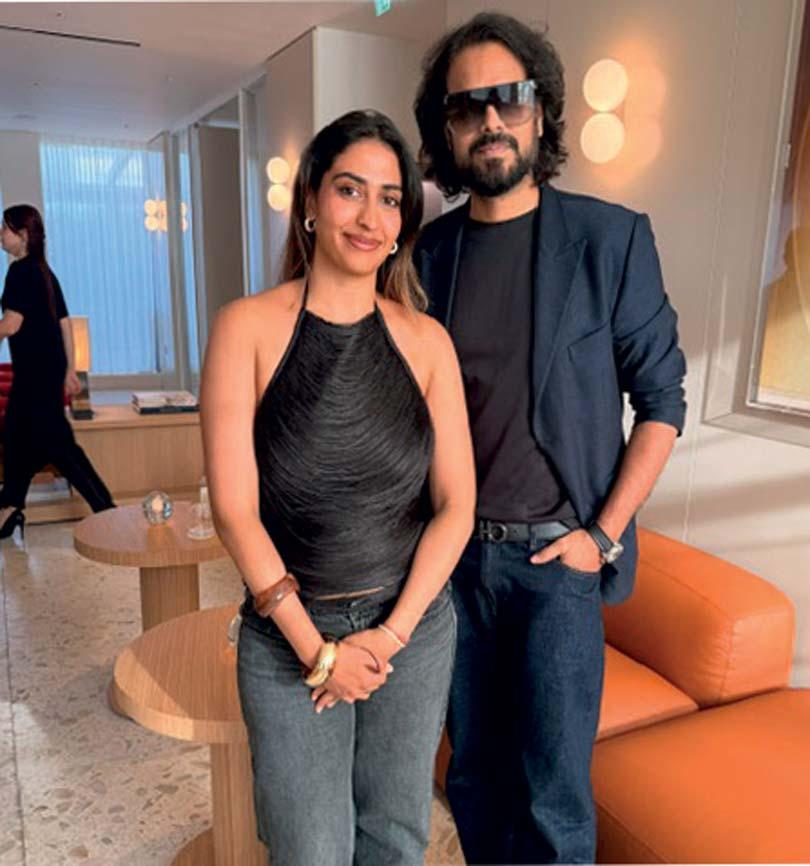
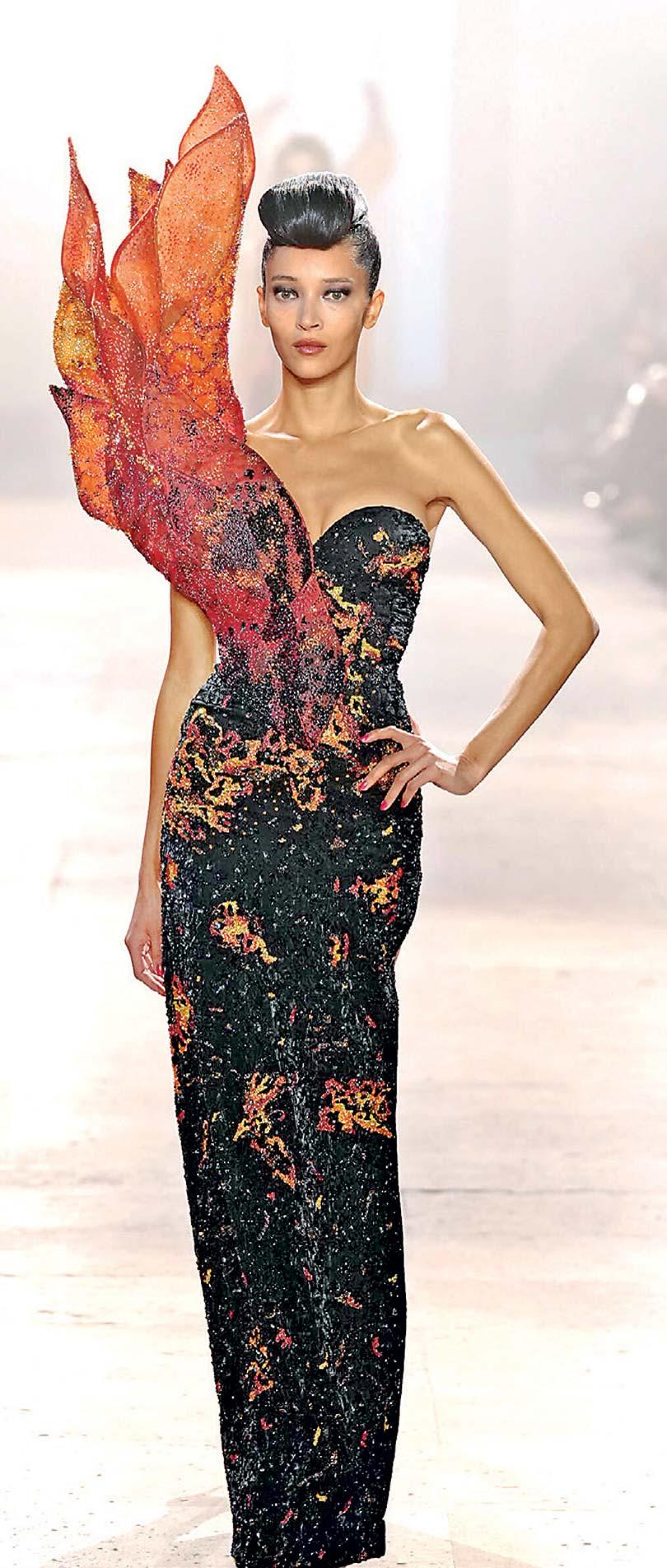
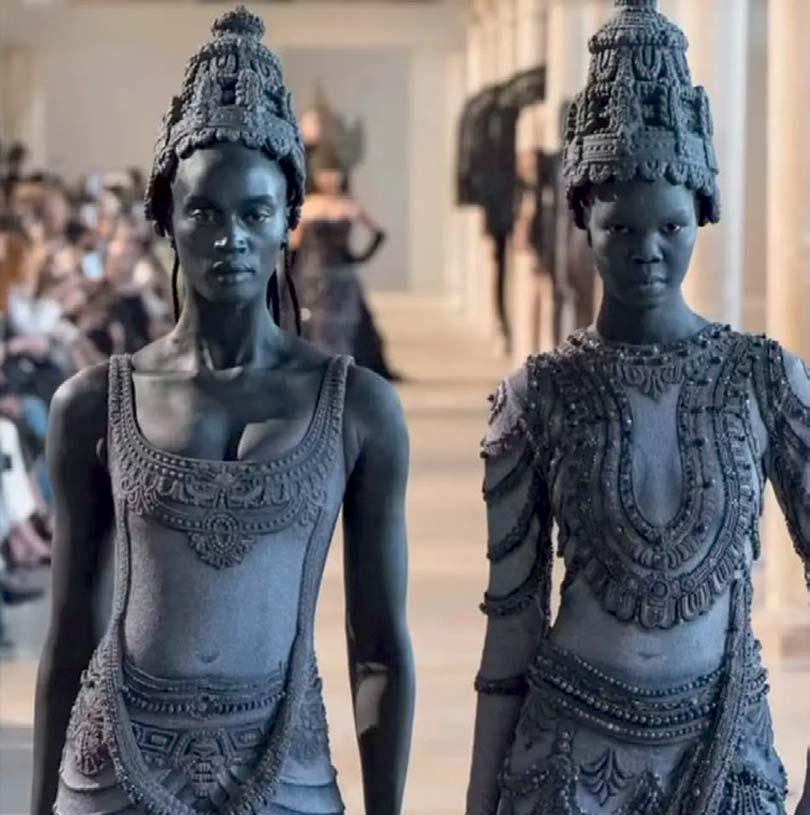
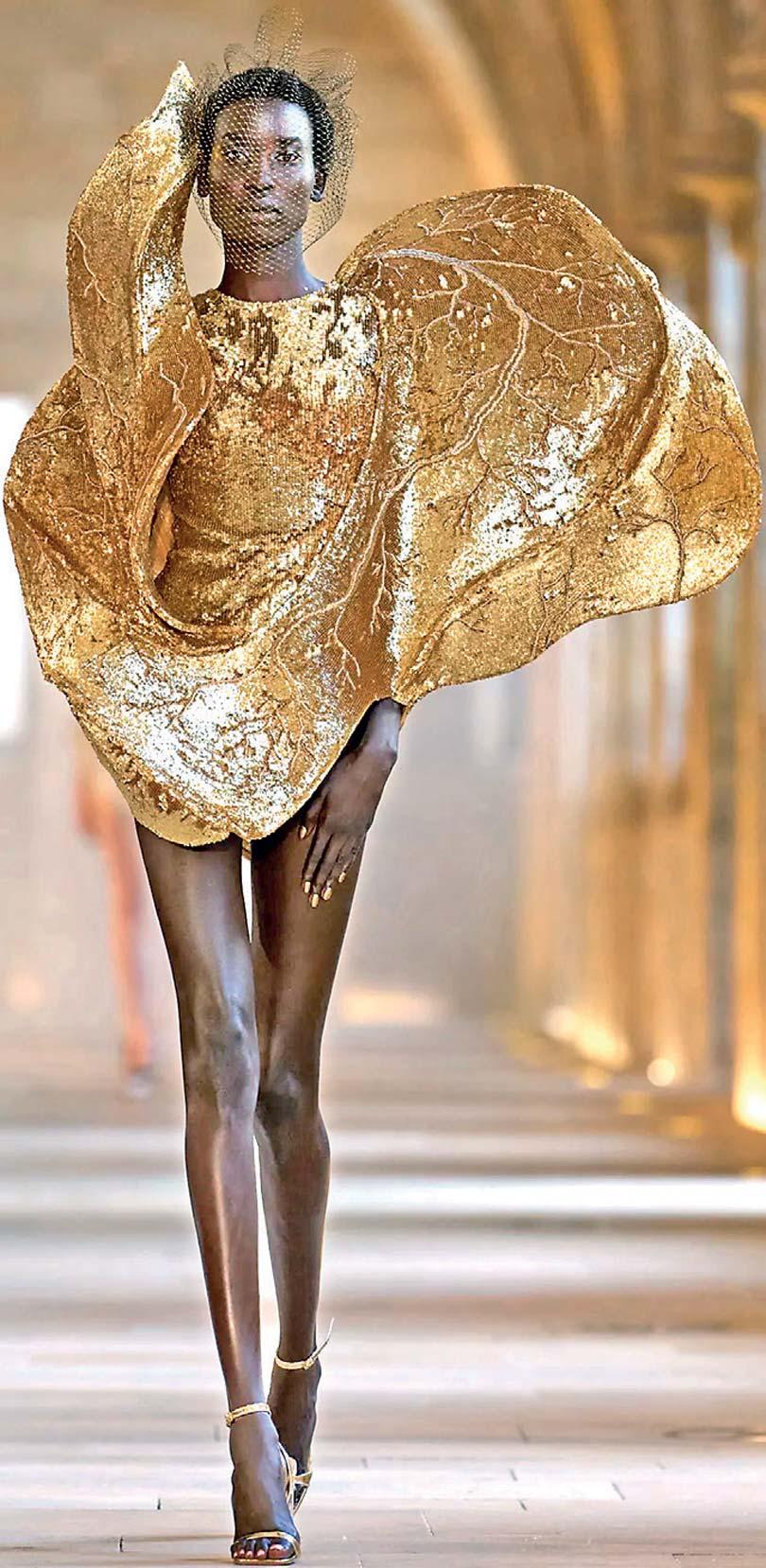
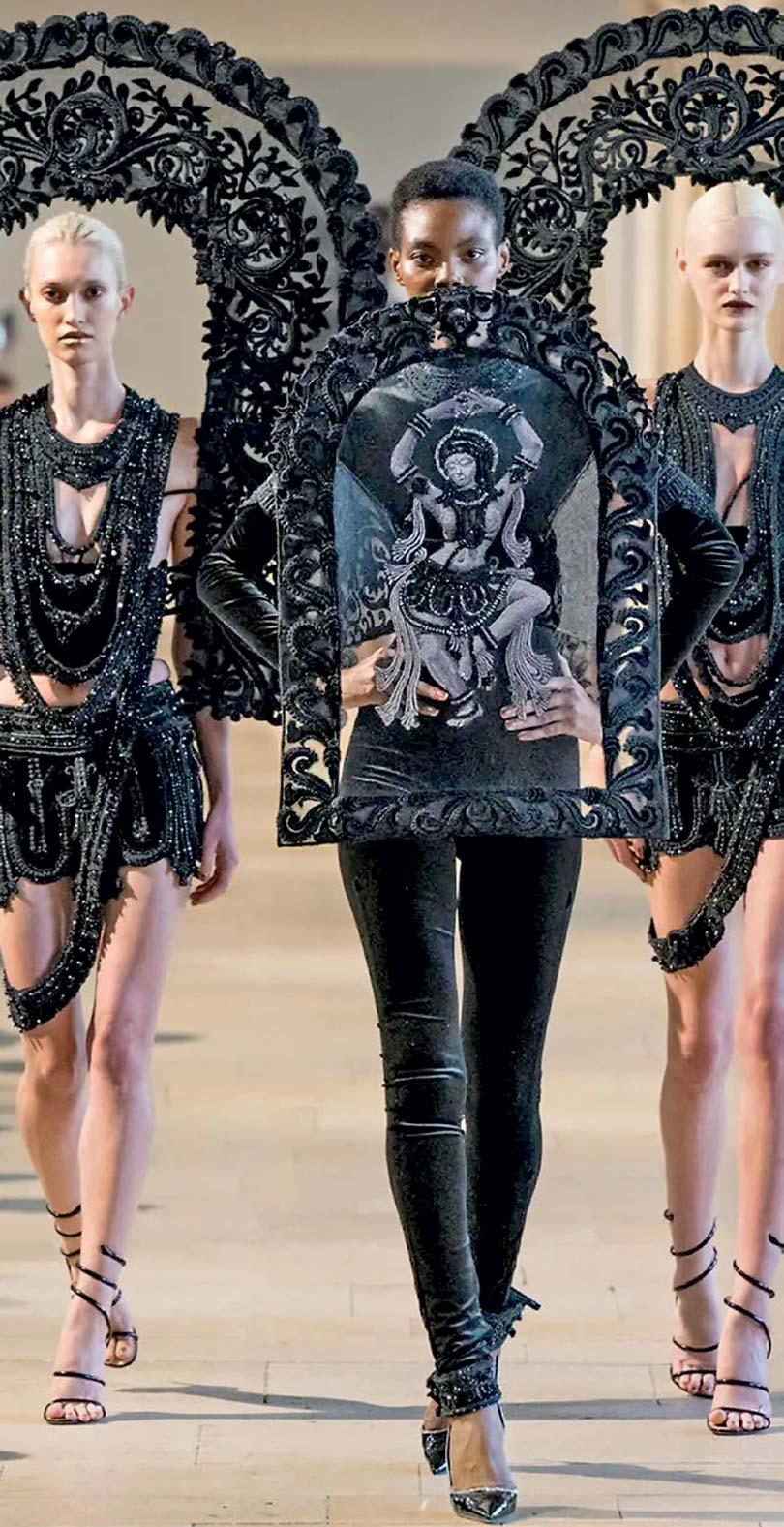
There are introductions that feel serendipitous, and meeting Rahul Mishra was one of them. I was introduced to the celebrated Indian couturier by Nonita Kalra, Chief Creative Officer of The Times of India and former Editor in Chief of Harper’s Bazaar India, during Rahul’s fleeting visit to London, fresh from presenting Devi, The Eternal Muse, his Fall 2026 collection at Paris Haute Couture Week. I met him at Selfridges with our young writer, Samaarah Wijerwardene, fresh from graduating from the University of Sheffield. High above the bustle of Oxford Street, we spent close to an hour at 40 Duke, Selfridges’ new 25,000 square foot private shopping, styling and members’ enclave. His collection was in residence for five days, but Rahul himself was in London for barely 24 hours. Warm, thoughtful and wonderfully unguarded, he was an absolute delight. What began as an interview quickly became a conversation. Only weeks earlier, Devi had transformed the Paris runway into an extraordinary meditation on India’s sacred sculptural traditions. Ancient devis, dancers and celestial beings emerged anew as stone appeared to become fabric and sculpture became embroidery. Sandstone, granite and weathered relief were evoked through zardozi, dabka, crystals, beads and astonishing handwork. Yet sitting opposite the man responsible for such grandeur, what struck me most was his complete absence of grandiosity. Rahul speaks almost reluctantly about success. He comes alive instead when discussing artisans, villages, nature, culture and the responsibility of creating by hand. For a designer who became the first Indian invited onto the official Paris Haute Couture calendar, his vocabulary is surprisingly little about luxury. It is about participation, livelihoods and preserving human skill. And so, our conversation began, travelling from the village of his childhood to Paris couture, two worlds that, to Rahul, are not nearly as distant as they might appear.
You grew up in a small village in Uttar Pradesh and eventually found yourself showing haute couture in Paris. When you look at these two worlds, the village you came from and Paris couture, what connects them in your mind?
I think every person is ultimately an outcome of their journey. The village where I grew up and the world of Paris couture might appear to be two extremes, but that contrast is perhaps what makes my life interesting. I spent the first ten years of my life very humbly, living with my mother and sister, and with my grandmother, uncle and extended family in the village. My father was away from us for a period. Looking back, those were some of the most beautiful years of my life. They gave me humility, a connection to my roots, a love of nature and an appreciation for the smallest things. I didn’t understand their significance then, but so much of my philosophy today comes from that childhood. It was a very modest beginning, and I could never have imagined that life would one day bring me to Paris couture. I learnt early to be grateful for what I had. Even today, I try to wake up thinking of one thing to care for and one thing to be grateful for. Perhaps that is why I can still enjoy a village and London in exactly the same way.
Before Rahul Mishra became a name recognised around the world, who was Rahul Mishra the young man? What did you imagine your life would become?
Growing up in a village, I could never have imagined a life like this. Even as a student, the idea of showing around the world or seeing my clothes in international stores was beyond anything I could have dreamed of. For someone with my very humble beginnings and modest upbringing, the journey has been extraordinary. When I was ten, my father recognised that I was a good student and sent me to boarding school in Lucknow. It was there that my world began to expand. I played sports, discovered how much I loved drawing and became increasingly curious about creativity. But because I did well academically, my father wanted me to become an engineer, so I studied science. Design was not the obvious path. In fact, even when I eventually entered design school, I never imagined becoming an entrepreneur or building my own label. My ambition was much simpler. I thought I would graduate, find a job and work somewhere.
So, what made you abandon science for design?
Science was my father's choice. Design was my choice. In a way, I had to run away from home to appear for the design entrance examinations. My father resisted it a lot. Later, of course, when he saw what we were doing and what happened over the years, he became very proud. But initially it was difficult for him to understand. Like many Asian parents, there was this idea of respectable professions and security. From his perspective, becoming what he imagined as a ladies' tailor would mean a miserable life. Thankfully, life had another plan.
Your International Woolmark Prize win in 2014 became an important turning point. Later you became the first Indian designer on the Paris haute couture calendar. Emotionally, which mattered more, the moment the world first recognised you or the moment Paris welcomed you?
The Woolmark Prize was really the beginning of everything for us. My wife, Divya, and I started the company together with a small loan of around £10,000 from her father. Within six months, we won the regional Woolmark competition, which gave us US $50,000 in seed capital. We then went on to win the International Woolmark Prize, worth US $100,000. At that stage in our lives, the impact of that money was enormous. It gave us the ability to scale and helped transform Rahul Mishra into an international ready to wear brand. Suddenly, we were selling through stores such as Colette, MyTheresa, Harvey Nichols, Saks Fifth Avenue and David Jones in Australia. Winning the prize during Milan Fashion Week in February 2014 changed our trajectory. Soon afterwards, I was invited to showcase on the Paris Fashion Week ready to wear calendar. Normally, a designer establishes a name at home before arriving in Paris. Our journey happened differently. The company was barely a year old when we found ourselves participating in one of the world's great fashion capitals. Over the following years, Paris continued to see our work evolve. There was already a couture sensibility to what we were creating, and eventually we were invited onto the haute couture calendar. So emotionally, I always return to 2014. Paris was extraordinary, but the Woolmark Prize opened the door. It was the moment our global journey truly began.
I want you to take me backstage in Paris. You have spent six or eight months creating a collection. Thousands of hours of human work are contained in these garments. Then suddenly everything is going to be judged in a matter of minutes. What is happening inside your head?
The surprising thing is that I am far more nervous a month before the show than I am on the actual day. That is when you are at your most vulnerable. You have spent six or eight months developing a collection, but you are still struggling with concepts, experimenting, failing and questioning everything. As a team, there are moments when you think, my God, is this actually going to happen? And personally, you begin to doubt yourself. You wonder, perhaps I am simply not good enough. Those final 30 or 45 days are incredibly intense because the moment when you feel most uncertain is also the moment when you need to concentrate and work the hardest. Once the collection is finished, something changes. We begin fittings with models in our studio in India, then take everything to Paris, where we spend six or seven days preparing. There can be around a hundred people working with us. The models become our first critics. These are women casting for Dior, Chanel, Schiaparelli and the great fashion houses, so their instinctive reaction tells you something. When a model puts on a piece and suddenly wants to pose, or doesn't want to take it off, you know the collection is speaking to her. She stays a little longer. She isn't rushing to leave. That response gives you tremendous confidence. So strangely, by the time the show arrives, I am relaxed. I'm excited. It feels like an examination for which you have prepared incredibly hard. After all the uncertainty and self-doubt, you reach that final moment knowing you are ready.
Devi feels intensely Indian, yet there is nothing nostalgic about it. Looking at these pieces here in London after seeing what they became on the Paris runway, there is an almost futuristic quality to the craftsmanship. How do you stop heritage becoming nostalgia?
The best work happens when you create for the present. For me, designing is almost like being a time traveller. You can journey into history and draw from centuries of culture and craftsmanship, but ultimately you have to return to now. You have to respect the body, the silhouette and the woman who will actually wear the clothes. I try to remove the noise of time until only two things remain: the wearer and the concept. Then it is about bringing those two together. If you simply recreate something that looks as though it belongs a thousand years ago, you are ignoring how much the world has changed. Our lifestyles have evolved, society has evolved, and the way we experience beauty and fashion has evolved. Culture is the soul of what we do, but a soul cannot exist without a body. And that body belongs to a woman living today. The woman I design for is no longer defined by geography. She is a global nomad. She might holiday at a resort in Sri Lanka, shop at Selfridges in London and then travel to South America in search of something new. She moves between cultures and experiences with extraordinary freedom. You cannot confine her to a region or a tradition. But precisely because she has seen so much of the world, she recognises and appreciates something increasingly precious: authenticity.
Did you ever feel that to succeed internationally you needed to make your work more Western?
No, never. In fact, one of the strangest compliments you can give a designer is, “This is so beautiful, it looks so international.” For me, the idea of “international” can be incredibly boring. What does it really mean? Following the same trends, wearing the same jacket, creating something that could have come from anywhere? Fashion should be much more powerful than that. Fashion is without soul if it lacks culture. If it does not ignite a cultural conversation, then something essential has been lost. I think commerce sometimes blinds us into believing that becoming global means becoming more alike. I believe exactly the opposite. The secret is to have a soul that is deeply local, but a voice that can speak globally. As a designer, you have a superpower. You can influence taste. You can introduce people to something they have never encountered before and seduce them with an entirely new idea. That, to me, is far more exciting than designing another black jacket when millions already exist simply because it appears “international.” I don't believe fashion should erase identity in order to travel. Fashion thrives on individuality. It thrives on authenticity, culture and conversation. That is ultimately what makes it universal.
Yet Paris remains Paris. What does it mean to an Indian designer to be part of that world? Is there an element of validation?
I don't see Paris as validation. I think people sometimes misunderstand what Paris represents. Look at the designers who show there. They are not simply French. Italian, American, British, Japanese and South Asian designers all come to Paris. That is precisely its beauty. It is a little like sport. Certain places develop extraordinary ecosystems around a discipline, and if you excel at it, you naturally want to participate there. Fashion has Paris. The city has given art and fashion an extraordinary level of cultural respect, allowing generations of artists and designers from around the world to find a global audience. In that sense, Paris is not simply a gift to France. It is a gift to the global creative community. But India does not need validation from Paris. Historically, South Asia produced some of the world's finest textiles and jewellery, exported and desired across continents. Culture was a powerful commodity. I sometimes say culture was the AI of its time. It was the internet of its time. Ideas, techniques and influences travelled between civilisations, creating extraordinary cultural conversations. Indian textiles became so desirable that European governments even restricted their import because domestic industries struggled to compete. So, when I come to Paris, or when I bring my collection to Selfridges in London, I am not asking the West to validate Indian creativity. Europe is an important and fascinating market, certainly, but I am there to expand the conversation and build a larger market. There is an important difference.
Nature is another language that runs through your work. Flowers, forests, insects, birds, the natural world appear repeatedly. Does that go back to your childhood?
Partly, yes. My childhood was deeply connected to nature, and I think those memories remain somewhere within me. But there is another side to it. Whenever I begin a collection and start building a mood board, I almost step into a different role.
Sometimes I become an archaeologist, searching for something buried in the past. Sometimes I think like a historian, trying to understand how people lived and what they created. At other times, I become a scientist or a botanist, studying the extraordinary intelligence of the natural world. Sometimes I find myself looking at insects, examining their structures, colours and forms. Design gives me permission to move between all these worlds. I think there is still a child inside me who is very happy, but never completely content. He is endlessly curious. He wants to keep looking, learning and discovering something he has never seen before. Perhaps that is why nature continues to return in my work. You can spend a lifetime observing a flower, a forest, a bird or an insect and still discover something new. There is simply too much to explore. One life is not enough.
That curiosity seems particularly present in Devi. You have taken something as solid and ancient as carved stone and asked embroidery to recreate it. Where does that impulse come from?
For me, designing begins with exploration. You start with an idea, but then you have to keep looking at it from different perspectives. You cannot approach everything only as a fashion designer. That is why, when I am developing a collection, I sometimes need to think like an archaeologist, trying to uncover what lies beneath the surface. At other times, I become a historian, a scientist or someone simply observing and questioning. Each perspective reveals something different. Then craft becomes the language through which you translate those discoveries. With Devi, we were looking at something ancient, monumental and carved in stone, but the challenge was not simply to reproduce the past in embroidery. It was to understand its spirit and then ask how that spirit could live on the body today. How can something that feels permanent and sculptural become soft, fluid and wearable? That transformation is what fascinates me. Culture gives you the soul, but the wearer gives you the body. For me, design happens when those two come together, when something rooted deeply in history can be transformed through craft and made meaningful to someone living in the present.
There is another fascinating tension in your world. These garments require extraordinary amounts of slow handwork, yet a celebrity can make an image travel around the world in seconds. When somebody like Cardi B or Ariana Grande wears Rahul Mishra, does that excite you, or do you ever worry that the celebrity overwhelms the craftsmanship?
I have a beautiful relationship with the celebrities we work with, and what excites me most is when they become fascinated by the work itself. Recently, we created an Emerald City look for Ariana Grande for a concert. She was so intrigued by the craftsmanship that the following day she called me. She and Law Roach wanted to understand how we had achieved the embroidery. Think about that. These are megastars, surrounded by extraordinary fashion every day. If something we have created can make them stop and ask questions about the artistry and recognise that this level of craftsmanship still exists in the world, then I think that is incredibly powerful.
A brand like Rahul Mishra cannot be built on craftsmanship alone. You need patrons, supporters and buyers. You need people who can amplify the work. It is an entire ecosystem, and these stars are part of that ecosystem. Of course, what we create takes time. There are many people I would love to dress, but sometimes it simply isn't possible because the notice is too short. Now, many of the stylists we work with understand that. They might approach us one or even two months in advance, which is unusual in celebrity dressing. And I don't want endless celebrity moments. I would rather have one or two truly meaningful moments in a year, where the person, the garment and the craftsmanship come together beautifully.
When I look at the intricacy of these clothes, it is impossible not to think about the hands behind them. You often speak about employment alongside design. Is that ultimately as important to you as the clothes themselves?
Absolutely. For us, embroidery is not simply a design choice. It is a social responsibility. We are a completely handmade brand, and I want us to continue creating clothes that require human participation because participation creates employment. In a country like India, with such a vast population and such an extraordinary tradition of craftsmanship, that matters enormously to me. For me, the success of a brand cannot be measured only by how many clothes we sell or how much the company grows. The more important question is: what can that growth give back to society? Can it create opportunities? Can it allow more people to participate in the economy and gain greater control over their own lives? That is what bigger success means to me. If today your work creates employment for 3,000 people, you begin to ask, why not 30,000? And then perhaps you dream of three million. I know these are enormous numbers, but I think you have to allow yourself to dream on that scale. Ultimately, the clothes are beautiful because of the human beings who make them. Every piece contains their time, knowledge and skill. So, when the brand grows, I want that growth to create more participation. For me, that is not separate from fashion. It is part of fashion's responsibility.
You have already achieved a series of firsts. You were the first Indian designer to win the International Woolmark Prize and the first to join the Paris haute couture calendar. What would you like a young designer sitting in a village or small town in India to say you changed for them?
I may have been the first Indian designer to achieve certain things, but I never want to be the last. I want every young person in South Asia, whether in a city classroom or a small village like mine, to believe that their circumstances do not define the scale of their dreams. Growing up, I could never have imagined Paris Fashion Week, haute couture or showing around the world. I didn't know such a path was possible. If my journey means anything, I hope it expands that sense of possibility. Being the first matters only if it opens the door for others to go further.
After everything that has happened, what are you still hungry for? Is there a dream for Rahul Mishra that almost frightens you to say aloud?
I genuinely feel that our journey has only just begun. The dream is not simply to become bigger. It is to remain meaningful. That matters much more to me. Success should allow us to create greater participation, employ more people, support more families and preserve more skills. If the brand grows, then the positive impact around it should grow too. Otherwise, what is the purpose of success? Of course, I am endlessly curious. There are still so many things I want to create and explore. But increasingly, I think about what our work can make possible for other people. Can we grow without losing our soul? Can we become much larger while remaining connected to the hands, communities and values that brought us here? If, years from now, we can say that our success created meaningful participation and gave something back to society, that would mean more to me than simply building a successful fashion brand.
You say the journey has only just started, but you are also moving beyond clothes. What is next?
A lot of things. There is always something happening. I recently completed my first architecture project, which opened up a completely new creative world for me. I am also designing some of our stores, so I am increasingly thinking beyond clothes and about how people experience the world of Rahul Mishra. But I also want to take a little break and spend time with my daughter. Those moments are precious. And, of course, my mind is already on next season. That is simply how I am. Even as one journey ends, another has already begun somewhere in my imagination.
Do you ever actually stop? Have you been to Sri Lanka?
Sri Lanka is very much on my bucket list. I really, really want to go. Recently, I was watching a video a friend had shared from there, and I was fascinated by what I saw. The beauty of the landscape, the preservation of nature, the cleanliness, the sense that things have been cared for so thoughtfully. It looked incredibly beautiful. The problem is that work keeps us so busy that I rarely have the opportunity to take a proper holiday. In fact, I am almost never on holiday. I travel constantly but travelling for work and actually experiencing a place are two completely different things. There are so many places I would love to discover slowly, without a schedule or a flight waiting for me the next morning. Sri Lanka is certainly one of them. The funny thing is, I have travelled to cities all over the world for fashion, and yet I haven't even managed to visit Goa.
Rahul, you travel all over the world and you have never been to Goa?
No, never! That is the irony of my life. I travel constantly, but almost all of it is for work. Look at this trip to London. I arrived this morning and tomorrow night I am already leaving. That is usually how it happens. I arrive somewhere, work, meet people, and before I have had any chance to experience the city, I am on a plane again. The first time I went to New York was even more ridiculous.
I had an 18-hour flight to get there and then spent only about 16 hours in New York before flying back. My hotel had been booked for three nights. I stayed for one. So yes, I travel all over the world, but I am not sure I can call it travelling in the conventional sense. I see a lot of airports, hotels, studios, stores and fashion weeks, but very little of the places themselves. That is my kind of travelling. And somehow, despite all those journeys, I still haven't made it to Goa.
So, perhaps Sri Lanka needs to be the place where somebody finally makes you stop.
Maybe it does. Maybe Sri Lanka is where I finally learn to stop for a little while.
--------------------------
There was something wonderfully incongruous about ending our conversation this way. Around us were clothes that had required thousands of hours of human concentration, pieces that weeks earlier had transformed a Paris runway into a gallery of sculpture. And here was their creator, in London for barely a day, telling two Sri Lankan women that, despite travelling constantly, he had never even found time to visit Goa. Perhaps that contradiction captures Rahul Mishra perfectly. His imagination travels even when he does not. It returns to the village of his childhood, journeys through India’s ancient sculpture, textiles and craft traditions, wanders into a natural world of flowers, forests and insects, and then finds its way to Paris. Yet it always returns home. Rahul did not go to Paris to become less Indian. His success rests on the opposite conviction: that being global should never mean becoming culturally anonymous. In his hands, stone becomes thread, embroidery becomes sculpture and heritage becomes startlingly contemporary. Beneath that beauty lies something deeper. Craftsmanship means livelihoods, dignity and continuity. Embroidery is not simply decoration. It is social responsibility. He may have been the first, but he never wants to be the last. And somewhere, perhaps, another child in a small South Asian village is drawing and dreaming of an impossible life. Rahul Mishra would like that child to know it isn't.
------------
Rahul Mishra continues to make a remarkable impact on the global fashion stage. According to Launchmetrics’ Media Impact Value rankings for Paris Haute Couture Week FW 2026/27, Rahul Mishra ranked among the Top 5 brands, generating $12.3 million in MIV. Significantly, he was the only independent couture house in the Top 5, an exceptional achievement that underscores the growing international influence and resonance of Indian couture.
- Dior $44.3 million
- Chanel $37.3 million
- Schiaparelli $21.8 million
- Balenciaga $14.7 million
- Rahul Mishra $12.3m