Expedition Serendip: The Wild Has a History
Before a landscape becomes heritage, it is a landscape. Before the ruin there is the rock; before the inscription there is the stone; before a mountain acquires a sacred name or becomes a chapter in a history book, there is simply the mountain, existing in geological time, indifferent to the meanings that human beings will eventually place upon it. Sri Lanka is a country in which these layers have been accumulating for centuries. Forests have grown around monasteries, rivers have determined settlements, mountains have become places of worship, and rocks have become records. What we now separate into categories such as archaeology, ecology, religion, geography and history was never quite so separate in the landscape itself. The land came first, and human history unfolded within it.
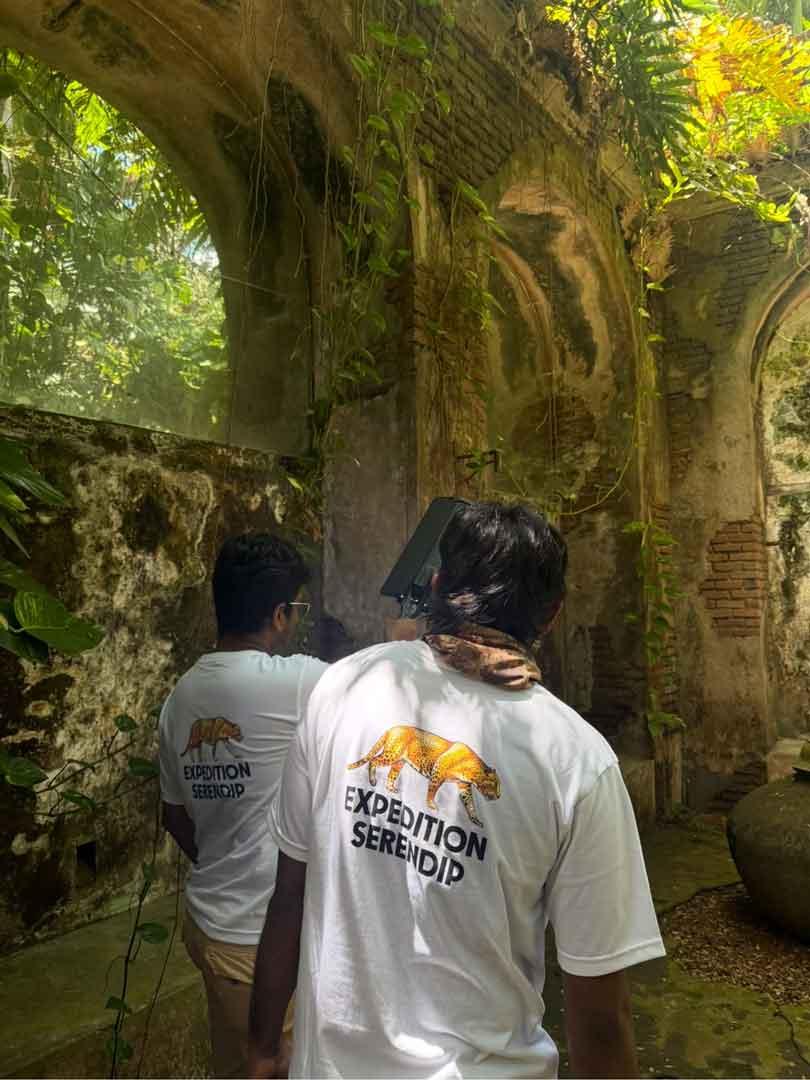
It is this entanglement that lies at the heart of Expedition Serendip, a forthcoming Sri Lankan documentary series that proposes to look at the dry zone not simply as a collection of celebrated destinations but as a meeting point between natural and human histories. Its first season will move through Sigiriya, Pidurangala, Gerandigala and Ritigala, places familiar enough to have become almost shorthand for Sri Lankan heritage, but which, when looked at closely, contain far more complicated stories. The intention is not merely to revisit these landscapes but to ask what happens when the historian and the ecologist are made to look at the same piece of earth. What does one see that the other might miss? What becomes visible when a ruin is considered alongside the forest that surrounds it, or when a mountain is understood not only through the people who climbed it but through the geology, water and species that existed there long before them?
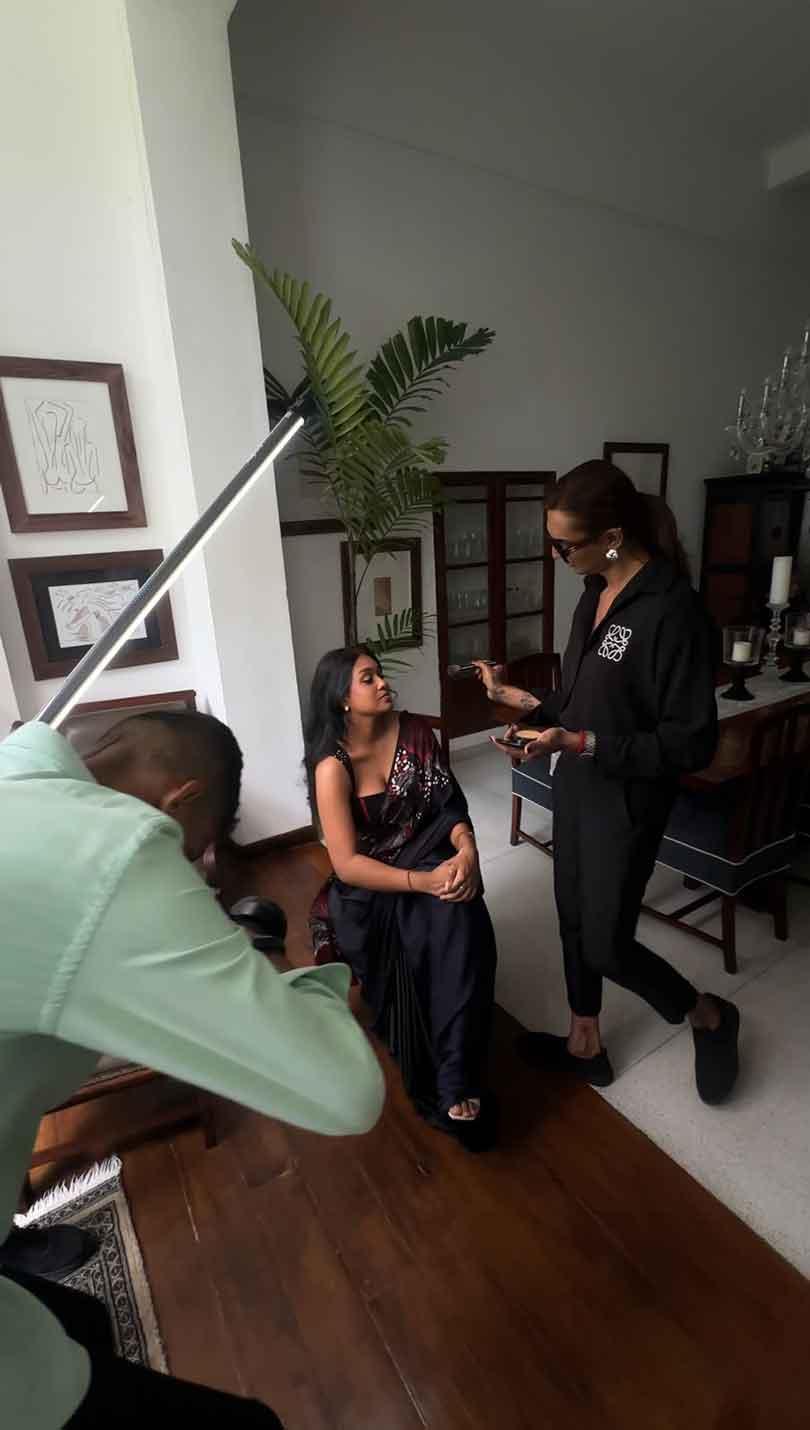
There is something instinctively familiar about this approach to anyone who has spent time watching wildlife. A forest is never only a forest. The attentive eye begins to read relationships. One notices which trees occupy the canopy, where water gathers, how the terrain changes, where an animal might have passed, how vegetation alters with elevation, how the presence of human beings leaves its own particular signature. The longer one watches, the less the landscape resembles scenery. It becomes a system. Its parts begin to speak to one another. This is, in many ways, the sensibility that Anargi is bringing to Expedition Serendip: the belief that a place becomes more intelligible when we stop looking at its histories in isolation.
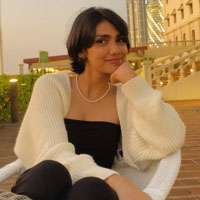
Her own route towards that idea was not entirely direct. Some of Anargi's earliest memories of Sri Lanka's dry zone came from family journeys to Sigiriya, Pidurangala, Ritigala and Dambulla. History eventually became her dominant interest, while the natural world receded somewhat from view. Then she left Sri Lanka to study in England. Distance altered the scale of things. She began hiking through Britain and Europe, encountering landscapes that were unfamiliar in climate, geology and character. Yet the farther she walked through those foreign terrains, the more persistently Sri Lanka seemed to return to her imagination. The mountains of the Dolomites and the landscapes of Europe did not make home feel less significant.
They gave her another vocabulary with which to understand it. Sometimes, perhaps, one needs to leave a landscape before one begins to see it properly. "My life trajectory is pointing me, very much like a compass, back home," Anargi says. The metaphor is particularly apt because Expedition Serendip is, in some ways, a project about reorientation. It is about looking again at places that have become familiar enough to escape serious attention. Her master's studies at the University of Peradeniya brought her closer to that realization. With the Hanthana range nearby, the landscape itself became part of her intellectual environment, and history and nature began to stop behaving like two separate interests. They were occupying the same physical world all along.
Ritigala offers perhaps one of the clearest examples of why this matters. One can approach it as an archaeological site and see ancient monastic remains, stone pathways, ponds and architectural fragments. One can also approach it as a mountain ecosystem and see forest, streams, wildlife, rock and elevation. Neither description is wrong, but neither is complete. The monastery did not exist on an abstract archaeological island. It existed on a mountain, within a particular climate and ecology, dependent upon particular forms of water and access, surrounded by a natural world that would have shaped the lives of the people who lived there. The archaeology is therefore not separate from the landscape. It is one of the landscape's layers.
Sigiriya presents a similar problem of perception. The rock has become so completely associated with the human history built around it that it is easy to forget that the human story is only one chapter in a much older physical history. Pidurangala, too, carries geological and religious histories that cannot be neatly separated from the environment in which they developed. Gerandigala becomes something more than an imposing geological feature when the surrounding ecological world enters the frame. The documentary's argument is therefore not that nature is more important than history, or history more important than nature. It is that the two have been speaking to each other for much longer than our modern categories suggest.

That is why the documentary's two-perspective structure is so important. A historian and an ecologist will approach the same terrain with different questions, different evidence and different habits of attention. The historian might ask what happened here, who came here and why. The ecologist might ask what lives here, how the landscape functions and what has changed. Between those questions lies a much larger story. The intention is to make that scholarship part of the experience rather than an academic footnote attached to attractive cinematography.
"The primary goal is to educate and to inform through a very eco-historical lens on the dry zone of Sri Lanka," Anargi explains. The more difficult task is to persuade people to become curious about what the photograph does not immediately reveal. What is beneath the rock? Why is this forest here? What species depend upon it? Why did people settle in this particular place? How did water shape civilization in the dry zone? What did earlier communities understand about the landscape that we have since forgotten?

Perhaps this is also where Anargi's desire to make history "cool" becomes more interesting than the phrase initially suggests. There is a generation for whom history can arrive heavily packaged: dates, dynasties, kings, battles, inscriptions, names to remember for examinations. Yet history is much stranger and more intimate than that. It survives in physical things. It is beneath our feet. It is in the rock face beside which we stand, in the irrigation system we drive past without noticing, in the manuscript preserved on an ola leaf, in the monastery hidden within a forest. To encounter history physically is to realize that it was once someone's present.
Anargi sees the documentary as potentially offering an entry point into that larger world. There are people who already know the Mahavamsa and Culavamsa, and there are others for whom Sri Lankan history remains a vast and intimidating territory. When she is asked where someone should begin reading, she points towards K. M. de Silva's A History of Sri Lanka. It is not offered as the final word, but as a foundation. The same principle seems to lie behind Expedition Serendip. A twenty-minute film cannot contain the history of a mountain. It should not try. Its purpose can be more modest, and perhaps more valuable: to make someone want to keep looking. Not the final authority.
The first door. There is something particularly appropriate about beginning that journey through the physical landscape because Sri Lankan history has always been written materially. "Our history has physically and literally been written into the rocks, onto our parchment, onto our leaves," Anargi says. The sentence carries a larger truth. The past is not preserved only in books. It is carved into stone, written on ola leaves, embodied in architecture, contained in irrigation systems and embedded in the geography of religious and human settlement. The archive is not always in a library. Sometimes it is standing in the middle of a forest.
In this sense, Expedition Serendip hopes to perform a small paradox. It wants to use television to send people outside. The screen becomes an invitation to leave the screen behind. There is another ecosystem behind the making of the series itself. Anargi speaks of videographers, editors, directors, producers, set designers and the many other people whose labour becomes almost invisible once the finished documentary is assembled. The audience will see the landscape as though it has simply revealed itself. But every frame will be the result of decisions about where to stand, what to hear, what to explain and what to leave silent.
Anargi describes herself as being "in the eye of the hurricane". It is an apt description of what the project has become. The original idea may have come from her, but the documentary is no longer simply hers. It has acquired its own network of people, disciplines and interpretations. In fact, she hopes eventually to move away from being its public face altogether. "I don't want this project to be synonymous with me," she says.
Expedition Serendip is asking us to think of Sri Lanka not as something still being discovered. The country has been studied, mapped, excavated, photographed and written about for centuries, yet familiarity has not exhausted it. If anything, familiarity may be the reason we sometimes fail to notice what remains in plain sight.
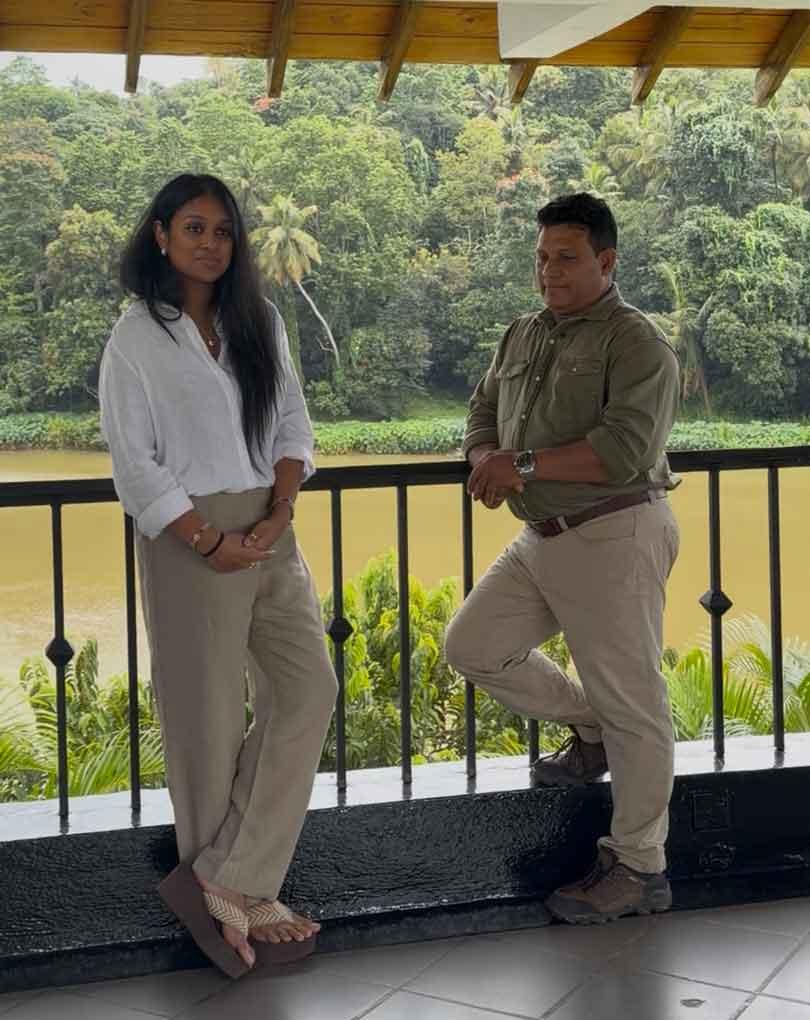
The wild has a history. History has a landscape. For centuries, they have been speaking to one another in the same places, through rock, water, forest, inscription and memory. Anargi and Nilantha are simply trying to listen closely enough to hear the conversation. And Expedition Serendip is putting a microphone between them. Coming Soon….