WHEN A LANGUAGE DIES, WHAT ELSE DIES WITH IT?
I have a rather amusing anecdote to relate connected to the Sinhala expression "helapaniya othaniya". Someone once asked my uncle for the botanical name of the kenda leaf used to wrap helapa, a traditional Sri Lankan sweetmeat made from treacle and flour and steamed between the petals of the kenda leaf. My uncle, never one to allow a question to go unanswered, promptly supplied what sounded like an impressive botanical classification: helapaniya othaniya (in other words, the botanical name of the helapa wrapper!) It was a clever piece of repartee, delivered with the sort of confidence that makes one momentarily wonder whether the answer might actually be correct. Yet, beyond the humour, there is something rather interesting about this little exchange. The leaf had an identity and a purpose long before anyone thought to ask for its scientific classification. It was part of a culinary tradition, a familiar feature of everyday life and a piece of knowledge passed down through generations. How many of us, however, could identify the leaf today, let alone explain its traditional use?
We tend to think of language as a means of communication, a collection of words that allows us to express ourselves and understand others. But language is considerably more than that. It is also a repository of collective memory, carrying within it the knowledge, customs and experiences of a people. The names given to plants, birds, foods, occupations, and natural phenomena are not simply convenient labels. Often, they reflect an intimate understanding of the environment in which people lived. Consider, for example, the distinctly Kandyan habit of giving directions without necessarily referring to road names or recognisable landmarks. Instead, one might be told to take the udaha para (the upper road) or the pahala para (the lower road). For someone visiting from Colombo, this can be rather disconcerting (not to mention annoying!). For Kandyans, however, it seems an entirely natural way of navigating their city. After all, in that neck of the woods, so to speak, one is generally either going uphill or downhill. It is a wonderfully simple illustration of how the language we use is often shaped by the landscape we inhabit.
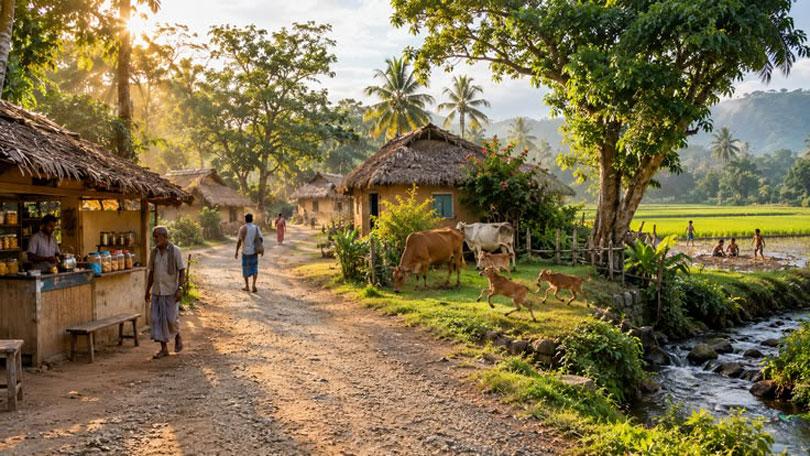
The same relationship between language and environment is evident in the vocabulary associated with traditional occupations. A farmer might distinguish between several stages of cultivation, while a fisherman might have words to describe particular conditions of the sea, types of nets or methods of fishing. Such words represent knowledge acquired through
observation and experience. When the occupations themselves disappear, or when younger generations no longer understand the vocabulary associated with them, something more than a collection of unfamiliar words is lost.
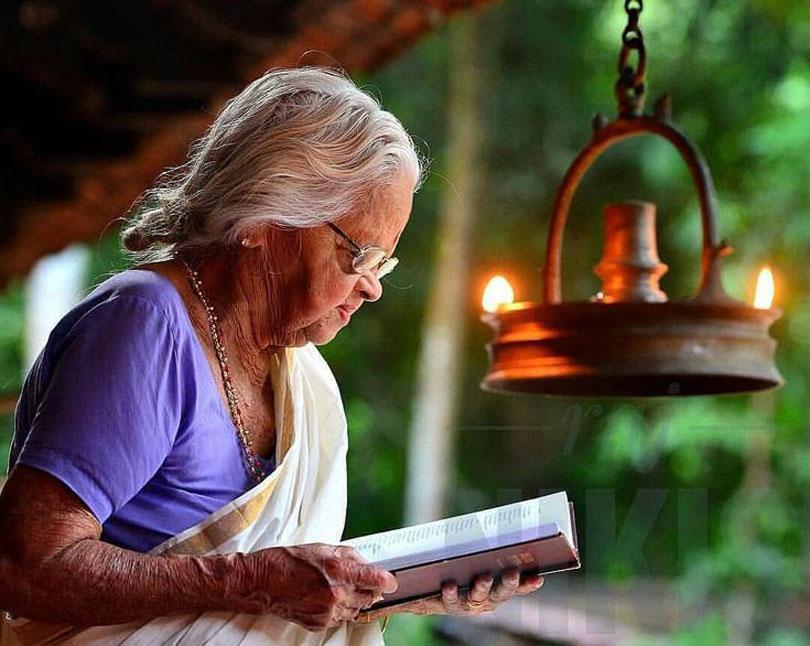
The same is true of proverbs, idioms and folk expressions. A good proverb, such as the Tamil expression “thottilil pazhakkam sudukaadu varai” (what is learned in the cradle is carried to the grave), is often a remarkably economical way of communicating an observation about human nature. It may contain a warning, a lesson in patience, or an understanding of the consequences of one's actions, all conveyed in a handful of words. Across Sinhala and Tamil communities, such expressions traditionally formed part of everyday conversation. They were absorbed through listening to parents, grandparents and other members of the community rather than learnt as formal lessons. Yet how many of these expressions remain familiar to younger generations? More importantly, how many understand the circumstances in which they originated or the wisdom they were intended to convey?
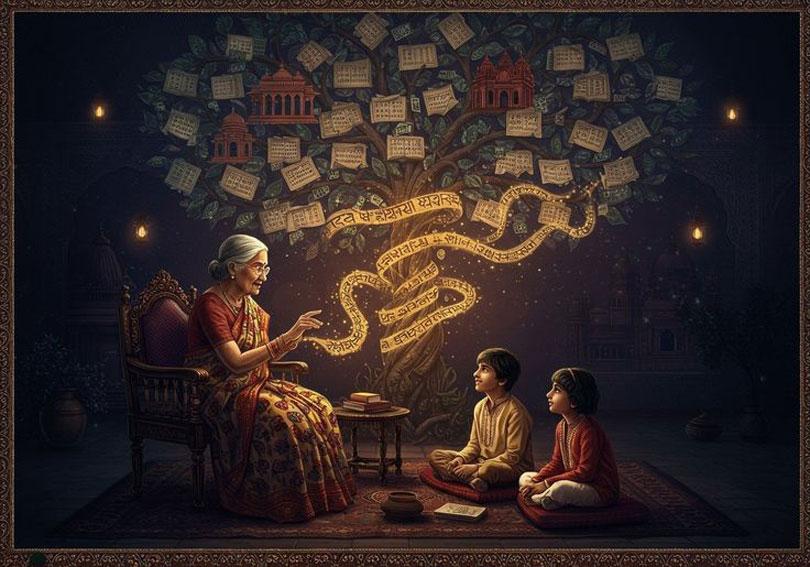
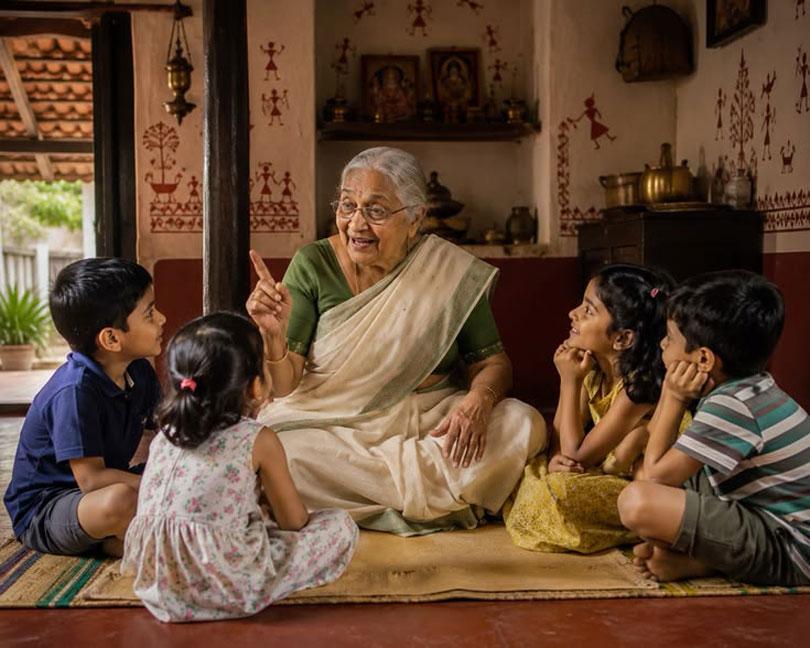
Our oral storytelling traditions offer another fascinating illustration of the relationship between language and cultural memory. Before television and digital entertainment became the principal sources of recreation, stories were passed from one generation to another through conversation. Grandparents recounted tales, children learnt songs and riddles, and family histories were preserved in the memories of those who had lived them. Some stories explained the origins of customs; others offered observations about human behaviour, courage, greed or foolishness. Many were humorous, but their purpose extended beyond entertainment. They allowed communities to transmit their experiences and values in a form that could be remembered and retold.
Consider, for instance, the tradition of riddling in different cultures. In parts of Africa and Asia, riddles were once an important feature of everyday interaction between adults and children. They encouraged the listener to look beyond the literal meaning of a question, recognise an association and arrive at an answer through observation and reasoning. Sri Lanka has its own traditions of Sinhala and Jaffna Tamil folk riddles, many of which circulated orally without ever being formally recorded. How much more remains undocumented? And what happens to such knowledge when the people who remember it are no longer around to pass it on?
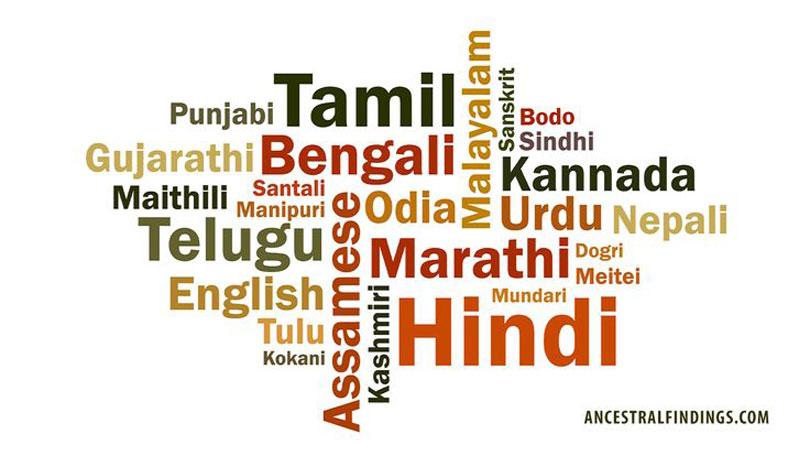
There is also the question of regional vocabulary. Sinhala and Tamil are not confined to the forms we encounter in textbooks or formal writing. Different communities have developed
their own expressions, pronunciations and vocabulary, shaped by geography, occupation and social experience. A word or phrase familiar to someone from Kandy may be unfamiliar to someone from Colombo; an expression used by a farming community may mean very little to a child growing up in an urban environment. These differences are not imperfections to be corrected. They are part of the richness of a language, reflecting the different experiences and environments that have shaped it. When such expressions disappear, we lose access to particular ways of describing and understanding the world.
Perhaps the most troubling aspect of this gradual disappearance is that it often goes unnoticed. We may preserve our monuments, photographs and historical documents, yet overlook the less tangible aspects of our inheritance. A family recipe survives because someone remembers how it was made. A folk song survives because someone continues to sing it. A traditional expression survives because it remains part of everyday conversation. But what happens when nobody remembers the recipe, nobody knows the song and nobody understands the expression? Unlike a monument or a written record, such knowledge may leave no trace of its existence once the people who carry it are gone.
This is where education has an important role to play. We spend considerable time teaching children to read, write and communicate in their mother tongues, but how much attention do we give to the cultural memory contained within those languages? Are children familiar with traditional proverbs, folk stories and songs? Do they know the names of the plants growing around them, or the stories behind familiar foods and customs? Have they ever asked their grandparents about the expressions they use or the experiences that gave rise to them? These need not be treated as exercises in nostalgia. They are opportunities to understand history, identity and the accumulated knowledge of the communities to which we belong.
A language can survive in dictionaries and textbooks, but that does not necessarily mean that everything it once carried has survived with it. We inherit more than property, recipes and family photographs. We inherit words, stories, customs and ways of understanding the world. Some are carefully preserved; others disappear quietly, often without anyone recognising the loss.
When a word disappears, then, do we merely lose a word? Or do we lose a little piece of ourselves?
Follow The Sun for the second part of this article next week: The Death of Meaning: Are We Losing The Art of Understanding Language?