ARE WE SCARED OF DRESSING COOL?
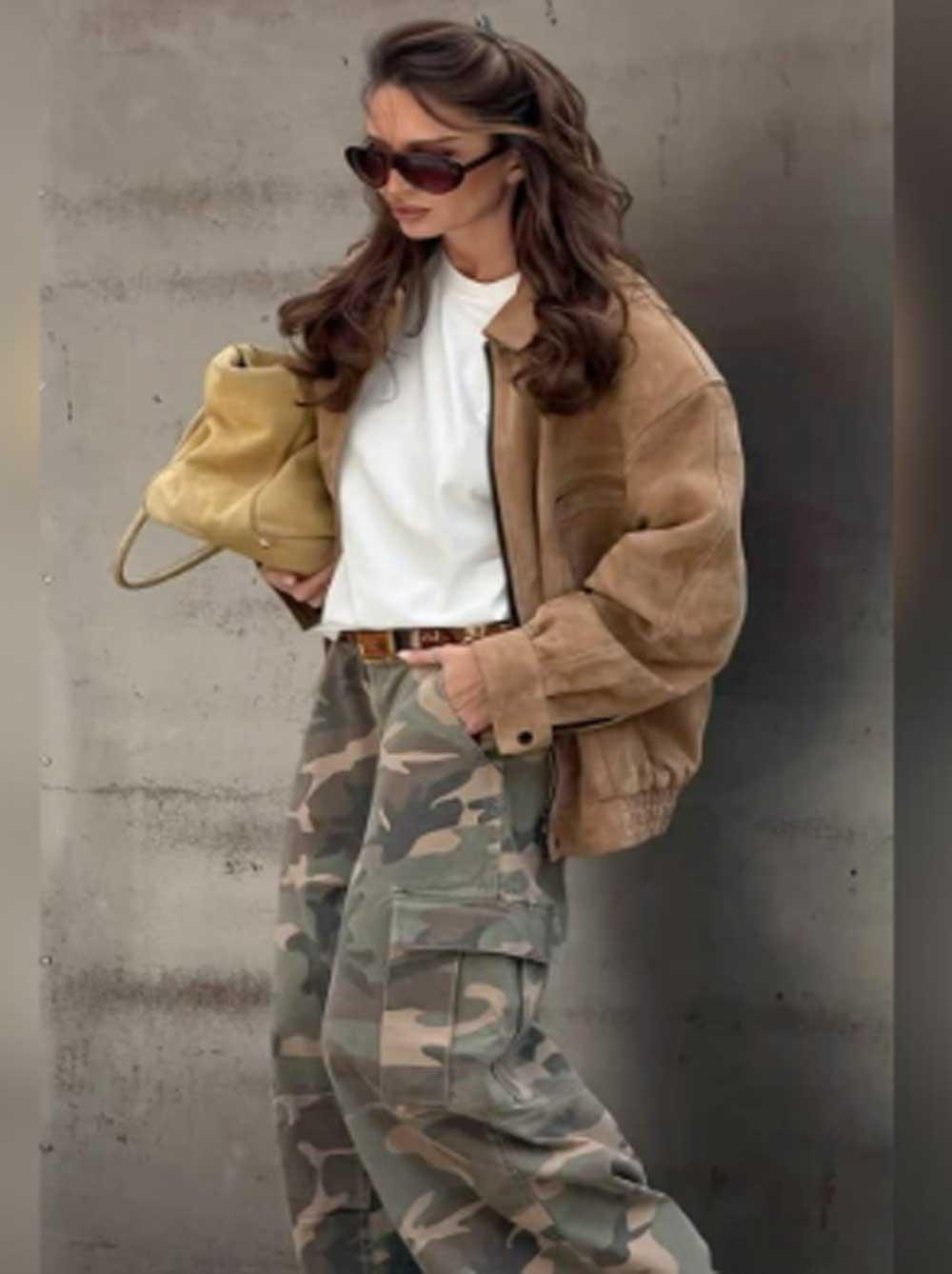
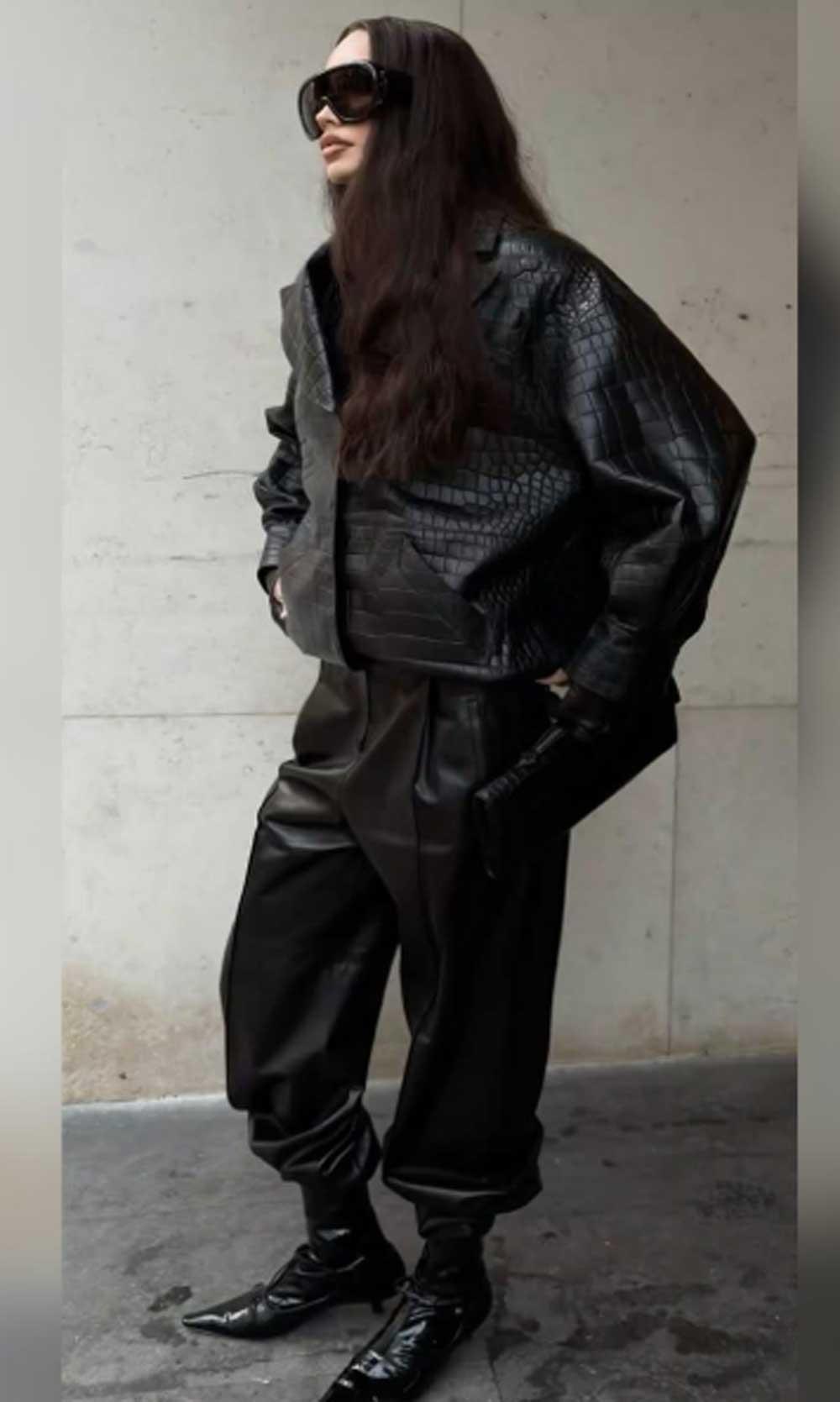
There are certain outfits I can admire endlessly on other women but struggle to imagine wearing myself. Leather trousers, oversized jackets, masculine tailoring and that slightly tougher approach to dressing that somehow looks effortlessly cool. I save the photographs, mentally recreate the outfits and occasionally convince myself that this is exactly the direction I want my wardrobe to take. Yet when it comes to getting dressed, I almost always return to what I know: fitted silhouettes, bodycon dresses, defined waists and clothes that feel distinctly feminine. It is not that I don't want to experiment. Quite the opposite. I am constantly drawn to women whose style feels unexpected, confident and almost intimidating in its effortlessness. The sort of woman who can throw on a leather co-ord, slick her hair back and make the entire thing look completely natural. But when I imagine myself wearing something similar, the questions begin. Would I still feel feminine? Would I look like I was trying too hard? Would people think I was attempting to become someone else? It sounds rather ridiculous when written down. After all, they are just clothes. But perhaps that is precisely the problem. Somewhere along the way, we have become so attached to the identities we create through fashion that changing our clothes can feel strangely similar to changing who we are. Which makes me wonder: are we dressing according to what we genuinely love, or according to the version of ourselves we have become comfortable presenting to the world?
THE COMFORT OF BEING RECOGNISABLE
Personal style is something we are constantly encouraged to develop. We are told to find our signature look, discover the silhouettes that flatter us and build wardrobes that feel authentically ours. And there is something reassuring about knowing what works. Getting dressed becomes easier, shopping feels more intentional and eventually certain clothes become synonymous with who we are. But I wonder whether having a recognisable personal style can sometimes become a limitation. Once you have established yourself as someone who dresses a particular way, stepping outside that image can feel surprisingly uncomfortable. The woman who always wears dresses might feel strange in baggy jeans. Someone known for minimalist tailoring might hesitate before wearing something colourful or romantic. And someone like me, who has spent years gravitating towards fitted, feminine silhouettes, can suddenly feel conspicuous in leather trousers and an oversized blazer. The hesitation is not necessarily about whether the outfit looks good. It is about whether it looks like you. There is a difference between knowing what you like and becoming so attached to a particular aesthetic that everything outside it feels almost off-limits. Perhaps we become so accustomed to seeing ourselves in certain clothes that anything unfamiliar feels like a costume. We look in the mirror and, rather than appreciating the outfit for what it is, immediately compare it to the version of ourselves we recognise. And familiarity, more often than not, wins.
WHEN DID CLOTHES START HAVING PERSONALITIES?
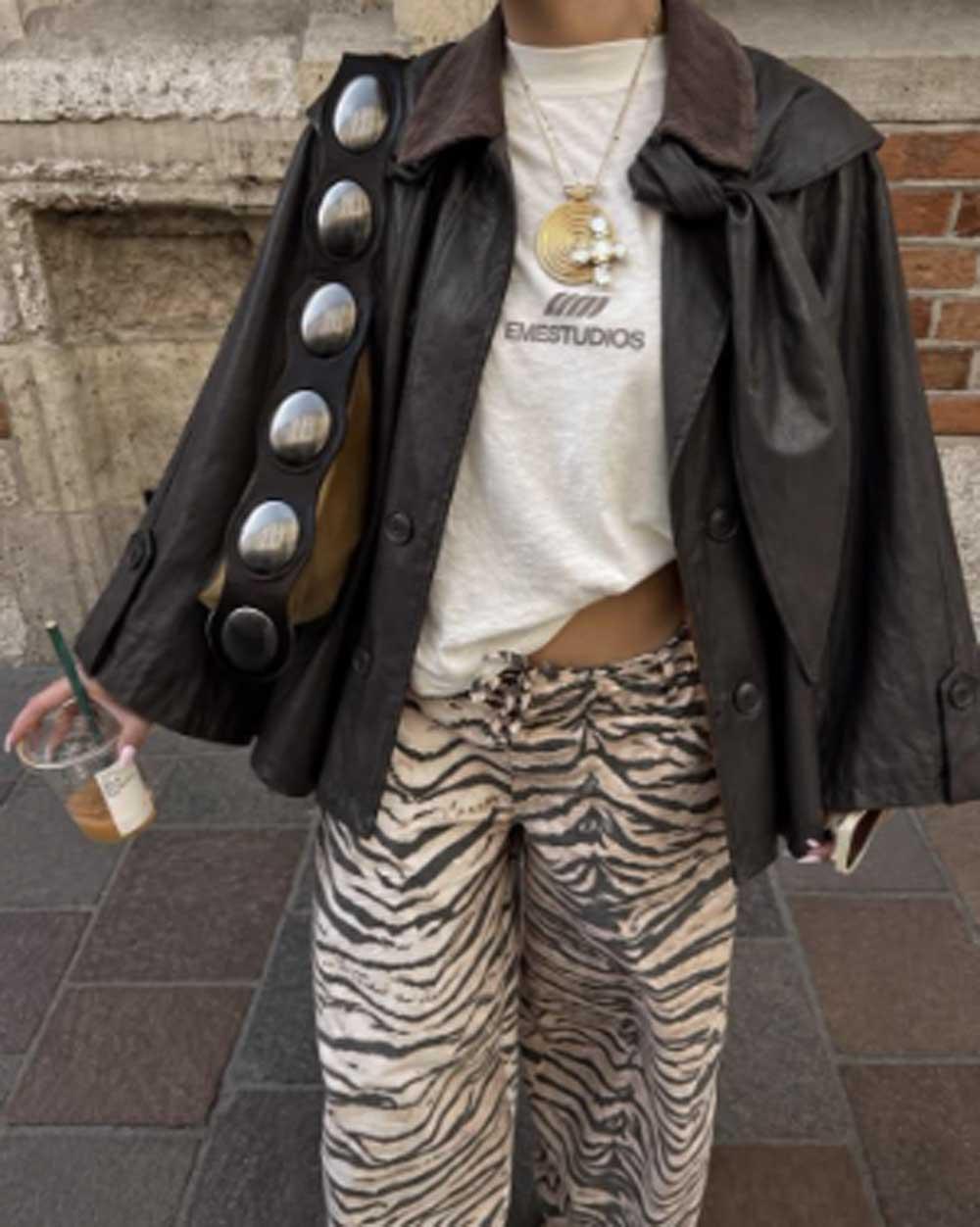
Part of the problem is the extraordinary amount of meaning we attach to clothes. A fitted dress is feminine. Leather trousers are edgy. An oversized suit is powerful. Ballet flats suggest softness, while biker boots imply rebelliousness. Of course, fashion has always communicated something about the person wearing it. But in an age of neatly packaged aesthetics, these associations have become increasingly restrictive. Social media has encouraged us to categorise women into recognisable identities: the clean girl, the coquette girl, the old-money girl and the mob wife. Each comes with its own wardrobe, beauty routine and, rather absurdly, implied personality. What began as a convenient way of describing trends has gradually made personal style feel like something we must commit to. Dress femininely, and anything tougher feels out of character. Favour minimalism, and suddenly a dramatic outfit seems like a statement. Wear something unexpected, and people assume you are entering a new era. But why should leather trousers say anything about my femininity? Why should an oversized jacket make me less elegant? And why should admiring a completely different aesthetic mean questioning my identity? Perhaps we have become so concerned with what our clothes communicate that we have forgotten the pleasure of simply wearing them.
THE FEAR OF LOOKING LIKE YOU'RE TRYING
There is another layer to this hesitation that I suspect many women will recognise: the fear of looking as though we are trying too hard. We admire women who dress boldly, particularly when their outfits appear effortless. Yet the moment we attempt something similar ourselves, we become painfully aware of the effort involved. An unusual combination that looks brilliant on someone else suddenly feels overly considered when we recreate it. A dramatic jacket becomes something we worry is attracting too much attention. We want to look cool, but we don't necessarily want anyone to know that we are trying to look cool. There is something contradictory about this. Fashion celebrates individuality, yet we can be remarkably uncomfortable with the process of developing it. Perhaps that is because dressing differently requires a willingness to be seen differently. When you wear something familiar, you know how to carry yourself. You know how the clothes move, how they fit and how you feel in them. There is confidence in that predictability. Put on something unexpected, however, and suddenly everything becomes a consideration. You adjust the jacket, question the shoes and wonder whether the outfit looks as natural as it did in your imagination. I am experiencing this exact feeling with a new leather set I recently bought. It is precisely the sort of outfit I have admired on countless other women. Yet wearing it myself, I feel strangely unlike me. Almost as though I am dressed as someone else. The frustrating part is that I still love the outfit. Nothing about the clothes has changed, except the person wearing them. And perhaps that is what makes experimenting so difficult.
CAN YOU BE FEMININE AND COOL?
What interests me most is how strongly we associate femininity with particular styles. I have always gravitated towards fitted dresses, defined waists and silhouettes that accentuate the body. I love dressing femininely, and that is not something I particularly want to change.
Yet whenever I consider something tougher or more androgynous, I find myself wondering whether I will still feel feminine enough. But why should femininity have such a narrow definition? There is nothing inherently unfeminine about leather, oversized tailoring or biker boots. A woman can wear a sharply cut suit one day and a silk dress the next without either outfit contradicting the other. Some of the most interesting looks exist precisely because they combine different expressions of style. A delicate top with masculine tailoring. A romantic dress with heavy boots. A leather jacket thrown over something unexpectedly soft. The contrast is often what makes an outfit compelling. Perhaps we have been conditioned to think of femininity as something that must be visually maintained through certain silhouettes, fabrics and proportions. But femininity is not a dress code. It does not disappear because a jacket is oversized or a pair of trousers is made from leather. And being cool certainly should not require abandoning it.
ARE WE DRESSING FOR OURSELVES OR OUR REPUTATION?
The more I think about it, the more I realise how much our reluctance to experiment comes from the identities we have created around ourselves. We all have an idea of how other people perceive us. Perhaps we are the friend who always dresses up, the one who lives in neutrals or the one who never leaves the house without heels. Over time, those descriptions become familiar, and without realising it, we begin dressing to reinforce them. There is comfort in being recognisable, but something quietly restrictive about feeling obliged to remain predictable. After all, we are not the same people every day. Our moods change, our interests evolve and the things we find beautiful are rarely confined to one aesthetic. So why should our wardrobes tell one consistent story? Some days I want to look polished and feminine. Other days I want to wear leather trousers, an oversized jacket and sunglasses and feel like the coolest person in the room. Neither version is less authentic than the other. Perhaps dressing authentically is not about remaining consistent but allowing ourselves to embrace different versions of who we are without feeling the need to explain them.
THE CLOTHES WE NEVER WEAR
Most of us have an imaginary wardrobe. The outfits we save on Pinterest, admire on Instagram and mentally recreate, but never quite have the confidence to wear. Perhaps it is a leather set, a dramatic coat, statement boots or simply a silhouette that feels unfamiliar. We tell ourselves we will wear these things when we are more confident, when the right occasion arrives or when we become the sort of woman who can pull them off. But what if that woman is not someone we have to become? What if the only difference between admiring an outfit and wearing it is the willingness to try? Of course, not every trend deserves a place in our wardrobes. There is nothing wrong with knowing that certain clothes simply are not for us. Experimenting should never become another fashion obligation. But there is a difference between avoiding something because we genuinely dislike it and avoiding it because we are worried about how others might perceive us. One is personal preference. The other is self-imposed restriction. And I suspect we confuse the two more often than we realise. Perhaps the most liberating thing we can do is stop asking whether an outfit looks like us and start asking whether we actually like it. Because personal style should not be a fixed identity, we spend our lives maintaining. It should give us the freedom to express different sides of ourselves, including those we have not yet become entirely comfortable showing. I will probably always love a fitted dress. I don't see that changing anytime soon.
But I would also quite like to wear the leather trousers I have spent so long admiring on everyone else, without feeling that I need an entirely different personality to go with them. After all, perhaps being cool has very little to do with the clothes themselves. Perhaps it is simply being comfortable enough with who you are to stop worrying about whether every outfit proves it.