
STATUTORY RAPE IS NOT A LOVE STORY: STOP ROMANTICIZING THE MAN
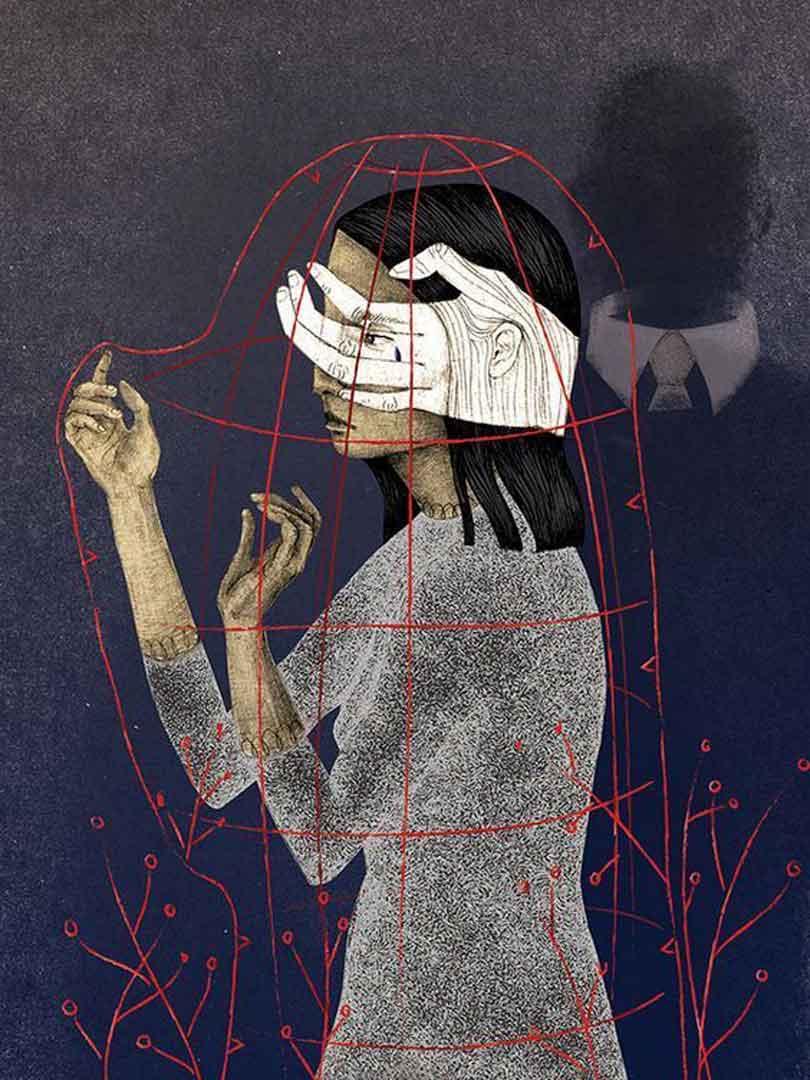
This story is about how the romanticization of a 23-year-old man in a case involving a 15-year-old girl exposes our deeply troubling understanding of male responsibility, childhood and consent. Sit back.
The discovery of a 15-year-old girl and her two-month-old baby in a forest cave should have provoked an urgent national conversation about child protection. Instead, some sections of the public have chosen to celebrate the 23-year-old man allegedly involved, exposing a deeply troubling tendency to mistake male provision for virtue and a child's vulnerability for a love story. The circumstances in which the girl was found are difficult enough to comprehend. She had reportedly been missing for nearly five months, had given birth inside the cave without medical assistance and was discovered following a police investigation into a 23-year-old man who had been purchasing unusually large quantities of food from a local shop. The man, believed to be the child's father, was arrested along with a relative who allegedly assisted him. The girl and her baby were subsequently placed under police protection and referred to the National Hospital in Kandy for medical examination and treatment. These are the reported facts of a case that demands serious investigation. Yet, somewhere beneath the news reports, the public discussion took a rather revealing turn.

A 15-year-old girl has reportedly spent months away from her family, given birth in a forest cave without medical assistance and now requires protection and medical attention. Yet the quality being celebrated about the man is that he did not leave her hungry. Apparently, the bar for being considered a good man has fallen so low that providing food to a child in circumstances involving serious allegations of exploitation is being presented as an extraordinary act of devotion.
This is not a story about an unconventional relationship between two adults who have chosen to withdraw from society. It is not a story about a young couple overcoming difficulties or a man demonstrating commitment by staying beside the woman he loves. It concerns a 15-year-old child and a 23-year-old adult, and that distinction matters enormously. Under Section 363(e) of Sri Lanka's Penal Code, sexual intercourse with a girl under the age of 16 constitutes rape, irrespective of whether she appears to have consented, subject to the statutory marital exception. The legal position is important because it establishes that a child's apparent willingness cannot simply be treated as legally valid consent. Whether a criminal offence has been committed in this particular case, and the precise circumstances surrounding the girl's pregnancy, must be established through investigation and due process.
It is not the responsibility of a 15-year-old to demonstrate that she understood the consequences of an adult relationship, possessed the emotional maturity to navigate its inequalities or knew how to remove herself from a potentially exploitative situation.
What makes the public reaction especially troubling is the assumption that abuse must always look like abuse to the people observing it. There is a tendency to imagine exploitation as something that happens only through visible violence, physical restraint or the obvious terror of a victim. When a child appears attached to the adult involved, when she stays with him or when she expresses affection, people become uncomfortable with the possibility that something harmful may have occurred. Emotional attachment does not establish equality; dependence does not establish consent and a child's apparent affection does not remove an adult's responsibility. Children can develop strong emotional attachments to people who exploit them. They can defend those people, depend on them and struggle to recognize the harm within relationships that have become central to their lives. These complexities are precisely why child protection must be informed by an understanding of power, vulnerability and psychological development rather than the romantic expectations adults impose on relationships.
We have become so accustomed to measuring male responsibility through a man's willingness to provide that we sometimes forget what responsibility actually requires. Providing for someone does not give a person authority over them. Financial support does not establish consent. Shelter does not become an act of heroism simply because the person receiving it is vulnerable. And remaining beside someone does not automatically make a person safe for them. There is something profoundly inadequate about a social standard in which men are praised for doing the bare minimum while girls are expected to accommodate the consequences of adult decisions. Not abandoning a child is not an extraordinary achievement. It is an ordinary expectation of human decency, and it certainly cannot be used to dismiss the need for accountability.
We should be especially wary of the suggestion that he ought to take responsibility for her once she reaches 18. What does that mean? That the relationship should simply be put on hold until she is legally an adult? That turning 18 somehow retrospectively resolves the circumstances of her childhood? That the appropriate outcome of a child protection investigation is to preserve the possibility of an adult relationship? A birthday does not erase exploitation. Legal adulthood does not undo the consequences of what may have happened during childhood. And the future of a girl who has experienced such circumstances should never be treated as something an adult man can reserve for himself.

It is also worth asking why our standards for male behaviour are sometimes so extraordinarily low. Quite honestly sometimes in hell. Why is the absence of abandonment presented as evidence of exceptional character? Why is a man praised for doing what any decent adult should be expected to do, while the vulnerability of the child is treated as an unfortunate detail? We cannot continue to describe men as good because they have refrained from causing every imaginable form of harm. Not committing murder is not an achievement that absolves someone of other allegations. Providing food is not a substitute for respecting the law. And remaining physically present does not automatically make someone a safe person.
Public sympathy is often temporary. The internet will argue, defend, condemn and eventually forget. But a child who has experienced exploitation, isolation or trauma does not simply return to an ordinary childhood because the news cycle has ended. She will need sustained care, protection, education, stability and the freedom to rebuild a life that belongs to her. Her recovery must not become conditional on whether the public approves of her decisions or understands the circumstances in which she was found. She must not be made to carry the shame of what happened to her. She must not be blamed for the circumstances in which she was found. And she must not be pressured into any future arrangement because society has decided that the adult man involved deserves a second chance at a relationship. Her future must be determined by her welfare, her rights and her ability to grow up with dignity and independence, not by the expectations of people who have turned a child protection concern into a debate about romantic commitment.
There is a baby whose future also matters. There is a young mother who needs protection. There are questions that the police and relevant authorities must answer. And there is a society that needs to confront the beliefs it has exposed through its response. We should be asking how a child could remain missing for months, what circumstances led to her giving birth without medical assistance, whether there were opportunities for intervention and what safeguards must be strengthened to prevent another child from experiencing something similar. These are the questions that deserve public attention, not the supposed nobility of an adult man for purchasing food.
If our first instinct is to praise a 23-year-old for feeding a 15-year-old girl, rather than ask why she was in a cave giving birth without medical assistance, then we have misunderstood the very meaning of child protection. If we can look at these circumstances and conclude that he is a good man because he did not leave her to suffer alone, then we have confused the bare minimum of human decency with moral virtue. And if we are willing to wait until a child turns 18 before considering her entitled to a different future, then we have failed to understand what childhood protection is supposed to mean. She did not need a man to rescue her by taking her away from the world. She needed the protection of a society that would never have allowed her to be placed in such circumstances in the first place. Stop romanticizing abuse. Stop lowering the bar for men and stop failing our children. And, above all, stop making excuses for circumstances in which a child should never have had to live.
A 15-year-old girl does not owe anyone gratitude for being fed. She is owed protection.