How Did a 1957 Sri Lankan Painting Become a US$640,000 Auction Record?
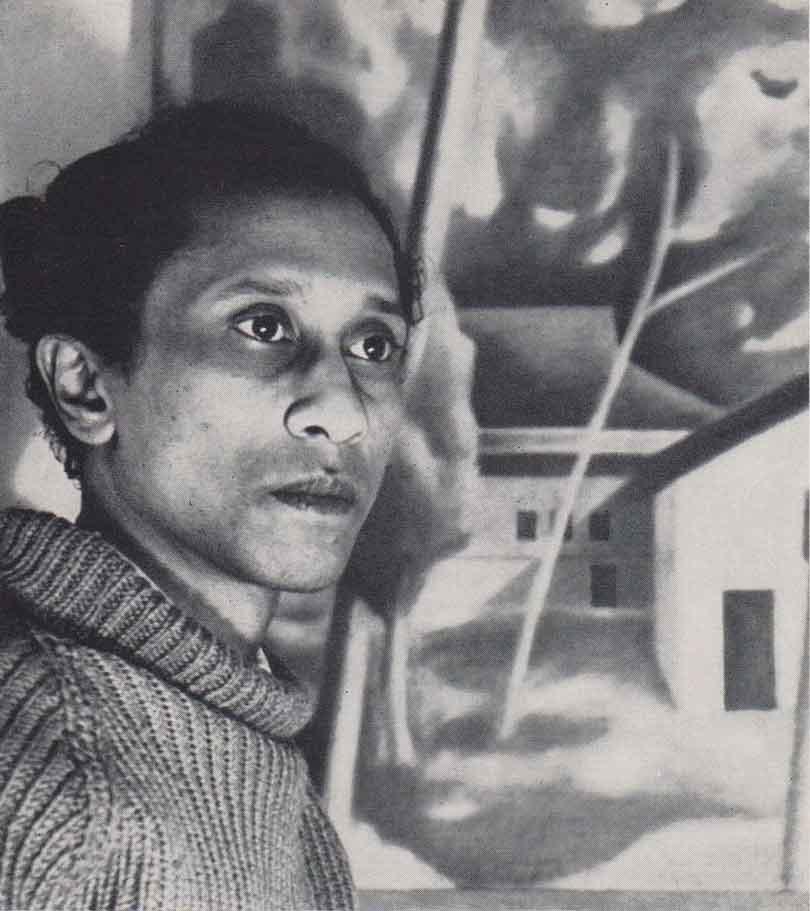
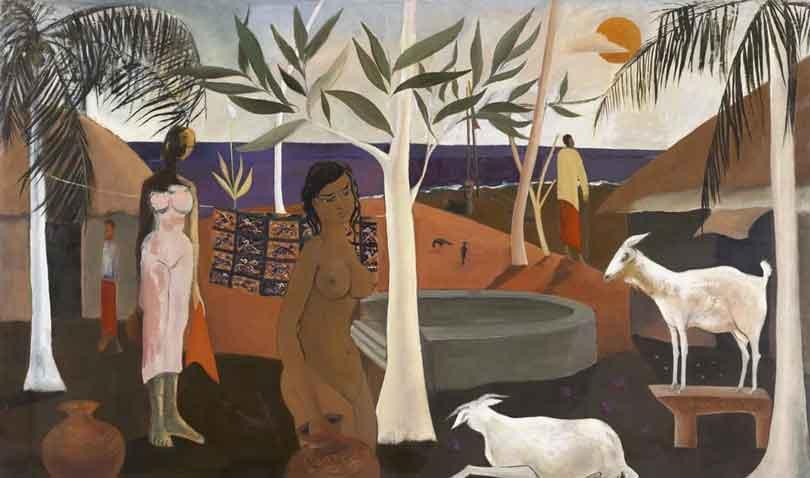
Nearly seven decades after it was painted, a quiet scene from rural Sri Lanka has made international art-market history. The Well, a 1957 oil-on-canvas painting by Sri Lankan-born artist Ivan Peries, sold for US$640,000 at Christie’s South Asian Modern + Contemporary Art auction in New York on the 16th of September, setting a new auction record for a work by a Sri Lankan-born artist.
The result was far above its pre-sale estimate of US$70,000 to US$100,000, taking the painting more than nine times above the lower end of its estimate. It also marked a significant rise from Peries’ previous auction record of US$63,500, achieved in 2025 when Untitled (Figure on the Shore) was sold at Christie’s in New York.
But the significance of The Well goes beyond its price. The painting is regarded by Christie’s as one of Peries’ most important works and is the only one of his seven monumental “panel paintings” to have appeared at auction. It also has an important place in the history of Sri Lankan art, having been exhibited at the 1958 Venice Biennale.
At the centre of the painting is a village well, surrounded by a rural coastal landscape. It is an image rooted in Sri Lankan life, yet one that travelled far beyond the island and eventually entered the international art market.
For Peries, however, scenes of Sri Lanka were more than simple representations of his homeland. They became recurring elements in a body of work shaped by memory, landscape and his experiences both in Sri Lanka and abroad.
Born in Dehiwala in 1921, Ivan Peries emerged during a period when Sri Lankan artists were beginning to challenge established ideas about what local art could be. In 1943, he became one of the founding members of the ’43 Group, a collective that would play an important role in the development of modern art in Sri Lanka.
The group brought together artists including George Keyt, Justin Daraniyagala, Aubrey Collette and Harry Pieris. At a time when much of the country’s established art scene remained influenced by academic and traditional approaches, the ’43 Group explored new artistic directions, drawing from international modernism while continuing to engage with Sri Lankan subjects and experiences.
Peries was particularly involved in bringing the group together and organising its early exhibitions. His contribution would become part of a wider transformation in the country’s visual arts.
His own artistic journey soon took him overseas. In 1946, Peries received a government scholarship to study at St. John’s Wood School of Art in London. He returned to Sri Lanka in 1949, but moved back to London in 1953, eventually making Britain his home.
Despite spending much of his later life in Britain, Sri Lanka remained deeply present in his work. Coastal landscapes, village settings, houses and human figures appeared repeatedly in his paintings. His work often carried a sense of stillness, with the Sri Lankan landscape becoming a space through which memories of home could be explored.
His international career also developed during this period. Peries exhibited in Europe and Britain and represented Sri Lanka at the Venice Biennale in 1956 and again in 1958. The Well was among the works shown during the latter appearance.
The painting therefore represents an important point in the journey of an artist who connected Sri Lankan subject matter with the international modern art world.
Peries died in Southend-on-Sea, Britain, in 1988, aged 66. Decades later, his work continues to attract attention from collectors and institutions, with the latest Christie’s sale providing a new measure of the market’s interest in his paintings.
The US$640,000 achieved by The Well is particularly striking when placed alongside Peries’ recent auction history. His Untitled (Figure on the Shore) sold for US$63,500 in 2025, while other works sold at Christie’s for US$44,100 in 2025 and US$31,500 in 2024.
The latest sale has therefore opened another chapter in the story of Ivan Peries, one that began with the growth of modern art in 1940s Sri Lanka and continued through his international career.
At the heart of that story is a painting of something seemingly ordinary: a village well in a Sri Lankan coastal setting. Painted in 1957, exhibited at one of the world’s most recognised art events the following year and now sold for US$640,000, The Well demonstrates how an image drawn from a local landscape can acquire a much wider place in art history. For Sri Lanka’s modern art movement, the record adds renewed attention to a generation of artists who helped shape the country’s artistic identity. For Ivan Peries, it brings one of his most significant works back into the international spotlight, almost four decades after his death.