SIX DESIGNERS THAT ARE SHAPING MERCEDES-BENZ FASHION WEEK
Colombo is once again at the center of South Asian Fashion. The Mercedes-Benz Fashion Week Sri Lanka returns for its 2026 edition at Cinnamon Life City of Dreams, running across five days in early October. Presented by AOD and powered by DIMO, the event is part of a growing push to firmly place Sri Lanka on the international fashion scene. Its roots in nurturing fashion remain strong, featuring stunning collections from the next generation of Sri Lanka’s up-and-coming designers, passionately weaving ambition, technology and sustainability into pieces of art.
More than just being a runway, MBFWSL is a space where craftsmanship, expression and cultural identity all meet up to create something spectacular. For the many emerging designers, it serves as a launchpad. For Sri Lankan fashion, it is a statement of ambition.
ESANDI
Boujie

Esandi Vidanalage
Boujie isn’t a project that follows the rules but instead questions why those rules are set in the first place.
Created by Esandi Vidanalage, Boujie emerges from a deeply personal relationship with individuality, identity, and the pressure to conform. Growing up in China, she experienced the tension between fitting in and wanting to exist outside them. This contrast grew into the foundation for Boujie, which is the collection that questions the idea that clothing, like humans, should have to make perfect sense.
As she describes it, the brand is about freedom. The freedom to wear whatever feels right, question and challenge what feels restrictive, and embrace the parts of ourselves that don’t need to perfectly fit into existing categories. As opposed to designing for conventional ideas such as beauty or perfection, this collection searches for its identity in contradiction. Proportions are deliberately disrupted and combined with unexpected textures and materials, making the ‘imperfections’ an integral part of the design rather than something that needs to be corrected.
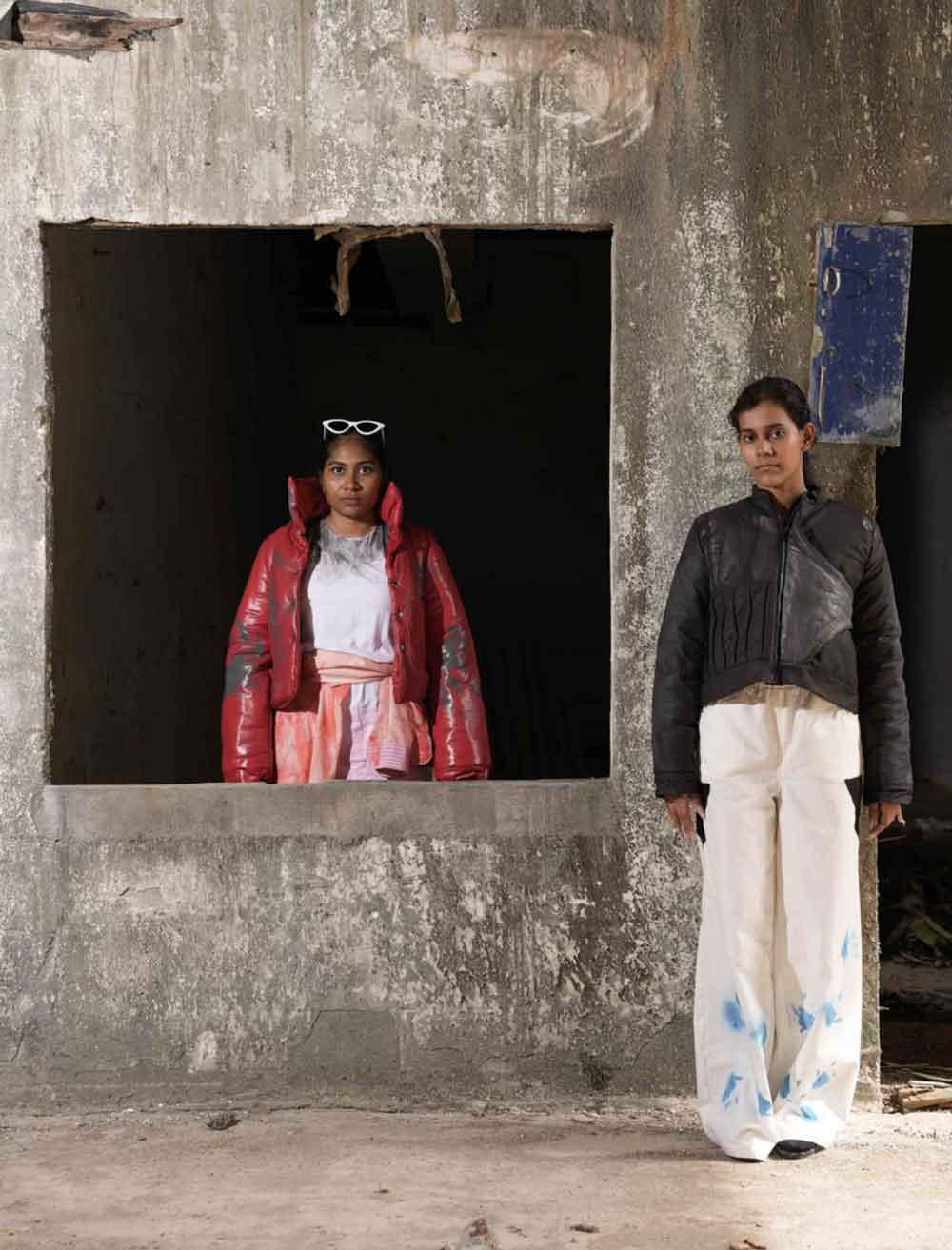
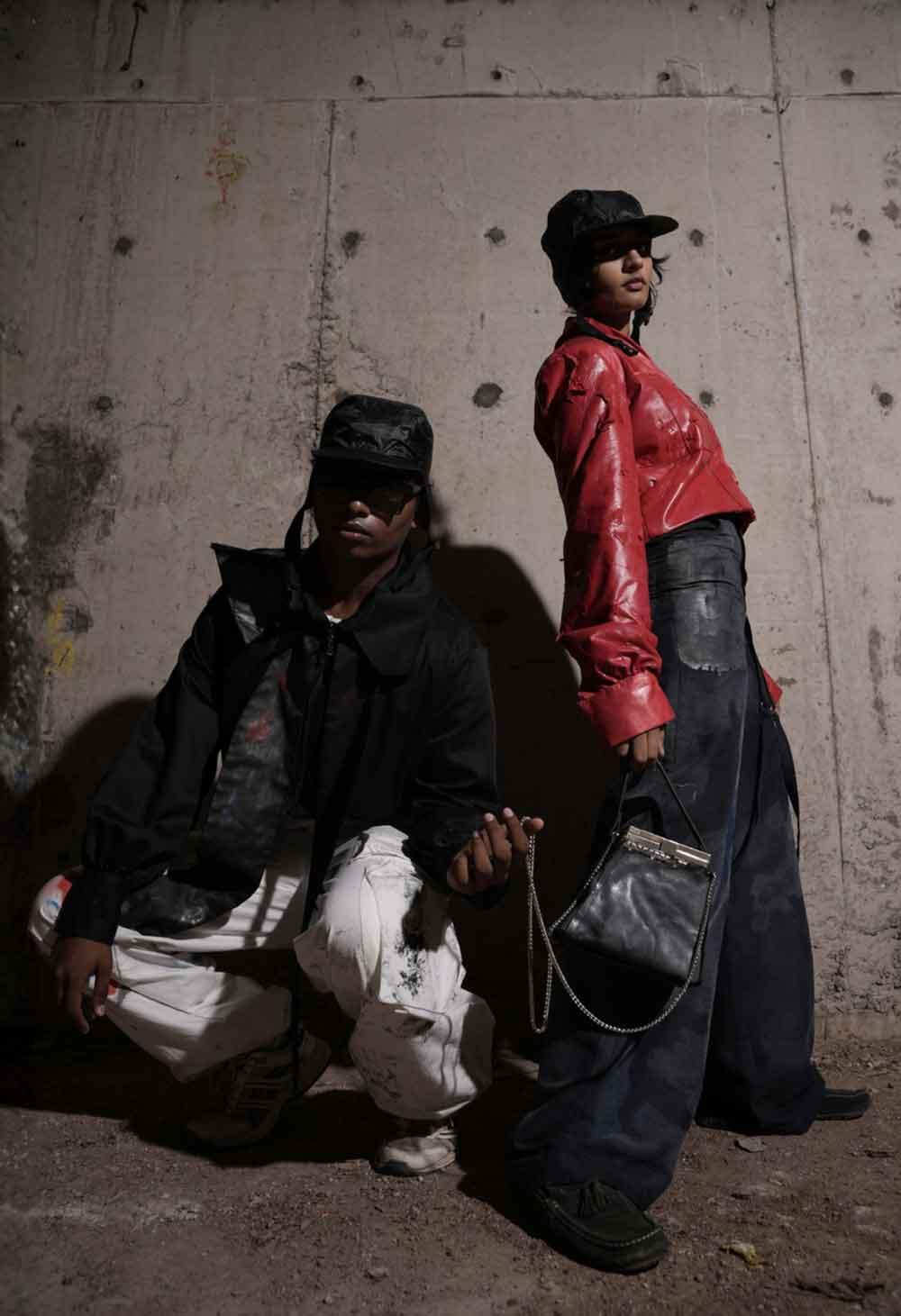
The collection draws its inspiration from Japanese fashion and Esandi’s experiences of growing up in a rapidly evolving China. The mass production, repetitive architecture, and dynamic urban landscapes of the environment created a contrast between individuality and conformity. Dadaism contributes to a rejection of a fixed logic and encourages Boujie to question what fashion is actually supposed to be. Japanese fashion, meanwhile, informs its experimental silhouettes and the appreciation of imperfection.
At its heart, Boujie is a fascination with things that traditionally do not belong together. The unconventional silhouettes, fragmented forms, and deconstructed tailoring all aim to create a visual language that feels deliberately familiar. Most people say that contradictions are meant to be resolved, but instead, the brand celebrates them.
Moreover, sustainability is also considered and is approached with the same spirit of experimentation. Deadstock and leftover fabrics are also incorporated into the designs, giving existing materials another shot at life, while simultaneously reducing unnecessary textile waste. These unconventional materials are transformed into new forms, while bio-based agar is used as an alternative coating.
Ultimately, Boujie is a brand that is less about telling people what clothes to wear and how to wear them but instead encourages people to question why they have been told to wear it in the first place. It is fashion presented as self-expression, disruption, and freedom, which is a bold reminder that being different is not something that needs to be fixed, but to be embraced.
SHENARA
Beyond the Matrix

Shenara Jayasekara
For designer Shenara, clothing isn’t ever just clothing. It is a statement, a form of protest, and an invitation to look up from your screen and back to the natural world in front of your eyes. Her debut collection under Crux 360 Labs (C3L), Beyond the Matrix, is built on this belief and communicates that fashion can be a powerful tool for activism rather than just a driver of excess.
At its core, this collection explores escaping the algorithm that controls us all. She sees a system that constantly pushes today’s consumers to chase the many different trends we see, to buy way more than what they need, and to drift further from nature. Beyond the Matrix stands firmly against this well-established cycle and directly challenges consumer culture and climate change. Each of the garments in this collection communicates C3L’s purpose, which is conscious consumption, environmental responsibility, and a genuine reconnection with the natural world.
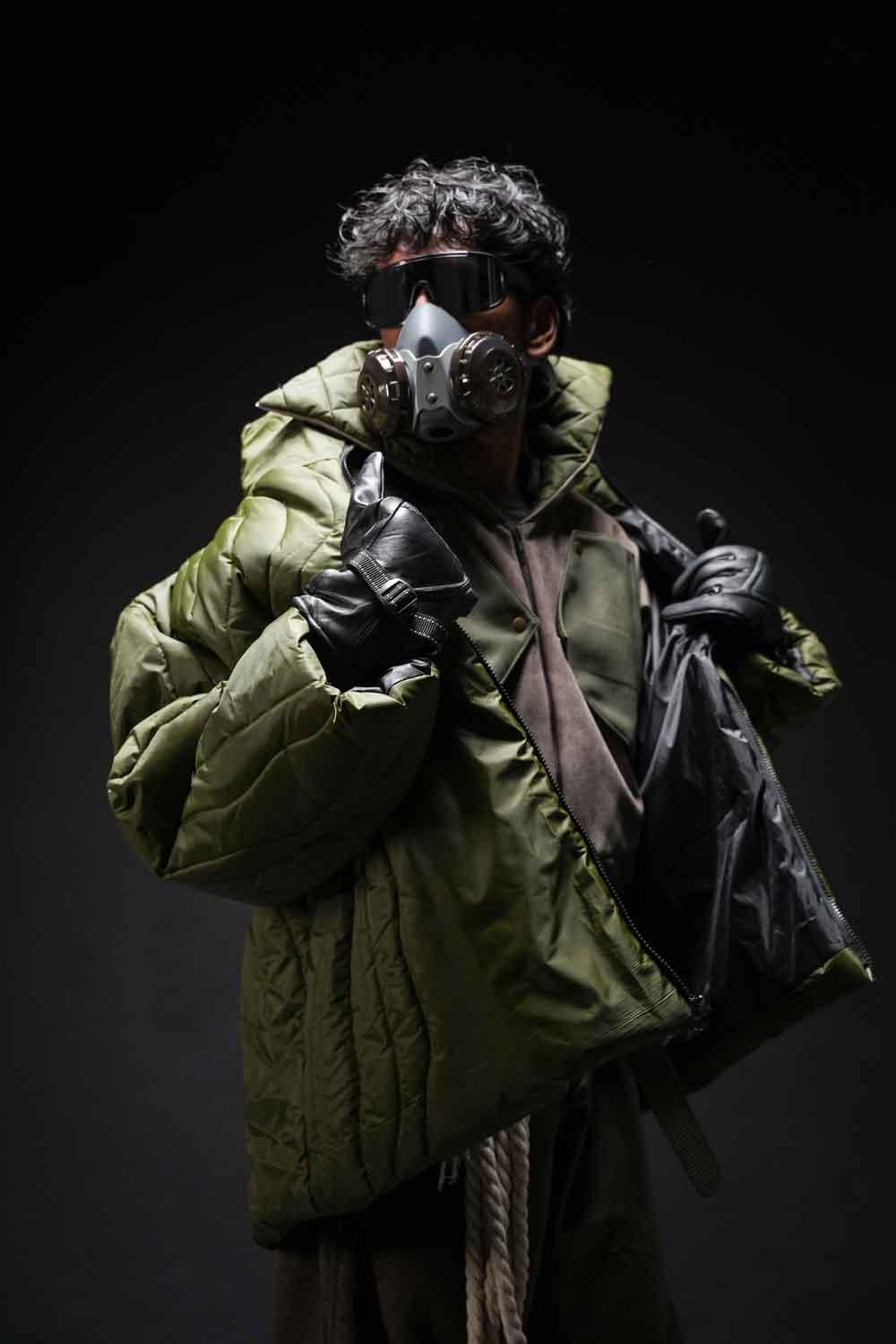
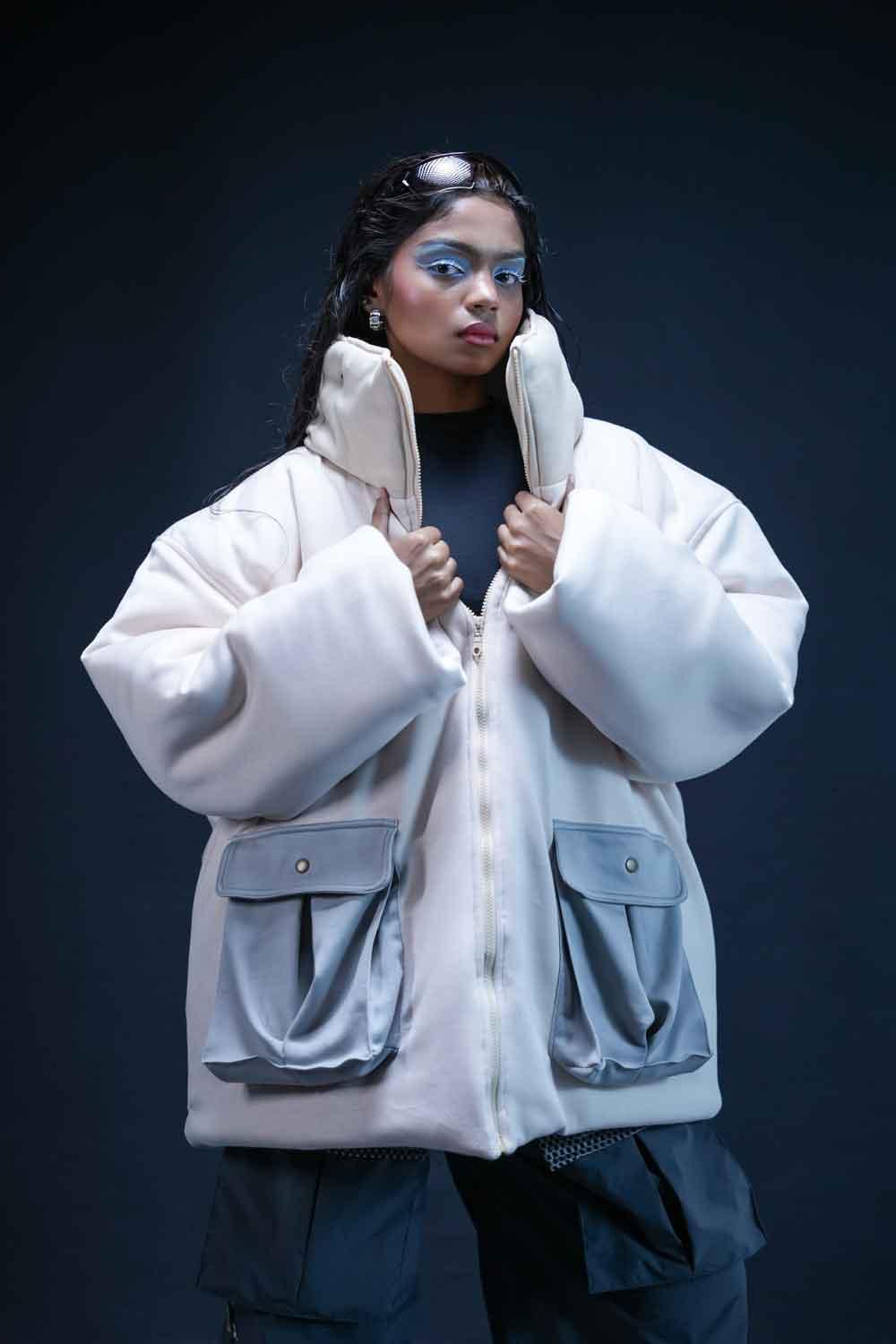
The inspiration for these pieces was drawn from the mountains. Shenara draws on the silhouettes and details of the 1953 Everest expeditions, along with the mountaineering gear and the spirit of exploration that gave rise to the success of this amazing event. The historical winter wear was redesigned into contemporary forms, creating functional pieces that strike the perfect balance of practicality, protection, and experimentation for the modern wearer.
While material choices carry out the message, the innovative thermochromic fabrics, which change colour with temperature, introduce an element of irony. As they respond to the heat surrounding them, they echo the temperature shifts that are caused by global warming, serving as a fashionable reminder of a crisis that is often blatantly ignored by many. Waterproof and leather fabrics are paired together with quilting techniques that map out the topography of Mount Everest, turning the contours of the mountain into ready-to-wear surface detail. When combined, they reflect the protective relationship between nature and humans – we shelter ourselves in what the earth provides, and in turn, we must protect it as well.
Moreover, the collection also celebrates people as crochet pieces made with local artisans bring their craft onto the global stage, honouring the handmade skills it took to create the looks and offering a thoughtful alternative to mass production as well.
By using fashion, an industry often blamed for fuelling overconsumption, to challenge fast fashion itself, Shenara draws attention to climate change and the way in which the algorithmic noise pushes it out of sight. The garments in this collection make wearers slow down, choose with intention, and think about what they wear and where it comes from.
MALSHA
COEXSISTENCE

Malsha Kumarasinghe
Malsha Kumarasinghe sees identity as not just a destination, but rather an ongoing state of becoming. The launch collection of her label Emreda, COEXSISTENCE stems from these very ideas, drawing on the threshold of turning 20, and the in-between world of adulthood and teenage years.
Caught in between uncertainty and certainty, longing and memory, this diverse collection proposes that many versions of the self can all ‘coexist’ at once, showcasing that the past, present and future all share the same body. Malsha brings this statement to her clothing through asymmetry, deconstruction and layering. The garments take layered forms and irregular silhouettes, with different elements shifting, overlapping and transforming, much like the self that they represent.
The collection leans towards the conceptual through bold textile manipulation, where fabrics are buried and reworked, garments are entirely constructed from pairs of socks, and even an actual monk robe is incorporated into it as well. Each of these careful choices turns usual and sacred objects into powerful carriers of meaning.
At the heart of her collection sits sustainability, not only in the chosen materials but also in the philosophy behind each of the garments, grounding Emreda in a sense of heritage and identity as Cultural value runs through both the brand building and the designs.
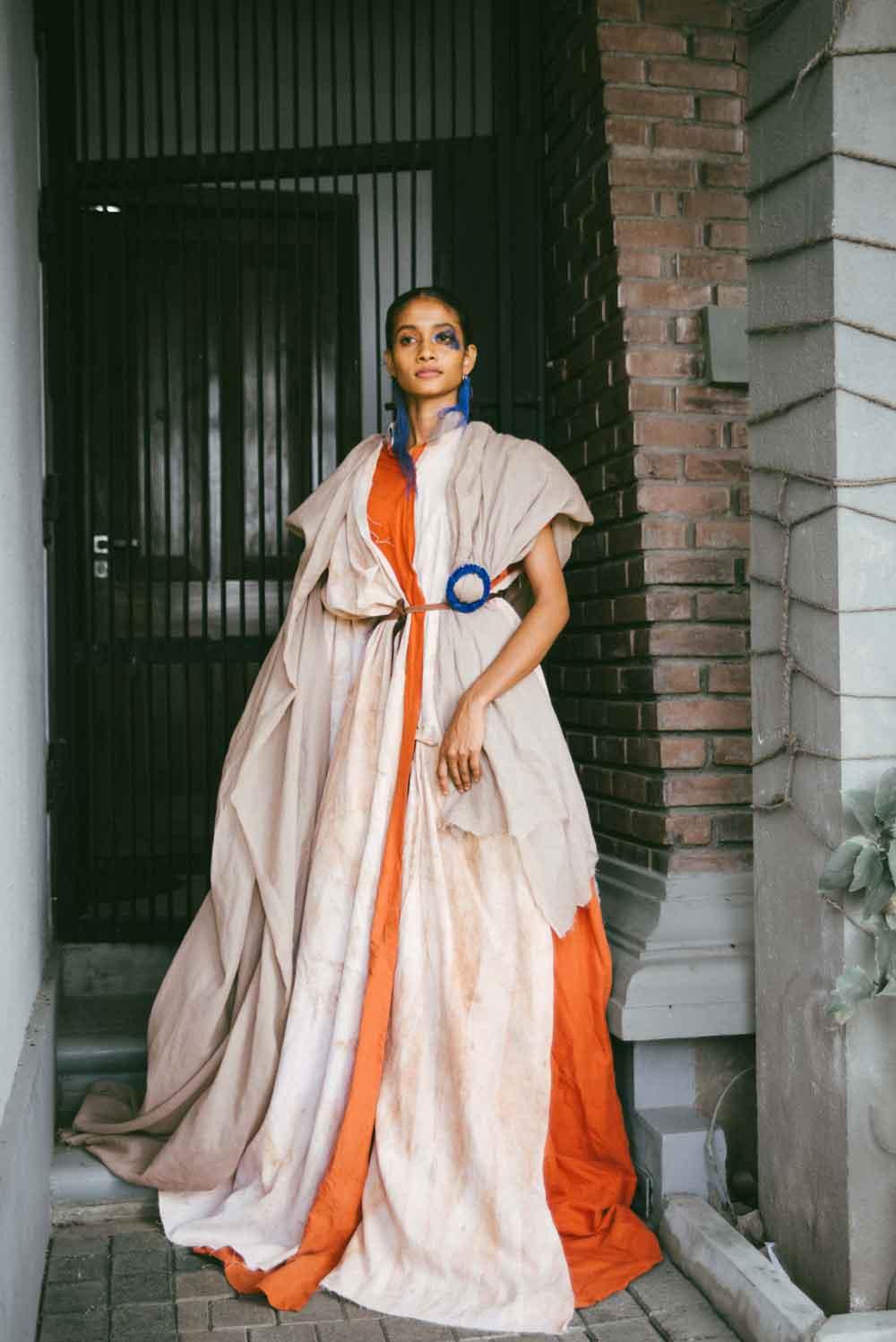
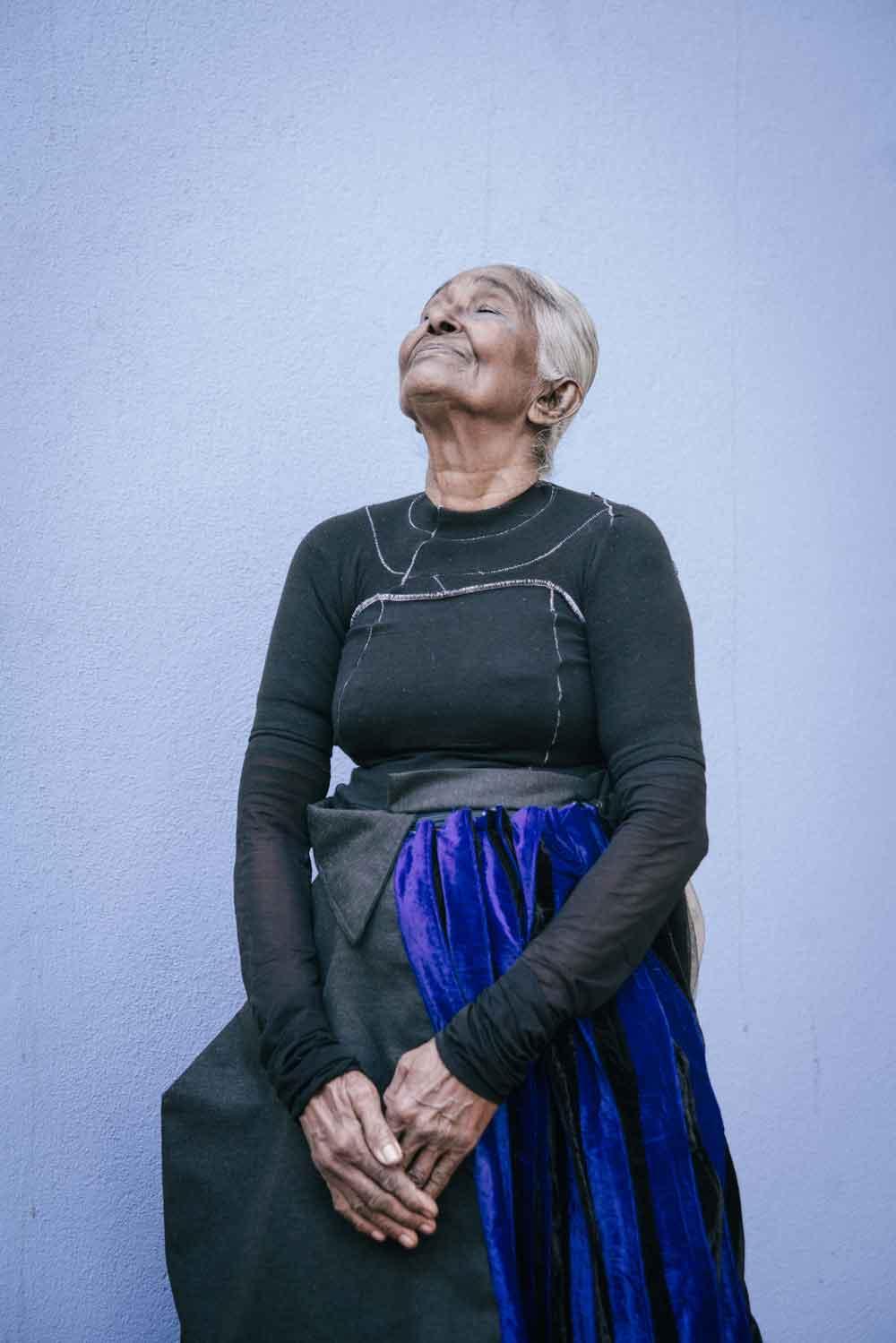
Another powerful element in this collection is colour. Ultramarine becomes the chromatic language of COEXISTENCE, evoking one to think introspectively about the vastness of the great unknown. Malsha took this inspiration from blue hour, which is the fleeting moment between day and night, to express this concept. The depth of the shades suggests the emotional landscape held within memory, while the vibrancy of it brings about transformation and possibility. When paired with the contrasting tones, ultramarine creates a strong visual tension between the unfamiliar and the familiar, anchoring the entire collection in its exploration of becoming.
What emerges from all the hard work is a bold collection that refuses to be neatly finished, as each piece invites the wearer to accept that they can be numerous things at once, and that nothing about that is contradictory. The garments shift and overlap because identity does so as well.
In the end, COEXISTENCE is an invitation to embrace the unfinished. Malsha asks us to recognise that becoming isn’t simply a bridge between one identity and the next, but instead, is an identity in itself.
SEMINI
Abalone ‘26

Semini Welivitigoda
Some collections start with a trend, others start with innovative ideas.
Abalone ’26 starts with a memory.
The Spring/Summer swim and resort collection takes its roots in childhood nostalgia and Semini’s own experiences in life, following a journey through pain, healing, and reconnection, treating an emotion like a tide. A tide that rises, recedes, and returns once again, never staying in one place for too long.
The collection’s heartbeat stems from an ever-changing emotional cycle. Rather than presenting a clear-cut and finished story, Semini showcases the highs and lows throughout her collection. Each piece reflects a different stage of the journey, from the ache of difficult seasons to the calmness of coming back to oneself, making this collection feel personal to anyone who has had to heal from the lows of life as well.
She expresses this through relaxing resort wear that blends 90s swimwear with soft tailoring and contemporary trends. The 90s influence takes wearers back to the easy, carefree spirit of childhood summers, while the tailoring adds softness and structure to the clothing. Each of the garments in the collection is crafted in lightweight fabrics, so each garment moves easily and is ideal for warm days by the water.
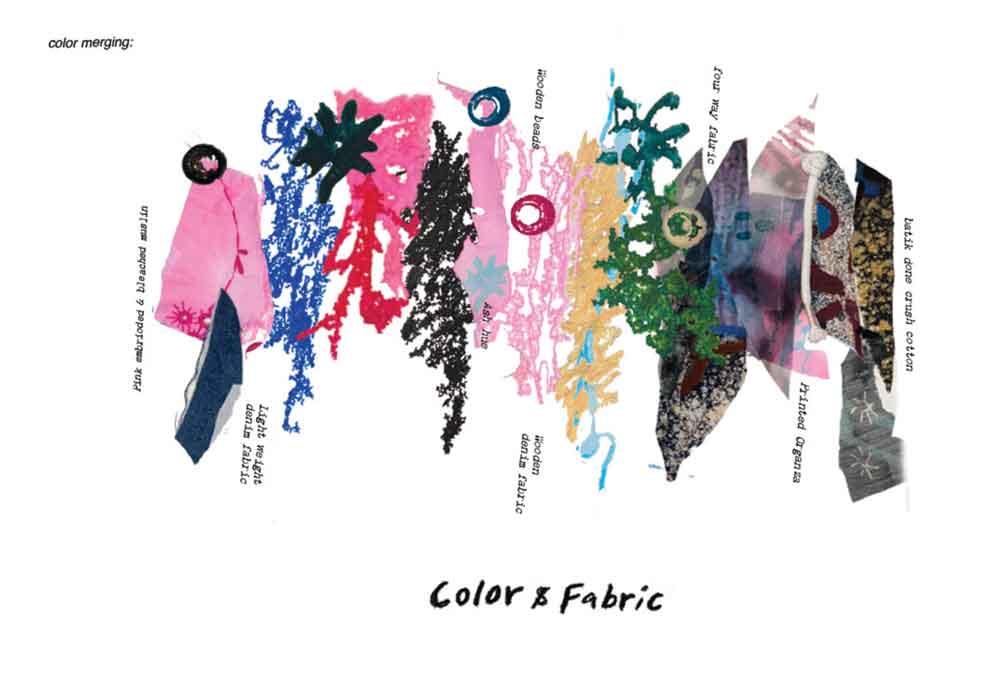
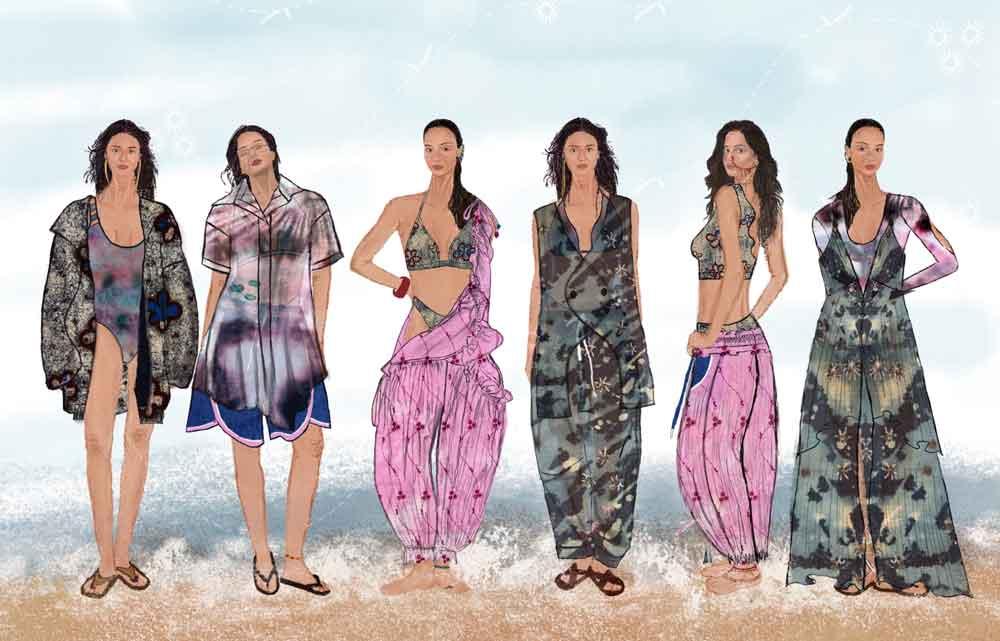
Moreover, depth is added to the collection through conceptual detailing. Abalone uses a mix of prints, batik, embroidery, and bleaching techniques to carry the emotional narrative, turning each of the surfaces into a form of storytelling. Batik adds a sense of cultural richness through handcrafted pieces, while the bleaching creates a faded, washed-out effect that echoes the way that memories often become softened over time. When combined, these techniques meet printed and bonded swimwear, where the elements of functionality and craftsmanship both join hands to create ideal pieces made for the sea.
At its core, Abalone ’26 is centered around peace, with even the name suggesting the shimmering inside of a shell, which is something that is not just beautiful, but is also delicately formed through pressure over time. That image fits a collection built on the idea that healing is not just a smooth-sailing straight line, but is more of a cycle, and a reminder that true beauty can stem from the hardest chapters in life.
For the wearer, this collection offers more than just something that you can wear by the beach. It invites them to embrace a slower, gentler way of moving through the world. A way of moving that accepts the highs and lows and finds true calmness in reconnection. Whether one is lounging in the resort wear or stepping into the water in a bonded swimsuit, they are given a quiet reminder that life, like the ocean, is dynamic, and that there is peace to be found in it. Peace that also tells us that every tide eventually brings us home.
THEVINDI
The Alter Egos

Thevindi Edirisinghe
In the modern world of today, where everyone moves at the speed of a trend cycle, it is often quite easy to lose track of who you truly are on the inside. The Alter Egos, a debut collection from D-RMAR, begins with that very issue. Thevindi Edirisinghe built her collection on the belief that authenticity has dissolved in a culture that is constantly driven by overconsumption and fleeting trends, where societal norms are shaped by whatever happens to be popular in the moment, as opposed to being shaped by individuals themselves.
D-DMAR is a high-fashion streetwear brand created to push back against this pressure. It offers a space for authentic self-expression that celebrates individuality, diversity, and subcultures. As opposed to asking individuals to fit into molds, this brand invites them to break out of them. Streetwear, which is rooted in community and identity, becomes the ideal choice of language for her powerful message, and high fashion gives it the craft and ambition to be taken seriously.
The collection’s title carries its central theme. An alter ego is a version of ourselves we often keep hidden. A version of us that is bolder, freer, stranger. A version of us that does not always survive in public. The Alter Egos treats these personas not as masks, but as truths. Each of the pieces in the collection suggests that one person can hold several different identities, and that every one of these repressed identities has the right to be seen and heard.
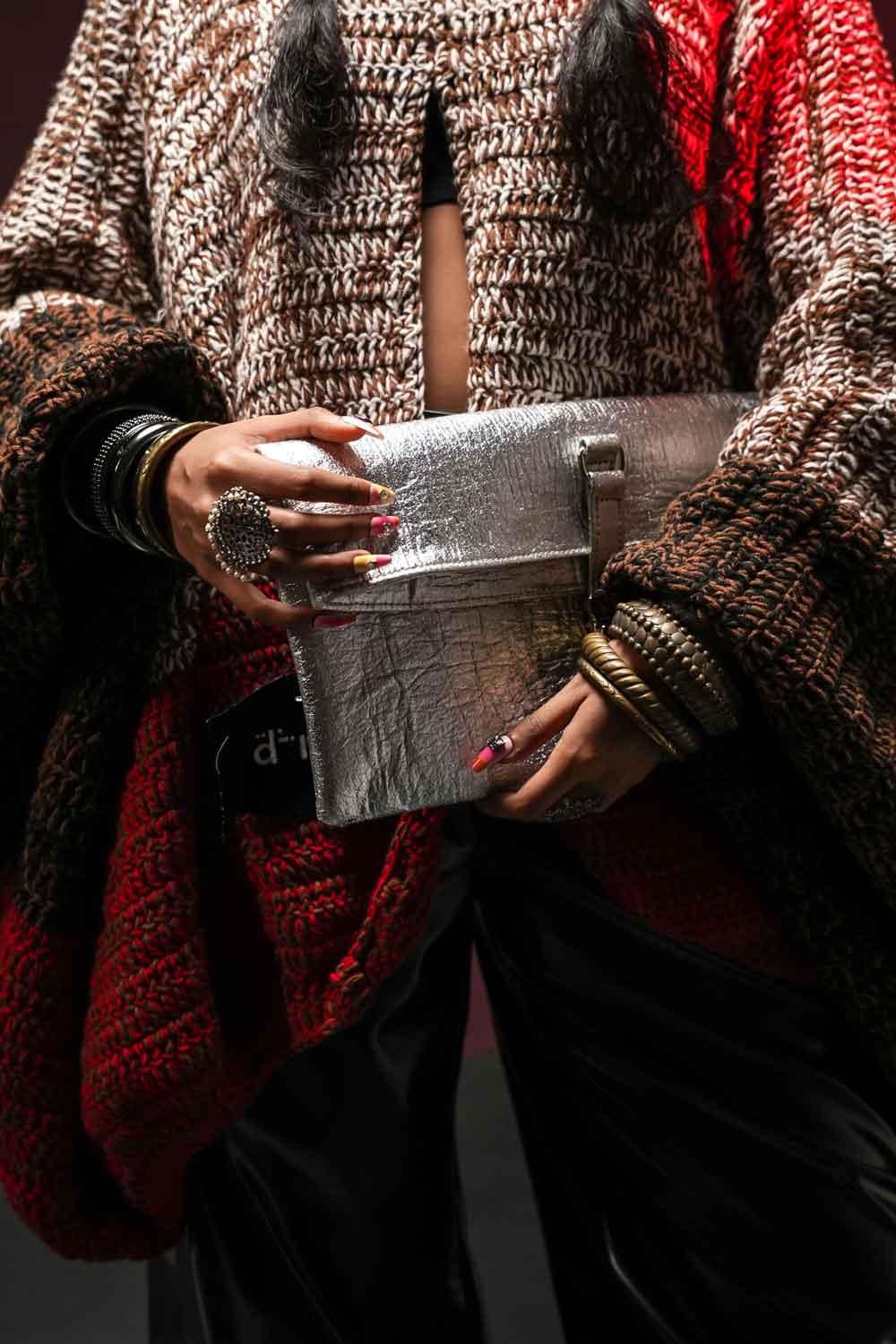
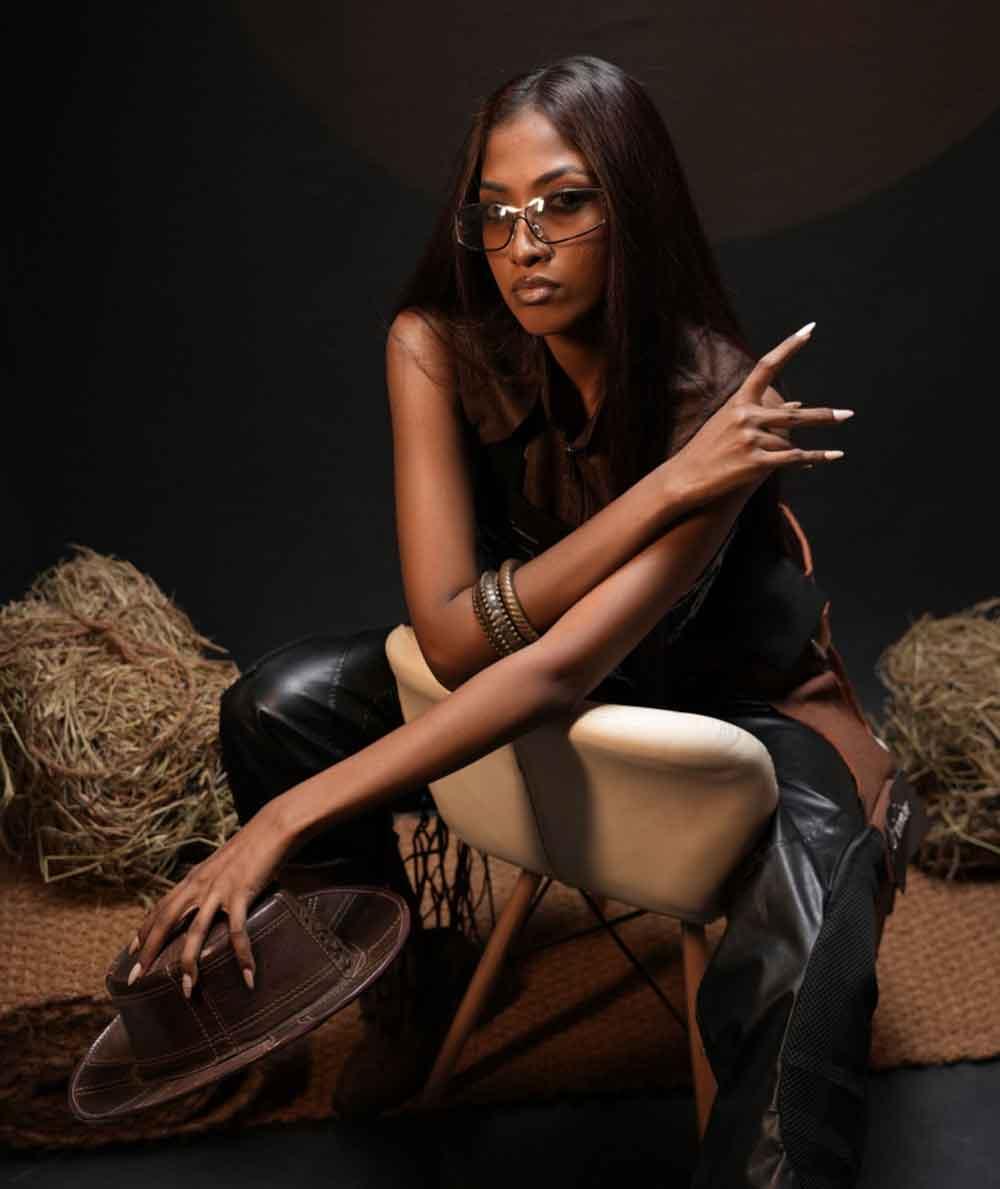
This is also why subcultures matter so much to the brand. They have always been in places where people build identity on their own terms, outside of the mainstream and often in defiance of it. By embracing and celebrating them, the collection honours the communities that have long shaped how we dress for ourselves and who we choose to be, free from the judgement of onlookers. Here, diversity is not an afterthought but a solid foundation and reminder that authenticity looks different on every person we meet.
The message running throughout the collection is anything but subtle. It boldly states that in a system that rewards constant buying and quick imitation, making the choice to dress as yourself is a fearless act of defiance. Positioning its garments as alternatives to disposable fashion, the pieces are meant to be worn with conviction rather than discarded when the next trend arrives.
For the wearer, The Alter Egos is both an invitation and a statement. It asks the wearer the question the norms we have built and absorbed, to look way past than what is expected of us, and embrace the multitude of versions that exist within ourselves far beneath the surface, proving that individuality is not just another trend, but the idea that the most profound thing anyone can wear is their own identity unapologetically.
NELITH
ULTRASKIN AW27
Nelith Gamhewage
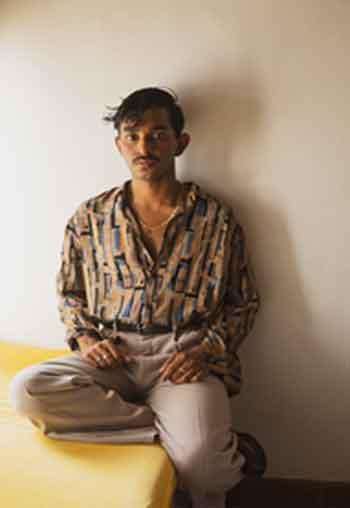
Where does the body end, and where does something new begin? For designer Nelith Gamhewage, that very question is the starting point for ULTRASKIN AW27, his debut collection. As opposed to treating clothing as something that is just worn over the body, Nelith reimagines it as an extension of the anatomy itself, with skin as a surface for transformation, exaggeration and expression.
The collection moves into a territory that can feel uncomfortable as well. It involves ideas surrounding the body, desire, and gender, which are topics that are often treated as taboo, especially within the cultural context of Sri Lanka. However, Nelith fearlessly chooses not to avoid them. ULTRASKIN AW27 embraces the unfamiliar and provocative nature of these ideas, using fashion as a space to explore what happens when the body is altered and reimagined. The skin is translated into material through stretch fabrics, manipulated surfaces and printed textiles, alongside natural rubber and experimental bio textiles. When put together, all these elements capture the tones and textures of the skin, blurring the line between what is part of us and what is worn.
The bio textiles used in this collection also carry significant weight, as they extend research from Nelith’s graduation dissertation into calcium alginate biofilms, which take the experimental materials from the laboratory and onto the body, making what was once an academic study into something bold and wearable.
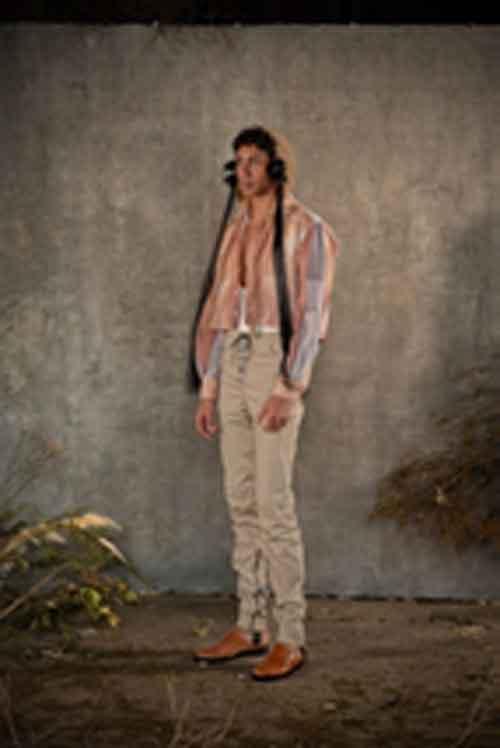

Throughout his collection, the garments act as new layers of the anatomy. They stretch, distort, protect and extend the body, shifting between second skin and sculptural form, showcasing that clothing is no longer just a covering, but can be seen as a continuation and a way of growing beyond the limits we assume to be fixed. ULTRASKIN AW27 counters the idea that skin is something that simply just exists. As Nelith sees it, the skin is a surface that can be reshaped, much like identity itself, which the collection presents as something continuously built on rather than naturally given. This idea sits comfortably alongside the collection’s willingness to unsettle, asking viewers and wearers to reconsider what they accept as natural and what they have simply been taught to see by society, and invites them to see the body as mutable rather than fixed, treating self-expression as an ongoing act of creation.
As a debut collection, ULTRASKIN AW27 announces Nelith as a designer who is unapologetically unafraid to come face to face with difficult questions and taboo topics. He questions the boundaries of the body and boldly asks what fashion can become, when those boundaries are pushed. In doing so, it makes a quiet but confident case that the most interesting place for fashion to thrive is exactly where the familiar ends and where the unknown begins.