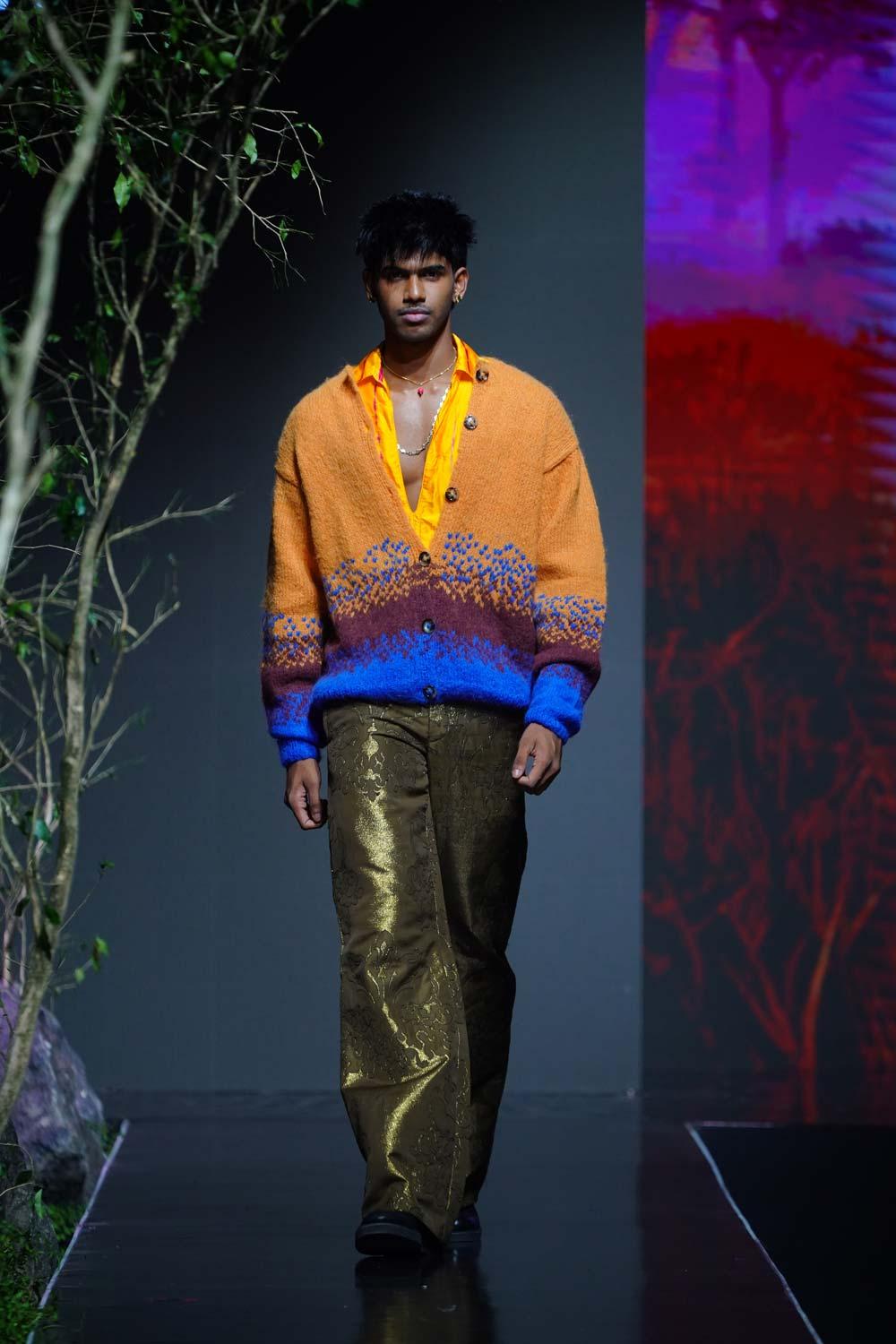
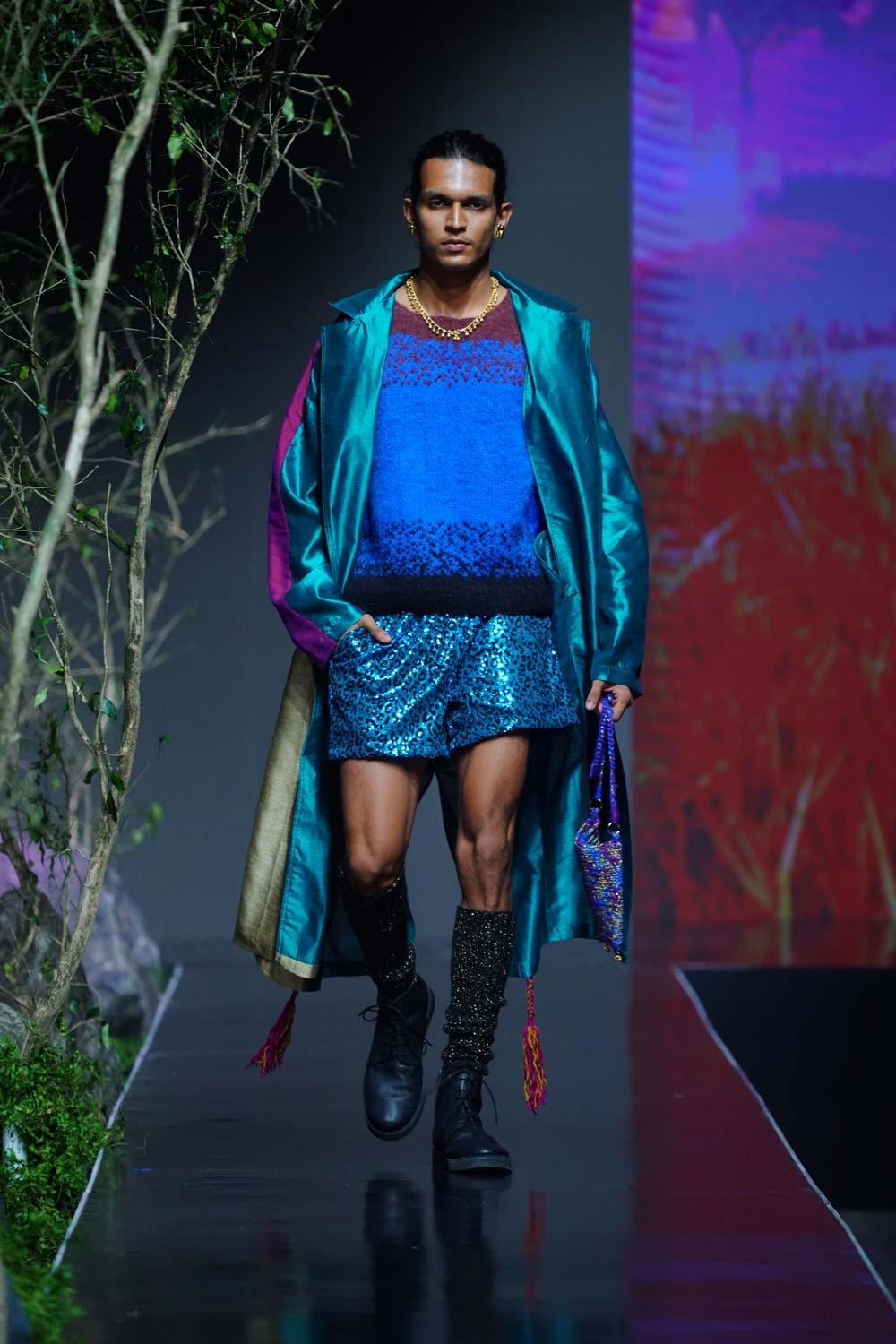
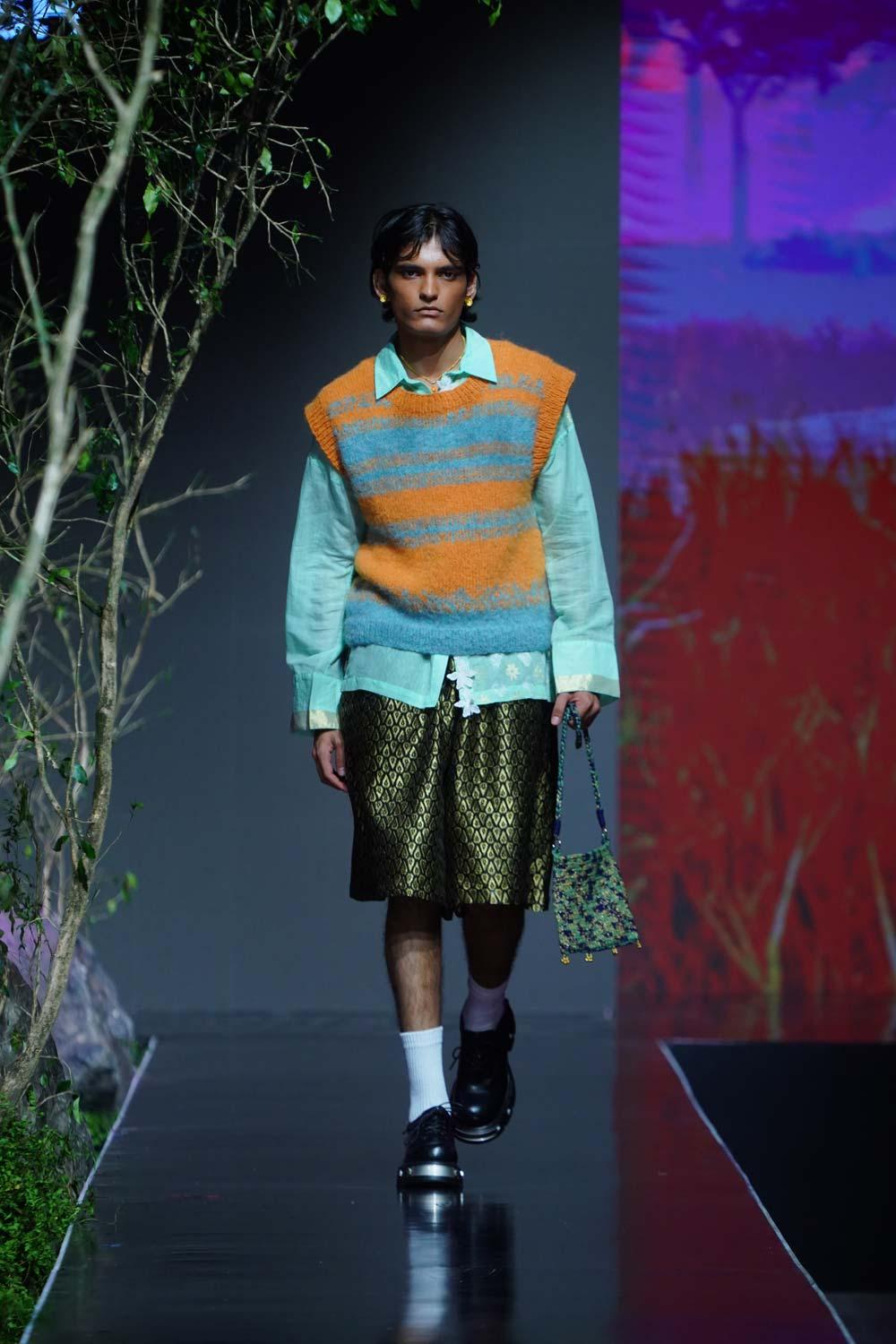
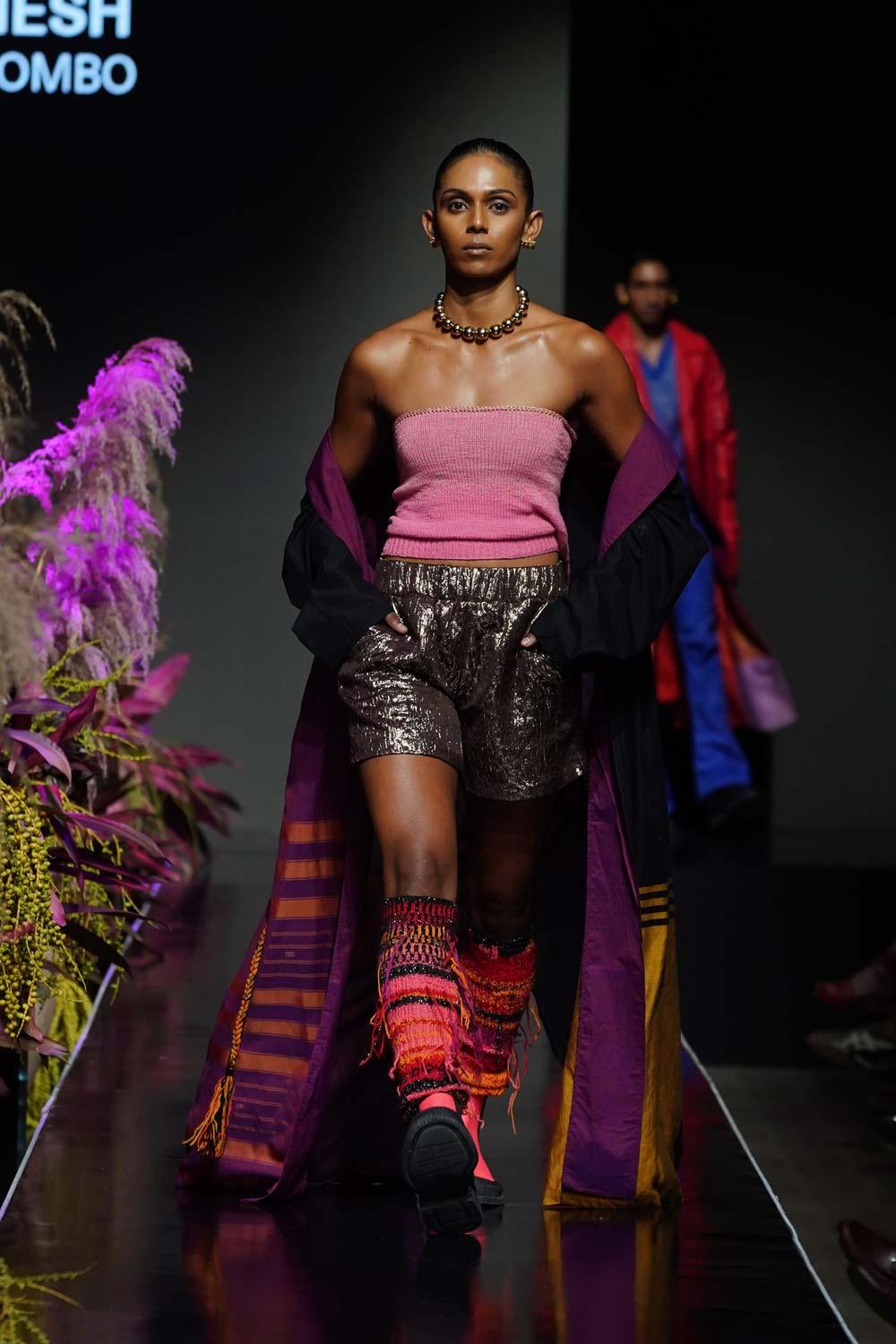
FROM AOD TO LVMH AND BACK TO COLOMBO, THE AMESH WIJESEKERA STORY COMES FULL CIRCLE.
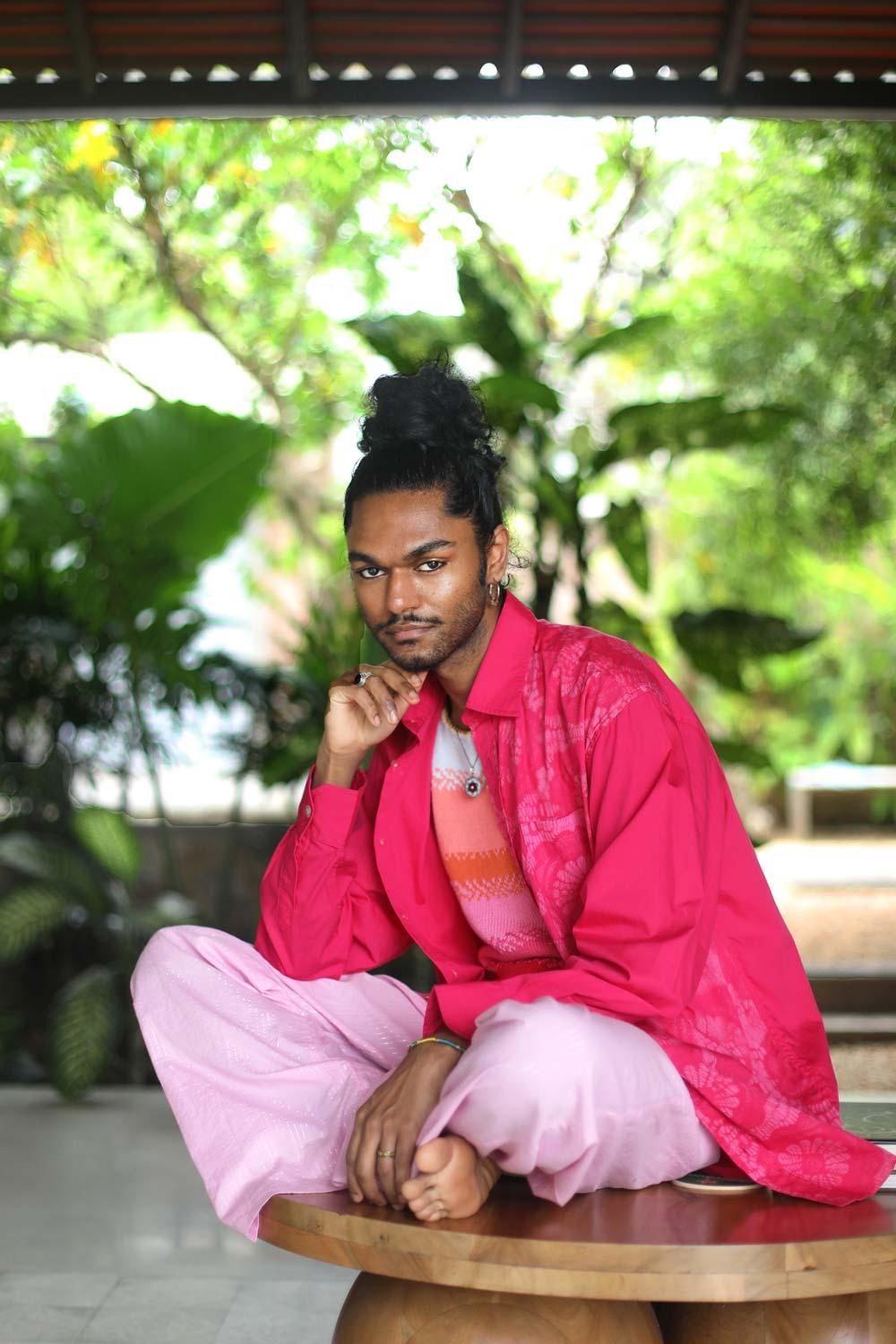
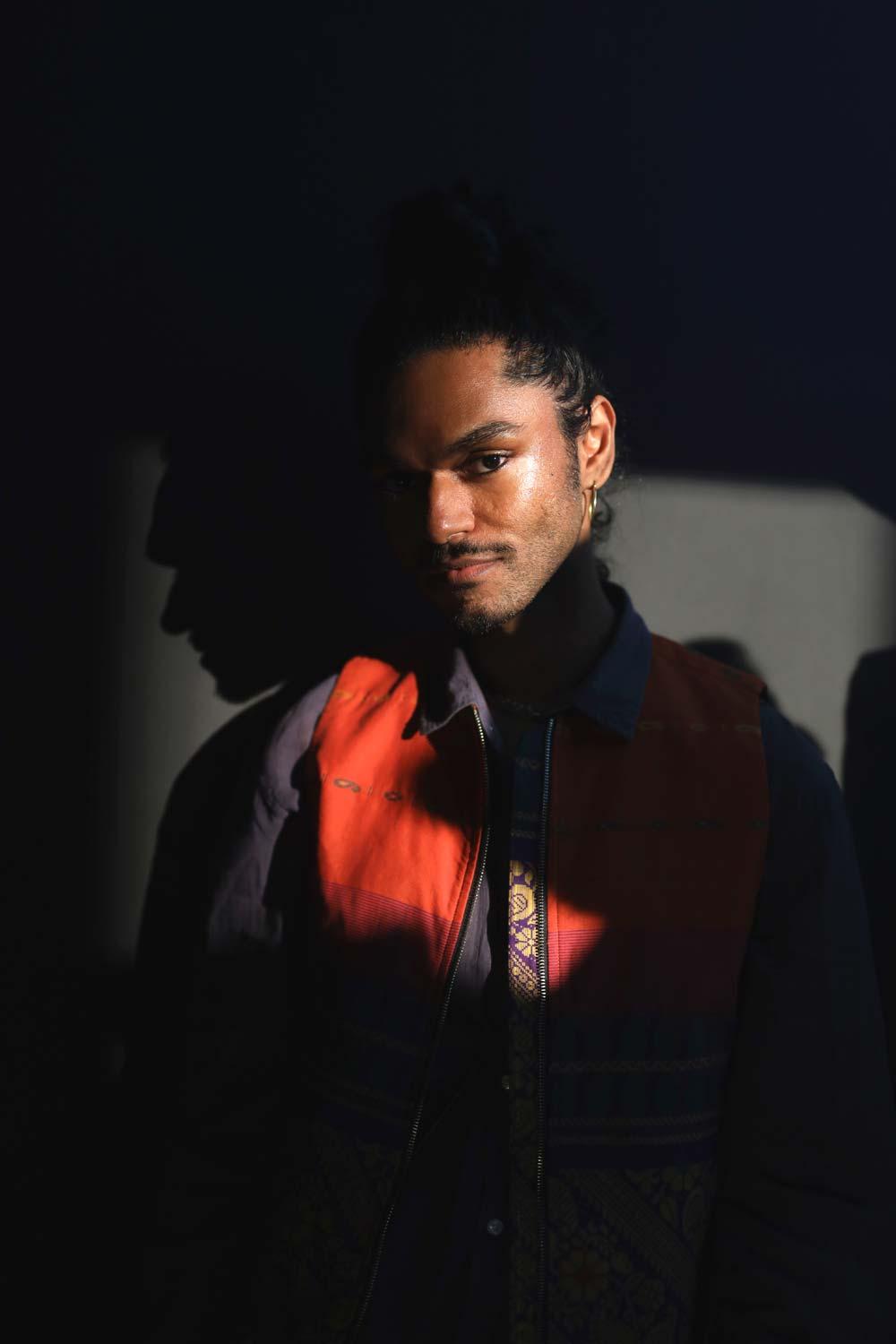
There is something compelling about a creative journey that returns to where it began, not in nostalgia, but with greater purpose. For Amesh Wijesekera, Mercedes Benz Fashion Week Sri Lanka represents precisely that kind of return. He first encountered its world as an AOD design student, later worked backstage, travelled through some of fashion’s most influential international spaces, built AMESH, became the first Sri Lankan designer nominated for the LVMH Prize, and eventually returned to Colombo with an entirely different responsibility. Today, he is helping shape the platform itself. His story is therefore larger than one designer’s ascent. It speaks to what Sri Lankan fashion could become when talent is given visibility, mentorship, confidence and meaningful international access. As Mercedes Benz Fashion Week Sri Lanka enters its 2026 edition, Amesh reflects on the distance travelled, the work audiences never see, the realities behind international recognition, and why Sri Lankan fashion must now become bolder, more distinctive and considerably less afraid of itself.
Amesh, your relationship with Mercedes Benz Fashion Week Sri Lanka is unusually personal, you began as a young designer coming through AOD and the Mercedes Benz platform, and today you are returning with international experience and a hands-on role in shaping the event itself. When you walk into MBFWSL in 2026, do you ever look around and think about the young designer you were when this journey began?
It definitely feels like a full circle moment. I began as a design student at AOD, then became a backstage dresser, and now I have returned to offer Creative Direction for the third consecutive year. When I think about those different stages, it has been quite a journey. Over the years I have had the opportunity to work with more than 200 designers. What continues to inspire me is meeting young talent, hearing their stories, understanding their practices and discovering the purpose and values behind what they create. One of the most rewarding parts of this journey has been working alongside like-minded creatives and changemakers. You begin to understand that fashion is not only about an individual designer or collection. Ideas can influence people, challenge perceptions and eventually shape an industry.
There are lots of fashion competitions and graduate showcases around the world, but relatively few genuinely alter the trajectory of someone’s career. Looking back, what did that early recognition through AOD and Mercedes Benz actually unlock for you, professionally, creatively and psychologically?
My design journey began with my graduate BA collection, showcased on the Mercedes Benz Fashion runway in Colombo. From there, AOD’s international network opened doors to Graduate Fashion Week in London and recognition through the Mercedes Benz awards. One opportunity led to another, from working with Edeline Lee and Zandra Rhodes to Fashion Scout and representing Sri Lanka at Berlin Fashion Week through the International Design Exchange programme. That journey continued through the International Fashion Showcase at London Fashion Week, Mercedes Benz Fashion Week Tbilisi, the Circular Design Challenge in Delhi and eventually becoming the first Sri Lankan designer nominated for the LVMH Prize in Paris.
Looking back, everything feels connected. These platforms gave me visibility, an audience and relationships I could never have imagined when starting in Sri Lanka. AMESH grew organically from those opportunities. It was never simply luck. The work, my Sri Lankan perspective, the platforms and timing came together. Even now, I feel I am only beginning.
Your journey took you from Colombo to Graduate Fashion Week in London, Fashion Scout, the International Fashion Showcase, Mercedes Benz Fashion Week Berlin and eventually to becoming an LVMH Prize semi-finalist. At what point did you stop thinking of yourself as a Sri Lankan designer trying to make it internationally and begin to think simply, I belong in this global conversation?
I have always seen myself as a Sri Lankan designer. I never felt that I needed to stop identifying that way in order to become international. If anything, that identity helped take me onto the global stage. My story has always been deeply personal. Where I came from mattered to me, and authenticity mattered. When international recognition started happening, I felt as though I was taking a piece of Sri Lanka into those spaces. Being global did not mean becoming less Sri Lankan. It meant being a Sri Lankan designer who had something meaningful to contribute to a global conversation.
This year you are not simply showing up as Amesh the designer, you are deeply involved behind the scenes in Mercedes Benz Fashion Week Sri Lanka. What exactly is your role for 2026, and how much influence do you have over the creative identity, curation and overall experience of this year’s edition?
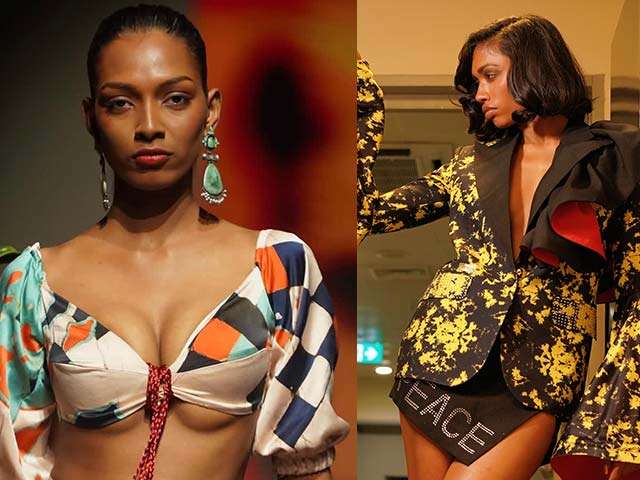
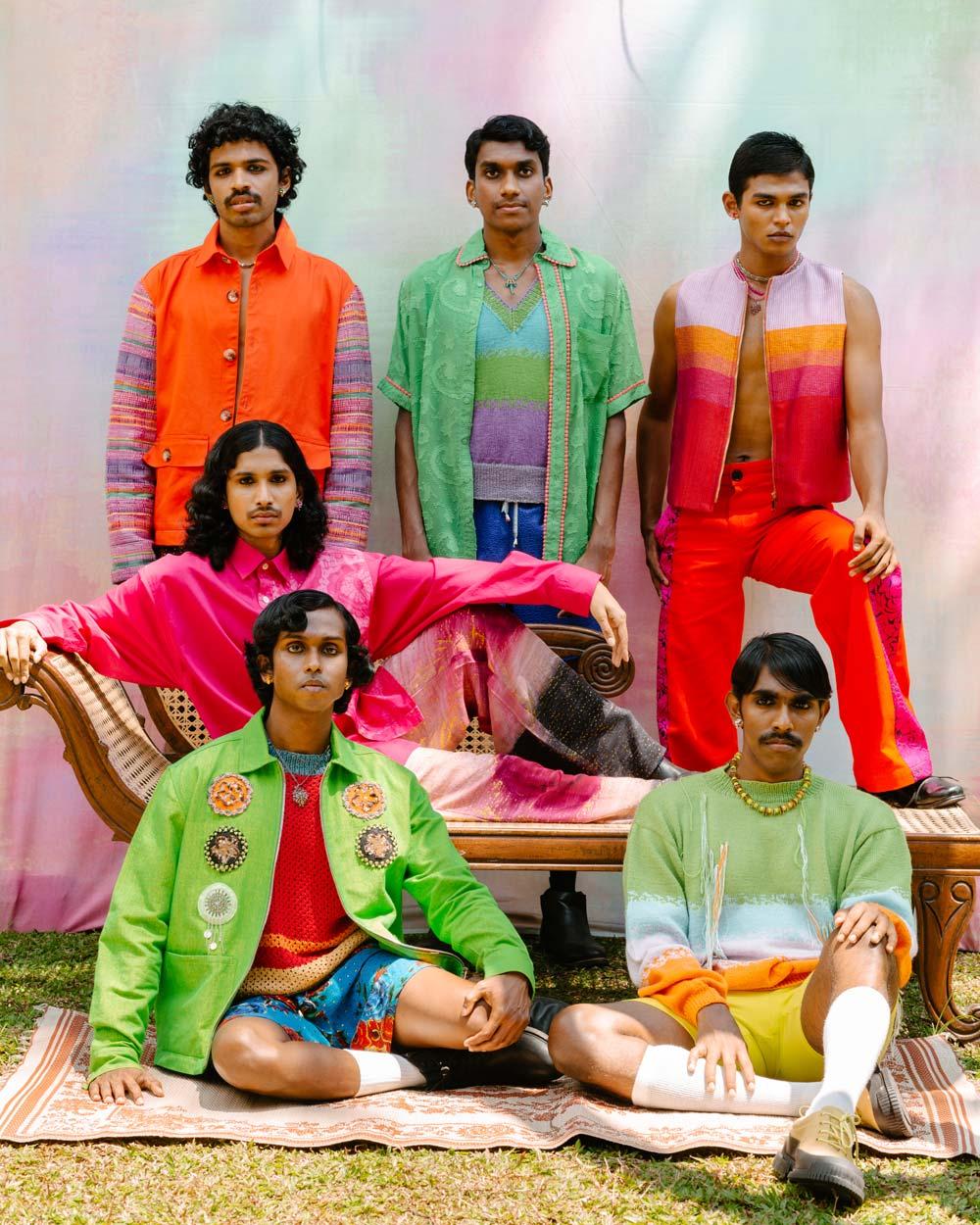
I have been working as Creative Director for the past three years, since returning to Colombo from Berlin. My role is to shape the creative direction of the platform; from the designers we work with to how their collections are experienced. We bring together talent from Sri Lanka and across South Asia, including India, Pakistan, Bhutan and Nepal. The role extends beyond selecting collections. I develop the themes, concepts, set design, music, choreography and visuals that create the overall runway experience. I also work closely with designers and the advisory committee, particularly mentoring emerging talent to develop collections and brands that can engage with international audiences. A major priority is building a distinctive identity for Mercedes Benz Fashion Week Sri Lanka as a gateway between South Asia and the world. Craft, circularity and sustainability must be authentic to each designer’s practice, while presenting a broader, more diverse vision of South Asian identity and beauty.
You have previously worked across casting, creative direction, set design, visual identity and show curation for MBFWSL. People in the audience see the finished runway, but they rarely understand what it takes to create those ten or fifteen minutes. What does the process actually look like from your side, and what are you obsessing over this year that the audience may never consciously notice?
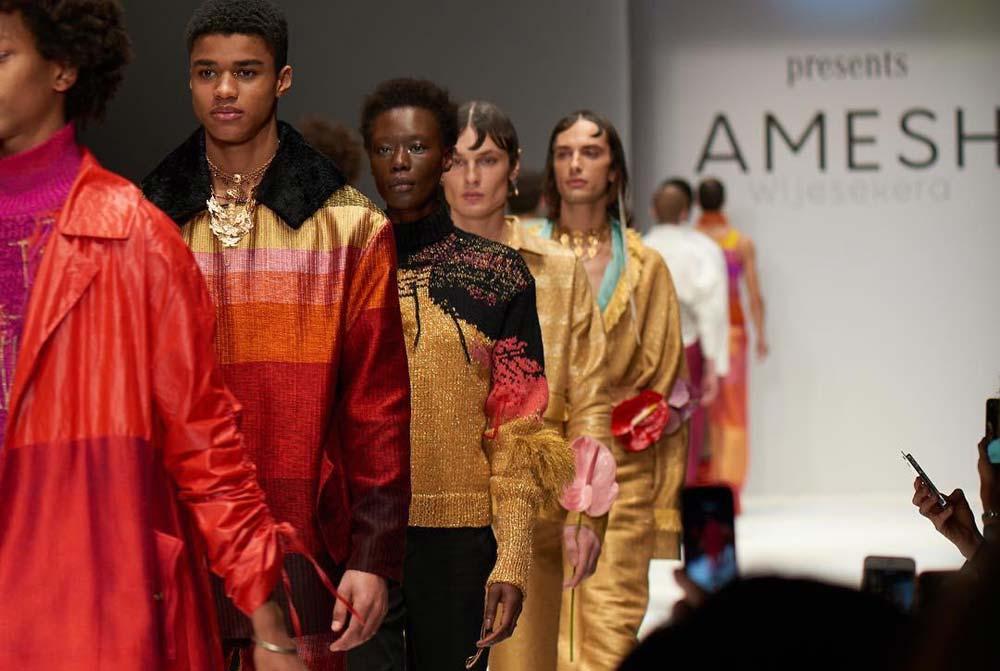
A huge part of the process involves conceptualising the visual identity and emotional experience of a show. Fashion is multisensory. I do not want somebody to walk into a show; decide everything looked beautiful and simply go home. I want them to feel something. I want them to be inspired, moved or perhaps made slightly uncomfortable enough to question something. That comes through the set, music, choreography, casting, hair, makeup, styling, lighting and visuals. The process takes months. There are conversations, revisions, fittings and constant changes. When garments finally appear on a body, you begin seeing everything differently. Gradually all those separate elements connect.
Then the runway begins and everything comes alive at once. It is almost theatrical. There is a cast, crew, set and atmosphere, except that here we are creating those moments across five days of fashion.
Having experienced fashion weeks in London, Berlin and elsewhere, what are you bringing back to Colombo from those international experiences? Equally, are there things about the conventional European fashion week model that you do not want Sri Lanka to imitate?
I do not think our objective should ever be imitation. The more important question is how we position ourselves alongside international platforms while retaining our own identity. Mercedes Benz Fashion Week Sri Lanka can deliver a world class experience without pretending that Colombo is London, Berlin or Paris. Its strength comes from being here. Our designers are purpose driven. Many work closely with craft, sustainability and cultural identity. South Asia has historically been recognised internationally for manufacturing and production, yet there are extraordinary designers and craftspeople here whose creativity deserves recognition in its own right. The opportunity is not to reproduce a European fashion week in Colombo. It is to create something globally relevant that unmistakably belongs here.
You were once the young designer being given an international opportunity, now you are helping select, mentor and present another generation. When you look at an emerging designer’s work, what makes you stop? What separates someone who is technically accomplished from someone who genuinely has a point of view?
We receive hundreds of applications, and I find emerging designers incredibly exciting because you are encountering ideas while they are still developing. Some designers work from deeply personal experiences. Others are experimenting with technology, texture, materials or completely new approaches. They are almost like uncut gems. There is so much energy there. I do not think we should suppress that too early by immediately forcing young designers to think commercially. When somebody launches a collection, there should be a strong identity and a clear point of view. They need room to experiment and show something that genuinely belongs to them. That willingness to take risks is what gives emerging design its energy.
What would you tell the designers showing at MBFWSL 2026 about what happens after the applause? A runway show can generate excitement for one evening, but what does a young designer need to do the following morning, and over the following two or three years, to turn that exposure into an actual career?
Use the moment. A runway gives you an opportunity to tell people who you are and what your practice represents. Take the exposure, press, networking and attention and build from it. The excitement surrounding a show might last several days. Eventually you are back inside your studio. What matters is what happens then. Keep creating. Build lookbooks and line sheets. Approach buyers and boutiques. Find your audience and understand your client. Collaborate with photographers, stylists, artists, editors and other designers. Put yourself and your work into the world. Then ask practical questions. How does the collection somebody saw on a runway actually reach their wardrobe? Is it through a store, website, pop up or studio experience? The platform can create an opportunity. Building something sustainable from that opportunity becomes your responsibility.
Because you have lived this journey yourself, are you particularly conscious of ensuring that MBFWSL does not simply produce beautiful shows but creates tangible pathways afterwards, introductions to buyers, press, international platforms, collaborators and mentors? Where do you think the responsibility of a fashion week ends, and the responsibility of the designer begins?
There is value in bringing designers back season after season because audiences can watch a brand evolve. A platform has a responsibility to provide presentation, mentorship, resources and access. We have buyers, press and industry professionals experiencing these collections firsthand. But designers then have to use that access. The platform can introduce somebody to a buyer, editor or collaborator, but the designer must develop the relationship and continue the conversation. Mercedes Benz created those kinds of opportunities for me, including international exposure and exchanges. It works both ways. A platform opens the door. The designer still has to walk through it.
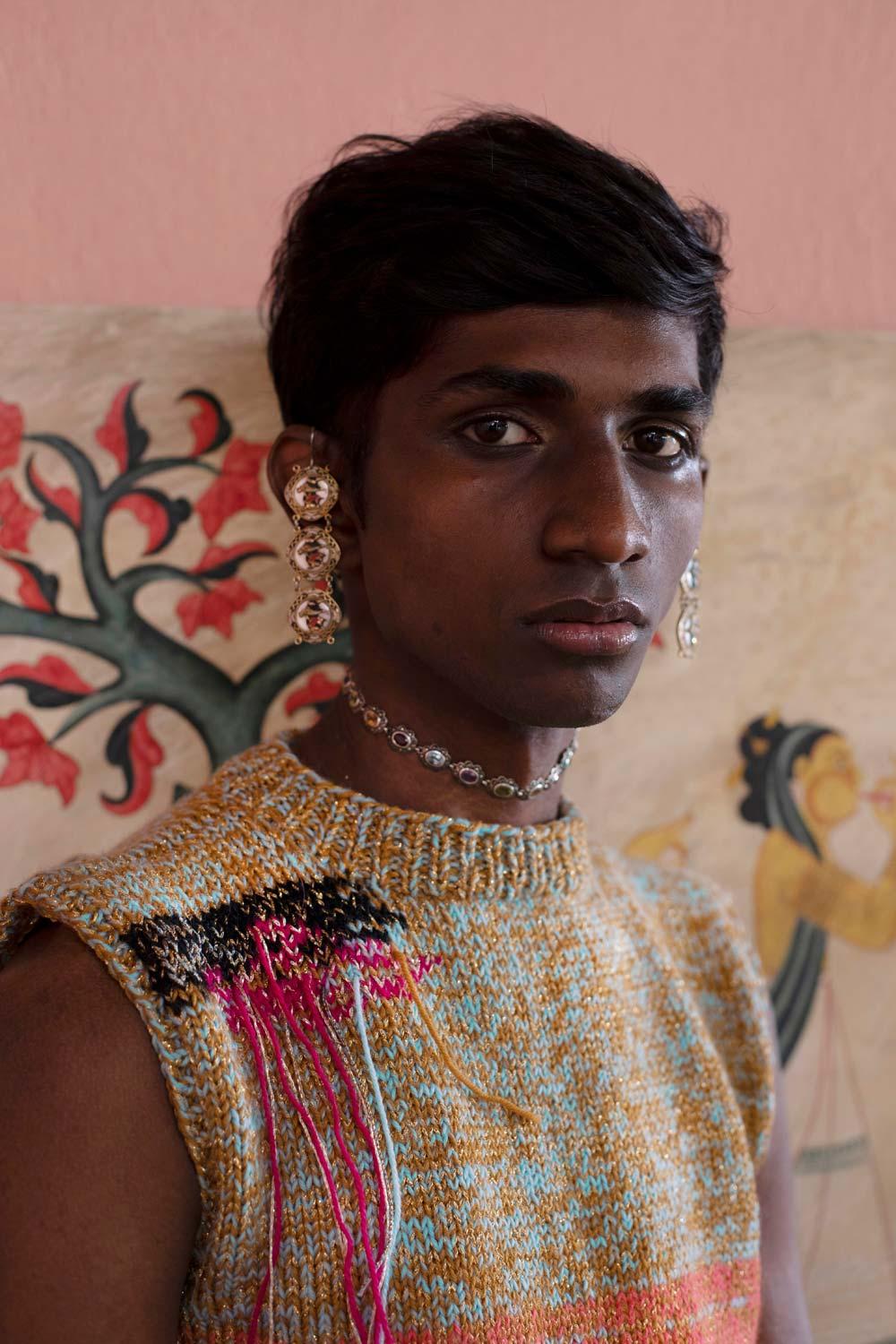
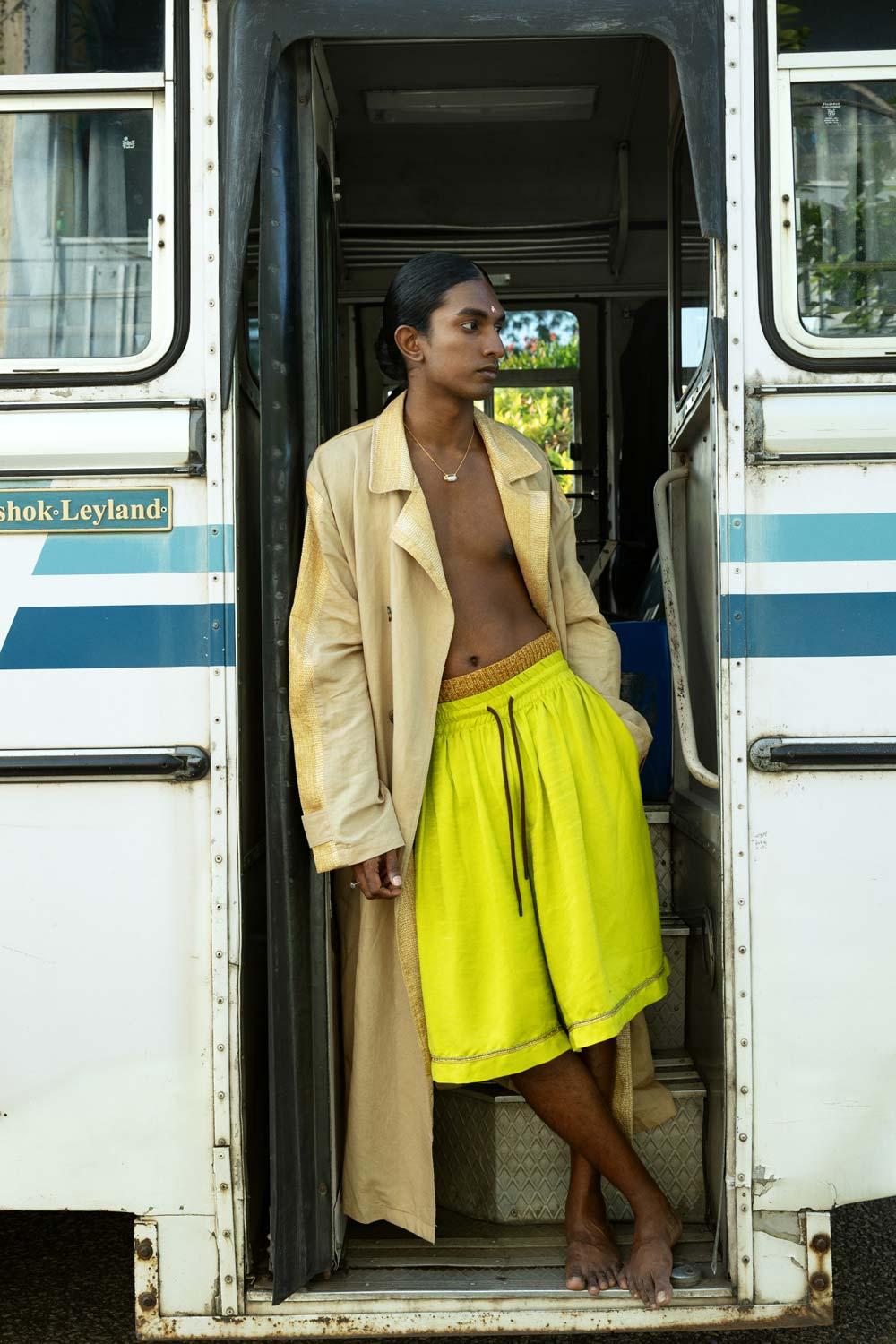
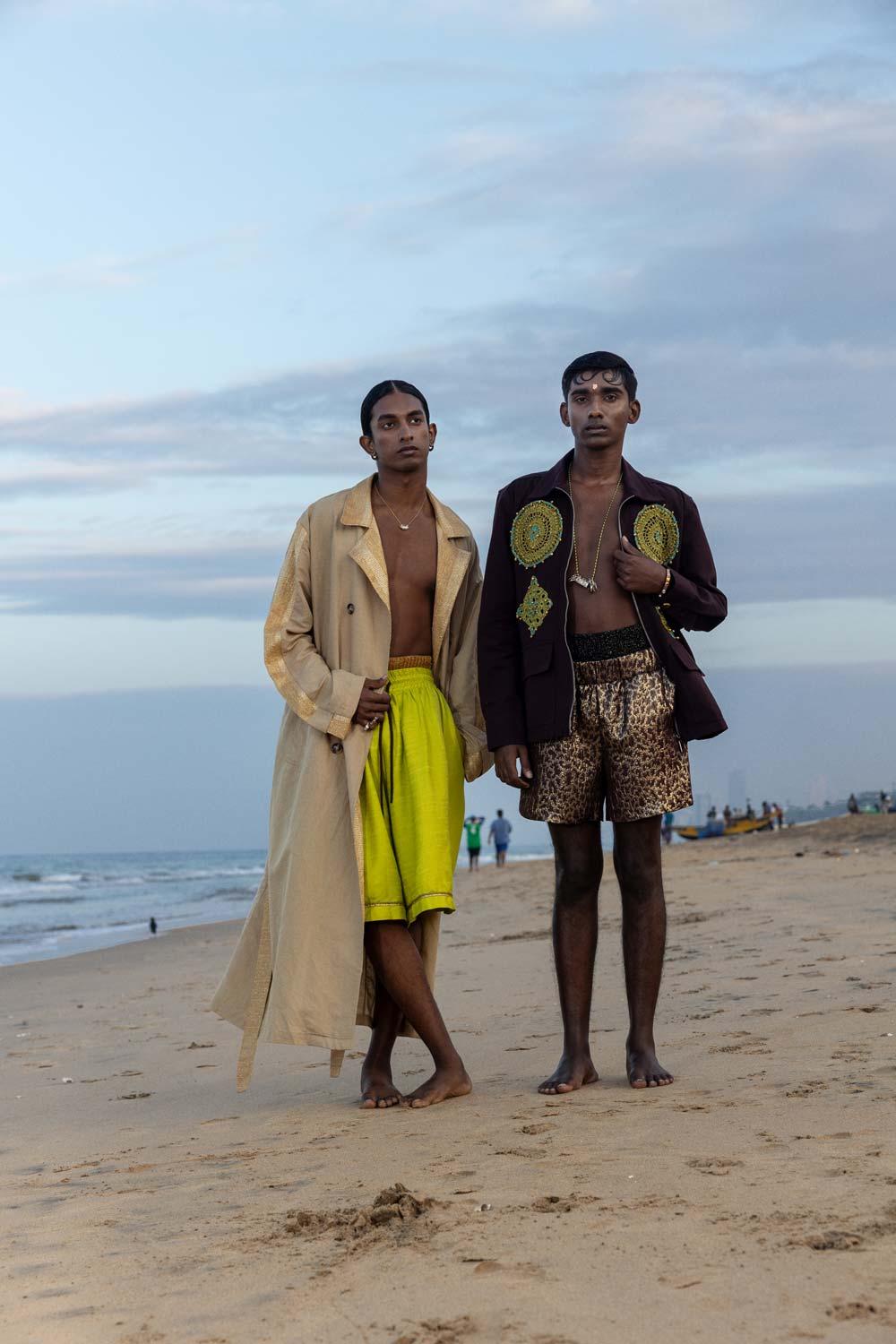
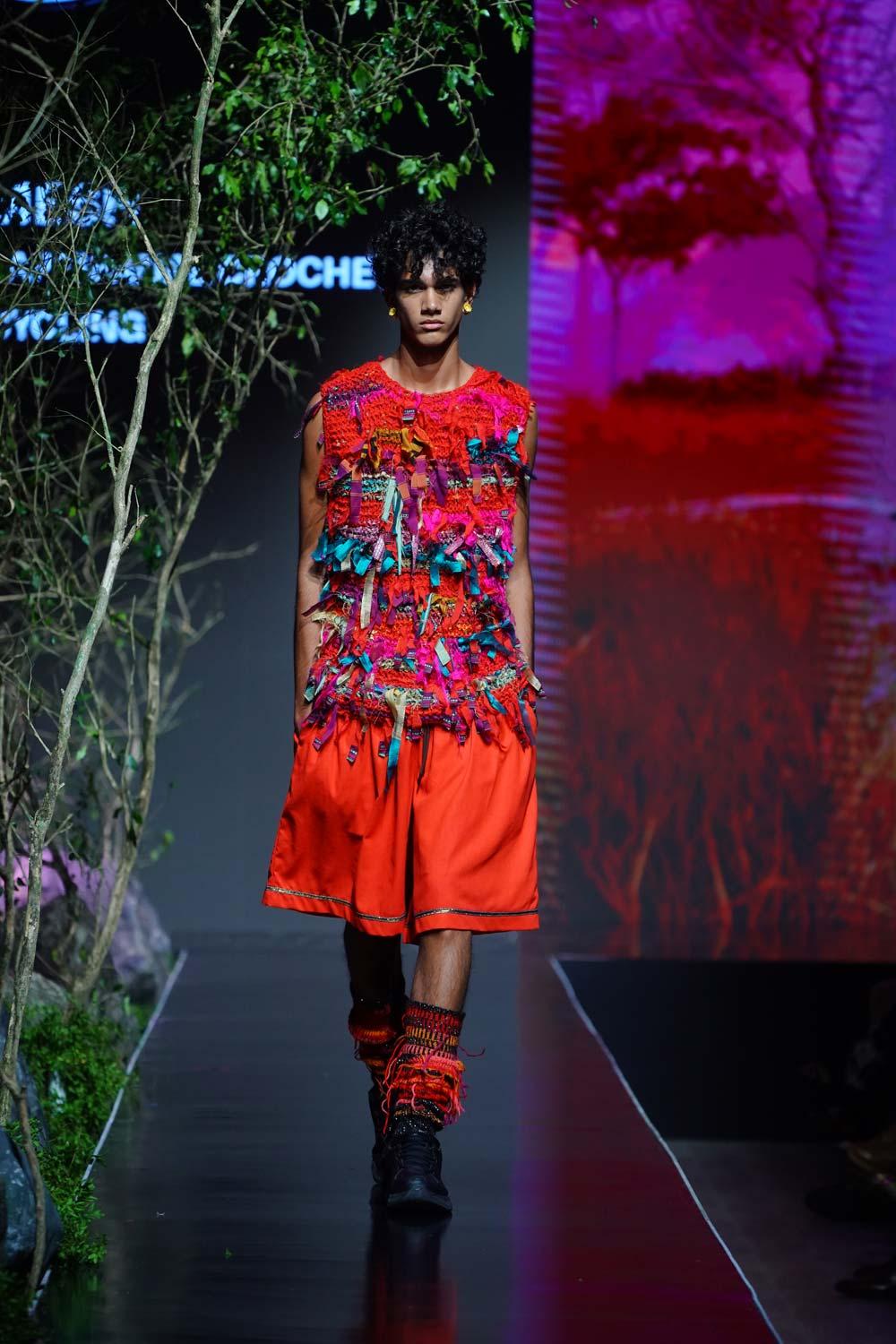
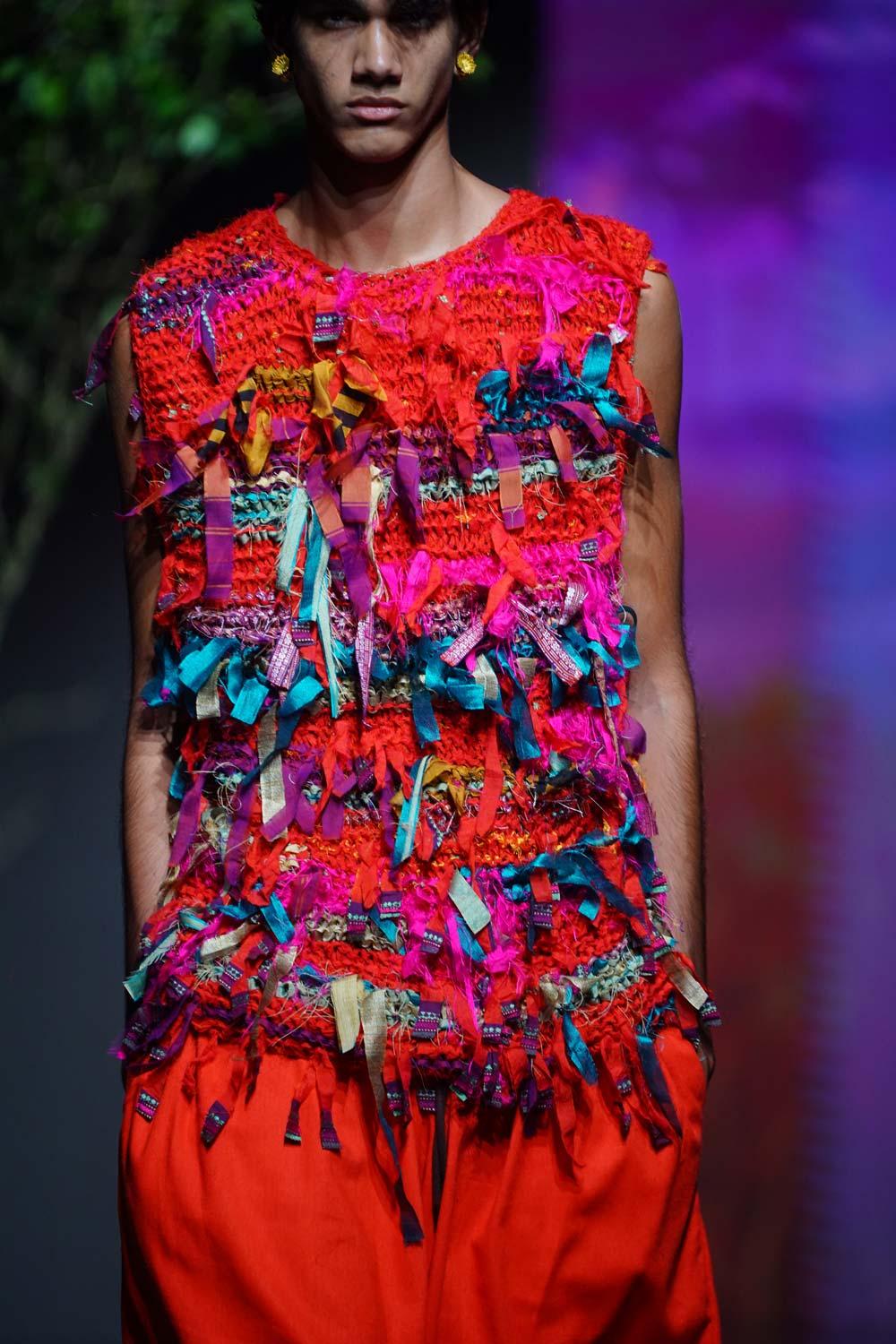
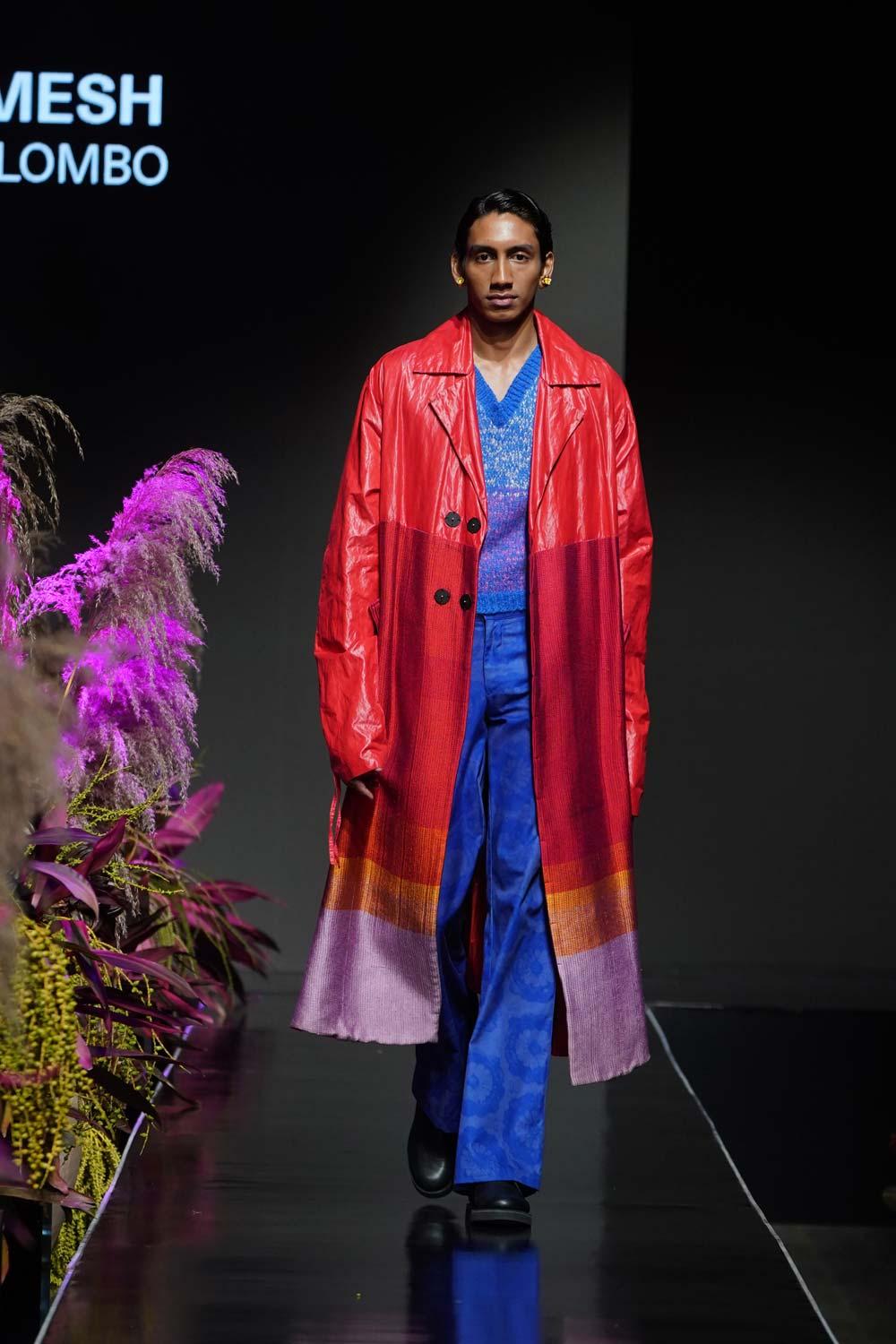
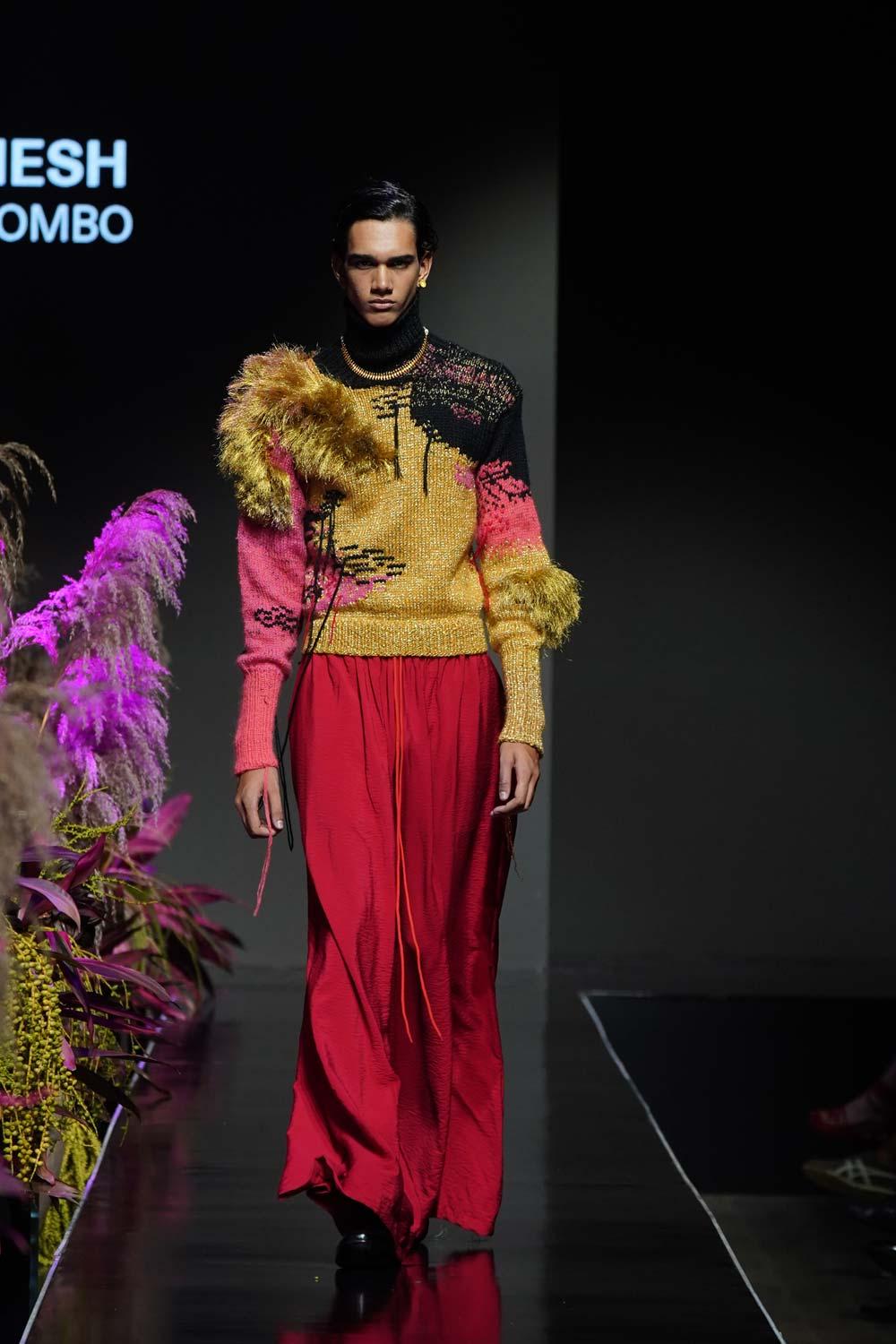
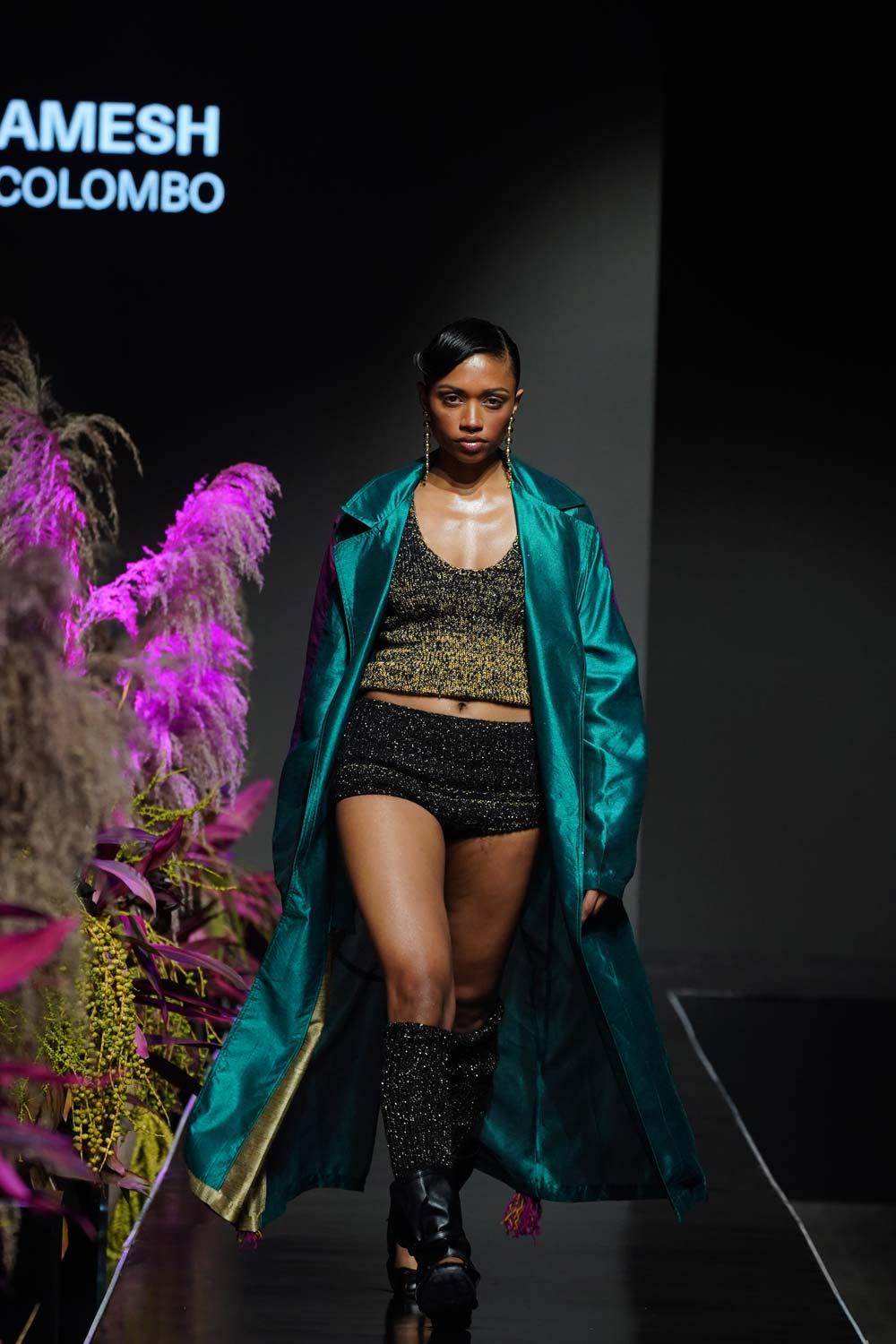
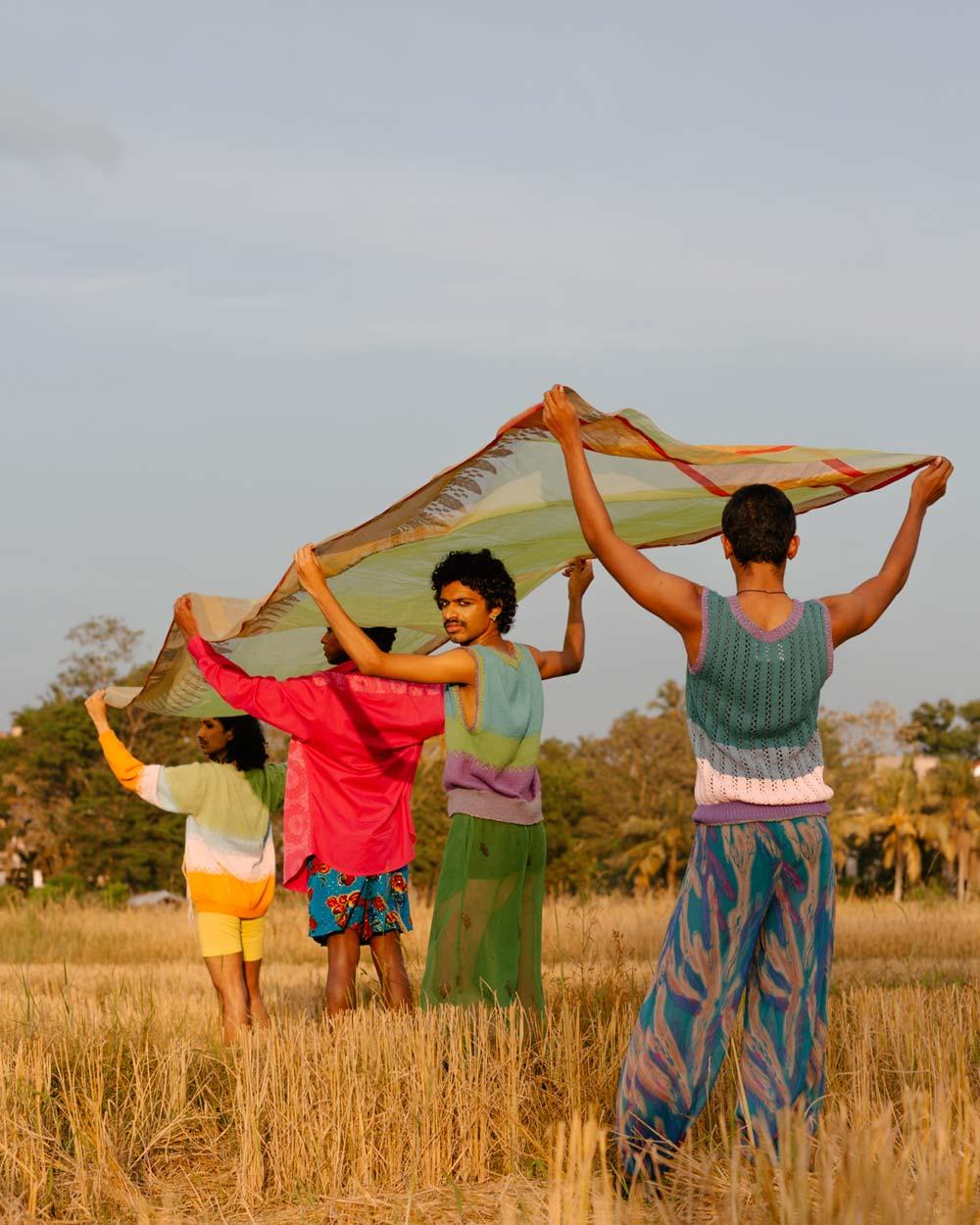
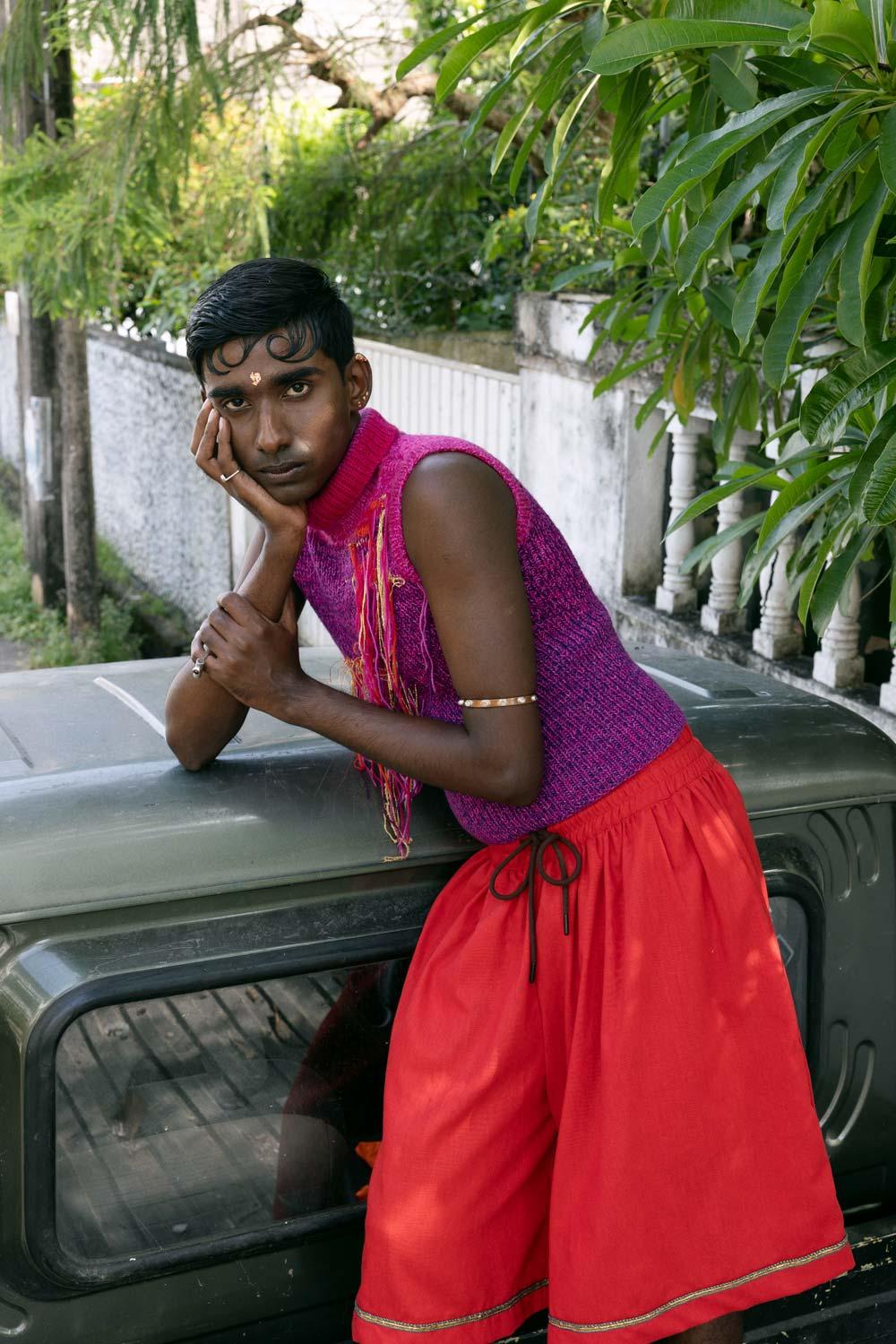
Your work is unmistakably connected to Sri Lanka, colour, memory, handloom, knitting, crochet, local artisans and even waste from the country’s enormous apparel industry, yet it does not rely on an obvious or stereotypical idea of Sri Lankan ness. How do you take cultural identity onto an international stage without turning heritage into costume?
I was born in London but grew up in Sri Lanka, and that cross cultural experience shaped my sensibilities. I later spent almost ten years living between London and Berlin. Watching how people dress and how cultures interact influenced the way I think about clothing. Even when the textiles are deeply Sri Lankan, I want the clothes to belong within an international wardrobe. A handloom textile does not have to become a sari or sarong simply because that is how we traditionally understand it. The question is how that textile can enter a contemporary context without losing what makes it special. My clients are international. Many are attracted precisely to the Sri Lankan qualities of the work, particularly the textiles, colour and craft, but they need to imagine those pieces inside their own wardrobes. Styling, photography and presentation become incredibly important because they can completely change how culturally specific clothing is understood.
Sri Lanka is globally respected as an apparel manufacturing destination, but we are much less internationally recognised as an originator of fashion brands and creative intellectual property. Why has that gap persisted, and what has to change for the world to associate Sri Lanka not only with making other people’s clothes but with creating globally desirable brands of its own?
We have incredible young designers, but there is a gap between creating good work here and connecting that work to a global context. We need stronger PR, investment, platforms and international networks. We also need to continue developing product, packaging and craftsmanship. Visual identity is particularly important. Sometimes Sri Lankan brands look towards Western references so much that they begin losing themselves. There is nothing wrong with understanding what is happening internationally, but why not create something somebody else wants to reference? A strong brand needs a story, visual language, values and recognisable DNA. The question is why you? Why should somebody desire what you create? Sri Lanka’s opportunity lies not simply in producing excellent products, but in creating brands with identities strong enough to travel.
You became the first Sri Lankan designer to reach the semi-final stage of the LVMH Prize. Take me inside that experience. When your work was suddenly being viewed in that rarefied international context, what did you learn about the gap, if there is one, between being creatively talented and being ready to build a truly global fashion business?
I was not prepared for it. Becoming the first Sri Lankan designer nominated for the LVMH Prize was enormous and incredibly overwhelming. There were several stages of interviews and presentations before the final selection. Then suddenly I was meeting people I had admired for years, including Jonathan Anderson and Maria Grazia Chiuri, and having intense conversations in very short periods of time. I was enormously proud to represent Sri Lanka. But I was also surrounded by some of the strongest emerging brands in the world. Many had teams, budgets and infrastructure. I was essentially there alone with a backpack and suitcase. That experience taught me that creativity is only one part of building a global fashion business. I received incredible exposure and international interest, but at that stage I did not have the business infrastructure required to maximise every opportunity. The experience changed how I thought about AMESH. It made me understand that a creative practice also has to become a functioning business.
We often romanticise the story of the young designer who makes it internationally, but the reality involves money, production, logistics, visas, PR, wholesale, relationships and simply surviving in extraordinarily expensive fashion capitals. What has been the hardest part of building AMESH globally that people looking at the photographs and runway shows do not see?
For years, I worked while building AMESH. My family supported me initially, but eventually I had to support myself. In London, I completed internships and worked in street markets and kitchens, eventually becoming a head chef. Those jobs funded my life and helped finance my collections. I would finish shifts at two in the morning and still return home to work on my projects. Living independently taught me responsibility, while hospitality pushed me beyond my introversion. My fashion internships taught me production, studio operations, shows and client relationships. People see the runway photographs, but not the years of work behind them.
Indian fashion is experiencing extraordinary international visibility, with designers and brands such as Rahul Mishra, Sabyasachi, Lovebirds, Raw Mango, Anamika Khanna and others entering spaces that were once extraordinarily difficult for South Asian fashion to access. As a Sri Lankan designer working internationally, do you feel that the world’s perception of South Asian fashion is fundamentally changing, and does that create an opening for Sri Lanka too?
South Asian fashion has often been placed inside bridal and ethnic categories. India has an extraordinary history of craft and textile production that influenced global fashion for centuries without always receiving appropriate acknowledgement. That is gradually changing. Indian designers are entering global spaces with narratives that move beyond ceremonial clothing. There is greater recognition of Indian design itself rather than simply Indian manufacturing or embroidery. Sri Lanka has an enormous opportunity within this shift. We have tourism, culture, art, history and a distinctive identity as an island. There is already international fascination with Sri Lanka. There are also relatively few globally recognised Sri Lankan fashion brands, which means there is space. We already possess the landscape, culture and craftsmanship. The challenge is communicating those things in ways that create genuine international desire.
South Asia possesses extraordinary textile histories, craftsmanship and visual cultures, but South Asian fashion can also become an overly broad label that collapses very different countries and identities into one aesthetic. What, to you, is distinctly Sri Lankan about our design language, and how do we make that distinction legible to an international audience?
Our history, culture and stories distinguish us. Sri Lankan textiles often have a certain lightness, youthfulness and ease. They can feel fluid rather than excessively ceremonial. A simple cotton handloom can exist in everyday life, which makes it relatively easy to translate into contemporary clothing. There is a lifestyle quality to these textiles. They can feel effortless. Batik has its own distinctive vibrancy, pattern and colour and can move naturally between fashion, interiors and lifestyle. The island itself influences our visual language too. Climate, landscape, travel and culture create a particular lightness. There is something almost like tropical modernism within Sri Lankan design. It can be deeply rooted here while still feeling contemporary and desirable to somebody living almost anywhere.
You came through AOD, benefited from platforms such as MBFWSL and international opportunities, and have now returned to mentor and work with younger creatives. If you could re-design the Sri Lankan fashion ecosystem for the next generation, what is still missing? Is it investment, buyers, fashion media, specialist manufacturing, retail, mentorship, stronger creative direction, or simply greater confidence in our own ideas?
We are missing much of the infrastructure needed to support designers, from investment and government support to mentorship, PR, buyers and international networks. But identity is equally important. Designers need to develop their own visual language rather than becoming versions of something that already exists elsewhere. That identity then needs a strong support system to grow. Fashion also remains difficult for young creatives without financial privilege, because building an independent brand requires significant investment. We need an ecosystem connecting education, funding, manufacturing, media, retail, buyers and global opportunities. Talent is essential, but talent alone cannot build a sustainable fashion industry.
When a young Sri Lankan designer tells you, I want to be the next Amesh Wijesekera and take my work to London, Paris or Milan, what do you tell them? Is global recognition still the ultimate benchmark, or should the next generation be thinking differently about what success means and perhaps build powerful brands from Sri Lanka rather than feeling they have to leave it?
International recognition is valuable because it gives you access to a wider audience, but success is also about the impact you create within your country and community. Anyone can make and sell clothes. What matters is what the work contributes. Are you supporting craftspeople and artists? Are you challenging conversations around gender, identity and culture? Are you inspiring someone? For me, fashion creates conversations because clothing communicates visually and emotionally. If my work makes someone question an assumption, that has meaning. A brand must also be financially sustainable, but global recognition can be part of the journey without defining success.
You have gone from an AOD student in Colombo to international runways, London and Berlin, the LVMH Prize, building AMESH and now returning to help shape the platform that helped launch you. If we were having this conversation again ten years from now, what would you want the next chapter of the Amesh Wijesekera story to look like, and what would you like to have changed for Sri Lankan fashion because you were part of it?
I would leave that judgement to the audience. If my work has inspired someone, challenged an assumption or created a shift, I am grateful, but I would never claim to have changed an industry. Through AMESH and Mercedes Benz Fashion Week Sri Lanka, I want to create space for purpose driven, unconventional ideas. Fashion should provoke thought, challenge expectations and start conversations. I want designers to experiment, take risks and develop their own identities. Sri Lanka already has extraordinary craft, textiles, manufacturing knowledge and creative talent. What we need now is confidence, infrastructure and the courage to become bolder, braver and more daring.