CRAFT, CULTURE, FUTURE. ELEVEN DESIGNERS SHAPING MERCEDES BENZ FASHION WEEK, SRI LANKA.
Mercedes Benz Fashion Week Sri Lanka 2026 brings together a compelling generation of designers who are redefining what contemporary Sri Lankan fashion can represent. Across eleven distinctive labels, this year’s collections reveal an industry increasingly confident in its ability to honour heritage while creating an entirely new visual language. Batik, handloom, traditional dress, artisanal techniques and cultural memory are reconsidered through modern tailoring, experimental textiles, expressive prints and globally relevant silhouettes. Yet beyond craft, these collections are deeply personal. Designers look towards childhood memories, coastal landscapes, Jaffna’s cultural richness, Colombo’s urban rhythm, the nostalgia of everyday Sri Lankan life and ideas of transformation, identity and belonging. From established fashion houses to emerging creative voices, each approaches the runway with an individual point of view. Together, they present a portrait of Sri Lankan fashion that is diverse, ambitious and forward looking, while remaining unmistakably connected to the island that inspires it.
CHARINI
CHAPTERS FROM THE COAST
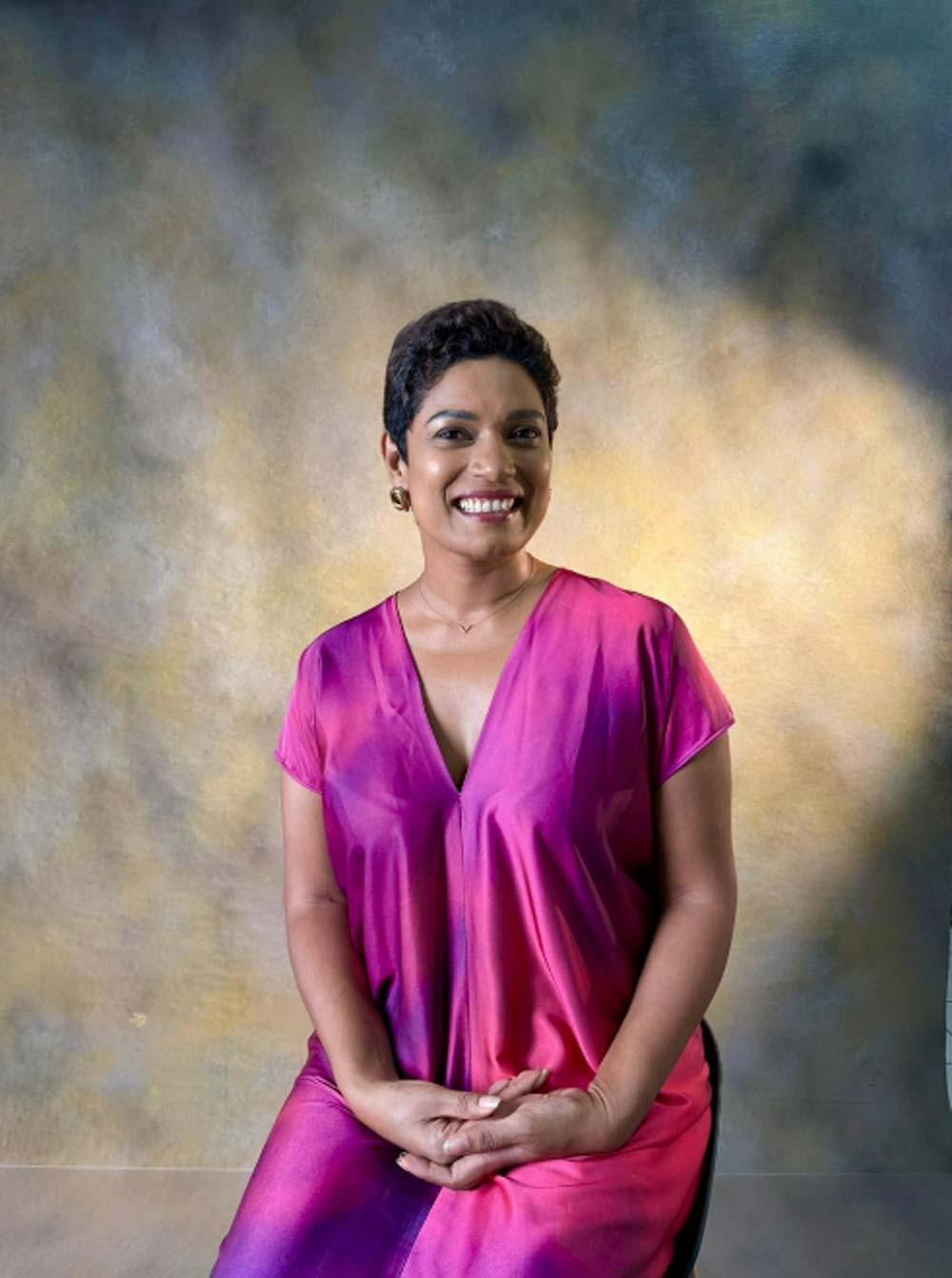
Charini Suriyage
For Charini Suriyage, fashion has long been a form of storytelling. The Sri Lankan designer, founder and creative force behind CHARINI has developed a visual language that combines a strong sense of place with an international approach to contemporary womenswear. A graduate of the University of Moratuwa who later completed her Master’s degree at the London College of Fashion, Charini has built her practice around craftsmanship, narrative and the idea that clothing can carry cultural references without becoming constrained by them. At Mercedes Benz Fashion Week Sri Lanka 2026, CHARINI brings that philosophy to the Colombo Edit runway with Chapters from the Coast, a collection inspired by Sri Lanka’s coastline and the fragments of memory gathered while moving around the island.
Rather than presenting the coast as a single tropical postcard, Charini approaches it as a series of individual stories. Ahangama, Galle, Unawatuna and Arugam Bay become chapters in a wider visual journey, each contributing its own colours, rhythms and associations. Palms, boats, waves, shells, architecture, vegetation and glimpses of everyday coastal life enter the collection as source material, but they are transformed through abstraction, shifts in scale and unexpected composition. A familiar image might be enlarged until it becomes almost graphic. Elsewhere, the reference is reduced to a small detail, a fragment of typography or an element that is nearly hidden within the garment. This movement between recognition and abstraction gives the collection its sense of discovery. The wearer is not simply dressed in imagery of Sri Lanka. She is invited to look at familiar places differently.
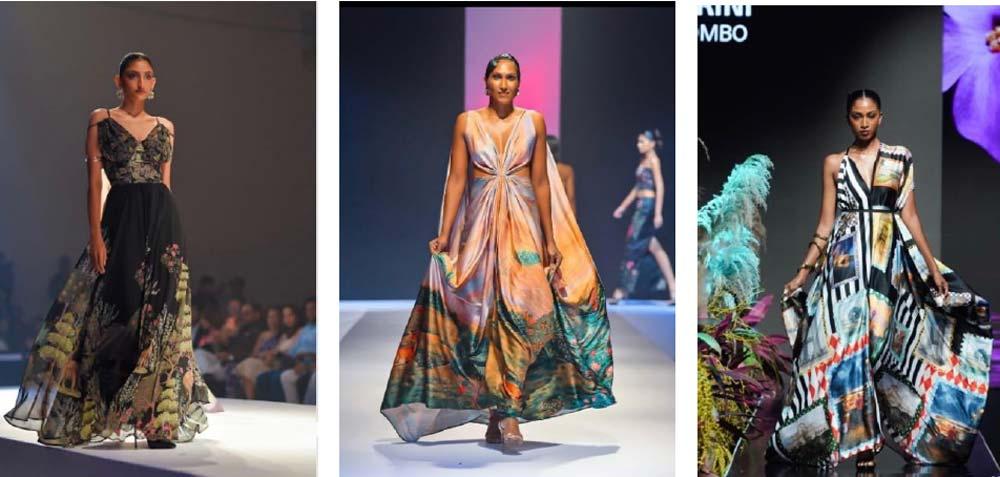
Colour plays an equally important role. Sun washed pastels evoke the softened tones of coastal landscapes before the palette moves towards saturated ocean blues and stronger expressions of colour. Each look has been conceived with its own identity, almost as if it were a wearable recollection of a particular shore. That approach is particularly suited to CHARINI.
Charini has consistently shown an ability to take culturally resonant material and move it into a polished contemporary context. Her work is feminine without relying on convention, expressive without losing wearability and recognisably Sri Lankan without becoming literal. Chapters from the Coast ultimately presents Sri Lanka as something experienced rather than simply observed. The coast becomes personal, layered and constantly changing. By translating destinations into colour, image and silhouette, Charini creates a collection that speaks simultaneously to travel, memory and home. At MBFWSL 2026, CHARINI’s contribution is therefore more than an ode to island life. It is an invitation to rediscover Sri Lanka through the details that stay with us long after a journey ends.
BUDDHI BATIKS BY DARSHI KEERTHISENA
A SECRET WORLD BENEATH THE LEAVES
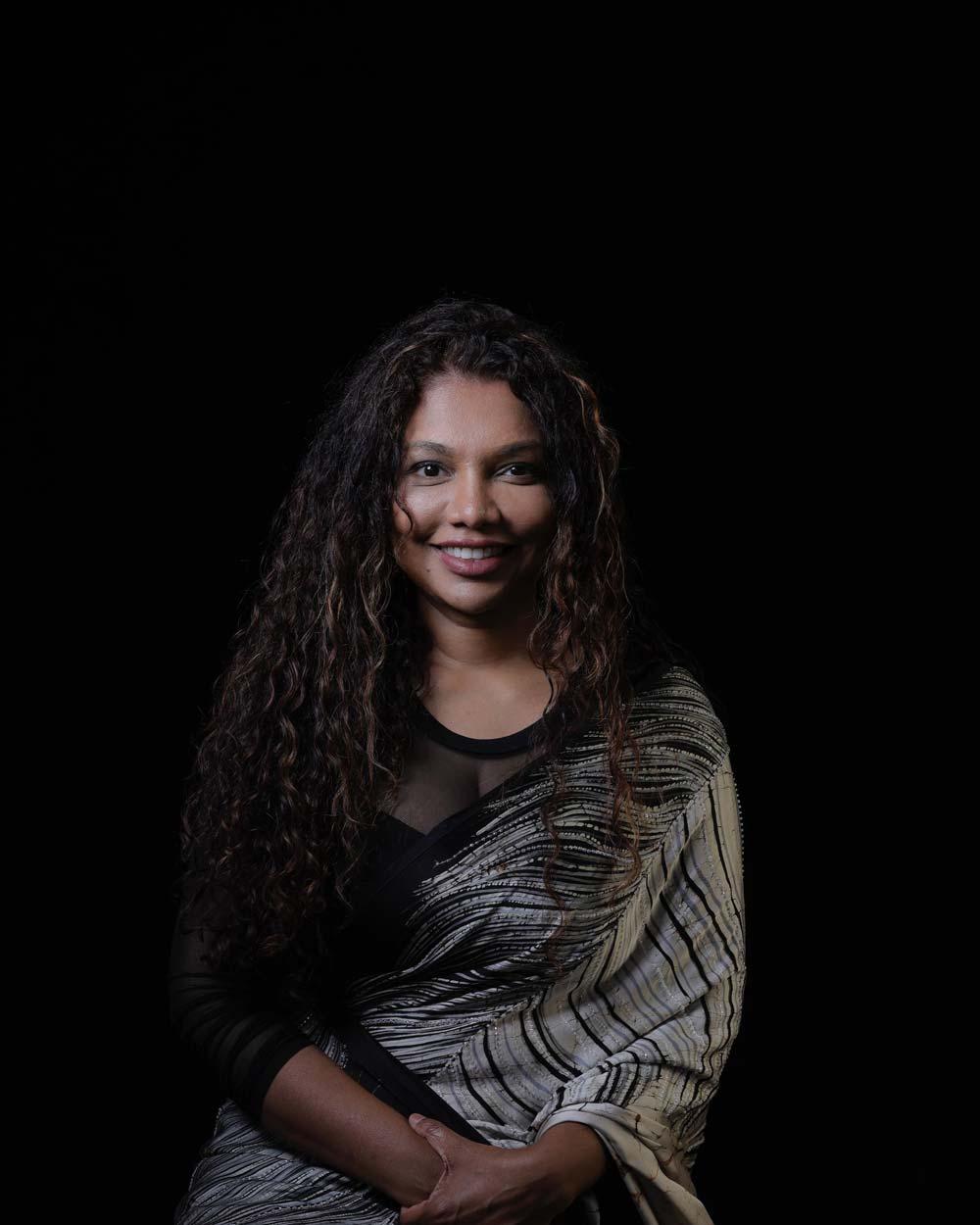
Darshi Keerthisena
Few Sri Lankan fashion houses are as closely connected to the evolution of modern batik as Buddhi Batiks. Founded in the 1970s by Buddhi and Ranasiri Keerthisena, the label has spent decades demonstrating that batik is not a static heritage technique but a living artistic language capable of continually changing with its time. That evolution entered a new phase when their daughter Darshi Keerthisena assumed the role of Creative Director. Trained in fashion and textile design in Singapore and England, Darshi debuted her first collection in 2006 and brought a distinctly contemporary sensibility to the family craft. Her work has helped push Sri Lankan batik into new contexts, from fashion and occasion wear to international exhibitions, including a presentation at Buckingham Palace. For the Future Craft runway at Mercedes Benz Fashion Week Sri Lanka 2026, however, Darshi begins somewhere surprisingly intimate; a childhood memory.
The collection recalls her fascination with mushrooms discovered while wandering through gardens and wooded spaces. Hidden beneath leaves and emerging unexpectedly from the earth, they appeared to her as tiny forms belonging to another world. Their silhouettes, colours and intricate surfaces captured her imagination. Some resembled umbrellas or the familiar form of an ilapatha. Others seemed beautiful but mysterious, particularly when childhood curiosity was tempered by a mother’s warning that some could be poisonous. It is this combination of wonder and danger, beauty and strangeness, that provides the emotional starting point for the collection. Darshi revisits those memories through the technical sophistication of Buddhi Batiks. Organic forms are translated into silhouettes while the minute patterns and surfaces found in nature are interpreted through batik, embroidery and embellishment. Layers of texture suggest the complexity of miniature ecosystems, allowing the collection to move beyond simply reproducing the appearance of mushrooms. The subject is especially compelling in the context of a Future Craft runway. Batik itself depends on transformation. Wax, dye, fabric and human intervention interact through a process in which the final surface gradually emerges. Here, that transformative craft is used to interpret another world of growth, mutation, colour and organic irregularity.
The result also reflects the wider philosophy that has kept Buddhi Batiks relevant across generations. Heritage is respected, but it is never treated as untouchable. Traditional knowledge becomes the foundation for experimentation.
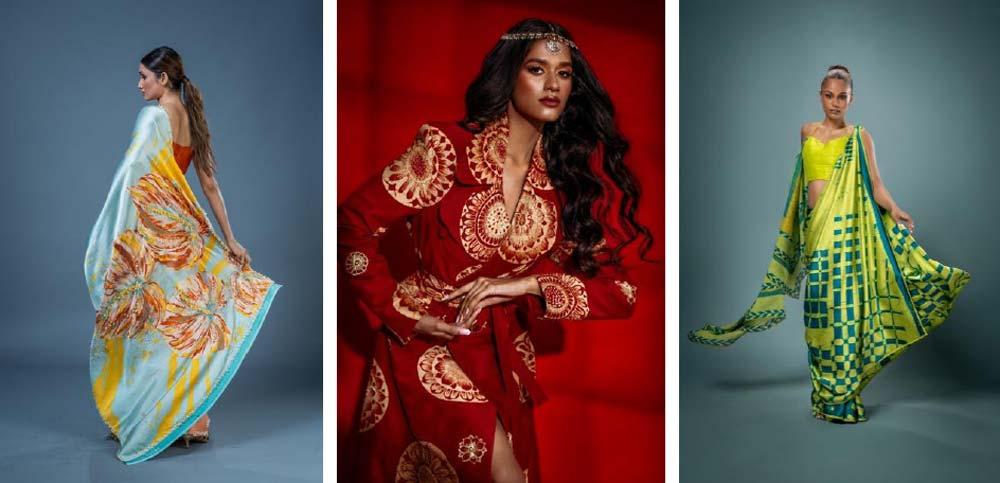
For MBFWSL 2026, Darshi Keerthisena brings the audience into a world that is whimsical, mysterious and quietly alive. What began as a childhood encounter beneath the leaves becomes a sophisticated meditation on memory, material and nature. It is a reminder that inspiration does not always announce itself dramatically. Sometimes an entire collection can begin with something tiny growing unnoticed on the forest floor.
HOUSE OF INDI BY INDI YAPA ABEYWARDENA
UNBOUND

Indi Yapa Abeywardena
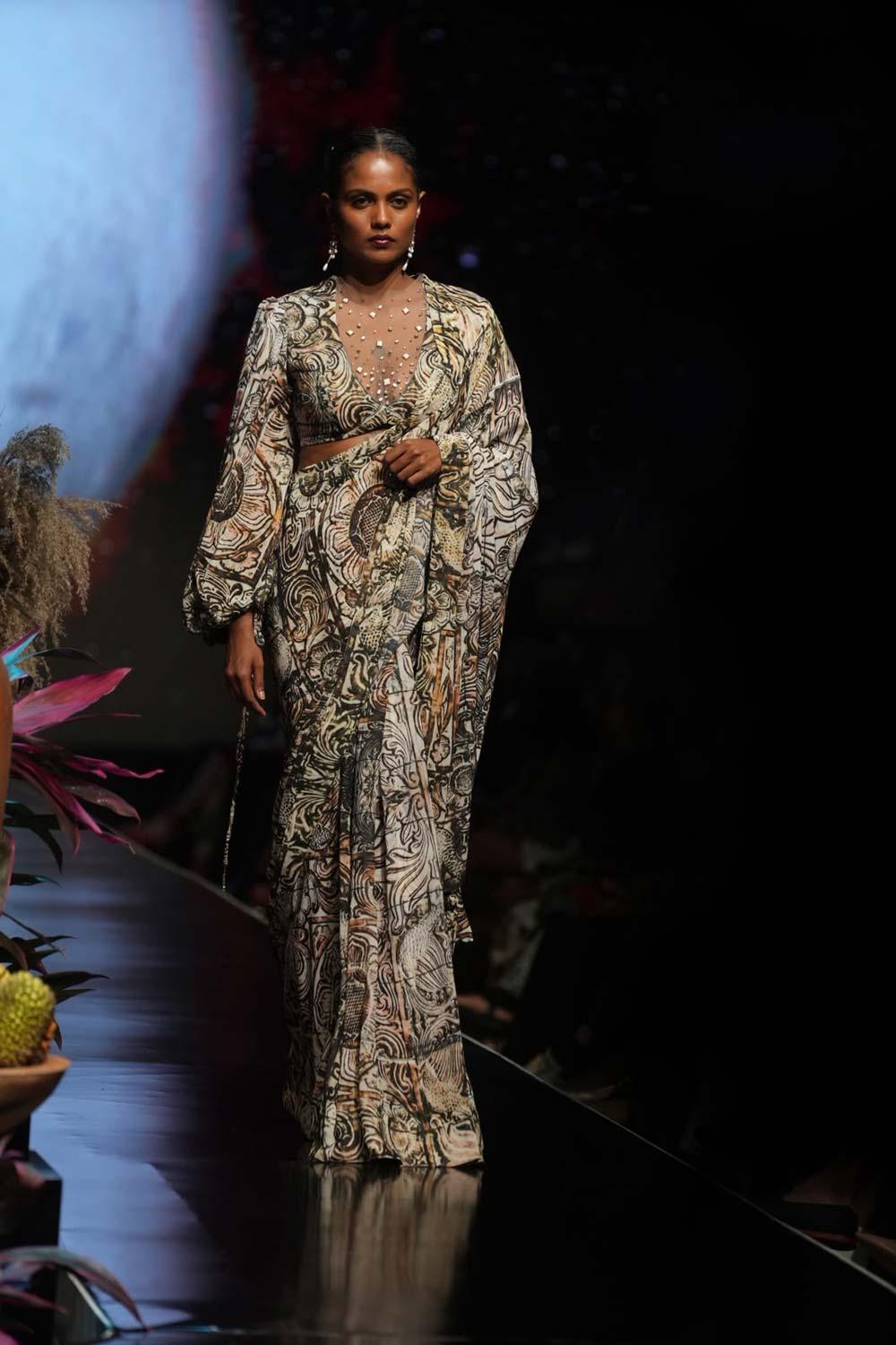
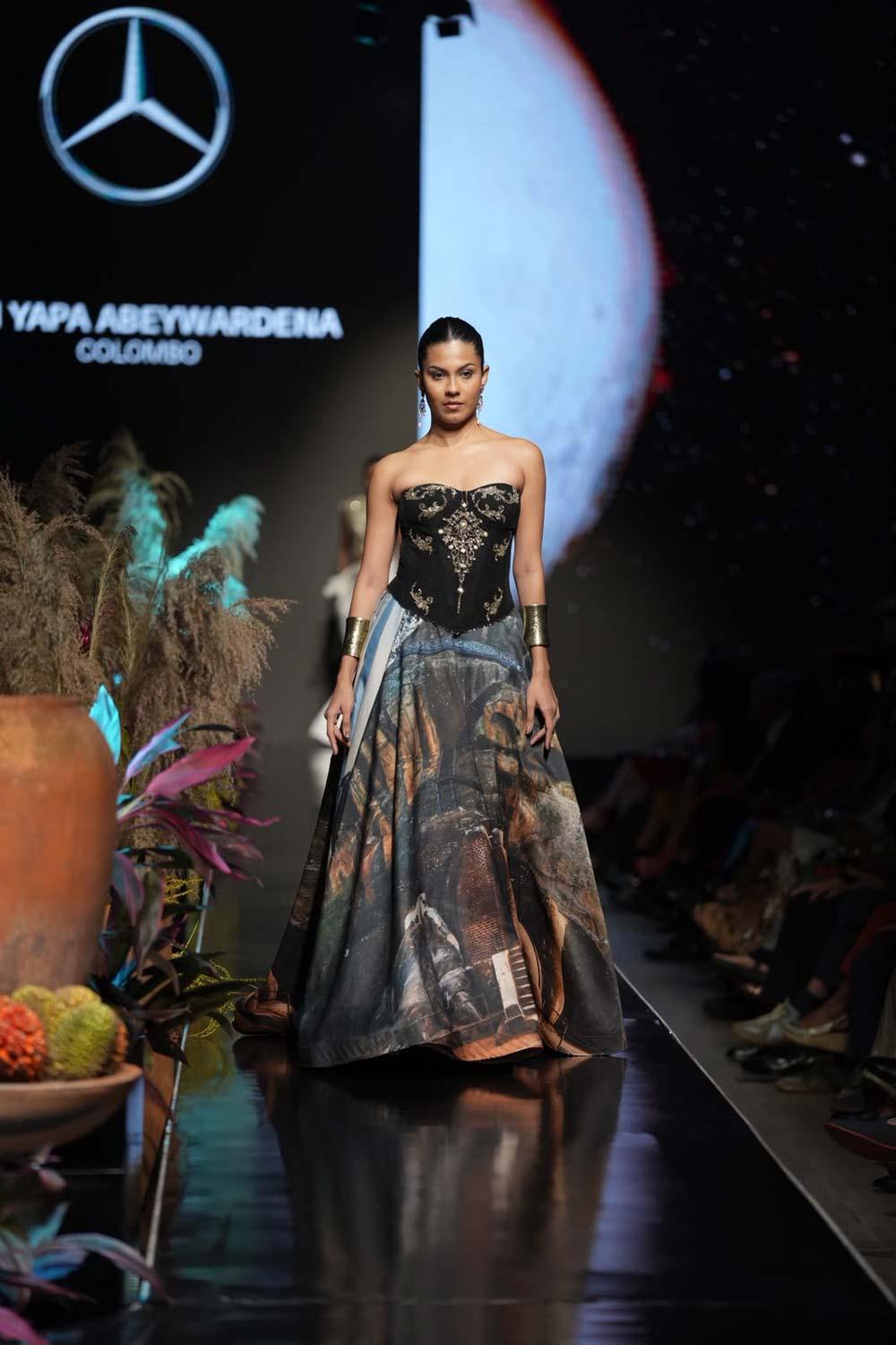
Indi Yapa Abeywardena has built House of Indi around the conviction that fashion can be both creatively ambitious and commercially purposeful. From beginnings with a single sewing machine, she has developed the label into a recognised Sri Lankan fashion and design house with a presence at home and internationally. Her career also extends beyond the clothes themselves. Entrepreneurship, employment and women’s economic empowerment form an important part of the House of Indi story. Indi has championed fair labour standards, equal pay and opportunities for women to develop skills, earn independently and progress into positions of responsibility. Her achievements have been recognised through local and international business awards, but her work remains grounded in the idea that fashion can create opportunities far beyond the runway. For Mercedes Benz Fashion Week Sri Lanka 2026, House of Indi joins the Future Craft runway with Unbound, an ambitious reconsideration of one of Sri Lanka’s most recognisable forms of dress; the Osariya. Instead of treating the traditional Kandyan sari as a completed form to be preserved intact, Indi takes it apart. The familiar vocabulary of the Osariya, including the jacket, neriya, fall, borders, pleating and drape, becomes raw material for reconstruction. Individual codes are isolated, examined and reassembled into contemporary silhouettes. The approach allows the collection to retain a visual conversation with tradition while moving decisively away from straightforward reproduction.
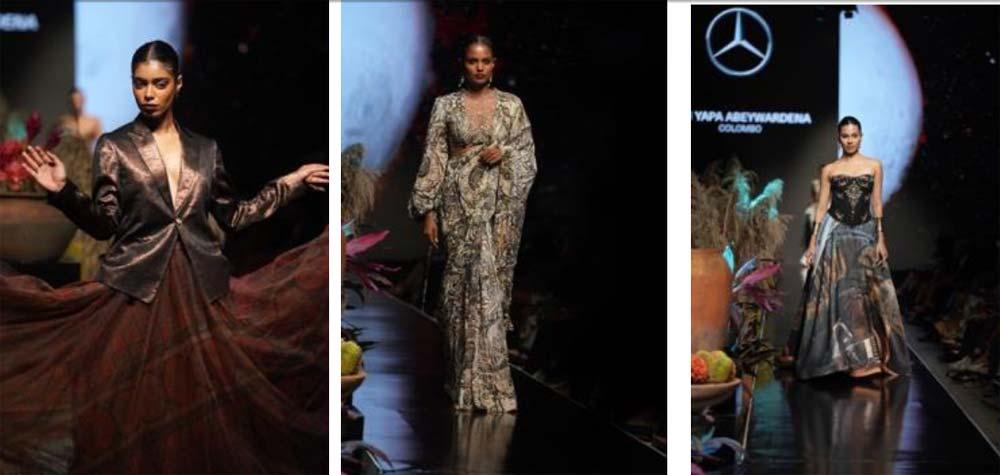
Craft undergoes a similar transformation. Beeralu lace and batik appear not merely as decorative heritage techniques but as starting points for further experimentation. They are reinterpreted through abstract prints, shadows, laser cut surfaces and expressive textures. The result creates a conversation between handcraft and modern fabrication, suggesting that preservation can also involve reinvention. Colour helps map this transition. Beeralu ivory and champagne establish a connection to ceremony and heritage before antique gold, aged bronze and burnished copper introduce richness and patina. Ceylon ruby intensifies the palette, while smoky graphite and lacquer black move the collection towards a darker contemporary conclusion. Throughout Unbound, opposing ideas are deliberately held together. Structure encounters movement. Precision is set against imperfection. Concealment meets exposure. Tradition is placed in dialogue with freedom. The title therefore carries considerable meaning. To become unbound is not necessarily to reject what came before. In Indi’s hands, it means releasing heritage from the expectation that it must always look the same. For a runway dedicated to Future Craft, the proposition feels particularly relevant. House of Indi asks what happens when an iconic form of Sri Lankan dress is allowed to evolve freely, while retaining enough of its original language to make its ancestry visible. The answer is an Osariya remembered, dismantled and reconstructed for another generation.
SUIT & TIE BY RAPHAEL
LOUNGE ACT

Roshan Senathirajah
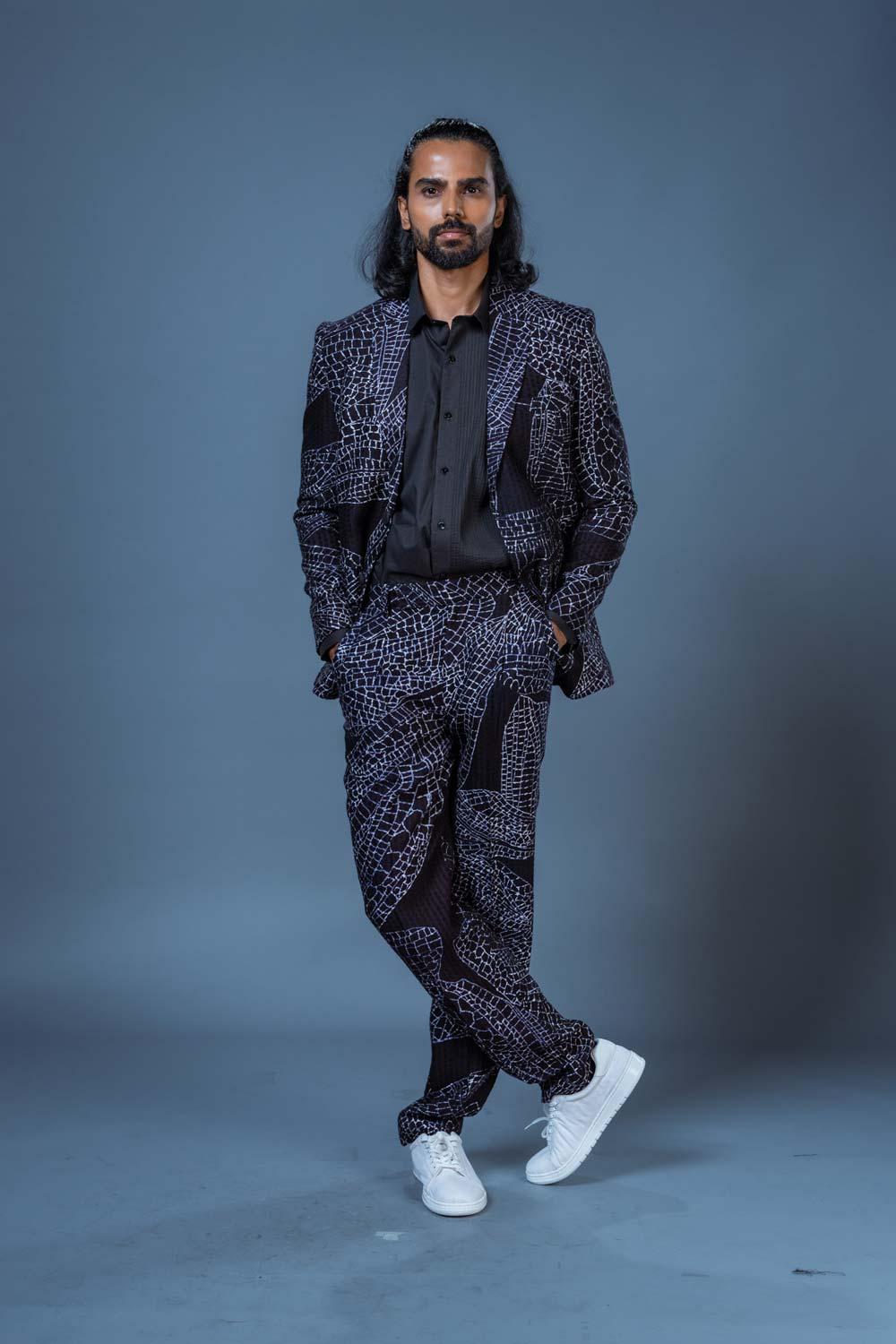
Menswear often relies on rules. Resort dressing belongs in one category, evening wear in another. A tuxedo has its place. Poolside clothing has its own. Suit & Tie by Raphael arrives at Mercedes Benz Fashion Week Sri Lanka 2026 ready to disrupt those divisions. Led by Co-Founder and Managing Director Roshan Senathirajah, the Colombo based bespoke tailoring house has established its reputation through an understanding of traditional menswear combined with a willingness to reconsider how contemporary men want to dress. Roshan graduated from the Academy of Design in 2007 and went on to build international industry experience with globally recognised brands including Tommy Hilfiger, Abercrombie & Fitch and Levi's. In 2016, he co-founded Suit & Tie by Raphael with business partner Angelo, developing the business around design innovation, craftsmanship and highly personalised service. For the Destination Island runway at MBFWSL 2026, that tailoring expertise loosens its collar.
The new collection, Lounge Act, begins with a scene. Imagine a resort verandah at the point when afternoon gives way to evening. One guest has arrived dressed for the pool bar. Another is already wearing a tuxedo. They meet at the same bar, and somehow neither appears incorrectly dressed. That collision between apparently incompatible dress codes becomes the collection’s central idea. Lounge Act brings the ease of resort wear into conversation with the discipline of fine tailoring. Rather than abandoning the suit, the label relaxes it. Silhouettes remain unstructured, shoulders lose their rigidity and jackets are cut with generous notch or peak lapels. Tailoring remains the foundation of the collection, but the atmosphere surrounding it changes.
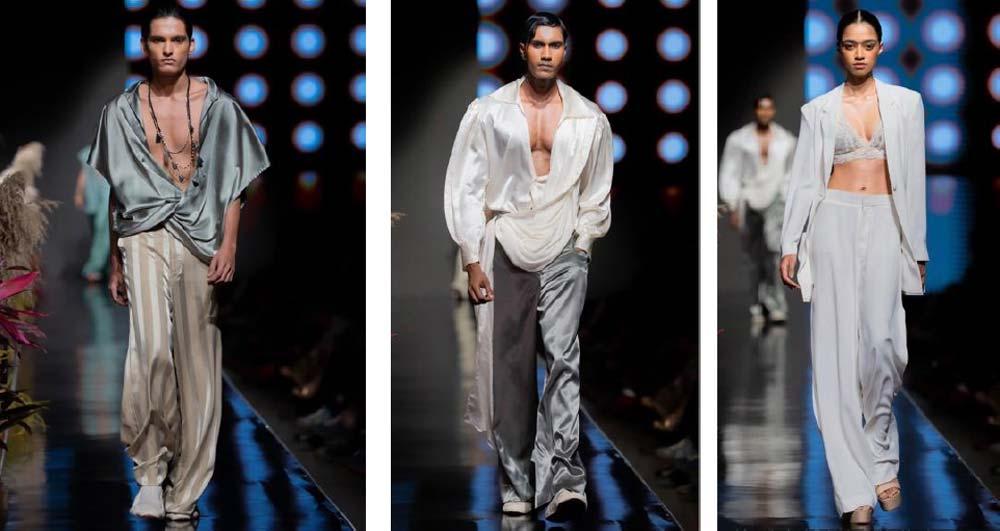
Even evening wear continues to speak through blazers and tailored volume. The difference is attitude. These clothes imagine formal dressing for a poolside crowd rather than a corporate boardroom. The colour palette follows the changing light of the fictional resort setting. Pool turquoise and banana leaf green evoke the brightness of daytime, while brass gold and cabana navy shift the mood towards dusk and evening. There is something distinctly contemporary about this refusal to choose between comfort and ceremony. Modern luxury increasingly depends on versatility, particularly in resort destinations where lunch, cocktails and dinner can flow into one another without the strict transitions of traditional city dressing. Suit & Tie by Raphael responds by retaining the codes that give tailoring its authority while removing the stiffness that can make it feel overly formal. Lounge Act ultimately argues that glamour does not require discomfort, and relaxation does not require abandoning elegance. At MBFWSL 2026, Roshan Senathirajah presents a version of menswear in which the tuxedo and the pool bar finally learn to coexist.
NATHARLEA
SRI LANKAN HERITAGE, GLOBAL VISION

Natharlea Yahampath
Natharlea Yahampath approaches fashion from the intersection of design, innovation, craftsmanship and technology. The designer and entrepreneur brings extensive international fashion experience to a practice that is increasingly interested not only in what clothing can look like, but in what fashion itself might become. Her academic background reflects that breadth. With doctoral qualifications, an MA in Design Innovation and a BA in Textile Design, Natharlea combines creative practice with research and an interest in new systems of making. Her work has also moved into technological innovation, including a recent development for fashion and accessories for which a patent application has been filed. At Mercedes Benz Fashion Week Sri Lanka 2026, Natharlea brings this future facing perspective to the Destination Island runway with a collection that makes a confident argument for the international potential of Sri Lankan craftsmanship. The starting proposition is clear. Heritage does not need to remain in the past in order to retain its value. Instead, the collection takes traditional Sri Lankan techniques, textures and handcraft and positions them within a contemporary luxury vocabulary. Craft becomes a platform for experimentation rather than an endpoint. The ambition is not simply to preserve cultural practices, but to demonstrate how they can participate in the future of international fashion. That distinction matters. Sri Lanka possesses a rich network of artisanal knowledge, yet discussions around traditional craft can too easily frame it through nostalgia. Natharlea instead presents craftsmanship as intellectual and creative capital, something capable of supporting sophisticated contemporary design and competing on global luxury stages. The collection is therefore conceived as a statement about national creative possibility. It asks audiences to consider Sri Lanka not merely as a manufacturing destination but as a source of original ideas, advanced craftsmanship and design innovation. Running alongside this celebration of Sri Lankan creativity is an international fashion reference. The collection pays tribute to Karl Lagerfeld, acknowledging a designer whose career was defined by an ability to repeatedly reinvent established fashion houses and visual codes.
Natharlea does not approach that influence through imitation. Instead, the homage centres on an idea associated with Lagerfeld’s career; that creativity advances by refusing to accept fixed boundaries. That principle aligns naturally with Natharlea’s own interest in combining heritage, luxury and innovation. Sri Lankan craft provides the cultural foundation, while the collection looks outward towards global possibilities.
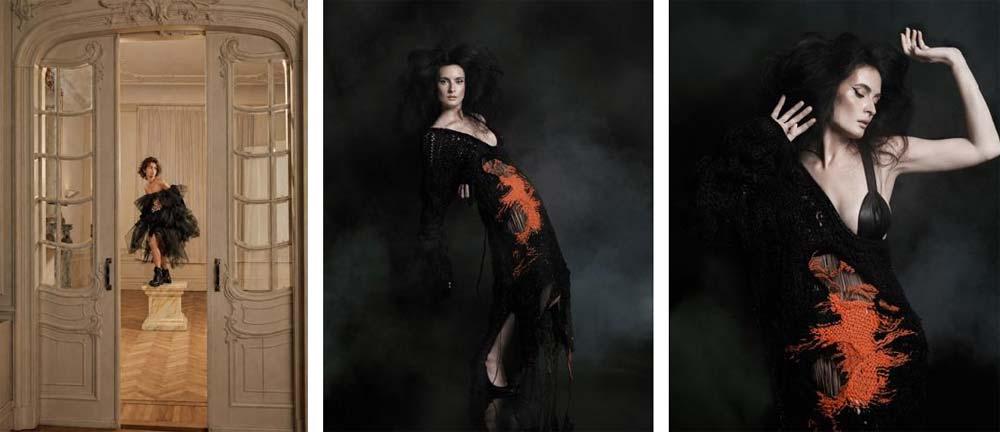
The message at MBFWSL is therefore intentionally ambitious. Natharlea is not only asking what Sri Lanka can produce today. She is asking what the country could contribute to the future of luxury fashion. Her answer places craft at the centre of that future. With heritage as its foundation, innovation as its method and international luxury as its horizon, Natharlea presents Sri Lankan design not as an emerging possibility but as a creative force ready to participate in the global conversation.
TSS BY THILINI SILVA
FASHION WITH INTENTION
Thilini Silva
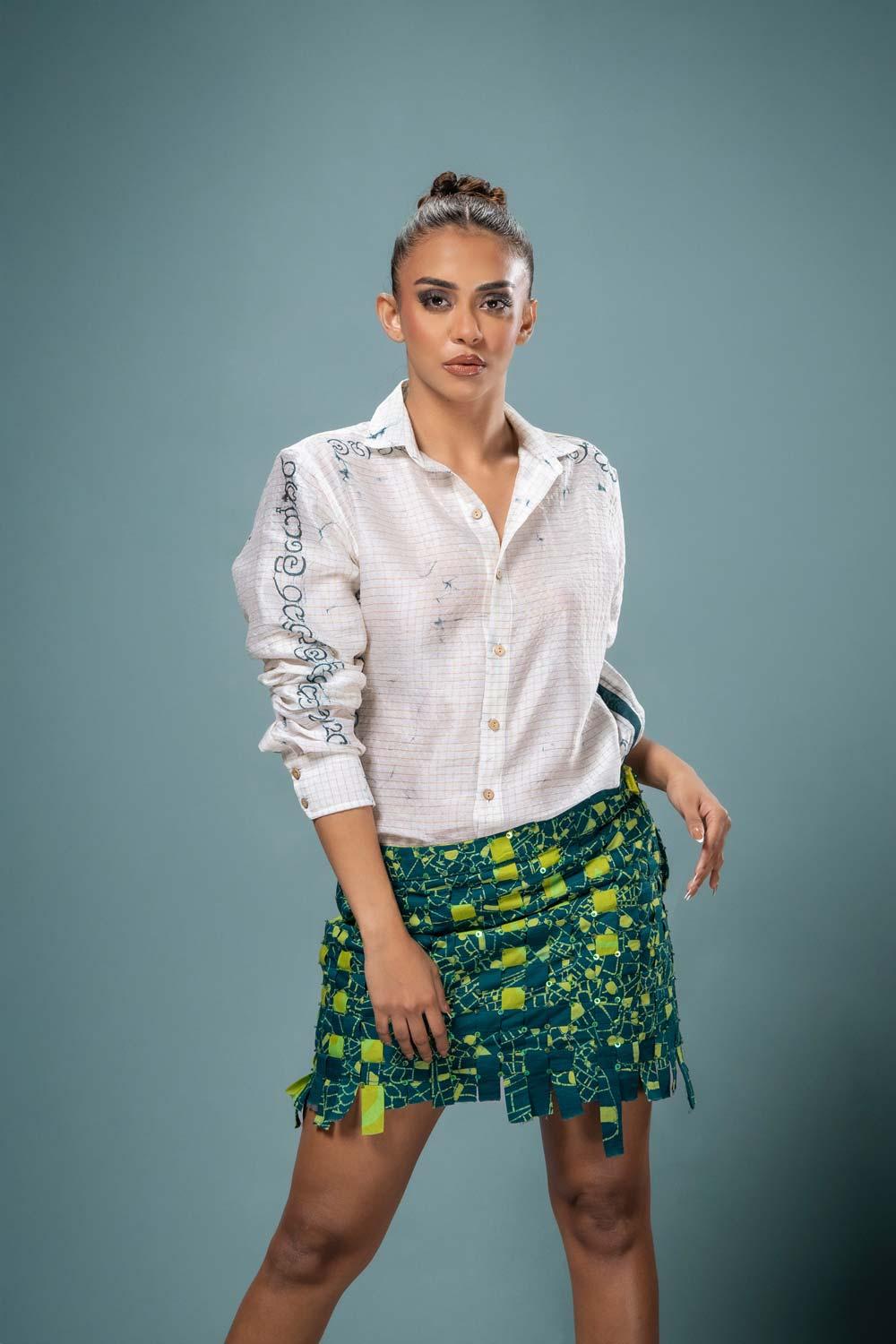
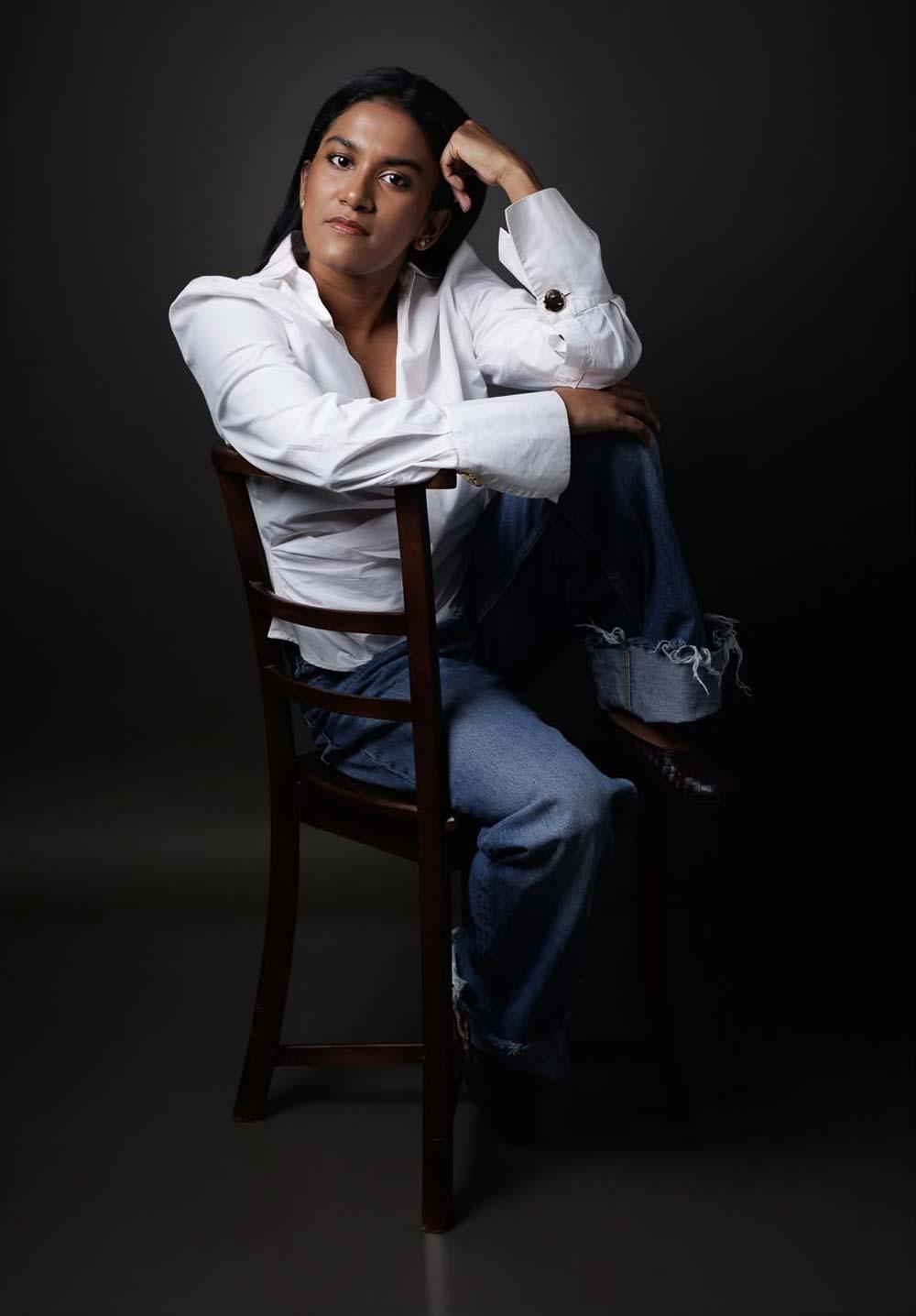
For Thilini Silva, fashion began long before the establishment of TSS. Growing up with a mother who was herself a fashion designer (Nilanka Silva) meant that clothing, making and experimentation were part of Thilini’s environment from an early age. Working alongside her mother allowed curiosity to become practical experience and eventually a professional direction. Thilini went on to study Fashion and Textile Design at the Academy of Design, developing the technical and conceptual foundation for what would become her own label. TSS subsequently entered retail through PR as part of the Rising Star programme, giving the young brand an important platform as Thilini began defining its identity. At Mercedes Benz Fashion Week Sri Lanka 2026, TSS appears on the Future Craft runway with a collection that turns attention towards the people, materials and experiences that sustain the designer’s creative practice. The concept is deliberately personal. Thilini describes the collection as a showcase of everything and everyone who inspires her to continue working. That sense of gratitude is connected to a second priority; using what the brand already has. Scraps and leftover materials become integral to the collection rather than being treated simply as waste. This approach places TSS within an increasingly important conversation around how young fashion labels define sustainability. For a smaller independent brand, responsible design does not necessarily begin with enormous technological systems or grand declarations. It can start at the cutting table, with the decision to reconsider the value of the fabric already present in the studio.
By working with scraps, Thilini challenges the assumption that newness requires entirely new material. Instead, limitations can become creative prompts. Fragments demand different approaches to construction, surface and composition. What might normally disappear from the production process can become visible evidence of it. The collection’s emphasis on intention is particularly important. Sustainability here is not positioned as an aesthetic trend. It becomes part of a broader way of thinking about why something is made, who contributes to making it and how existing resources can be respected.
That philosophy also connects neatly with the Future Craft platform. Craft has always depended on close relationships between hand, material and maker. TSS extends that thinking into a contemporary context in which material responsibility is becoming increasingly urgent. There is also something fitting about Thilini presenting a collection centred on the people who inspire her. Her own introduction to fashion came through family, before education, retail and industry experience expanded that circle. MBFWSL 2026 gives TSS the opportunity to bring those influences together on the runway. The resulting collection represents a young designer defining success not simply through the production of more clothing, but through a more thoughtful relationship with what already exists. For TSS, the future of fashion begins with intention.
KUMA COLLECTION BY ISHINI KUMARASIRI
THREADS OF JAFFNA
Ishini Kumarasiri
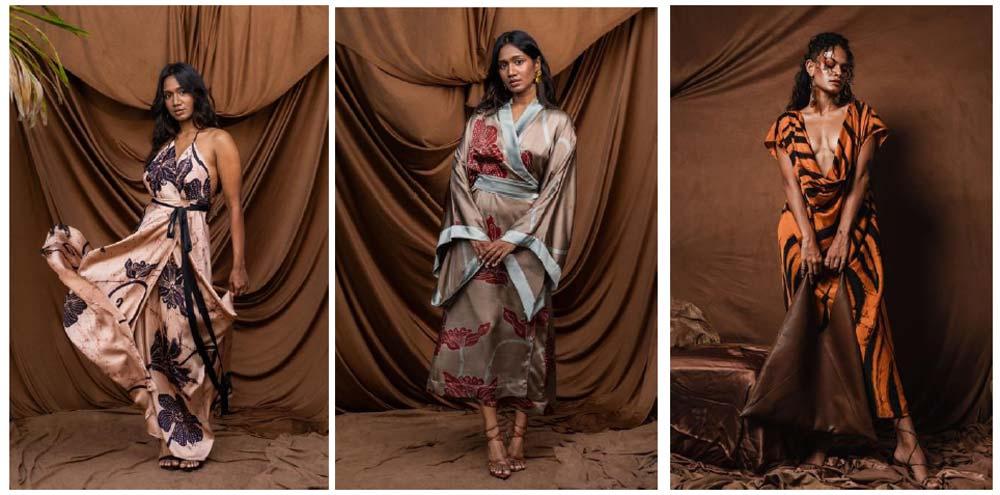
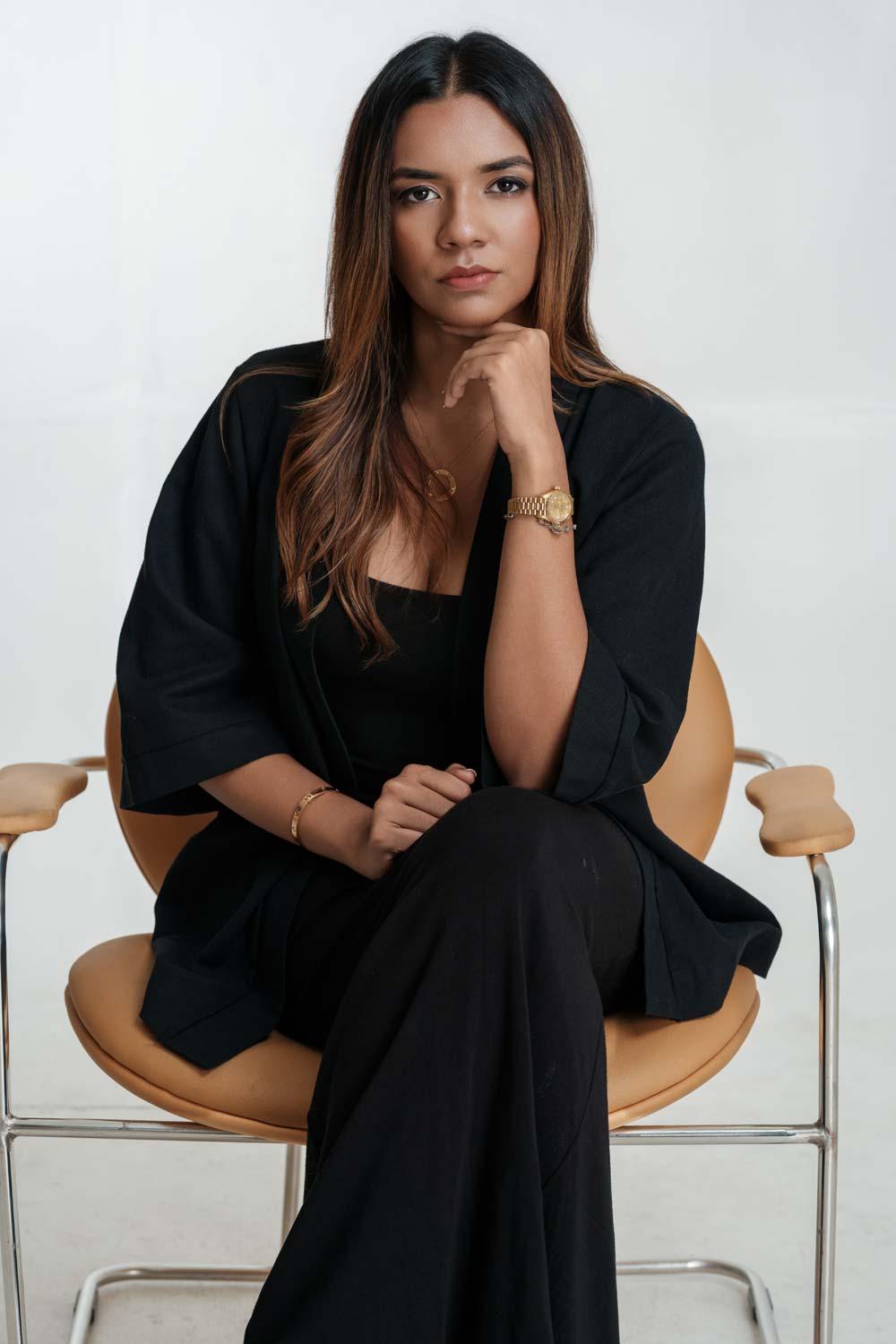
Ishini Kumarasiri has built KUMA Collection around a desire to see Sri Lankan craftsmanship through a contemporary lens. As founder and creative director of the label, she has been particularly interested in batik and its capacity to move beyond familiar expressions into clothing that feels current, expressive and wearable. KUMA’s collections draw from Sri Lankan culture and storytelling while allowing artisanal techniques to evolve through modern silhouettes. Previous appearances at Mercedes Benz Fashion Week have helped Ishini continue developing that identity, and for MBFWSL 2026 she turns her attention north. Threads of Jaffna, presented on the Destination Island runway, takes inspiration from the cultural heritage, colours and artistic traditions of Jaffna and Tamil culture. It is rich territory for a designer interested in the relationship between place and textile. Yet Ishini avoids simply reproducing traditional clothing. Instead, she extracts visual and craft references and translates them through KUMA’s contemporary design language. Batik remains central to that process. Sri Lanka has a distinctive relationship with batik, but Threads of Jaffna asks what happens when the technique enters into conversation with another set of cultural references. Bold colour, Tamil inspired motifs, intricate mirror work and expressive batik surfaces come together across modern silhouettes. The combination allows the collection to speak about heritage without turning it into costume.
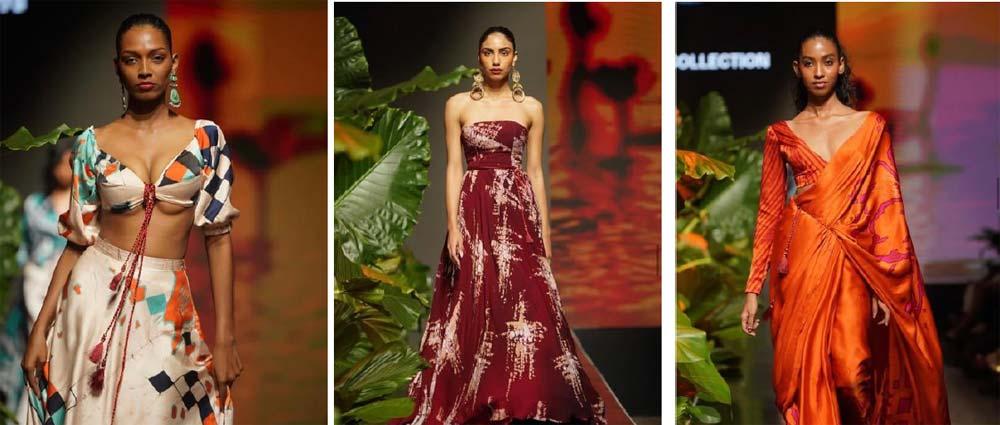
Mirror work brings another dimension to the surfaces, creating points of reflection and movement alongside the irregular qualities of batik. Colour becomes an immediate carrier of energy, reflecting the vibrancy that informs Ishini’s interpretation of Jaffna. The collection’s title is significant. Threads suggests both textile construction and connection. Jaffna becomes not simply a visual inspiration, but a cultural story connected through material, motif and making. For KUMA, the collection also demonstrates the adaptability of batik itself. Traditional crafts survive not only because they are carefully protected, but because designers continue finding new contexts in which they can speak. Ishini’s approach respects the technique while refusing to restrict it to one aesthetic vocabulary. That makes Threads of Jaffna particularly appropriate for a contemporary Sri Lankan runway. The collection reflects a country with multiple cultural histories and visual traditions, showing how fashion can create new conversations between them. At MBFWSL 2026, KUMA Collection presents heritage as something active. Cultural references are acknowledged, transformed and placed into a modern wardrobe rather than preserved at a distance. The result is a collection that celebrates Jaffna while also extending Ishini’s wider mission for KUMA; to demonstrate that Sri Lankan batik can continue changing, travelling and finding new forms of expression.
NITHYA BY NITHYA YAMINI LAMAHEWA
THE MEMORY EDIT

Nithya Lamahewa
Since founding her label in 2012, Nithya Yamini Lamahewa has been asking how Sri Lanka’s ancient handloom and textile traditions can be brought into contemporary life. The answer has never been to preserve craft by leaving it unchanged. Nithya instead combines the knowledge of artisan communities with experimentation, global fashion influences and a determination to challenge assumptions about what handloom can become. The label has explored ideas ranging from handloom denim saris to modern interpretations of traditional tartan checks, consistently moving familiar textile languages into unexpected territory. That experimentation exists alongside a strong social purpose. Working with rural artisans allows the label to support the communities whose knowledge makes its collections possible while creating opportunities for traditional skills to reach wider markets. For the Destination Island runway at Mercedes Benz Fashion Week Sri Lanka 2026, Nithya turns from textile history towards personal and collective memory with The Memory Edit. The collection begins with nostalgia.
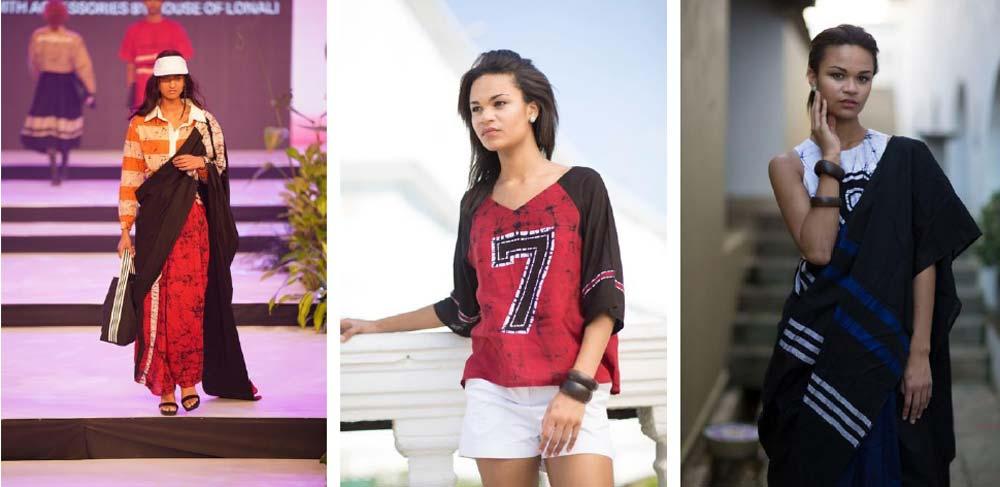
For Nithya, nostalgia is not purely comforting. Memory can offer belonging and emotional grounding, but it can also become a shadow that holds a person in the past. The Memory Edit explores that tension between what has already shaped us and what still lies ahead. Its visual world is particularly connected to everyday Sri Lankan life during the 1990s. Rather than looking only towards grand historical imagery, Nithya finds meaning in ordinary scenes. Roadside food vendors, neighbours wearing sarongs, children playing batta in the street and the sounds and colours of daily life become emotional reference points. These are memories that may appear small individually, yet collectively they form a powerful picture of place and generation. The collection translates those references into contemporary fashion through prints, reimagined silhouettes and handloom craftsmanship. Familiar details are not reproduced literally. They are edited, reshaped and carried into the present.
That process mirrors the way memory itself works. We rarely remember the past as a perfect sequence. Instead, images, textures, colours and emotions return as fragments. Some become sharper with time while others soften. The Memory Edit uses fashion to assemble those fragments into something new. It also encapsulates Nithya’s broader design philosophy. Just as the label takes inherited craft and gives it contemporary relevance, this collection takes inherited memories and allows them to live differently. The past is therefore neither rejected nor allowed to dominate. For Nithya, moving forward does not require forgetting where we came from. It means choosing how those memories accompany us. At MBFWSL 2026, The Memory Edit becomes a celebration of identity and reinvention. It is nostalgic without becoming sentimental and culturally grounded without remaining fixed in time. Nithya’s handloom story has always been about giving old knowledge new life. This season, the same philosophy is applied to memory itself.
NÅD STORE BY JOANNE STOKER
RHYTHM & FOLK

Joanne Stoker
Joanne Stoker’s Nåd Store occupies an interesting position within Sri Lanka’s contemporary fashion landscape. The British Sri Lankan designer has built the slow fashion label around Sri Lankan craftsmanship, tropical modernism and an exploration of how place influences identity. Handloom textiles, deadstock fabrics and considered approaches to zero waste form part of the brand’s material vocabulary. Yet sustainability is only one dimension of Joanne’s practice. Nåd is equally interested in atmosphere, movement and the visual character of everyday Sri Lanka. For Mercedes Benz Fashion Week Sri Lanka 2026, the label joins the Destination Island runway with Rhythm & Folk, a collection structured around a journey. It begins in Colombo. The city provides energy, density and structure. Clothing responds accordingly through silhouettes that feel more defined and urban. But as the imagined journey leaves the capital and moves through coastal towns towards the shoreline, the collection begins to change. Structure gradually relaxes. Silhouettes soften. Garments become more fluid and effortless.
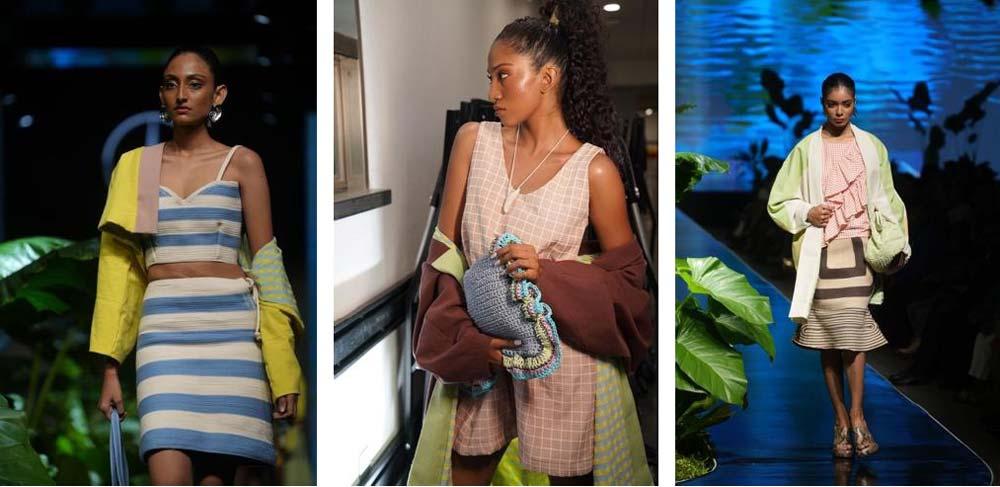
The progression reflects the different rhythms of life encountered while travelling through Sri Lanka. Colombo’s speed gives way to the slower pace of the coast, and clothing becomes the medium through which that transition is expressed.
This is not simply a geographical journey. Joanne is interested in the way surroundings affect behaviour, movement and the way people dress. A city can create one posture and tempo, while a coastal landscape encourages another. Rhythm & Folk observes those subtle shifts.
Colour, texture, people and everyday visual culture encountered along the route become part of the collection’s vocabulary. Through them, Nåd creates a portrait of Sri Lanka that is less about monumental landmarks and more about lived atmosphere. The concept fits naturally with Joanne’s wider interest in tropical modernism. That design philosophy has always negotiated relationships between modern structure, climate, landscape and local identity. Rhythm & Folk brings a similar sensibility to clothing. There is structure, but it responds to environment. There is modernity, but it remains connected to local materials and cultural context. Handloom and deadstock textiles also give the clothes a material sense of place while supporting Nåd Store’s slow fashion principles. Rather than chasing rapid seasonal change, Joanne’s practice emphasises considered design and a closer relationship with materials. On the Destination Island runway, that philosophy becomes particularly resonant. Sri Lanka is often marketed through images of escape, but Joanne’s collection proposes something more nuanced. The island contains many speeds, identities and ways of moving. Rhythm & Folk captures the transition between them. From city structure to coastal ease, Joanne Stoker presents clothing as a response to environment, showing how the rhythm of a place can ultimately become the rhythm of a wardrobe.
AMIRAN BY AMILA PERERA
REBIRTH

Amila Perera
Amila Perera describes fashion as more than aesthetics. For the founder of AMIRAN, it is a medium through which emotion, storytelling and human connection can be made visible. That philosophy has shaped a label characterised by expressive colour, striking prints, intricate embellishment and a willingness to embrace drama. Amila’s creative journey began at a young age before developing through his studies at the Academy of Design, where experimentation helped him establish his own design identity. His relationship with Mercedes Benz Fashion Week has evolved alongside that journey. Having experienced the platform behind the scenes and as a design student, he returns in 2026 with his own label. The moment represents both progression and a kind of homecoming. Appropriately, the collection is titled Rebirth.
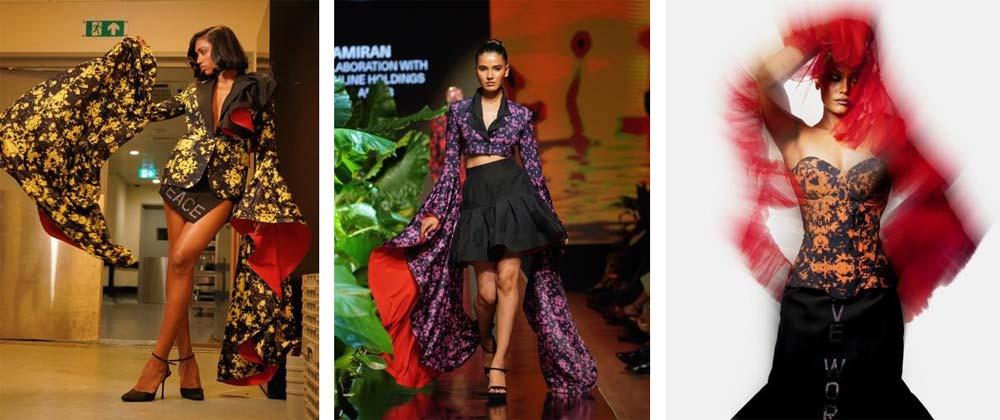
Presented as AMIRAN’s Spring Summer 2027 ready to wear collection on the Destination Island runway, Rebirth takes the emotional intensity and visual grandeur of Renaissance art and reimagines it through a distinctly Sri Lankan perspective. Rather than treating Renaissance imagery as an untouchable Western canon, Amila brings two visual worlds into conversation. Portraits, sacred imagery and mythological figures are transformed through Sri Lankan manner, jewellery, symbolism, tropical landscapes and cultural motifs. The familiar iconography of European art is therefore displaced and reborn within another geography.
AMIRAN’s established visual language intensifies the collision. Red and black create drama, while expressive prints and contemporary silhouettes prevent the historical references from becoming costume. Embellishment adds richness and detail, echoing the decorative intensity of Renaissance art while speaking in the label’s own voice. Yet Rebirth is not simply an exercise in visual fusion. At the centre of the collection is a wider reflection on humanity. Amila uses the idea of civilisation and the masterpieces it leaves behind to ask a deceptively simple question; what should we consider humanity’s greatest masterpiece? His answer is love.
Compassion, connection, peace and humanity provide the emotional foundation beneath the dramatic surfaces. Art may preserve the memory of civilisations, but Amila argues that the ability to care for one another is ultimately a greater human achievement. That message gives the collection an unexpected tenderness. Rebirth therefore operates on several levels. Renaissance imagery is reborn through Sri Lankan culture. Historical references are reborn through contemporary clothing. Amila himself returns to the MBFWSL platform at a new stage of his career. For AMIRAN, the collection becomes a declaration of creative identity. It is fearless, theatrical and visually ambitious, yet its final message is fundamentally human. At Mercedes Benz Fashion Week Sri Lanka 2026, Amila Perera invites two artistic worlds to meet, not to determine which is greater, but to reveal the emotions that have always connected them.
VZOR COUTURE BY ANA AND KAVYA
THE TURNING TIDE

Ana and Kavya
VZOR Couture begins with the meeting of two perspectives. Founders Ana and Kavya describe themselves as two girls from two different islands brought together by a shared vision and passion for design. That meeting of backgrounds has developed into a label centred on individuality, confidence, self-expression and a contemporary understanding of luxury.
Their ambition is to create pieces that feel personal rather than prescriptive. Clothing, in the VZOR vocabulary, should allow the wearer to recognise herself within it. The label therefore positions luxury not simply as decoration or exclusivity, but as the feeling of wearing something that communicates an authentic sense of self. At Mercedes Benz Fashion Week Sri Lanka 2026, Ana and Kavya bring that philosophy to the Emerging Designers runway with The Turning Tide. The collection takes transformation as both its subject and its visual structure. Its starting point is the moment when a storm begins to clear and light returns. Rather than focusing only on the darkness of turbulence or the optimism of what follows, VZOR explores the transition itself.
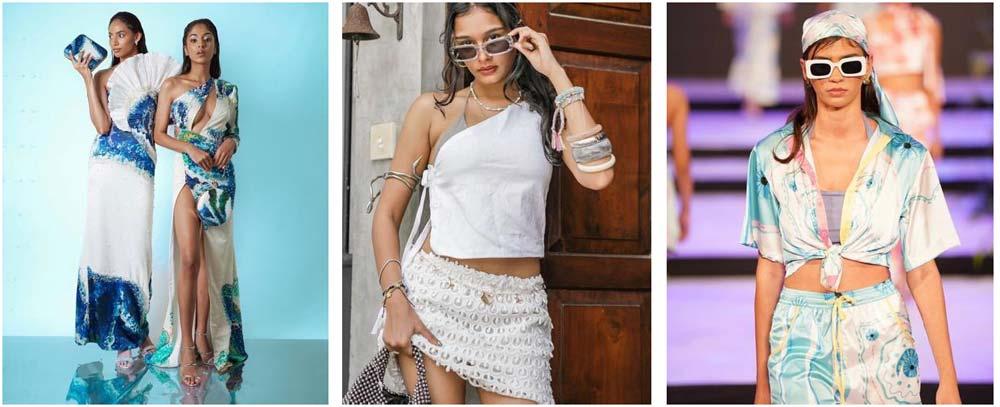
Colour, print and movement chart that emotional progression. The collection begins with layered and restless forms that suggest instability. As the narrative develops, the visual language becomes increasingly grounded. Earthier tones emerge, compositions soften and eventually vibrant colour enters with renewed confidence. The shift creates a fashion narrative about finding equilibrium after disruption. This idea of becoming is central to The Turning Tide. Transformation is not presented as a sudden before and after moment. It is gradual, layered and sometimes uncertain. The wearer moves through that journey rather than simply arriving at its conclusion. For an emerging label, the concept feels particularly apt. Establishing a design identity also requires a process of change and discovery. Ana and Kavya are developing the codes that will define VZOR while simultaneously exploring themes of individuality and self-expression.
Print provides an important tool for communicating that emotional movement. Rather than acting purely as surface decoration, it becomes part of the storytelling. Shifts in composition and colour allow the garments to express different stages of the collection’s journey. Movement adds another dimension, giving the clothing a sense of release as the narrative progresses from turbulence towards confidence. Ultimately, The Turning Tide is about returning to oneself. There is optimism in that idea, but not the simplistic optimism of pretending storms never happen. VZOR instead acknowledges uncertainty as part of transformation. At MBFWSL 2026, Ana and Kavya present a collection about navigating change and emerging with a stronger sense of identity. For VZOR Couture, finding your way forward begins with finding your way back to yourself.