MERCEDES BENZ FASHION WEEK 2026
DILUNI: PASSING BODIES
What do we wear to become the person a room expects us to be? Diluni sees clothing as a tool that is used for navigating identity and a way of moving between social spaces, performing the roles that each one demands. Her collection Passing Bodies examines how perceptions shape appearance and how people use what they wear to create a shift between different roles, environments, and expectations that society has set for them. This collection was inspired by the contrast between luxury and labour, combining practical workwear with theatrical elements that are drawn from various performance industries such as culinary work, hospitality and even the circus. These references suggest that everyday life can itself turn into a performance, with many individuals adapting their appearance in accordance with the role they occupy. The tension they feel shows up in silhouettes. Structured garments, oversized outerwear and fitted bodysuits are set side by side, creating a push and pull between functionality, movement and restriction, with the fabrics used creating the same dialogue. The incorporated corduroy, twill and canvas reference the durability and labour, whereas the cotton, lace and silk-inspired textiles aim to showcase the softness and refinement of the clothing. Diluni combines all these elements together to create a collection that holds the hard-wearing and the delicate within the same frame.
However, the key design language incorporated into the collection is illusion. This illusion is developed through corset effects, the manipulation of lace and trompe-l’oeil prints, blurring the boundary between what is performed and what is real. It shows that a garment may appear to be something that it is not, making the wearer question how identity can be constructed through just appearance. This contrast is also reinforced by a choice of contrasting choice of colours, which are white, red and cream. The red brings the theatricality of the circus, while the softer white and cream colours bring about the workwear and traditional tailoring. When paired with one another, the colours move between the quiet discipline of the workplace and the spectacle of the grand stage.
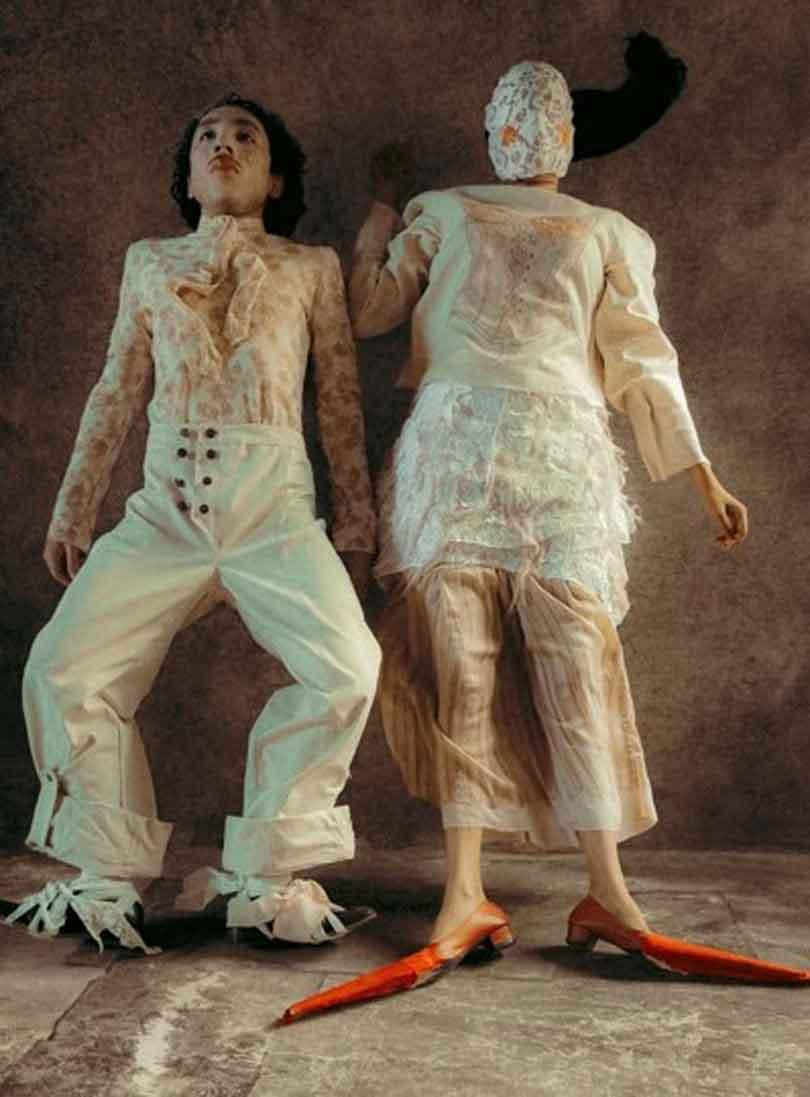
Passing Bodies shows us that fashion can be treated as both costume and uniform. We wear these clothes to work, to perform, and essentially belong and adapt to different worlds. Diluni invites the wearer to realize that the line between the two is often thinner than we realize and really think about how much of who we are is shaped and determined by what we choose to put on each morning. Diluni suggests that clothing is never just a surface, but rather how we pass through the world.
YEHANSA
EMERGING ELSEWHERE
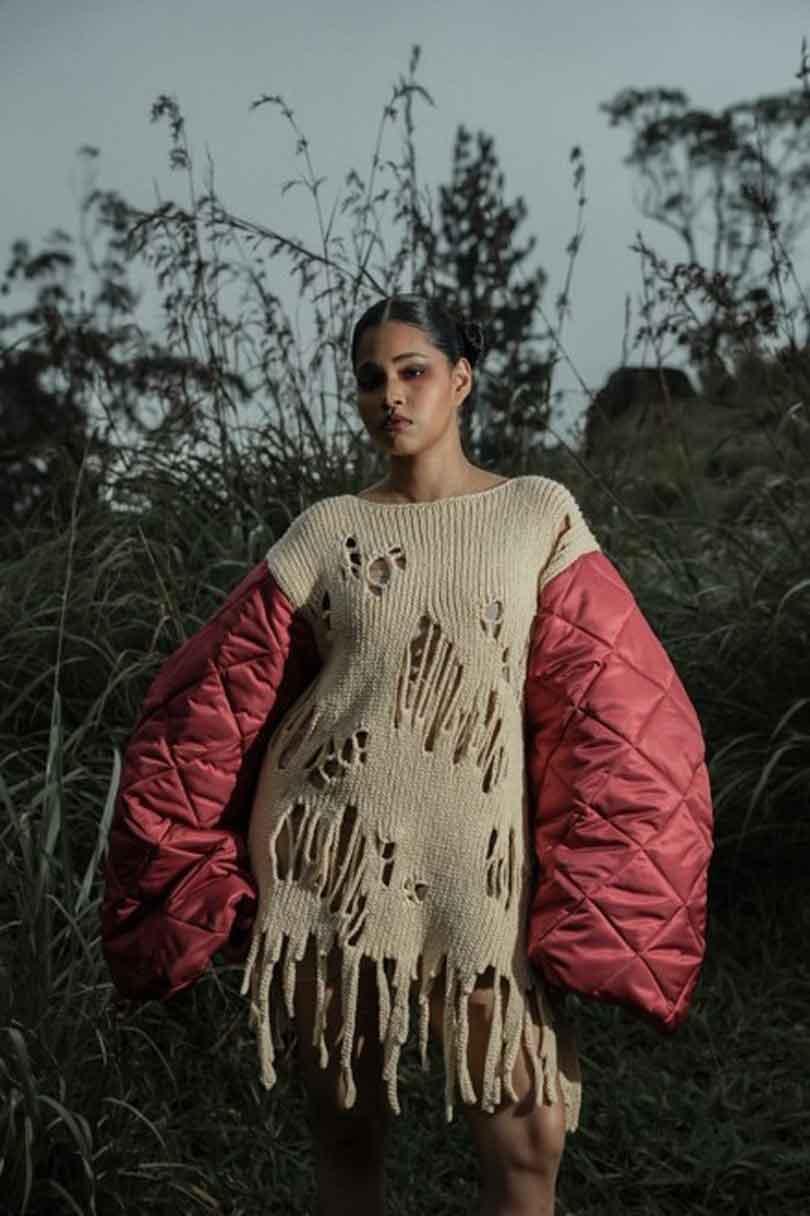
What if humanity was forced to start again in an entirely new place? For Yehansa, that question became Emerging Elsewhere, the collection from her futuristic contemporary streetwear brand, ERID. The brand was built around the themes of escapism and reconnection, imagining a world far from here called Eira, a fictional planet that is shaped entirely by nature. Her collection presents a story about humanity’s migration. As people leave behind planet Earth, which is overwhelmed by the artificial, they arrive on an unfamiliar planet and must therefore learn how to adapt to living there. She uses this journey to explore how humans could rediscover their identity and their connection with nature, when all that they once knew has been stripped away from them.
The source of inspiration is the planet Eira itself. It explores diverse climates, environments, and landscapes, which are then translated into every part of the collection, from every silhouette to every colour. Each of the looks represents adaptation to a different climate on the planet, so that the collection reads as a map of Eira, a venture told through clothing. When combined, the garments narrate a journey from finding belonging and reconnection in new territories after being displaced.
Yehansa translates these natural environments into contemporary futuristic streetwear through experimental silhouettes and oversized proportions. The intricate crocheting and organic textures bring a handmade, earthy quality to the garments, while the vibrant colours reflect the richness of a world that is still in the process of being uncovered. The result of this sits comfortably in between the natural and futuristic, suggesting that the future of fashion may turn out to be more organic than one would expect.
Streetwear is an ideal language for this story. The garments being rooted in self-expression and identity allow it to stay wearable and grounded even though its world is imagined. They feel like survival and celebration all at once, being built for a completely new environment, but still remaining to stay unmistakably human.
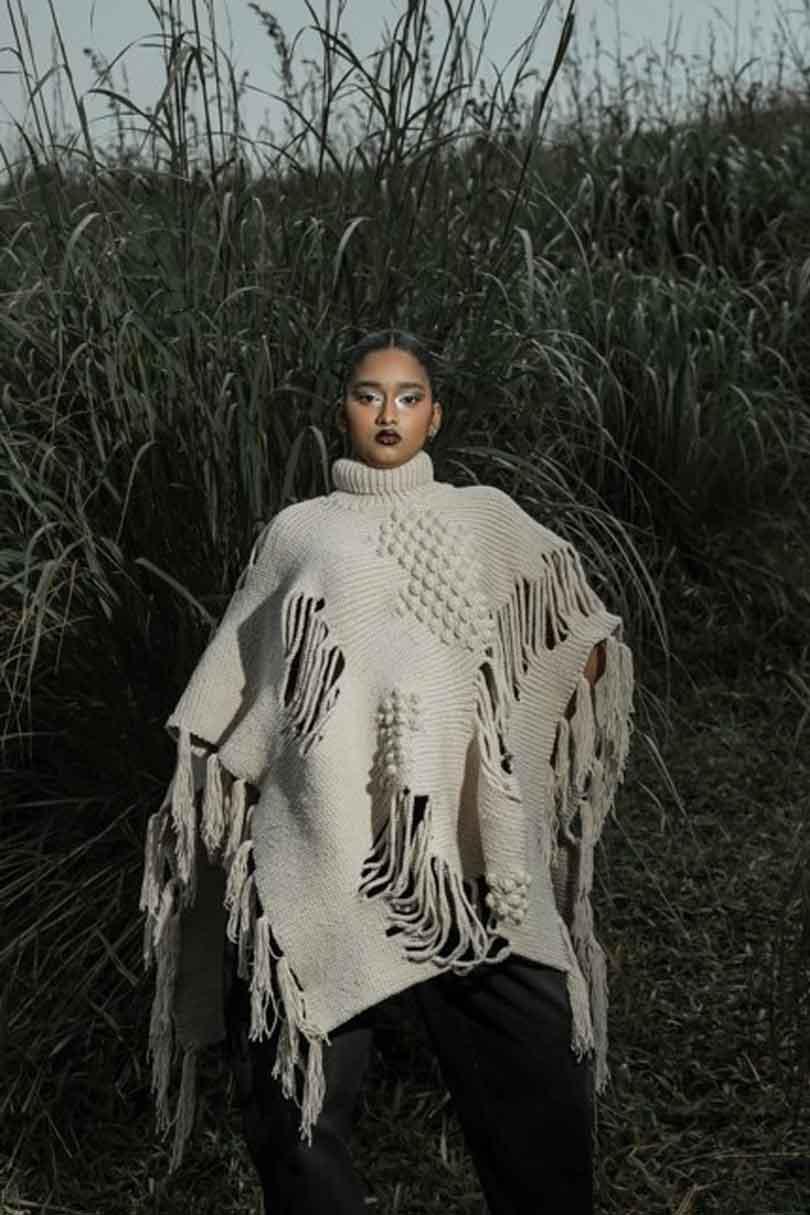
At its core, the collection is centered around preserving individuality, and even as humanity begins again, Yehansa imagines a future where people embrace nature as a new beginning without losing sight of their identity or human essence in the process. It is a hopeful vision rather than a cautionary one, as it aims to focus on what has the ability to be rebuilt, instead of focusing on what has been lost. With this collection, ERID offers us a vision of escape that is also a return and takes us on a journey to a new planet that leads people back to nature, to identity and most importantly, back to ourselves.
HIRUNI
UNBOUND
Does art always have to mean something? For Hiruni, the answer is no. Her debut six-look Spring/Summer collection is built on a concept she calls “Art Without Meaning.” This is a quiet challenge to the idea that creative work must always carry a message or a predetermined purpose to be considered great. The idea behind UNBOUND begins with how we grow. As children, our imagination exists beyond boundaries. A simple drawing does not have to mean anything. The colours used do not need justification, and something can be beautiful simply because it brings joy. However, this outlook tends to be seen less as we grow. This is because the older we grow, the more we seek for the world to make sense. We tend to become obsessed with the search for logic and purpose in everything we do, but in learning to understand the world, we can also slowly forget how to simply experience it.
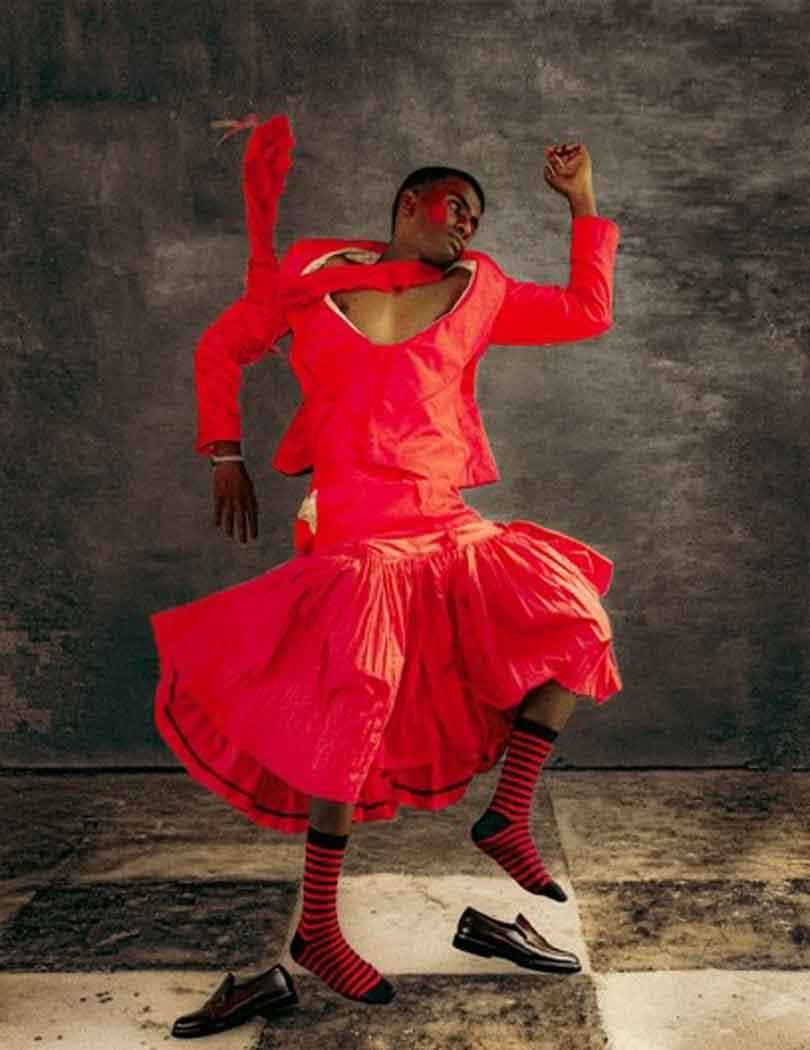
The collection is Hiruni’s bold attempt to reclaim that lost freedom. It reconnects with the whimsy and spontaneity of childhood, treating the art as a space for imagination as opposed to interpretation. The process of creating the collection also reflects this philosophy. It begins with the series of artworks created intuitively, without assigning them any specific narrative. Hiruni just let the work happen without really asking what it should say or mean. The artwork was then translated into textile prints, making the print design the central language of the collection. The visual expression was influenced by the collection’s composition, colours, and movement, which stay open to interpretation rather than just belonging to a singular story.
Across each of the six looks, the prints carry the collection’s spirit. Nothing is explained or fixed, and each garment becomes a canvas where the viewer is free to find whatever they wish the outfit to be, or decide that it is nothing at all. This openness is the heartbeat of UNBOUND. Instead of telling the viewer what to see or what to feel, it leaves that space for their imagination, as they decide what it gets to be. It invites engagement through memory and feeling, encouraging the viewer to momentarily step away from the human instinct to analyse, and as we live in a world where everything around us seems to demand reason, this invitation may feel quietly radical. As a debut, UNBOUND announces Hiruni as a designer who trusts her audience and values instinct over explanation, asking viewers to look at the designs the way they looked at the world around them when they were children. No analysis needed.