WHY DO WE STILL HAVE A COLONIAL MENTALITY?
Why is it that in Sri Lanka, the quality of service sometimes appears to improve the moment the customer speaks with a foreign accent?
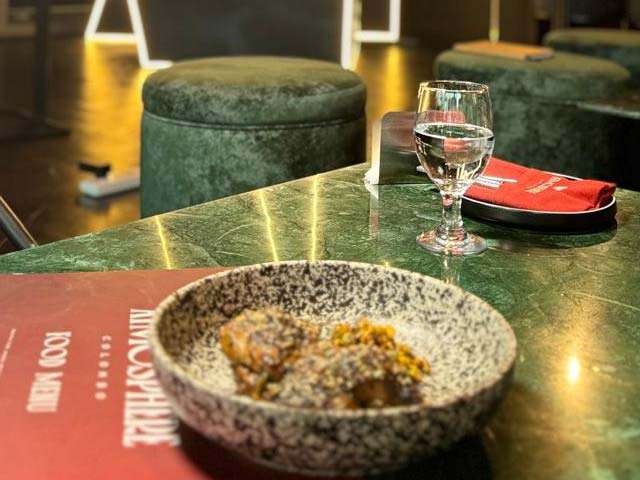
 I found myself asking this question recently after a rather ordinary dinner at an Italian-style pizza restaurant in Colombo. There were three of us, and we were shown to a small table tucked away near the kitchen. A larger table for six was available, but we were told that because there were only three of us, we could not use it. Fair enough. Restaurants need to manage their tables.
There was, however, a foreigner sitting alone at another table for six.
I noticed a smaller table for two in a considerably more pleasant part of the restaurant and asked whether a third chair could be added. I was told that company policy did not permit chairs to be moved around and, besides, three chairs would not fit comfortably.
About half an hour later, another party of three arrived. They were not given the table for six either. But a third chair was added to the very table I had asked for.
I pointed this out to our waiter. His explanation was that this could be done “in an emergency situation”. He also said he had assumed that we would be ordering a lot more food, which would not have fitted on the smaller table.
Perhaps it was an emergency. Perhaps he genuinely had made that assumption. But while all this was being explained to me, the foreign customer continued to occupy a table for six by himself.
Was it discrimination? I cannot say. Was it a double standard? It certainly looked like one.
And perhaps that is where the larger question begins. We often speak about Sri Lanka's colonial mentality as though it means little more than preferring English, admiring Western lifestyles or believing that everything foreign is better. But does it go deeper? Do we believe in effect that the foreigner is somehow more important, more sophisticated, more deserving, or simply more valuable, than the average Sri Lankan?
 We tend to see such examples in our service industry. A tuk-tuk driver may quote one price to a local and another to a foreign tourist, while simultaneously bending over backwards to please the latter because he assumes the foreigner has more money. A restaurant may reserve its best table for the tourist. A hotel may become extraordinarily attentive when it believes the guest has foreign purchasing power. Yet during off-peak periods, when international tourists disappear, it is often the Sri Lankan domestic traveller who keeps the hospitality industry alive. Why, then, should one customer be treated as intrinsically more valuable than another?
The irony is that Sri Lanka desperately wants to be recognised as a world-class tourism destination. We advertise our hospitality, our warmth and our famous Sri Lankan smile. But genuine hospitality cannot mean being deferential to foreigners while treating locals as an inconvenience. Hospitality is not servility. It is respect, and that respect should not depend on nationality.
This becomes even more uncomfortable when we consider reports about foreign-operated businesses and tourist enclaves in parts of the country. Recent reporting has raised concerns about alleged visa violations, unregulated businesses and establishments catering exclusively to Israeli visitors in places such as Arugam Bay, while authorities have also faced questions about inconsistent enforcement. These allegations must of course be distinguished from the many Israeli tourists and legitimate businesses operating within Sri Lankan law. But the broader principle remains important: if rules exist, they must apply consistently, whether the person involved is Sri Lankan, Israeli, British, Indian or Australian. A country that bends its standards because it wants foreign currency is not demonstrating hospitality. It is demonstrating insecurity.
And perhaps that insecurity has historical roots. British colonialism did not merely change our economy and administration. It altered perceptions of what was valuable. English education created an elite with access to power, while local systems and practices were increasingly dismissed as backward. Over time, admiration for Western norms became intertwined with social status. The problem is not that we learned from the West. Every society learns from others. Sri Lanka itself has always been a crossroads of cultures, peoples and ideas. Our history is a mixture, not a story of purity. The problem is when learning becomes unquestioning imitation and difference becomes a measure of worth.
We see the same mentality in our workplaces. English fluency can be mistaken for intelligence. A foreign qualification can be valued above a local one. A foreign accent can command greater attention than local expertise. We sometimes behave as though anything imported carries a higher price, and consequently a higher value.
But there is another side to this problem: service standards.
On another occasion, I went for lunch at a well-known café in Colombo. The waiter who came to take my order appeared to have been drinking. His breath gave it away and his speech was noticeably slurred. Another waiter brought water to the table and simply plonked the glasses down. When I complained to the supervisor, the transformation was remarkable. The same waiter who had handled the glasses without care later returned with the dishes and placed them delicately in front of me.
The supervisor clearly understood hospitality. His staff, at least on that occasion, did not. I received an apology, but the episode left me wondering how many businesses have policies without culture, procedures without pride, and training without standards.
This is precisely where education matters. In an earlier discussion of corporate ethics, I argued that businesses have responsibilities beyond making money: they are custodians of trust, and when service quality declines while prices rise, the gap between legality and legitimacy becomes painfully clear. Good service is not created by a laminated manual instructing employees how to hold a glass. It comes from understanding why the glass should be handled with care in the first place.
Perhaps, then, the question is not simply whether Sri Lanka still has a colonial mentality. It is whether we have ever fully replaced it with something better. We should be able to welcome foreigners without worshipping them, learn from other countries without feeling inferior to them, and value tourism without undervaluing our own people. We should demand the same standards of courtesy from a waiter serving a Sri Lankan family as from one serving a foreign tourist. We should enforce the same laws on everyone. And we should teach our young people that professionalism is not about sounding foreign, wearing a particular uniform or working in an expensive establishment. It is about competence, integrity, respect and pride in doing a job properly.
Colonialism ended in 1948. But perhaps some of its most enduring effects are not found in our laws or buildings. They live in the assumptions we make about who matters. Until we stop believing that the foreigner deserves better simply because he is foreign, we have not really overcome the colonial mentality. We have merely changed its uniform.