HOW RATIONAL IS OUR THINKING?

BY SHALEEKA JAYALATH
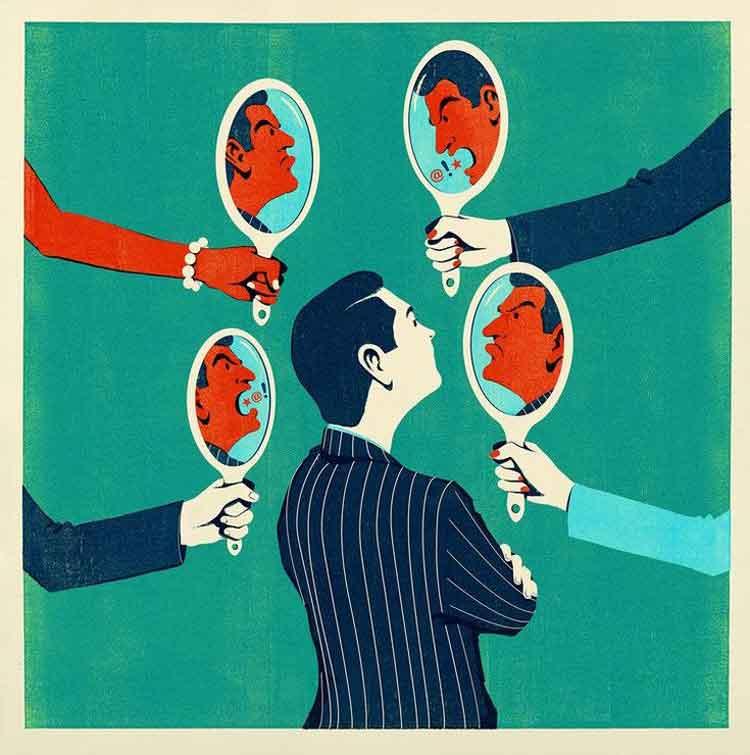
We like to believe that we are rational beings. We weigh the evidence, consider the alternatives, calculate the risks and make decisions based on what we know. We tell ourselves that reason, rather than emotion, guides our choices. Yet behavioural decision theory tells us that the human mind is considerably less rational than we would like to believe. The way we make decisions is shaped not only by facts and probabilities, but by experience, perception, emotion, memory and the way information is presented to us. In other words, we rarely see a situation exactly as it is. We see it through the lens of who we are.
Behavioural decision theory draws upon ideas from several disciplines, including economics, psychology and statistics. At its heart are two rather different ways of understanding uncertainty. Bayesian statistics teaches us to update what we believe when new evidence becomes available, using conditional probability to ask how likely something is given what we already know. Economics, meanwhile, gives us the concept of expected utility: the idea that a rational decision should consider not merely the probability of an outcome, but also the value or consequence attached to that outcome. Put the two together and we have a useful framework for thinking about decisions. The problem is that human beings do not always behave according to the framework.
Consider the fear of flying. In 2025, commercial airlines operated approximately 38.7 million flights worldwide, yet IATA recorded only eight fatal accidents. Its five-year data show approximately one fatal accident for every 5.6 million flights. On American roads alone, meanwhile, 39,254 people died in traffic crashes in 2024. The numbers are not directly comparable because the modes of transport involve vastly different numbers of journeys and distances travelled, but they illustrate something important: our perception of risk is not necessarily proportional to statistical risk. Why, then, does the aeroplane crash occupy such a disproportionate place in our imagination? Because probability is not the only thing influencing the human mind. We are particularly responsive to events that are vivid, dramatic and easily recalled. A plane crash may dominate international headlines for days, while hundreds of road deaths can occur without becoming a national story. What is more visible consequently feels more probable. We mistake availability for likelihood, and thus individuals are considerably more anxious about boarding an aircraft than getting into a car, despite the fact that travelling by road presents a much greater statistical risk.
The same problem appears in much simpler decisions. Is a glass half full or half empty? The quantity of water has not changed simply because we have described it differently. Yet the two descriptions do not produce the same psychological response. One suggests abundance; the other suggests absence. Statistically, if the glass is exactly half full, there is no difference in the quantity represented by the two statements. Psychologically, however, there can be a considerable difference in the way we respond to them. The fact has remained constant. The perspective has changed.
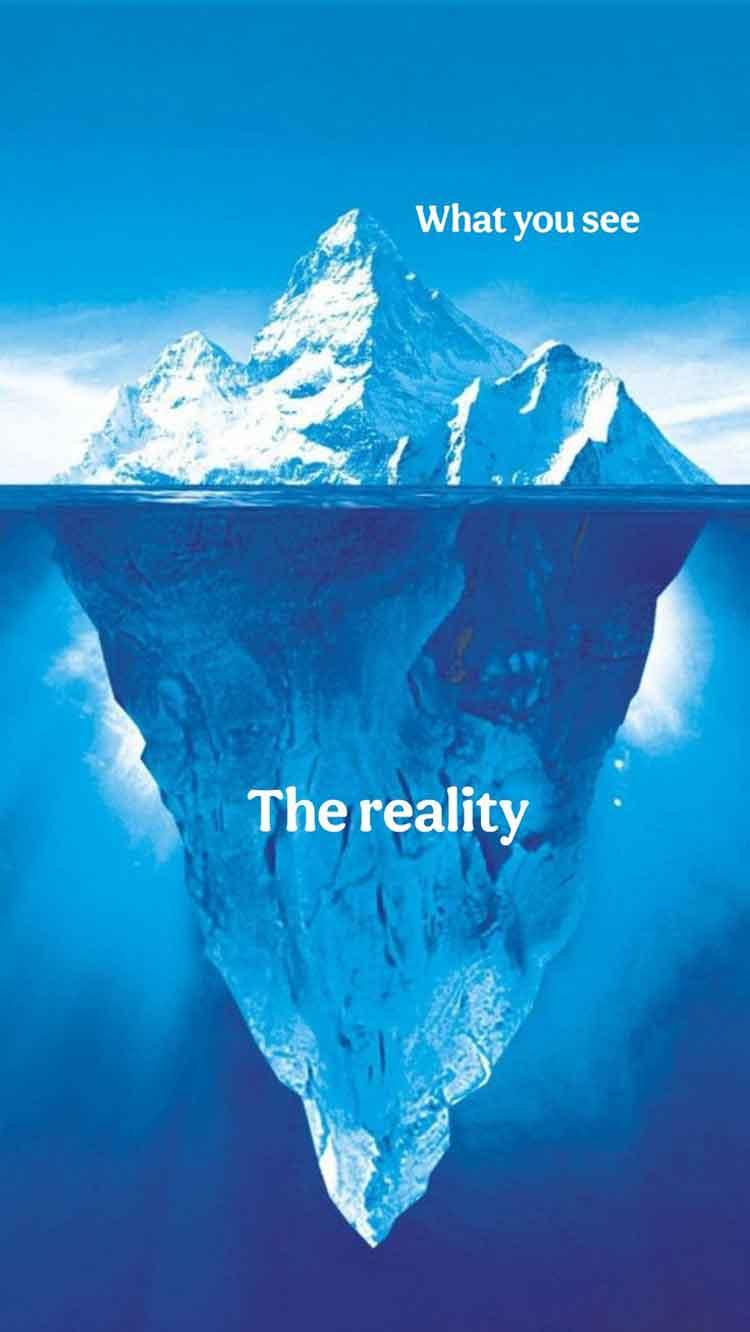
This is where our supposedly rational thinking becomes interesting. We do not approach decisions as blank mathematical calculators. We bring our histories with us. A child who has fallen from a bicycle may grow into an adult who is unusually cautious about cycling. Someone who has lost money in an investment may become excessively conservative about financial risk. A person who has experienced betrayal may interpret an innocent action as suspicious. None of these reactions is necessarily irrational in itself. They are understandable responses to previous experience. The difficulty arises when yesterday's experience is allowed to determine today's probability without sufficient evidence.
Our individual perspectives therefore become invisible influences on our decisions. We may think we are judging the world when, in reality, we are often judging the world as we have learned to experience it. The tadpole knows only water. The frog, having experienced both water and land, possesses a different frame of reference. Neither is necessarily wrong; their realities have simply been shaped by different experiences.
This matters enormously in education. We teach children facts, formulas and theories, but how often do we teach them to examine the assumptions behind their own thinking? A student who believes that he is “bad at mathematics” may have accumulated a series of small failures that have become a personal probability: I will get this wrong. A child who believes that another student is unfriendly may have interpreted one incident through an already established expectation. In both cases, the conclusion may feel like fact when it is actually an interpretation.
So how do we become more rational thinkers? The answer is not to eliminate emotion or experience. That would be neither possible nor desirable. Instead, we must become better at recognising when they are influencing our judgement. Before making an important decision, we can ask some deceptively simple questions: What do I actually know? What am I assuming? What evidence would change my mind? Am I judging probability, or merely remembering something vividly? Am I considering the consequences of each outcome, or reacting to the outcome I fear most?
Perhaps most importantly, we need to learn to distinguish between fact and perspective. The artist, the philosopher and the physicist may look at black and white and describe them differently because each is using a different framework. The mistake is not necessarily that one person sees incorrectly. The mistake is assuming that our particular way of seeing is the only possible way of seeing.
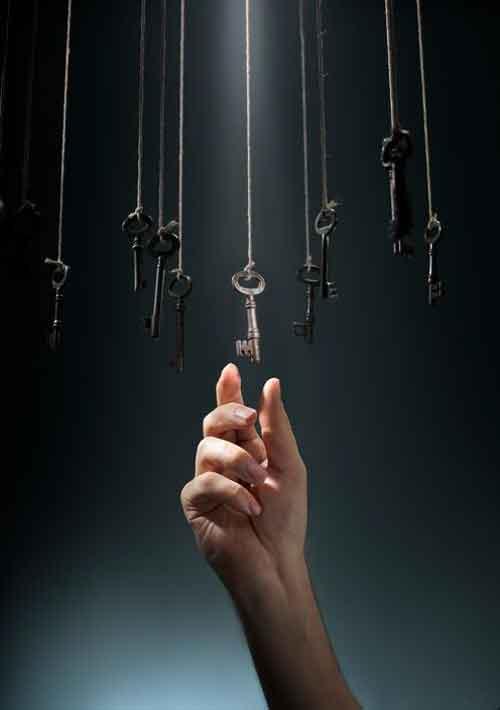
A rational mind, therefore, is not a mind without perspective. It is a mind sufficiently aware of its own perspective to question it. We cannot step entirely outside our experiences, prejudices and emotions, but we can learn to recognise them. We can slow down before reaching conclusions, seek evidence that challenges rather than merely confirms what we already believe, and consciously consider how another person might interpret the same situation.
Perhaps true rationality is not the absence of bias but the willingness to examine our biases. After all, the world does not change simply because we look at it differently. What changes is our understanding of it. And sometimes the most irrational thing we can do is to assume that the way we see the world is the way the world actually is.