ARE WE RIPPING OFF THE TOURIST?
BY SHALEEKA JAYALATH
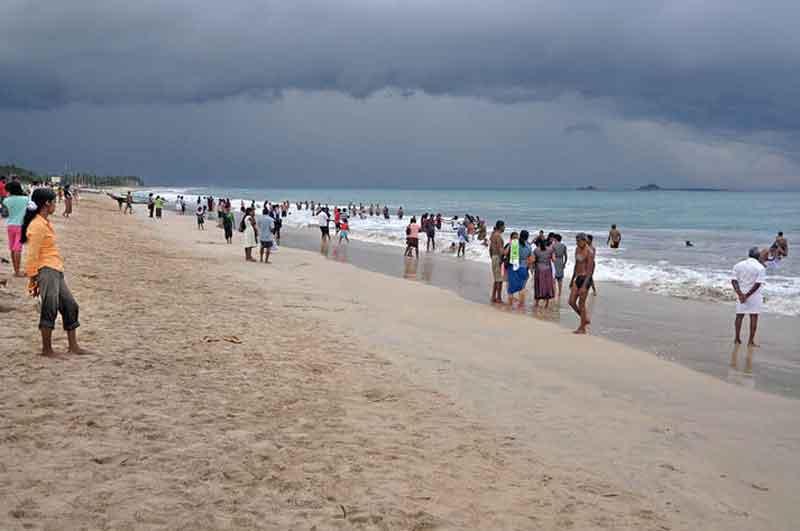
The first time I went to Trincomalee just after the end of the civil war, I went with a group of school children. The A9 had only recently reopened and there was a sense of curiosity about what lay beyond the familiar. Trincomalee aka Trinco, for many of the children (as well as myself), was somewhere they had heard about but never experienced due to the civil war. There was little by way of choice then. If you wanted something approaching international standards of accommodation, there was essentially only one obvious place to stay.
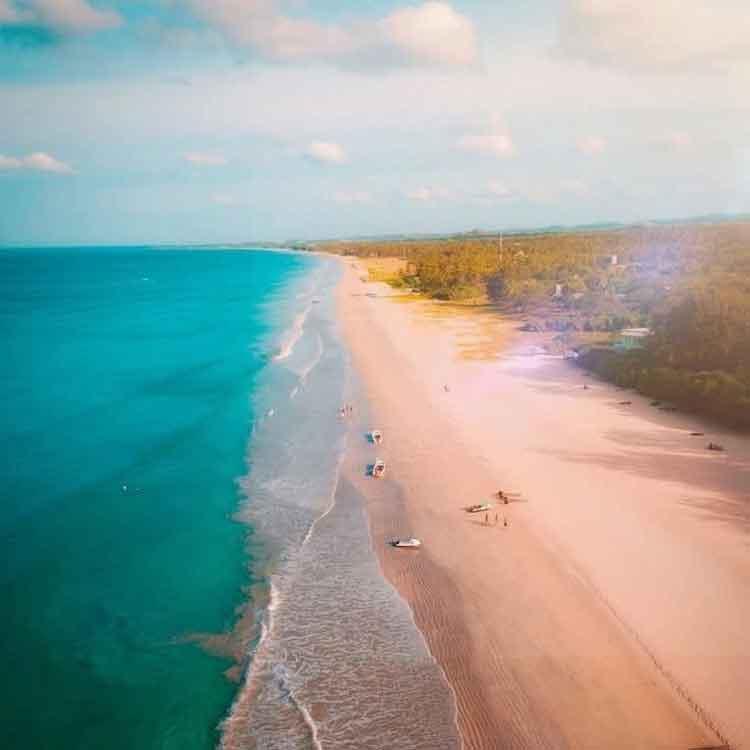
In terms of sightseeing, there was the beautiful Nilaveli Beach and Marble Beach, Koneswaram Temple and, of course, the sea. Beyond that, there was not a great deal to do except to enjoy the hotel and the seafood. I clearly recall the hotel staff. They were local boys, warm and eager to please, although communication was sometimes a challenge, their English not being particularly fluent. Yet somehow it did not matter. They knew hospitality. They smiled. They tried. They understood that the person in front of them was a guest. Fast forward about fifteen years and I found myself in Trincomalee once again on a school trip, with students visiting for the first time. What a difference.
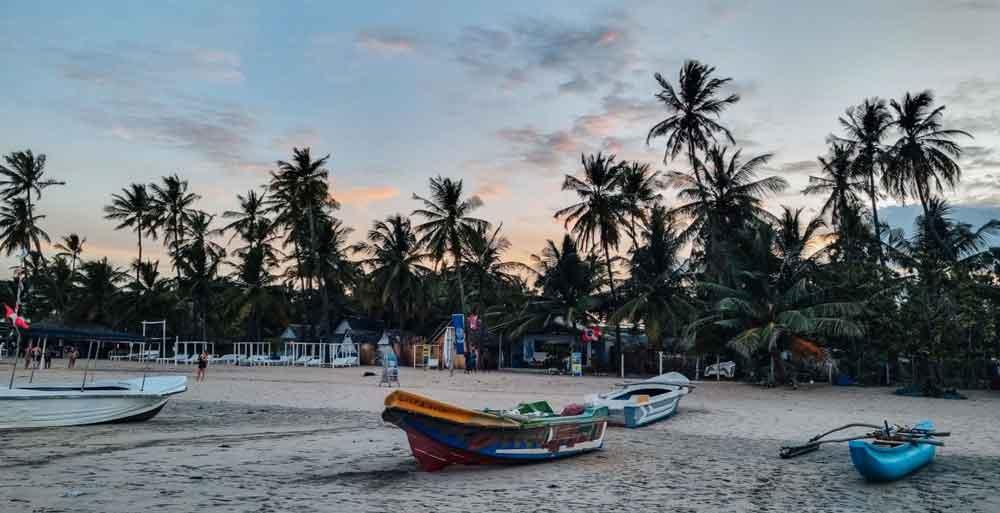
The same established hotel remains one of the principal options if you are looking for five-star accommodation, but the landscape around it has changed dramatically. There are now guesthouses, homestays, cabanas, cafés and restaurants. English is widely spoken. Getting around is considerably easier. There are tuk-tuks everywhere and PickMe has made its way into Trinco. More importantly, there is now an entire tourism ecosystem that barely existed when I first went. You can go snorkelling or scuba diving.
You can take a boat to Pigeon Island. There are whale- and dolphin-watching excursions. There are people who have clearly invested in proper boats, equipment and training. There is a growing understanding that tourism is not simply about providing a bed and a meal; it is about creating an experience. And, remarkably, the hospitality itself seems largely unchanged. There is something refreshing about the way people interact with visitors in Trinco. It has not yet acquired quite the slick, sometimes transactional character that one encounters in places such as present-day Ella or Unawatuna. There remains a simplicity in the interaction with the local community.
People seem genuinely curious about visitors rather than simply seeing them as customers. That, in itself, is something worth preserving. Trincomalee is beginning to look like a tourist destination rather than simply a beautiful place tourists happen to visit. There are cafés serving pancakes and fruit platters. Restaurants have menus designed for an increasingly international clientele. The local economy is responding to demand, and there is nothing inherently wrong with that. But then you walk into one of the fashionable little roadside cafés first thing in the morning, desperately in need of a proper hot coffee to kickstart your morning, and discover that there is no cappuccino (or anything approaching it!) on the menu.
There is an iced latte. Only an iced latte. I asked whether they could make a hot cappuccino or even a hot latte. No, I was told. They only serve what is on the menu. Now, perhaps I am being unreasonable, but I found this rather extraordinary. Behind the counter was a kettle. One assumes, therefore, that hot water was not an entirely foreign concept. And if the establishment could make an iced latte, it presumably had coffee. It also offered hot Ceylon tea. So why could it not make a hot coffee? I even wondered whether a simple hot brewed local coffee might have been a possibility. But apparently not. What made the conversation even more interesting was the explanation from the server: they did not really cater to locals.
There it was. The menu was filled with the sort of items that have become shorthand for the modern tourist café - avocado toast, croissants, smoothie bowls, and various other carefully presented offerings. It looked, in every way, like a modern Sri Lankan café, down to the Marshall speakers and jazz music. But apparently the local customer was not its market. And the prices? Colombo prices. Perhaps, more importantly, this raises a much bigger question: are we beginning to confuse tourism with an opportunity to charge extra from foreigners simply because they are foreigners? For years we have quite rightly complained about our colonial mentality (myself included) and the way Sri Lankans can sometimes be treated differently from foreigners.
A foreign passport, a foreign accent or simply the assumption that someone has more money can suddenly result in better service, better tables and a different attitude. But there is another side to this story. What happens when the pendulum swings too far in the other direction and the foreign visitor becomes little more than a walking wallet? There is a fine line between charging a tourist what the market will bear and taking advantage of the fact that the tourist does not know what things should cost. A visitor may pay twice the local price for something because they have no frame of reference. They may pay an inflated fare because they do not know the route. They may accept an inferior service because they assume that this is simply how things are done here. And perhaps the most damaging part is that they may not complain. They simply leave. And they tell someone.
But there is another question we should be asking as Trinco develops. In all the excitement about its beaches, diving, snorkelling, and whale watching, where are we honouring the world's largest natural harbour? Where is the story of Trincomalee itself? This is not simply another beautiful stretch of Sri Lankan coastline. Trincomalee's natural harbour has been of immense strategic importance for centuries. The area has been contested, occupied and fought over by different powers, including European colonial powers, while also carrying layers of local political, religious and cultural history. Do we ourselves fully understand the extraordinary value of the land on which we live? And if we do not understand it, how can we communicate that pride to the visitor? A tourist should not leave Trincomalee knowing only that Pigeon Island has lovely coral, the sea is warm and there are cafés that serve avocado toast. Rather, they should leave knowing that they have been somewhere extraordinary.
That requires more than putting up a sign or adding a paragraph to a tourist brochure. It requires the people who live there to understand the story of their own home. It requires guides who can tell that story with knowledge and pride. It requires businesses to recognise that what they are selling is not simply a room, a meal or a boat ride. They are selling a place. And until we learn to value the place ourselves, Trincomalee risks becoming simply another version of Weligama, Hiriketiya or Arugam Bay - beautiful, increasingly commercialised, and increasingly interchangeable. Tourism is not built only on beaches, wildlife, ancient temples and spectacular sunsets. It is built on identity. It is built on trust. And it is built on the visitor feeling that they have encountered something they cannot find anywhere else. There is nothing wrong with making money from tourism.
In fact, there is every reason to do so. Tourism provides employment, creates businesses and brings money into communities that desperately need economic opportunities. But the answer cannot simply be: because we can. And perhaps we should also rethink what we mean by the word ‘tourist’. Why should a tourist necessarily have to be foreign? The Sri Lankan family that drives up from Colombo for a long weekend is a tourist. The group of young people travelling from Kandy is a tourist. The family from Jaffna coming south for the first time is a tourist. They may not have dollars in their pockets, but they are still customers, still visitors and still ambassadors for the destination when they return home. If we build an industry that caters exclusively to the foreign visitor, we are not building tourism. We are building a parallel economy.
There is no reason why a café cannot serve avocado toast and pancakes alongside a good cup of local brew. There is no reason why it cannot offer an excellent iced latte to a foreign visitor and an equally good cappuccino to a local family. There is no reason why an establishment cannot be international in its standards while remaining rooted in its own country. In fact, that may be precisely what authentic hospitality should look like. My complaint about the missing cappuccino was, on the surface, rather trivial. But it was not really about the coffee at all. It was about a business telling me, quite openly, that I was not its customer. And that seems a strange philosophy for an industry whose very existence depends on making people feel welcome.
If we invite people to experience our country, we cannot treat their unfamiliarity as permission to overcharge them, underdeliver or provide something that falls short of what we promised. But neither should we make our own people feel that the best experiences in their own country are reserved for foreigners. The tourist who arrives in Sri Lanka is not simply a source of foreign currency. And neither is the Sri Lankan tourist a secondclass customer. Both are guests. Hospitality, after all, is not the art of extracting the maximum amount of money from a visitor. Rather, it is the art of making people want to come back. And, more importantly, making them want to tell others to come too.