WHEN DID WE STOP TEACHING CHILDREN TO MAKE DECISIONS?


There is a curious contradiction in modern parenting. We spend enormous amounts of time preparing our children for adulthood, yet often seem determined to prevent them from doing the very thing adulthood demands of them: making decisions.
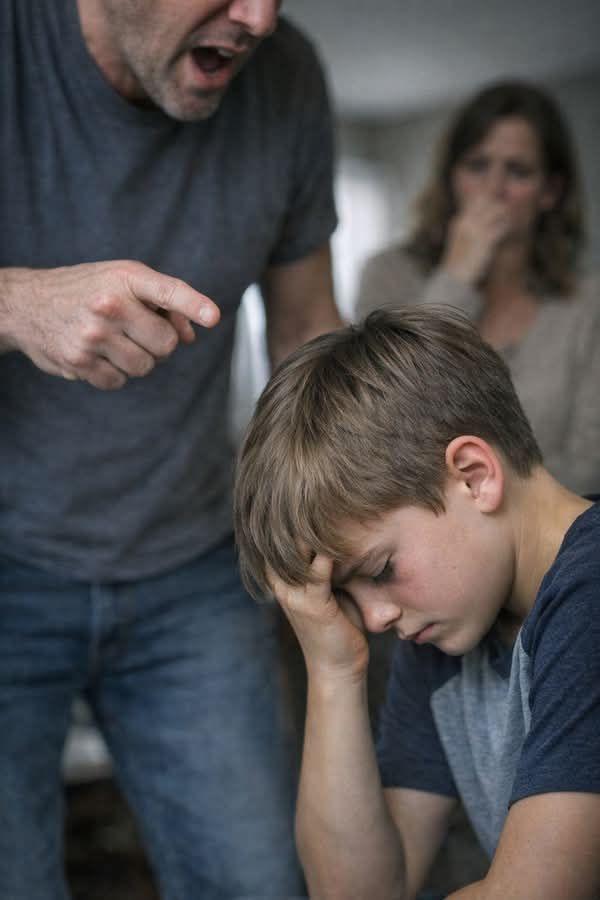 We decide what they study, where they study, what extracurricular activities they pursue, when they study, what they eat and, increasingly, what careers they should aspire to. Even university choices, which will shape the course of their lives, are frequently made with considerable parental interference. And then, having spent eighteen years making decisions on their behalf, we wonder why they struggle to make decisions for themselves.
When exactly did we begin confusing parenting with the management of another human being? Perhaps the answer lies partly in our obsession with appearances. For some parents, a child's failure is not simply an unfortunate experience for the child; it becomes a reflection of the parent's own competence. A poor examination result, an unpopular choice or a failed attempt at something new is perceived almost as a personal indictment. The natural response is to tighten the reins. If we control every variable, surely we can control the outcome. The child, meanwhile, is placed in a virtual straitjacket, with little room to exercise judgement, make mistakes or discover what it means to take responsibility for a decision.
But how does a child learn to make decisions unless he or she is actually permitted to make them? I have known teenagers who have sought permission to telephone their fathers from school to ask whether they may drink Coca-Cola. Yes, we know that excessive consumption of sugary drinks is unhealthy. But is the occasional soft drink really the catastrophe we imagine it to be? More importantly, what have we taught a teenager who cannot make such a trivial decision without seeking parental approval? The child may have avoided a few teaspoons of sugar, but at what cost? The embarrassment of being unable to exercise the simplest judgement in front of one's peers is hardly a lesson in independence.
The issue is not whether children should be allowed to do whatever they please. It is whether we can distinguish between decisions that genuinely require adult intervention and those that provide opportunities for children to develop their own judgement.
Consider something as ordinary as walking to the supermarket. Of course, there are dangers. Traffic accidents, strangers and the possibility of getting lost are legitimate concerns. But does the answer lie in keeping children indoors indefinitely, or in teaching them how to cross a road, recognise danger, ask for help and navigate their surroundings safely? If we never allow a child to cross a road independently, when exactly do we expect that child to learn?
Fear is sometimes necessary. Recklessness is not courage, and children need to understand consequences. Yet there is a difference between teaching a child to recognise a risk and teaching that child to be afraid of the world. A child who climbs a tree does not necessarily need an anxious chorus of warnings about every possible injury. Sometimes, what the child needs is guidance about where to place a foot, when to stop and how to assess whether the next branch can bear their weight. Safety is a skill to be learnt, not merely a restriction to be imposed.
And the consequences of excessive protection extend far beyond childhood adventures. Children who are constantly rescued from uncertainty may grow into adults who are terrified of making the wrong choice. They hesitate to try something unfamiliar, avoid taking reasonable risks and seek reassurance long after they should have developed the confidence to act independently. A fear of failure becomes a fear of deciding at all. The irony is that we, as parents, often create the very helplessness we later complain about in our children. We make their decisions for them, remove every obstacle from their path, and then wonder why they lack the confidence to navigate the world independently. We have mistaken obedience for maturity and dependence for good parenting.
There is, however, an equally misguided approach at the other extreme: allowing children to make every decision in the name of respecting their autonomy. A child who is permitted to choose their own secondary school, for instance, may not yet possess the maturity to appreciate the long-term implications of that choice. If parents recognise that a decision is likely to be detrimental but surrender simply because they do not wish to upset their child, they have confused indulgence with empowerment. The child may be happy today, but it is the child who must live with the consequences tomorrow.
Autonomy does not mean abandoning responsibility. Nor does it mean that adults should dictate every choice. It means gradually transferring responsibility as a child develops the maturity to exercise it. Parents must know when to guide, when to set boundaries and when to step aside.
This is particularly important when it comes to education. Parents sometimes determine which subjects their children should pursue for O-Level and A-Level examinations, often based on their own past subject choices, ambitions, worldviews, perceptions of prestige, or assumptions about future employment. When the child subsequently struggles, the response may be to add tuition, impose stricter schedules, or devise yet another strategy to improve performance. But have we stopped to ask whether the child ever wanted that particular academic path in the first place? We cannot expect children to take ownership of their education when they have had so little ownership of the decisions that shaped it.
Those of us who remember You've Got Mail, the 1998 film starring Tom Hanks and Meg Ryan, may recall Hanks's character explaining that places such as Starbucks help people make decisions. It was a humorous observation about the bewildering number of choices available to consumers. Yet there is an uncomfortable truth lurking beneath the joke. If we have not learnt to make decisions as children, perhaps we really do need a coffee shop to teach us how to choose between a cappuccino and a latte (and whipped cream and hazelnut syrup as add-ons!).
But life offers rather more consequential choices than coffee. How will these young people choose their friends? How will they navigate university, resolve disagreements with colleagues, decide when to leave a job, or recognise when a relationship is unhealthy? Who will hold their hands when they are no longer living at home, when the school principal cannot be telephoned, and when every difficult decision cannot be referred to a parent? The world will not wait for them to acquire, at twenty-five, the judgement they were never allowed to develop at fifteen.

No one said parenting was easy. There was no perfect Parenting 101 manual handed to us when our children were born. But surely common sense tells us that neither extreme is desirable. Children should neither be permitted to do everything they please nor be denied the opportunity to make decisions for themselves.
The answer is to begin small. Let them choose, explain their reasoning, experience proportionate consequences, and reflect on what went wrong. Let them make mistakes that are manageable at ten, rather than catastrophic at twenty-five. When they make a poor decision, resist the temptation to say, “I told you so.” Ask instead what they might do differently next time.
Our responsibility as parents and educators is not to ensure that our children never make a wrong decision. It is to equip them with the judgement to recognise one, the courage to learn from it and the confidence to make another. Protecting a child from every mistake may keep that child safe for a while. But preparing that child to make decisions may very well be what keeps them safe for life.