The Zone of Peace We Forgot

By: Damintha Gunasekera
Fifty-five years ago, a Sri Lankan prime minister stood before the world and asked it to keep our ocean calm. This year, a warship was torpedoed and sunk nineteen miles off Galle. Somewhere between those two moments, we lost the thread of our own best idea.
In 1971, Sirimavo Bandaranaike, the world's first woman head of government, tabled a resolution at the United Nations General Assembly declaring the Indian Ocean a Zone of Peace. Resolution 2832 called on the great powers to halt the build-up of their military presence in these waters and to dismantle the bases they had built in the service of their rivalries. She had first raised the idea a year earlier at the non-aligned summit in Lusaka. The immediate provocation was the American base rising on Diego Garcia, but the vision was larger than any single base. It was that a small island at the centre of the world's busiest sea lanes had an interest, and a right, in keeping those waters free of other people's wars.
It was an extraordinary act of ambition for a young, poor country. And for a time, it carried real moral weight. What is striking, reading it back today, is not how idealistic it sounds. It is how practical it was, and how completely we have let it lapse.
An ocean that is no longer at peace
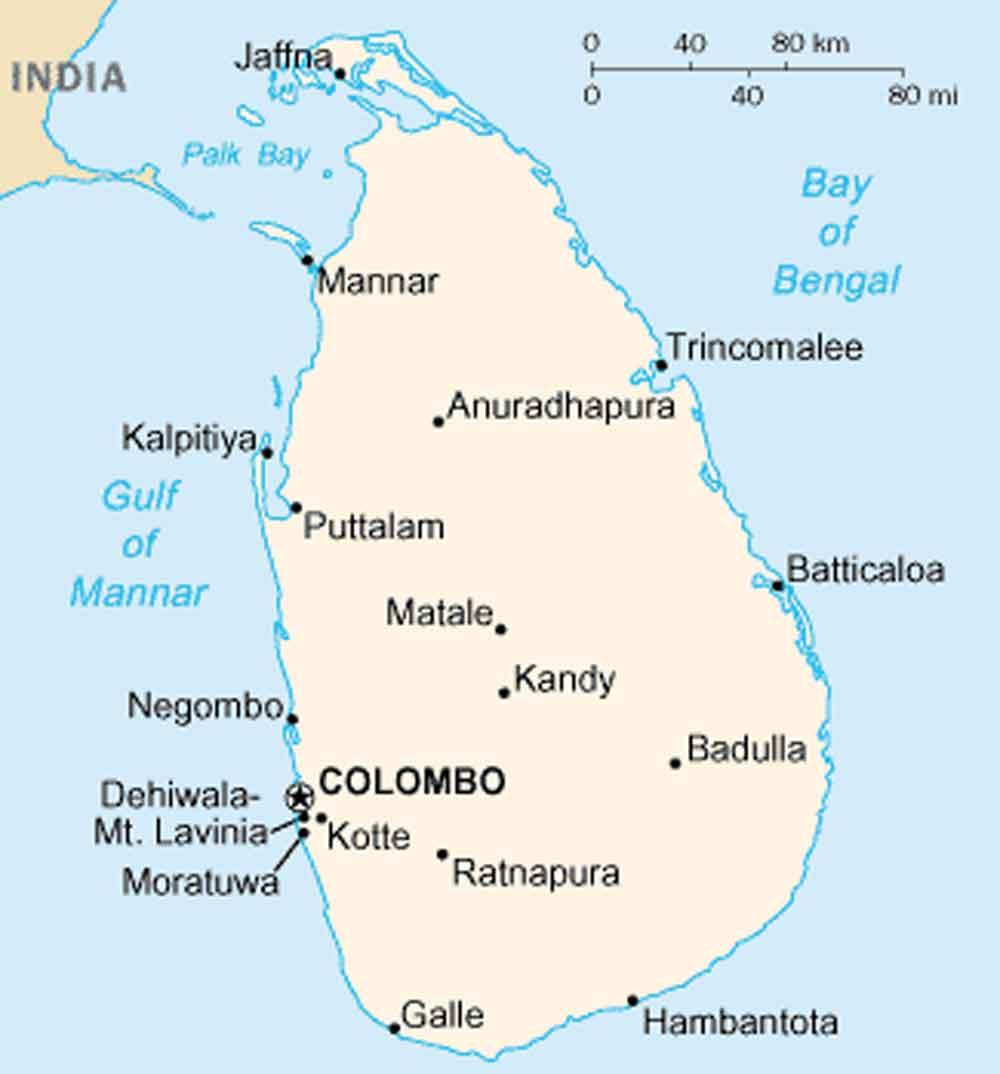
This year, during the war between the United States and Iran, an American submarine sank an Iranian frigate inside Sri Lanka's exclusive economic zone, within sight of our southern coast, killing most of those aboard. Under the Law of the Sea, that zone is not our sovereign territory, but it carries our jurisdiction and our responsibilities, and so it was our navy that went out to the wreck, pulled survivors from the water, and treated them in a hospital in Galle. A neutral country, doing its lawful duty, in the middle of someone else's war.
That is the paradox of our position in a single scene. We claim no side, yet the consequences of great-power conflict wash up in our waters and become our problem to manage. And the same body of law that sent our sailors out to rescue Iranian survivors, the United Nations Convention on the Law of the Sea, is the framework we have failed to translate into clear rules of our own for who may enter these waters and what they may do there.
The Dena was one incident, and I do not want to build too much on a single tragedy. But it is a marker of something larger. Nearly a hundred thousand ships cross the Indian Ocean every year. These waters carry roughly a third of global container traffic and a large share of the world's oil. They are, increasingly, crowded with the warships, submarines and surveillance vessels of powers that do not live here: American, Chinese, Indian, and others. The ocean Sirimavo wanted kept free of great-power rivalry has become one of its main arenas.
For a nation whose entire economy depends on the free and peaceful movement of goods across these lanes, that is not a distant worry. It is an economic threat of the first order.
The vessel question, and our two-year silence
Nowhere is our loss of direction clearer than in something that sounds mundane: the question of which foreign research vessels may enter our waters.
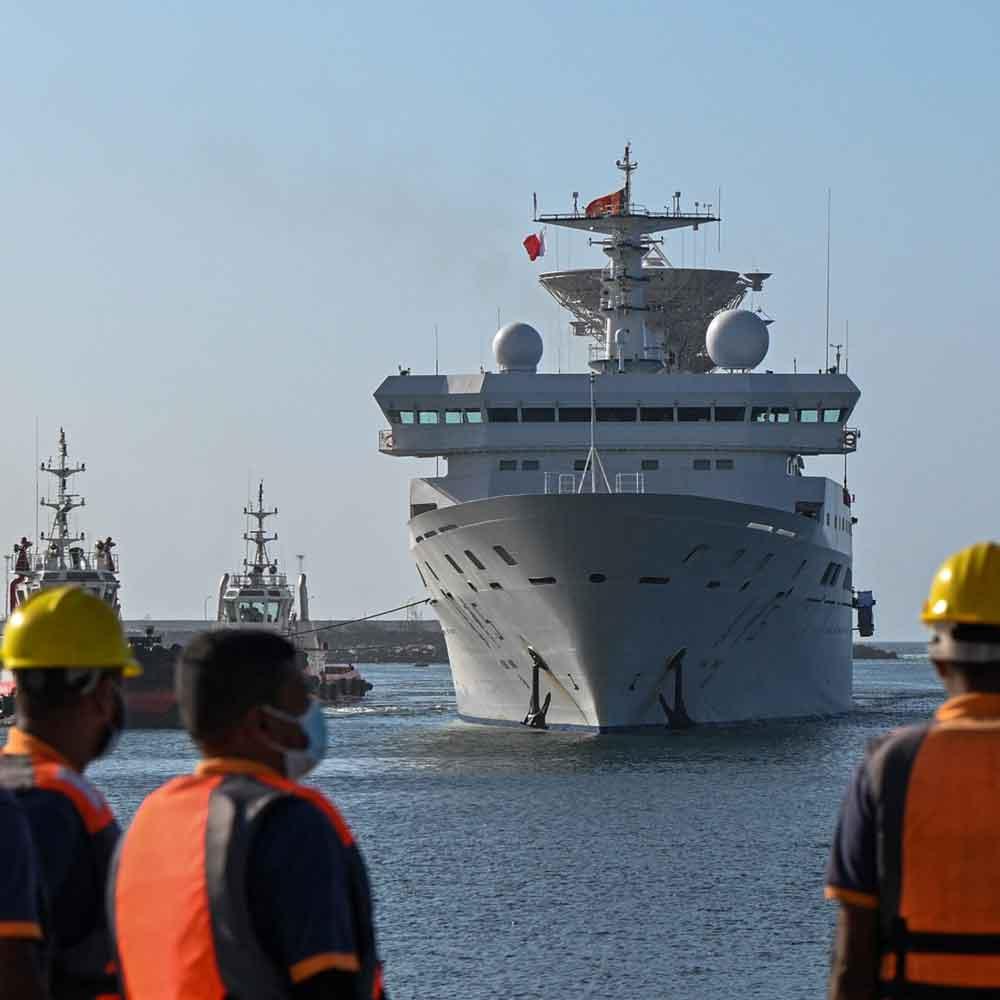
The story is by now familiar. In 2022 the previous government allowed a Chinese ship, widely reported to be capable of tracking satellites and missiles, to dock at Hambantota, over strong objections from India. In 2023 another Chinese research ship called at Colombo. Under pressure from India and the United States, Sri Lanka then imposed a one-year moratorium on all foreign research vessels, which China read, not unreasonably, as a decision taken in Delhi rather than Colombo. That moratorium lapsed at the start of 2025. In its place, we were promised a new Standard Operating Procedure, a clear set of rules for who may come and under what conditions.
We are still waiting. As of this April, the Foreign Minister said the procedure had been finalised and handed to the Attorney General's Department and would be ready in two months. It has been drifting between committees and desks for over two years now, across two governments. A country that once wrote the rulebook for great-power conduct in an entire ocean cannot, apparently, write a rulebook for its own harbours.
This paralysis is not neutrality. It is the appearance of neutrality while the actual decisions get made by whoever pushes hardest in a given month. And that is precisely the opposite of what Sirimavo intended.
What genuine neutrality would require
Let me be clear about India's concerns, because they are legitimate and pretending otherwise helps no one. Some of these so-called research vessels are dual-use ships, capable of gathering intelligence near sensitive Indian installations. A country that shares our closest waters and underwrites much of our recovery has every right to raise the alarm. This is not paranoia on Delhi's part. It is a real security interest, and a serious Sri Lankan foreign policy takes it seriously.
But the answer to a real concern is a real rule, not a quiet, deniable bias. Genuine neutrality would mean a single, transparent Standard Operating Procedure applied to every flag without exception: American, Indian, Chinese alike. Transponders on at all times. No data collection within our exclusive economic zone. Advance notification and the same published criteria for everyone. A framework like that would be more open than today's de facto freeze, and, crucially, more reassuring to India than the ambiguity that lets each docking become a fresh crisis. Rules protect the small state. Discretion just exposes us to pressure.
And here is the part worth remembering when this argument gets caricatured as tilting one way. India itself has invoked the Zone of Peace when it suited Delhi's interests. In 2014, India's own National Security Adviser urged the region to return to Sirimavo's 1971 resolution. When a Chinese submarine docked in Colombo, it was India that reached for the language of a peaceful, demilitarized ocean. The principle is not anti-Indian or pro-Chinese. It is a standard that every power in these waters has at one time or another, found convenient. A small country's job is to hold them all to it consistently, rather than only when one neighbour is watching.
Our idea, worth reclaiming
There is a reason this matters beyond ship schedules. Sri Lanka has very little hard power. What we have always had, at our best, is the authority of a good idea and the credibility to hold larger powers to it. The Zone of Peace was that. It was the assertion that the small state at the centre of the ocean has a legitimate voice in how that ocean is used, and that peace and open navigation are not favours granted by the strong, but rights shared by all.
We are approaching the resolution's anniversary this December. It would be a fitting moment not for a commemorative speech, but for something harder and more useful: to finish the procedure that has languished for two years, to state plainly the rules under which any vessel may enter our waters, and to reclaim, in a modest and practical way, the principle a Sri Lankan leader gave the world half a century ago. The ocean will not stay peaceful on its own, and no one will keep it peaceful for us. The least we can do is remember that we were once the country that asked.