WHO FAILED KAVANTISSA?
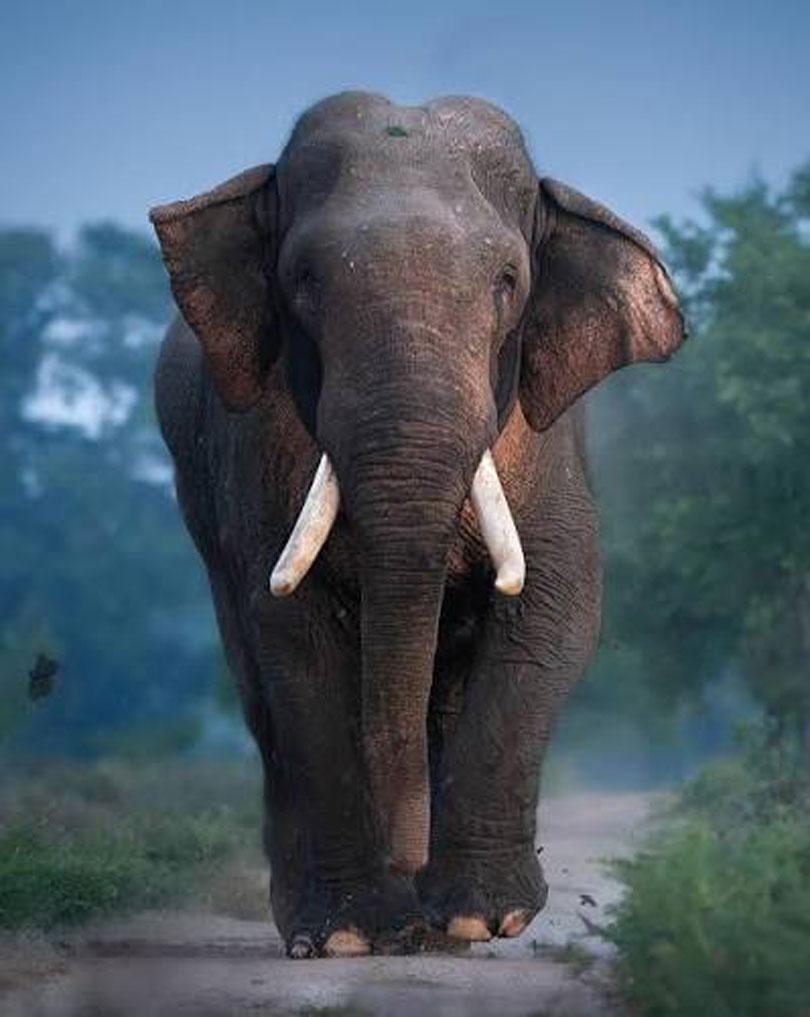
Kavantissa is dead. And somewhere between an injured leg, weeks of veterinary intervention, deteriorating health and the desperate mobilization of emergency assistance on the 16th of October, Sri Lanka must confront a question far more uncomfortable than how one of its most magnificent wild tuskers died.
DID WE DO EVERYTHING REASONABLY POSSIBLE TO SAVE HIM?
At approximately 6.18 p.m. on the 16th of October 2026, Kavantissa died after collapsing in a paddy field near Siyambalangamuwa. He had reportedly received treatment since the 24th of September for an injured right foreleg. Initial improvement gave way to gastrointestinal illness, reduced appetite, dehydration and progressive weakness. Sri Lanka lost a tusker believed to be among its tallest, instantly recognizable for his extraordinary stature and familiar salute. The Department of Wildlife Conservation must release the medical evidence. Environment Minister Dammika Patabendi must account for the institutional response. Investigators must establish whether Kavantissa was shot, and an independent veterinary assessment must determine whether his deterioration was unavoidable. There is a difference between mourning a national treasure and protecting one. Sri Lanka has become painfully familiar with the first.
TWENTY-TWO DAYS OF TREATMENT.
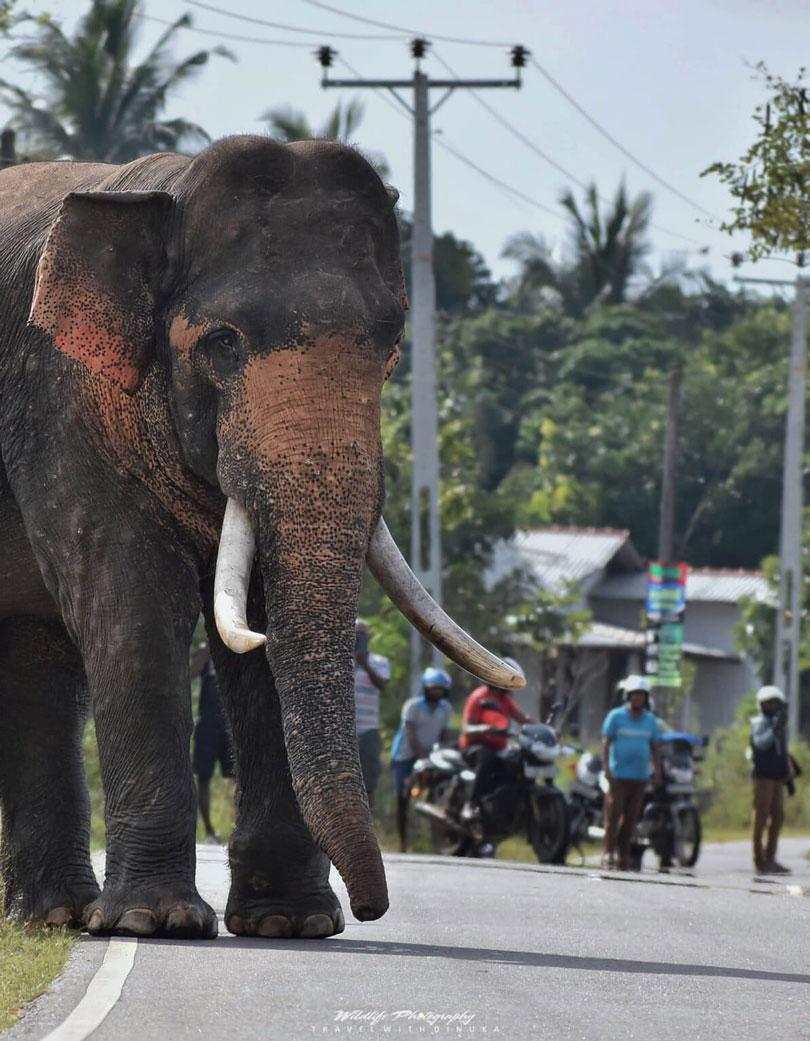
On the 20th of September, wildlife photographer Pathum Bandara reportedly observed Kavantissa moving normally near Galgamuwa. By the following day, the tusker was limping, with an apparent injury near his right front knee. Early reports suggested a gunshot wound, although other accounts raised the possibility of an injury inflicted by another tusker. That distinction matters. Establishing the original injury is essential to understanding the treatment that followed. Veterinary intervention reportedly began on the 24th of September under Department of Wildlife Conservation personnel, including Dr. Isuru Hewakottage. The wound was cleaned, antibiotics administered and blood samples collected.
Initially, Kavantissa appeared to improve. Then his condition deteriorated. By early October, he was reportedly experiencing diarrhoea, refusing food and becoming increasingly weak. On the 12th of October, Wildlife Assistant Director Channa Sooriyaweera confirmed that officers had located him near Thambuttegama suffering from gastrointestinal illness. Further blood samples were reportedly collected on the 16th of October. Hours later, he was dead. What did those investigations reveal? Were results available before his death? Did they indicate infection, organ dysfunction, dehydration or another complication? Were changes in his condition recognized and addressed promptly? Treating a wild elephant weighing several tonnes is exceptionally difficult. Sedation, immobilization and medication carry considerable risks, particularly in unpredictable terrain. The veterinarians involved deserve a fair, evidence-based assessment rather than condemnation driven by grief.
BUT PROFESSIONAL DIFFICULTY CANNOT BECOME AN ARGUMENT AGAINST PROFESSIONAL SCRUTINY.
If appropriate treatment was provided, the records should demonstrate it. If resources were inadequate or opportunities for intervention were missed, those findings must be equally transparent. An independent investigation is not an accusation of negligence. It is how negligence can be distinguished from an unavoidable tragedy.
WHAT ANTIBIOTICS WAS HE GIVEN? WAS AN OVERDOSE RULED OUT?
One of the most urgent unanswered questions concerns Kavantissa's medication. Which antibiotics were administered? At what dosages and intervals? For how long? How was his weight estimated? What monitoring was undertaken for adverse reactions? Antibiotics can be essential in treating bacterial infections. Depending on the medication and circumstances, they can also produce gastrointestinal complications. Kavantissa subsequently developed diarrhoea, reduced appetite and dehydration. That sequence warrants examination. An adverse drug reaction is not necessarily an overdose, and gastrointestinal illness following treatment does not prove the medication caused it. Infection, systemic illness and other complications must also be considered. But were adverse reactions investigated? Were medications reviewed when his condition changed? Did laboratory results influence treatment decisions? The Department must make the medication chart, clinical observations and laboratory findings available to an independent veterinary panel.
THE X-RAY THAT WAS PROMISED. WAS IT EVER PERFORMED?
On the 26th of September, wildlife authorities reportedly planned an X-ray examination to assess the bones surrounding Kavantissa's injured leg. Was it performed? If so, what did it reveal? If not, why? Imaging could potentially have helped identify skeletal damage or a retained projectile, depending on the injury and available equipment. Yet the public reporting reviewed does not establish whether the proposed examination took place. Was bone involvement excluded? Was a projectile identified? Were alternative investigations considered if field imaging proved impossible? A credible inquiry must establish what clinicians knew, when they knew it and whether the diagnostic investigations available were sufficient.
Thailand Was Being Discussed. Kavantissa Had Hours.
Perhaps the most disturbing aspect of Kavantissa's final day was the urgency surrounding efforts to obtain additional assistance. Minister Dammika Patabendi reportedly explored specialist veterinary support from Thailand. Emergency lifting equipment, additional personnel and other resources were also being discussed. Businessman Dudley Sirisena publicly described attempts to mobilize private assistance and international expertise. But the central question remains. Why was international assistance being urgently pursued on the 16th of October, more than three weeks after treatment began? Had overseas specialists been consulted earlier? When was additional expertise first considered necessary?
What prevented earlier escalation, if it was clinically indicated? The minister's instructions must be measured against what actually reached Kavantissa before his death. Announcing emergency assistance is not the same as delivering it in time. Nobody can establish that foreign specialists would have saved him. Even the best-equipped veterinary teams cannot reverse every critical illness. But whether earlier consultation might have expanded treatment options deserves investigation. A protected wild elephant should not depend on private generosity, influential connections or national publicity to access emergency expertise. And what happens to the injured elephant whose suffering never becomes news?
Had Kavantissa Been Born Somewhere Else, Would He Have Survived?
Thailand operates specialist elephant veterinary facilities. India has developed dedicated wildlife rescue and rehabilitation infrastructure. Neither country is free from animal cruelty, conservation failures or human-elephant conflict. But their facilities raise an uncomfortable question. Would Kavantissa have had a better chance with access to readily deployable diagnostic equipment, coordinated specialist referrals and emergency veterinary infrastructure? Nobody can answer that with certainty. The issue is not whether foreign veterinarians are inherently more capable. Sri Lanka's wildlife veterinarians frequently work under dangerous conditions with limited resources. The issue is preparedness. What advanced diagnostic facilities are available for seriously injured wild elephants? Who authorizes emergency referrals? What happens when specialized equipment cannot reach an animal? Are there established protocols for international consultation? A conservation system cannot depend entirely on the dedication of individual veterinarians.
Minister Patabendi, Where Was the System You Promised? Bhathiya, Sumedha, Kavantissa. How Many More Must We Lose?
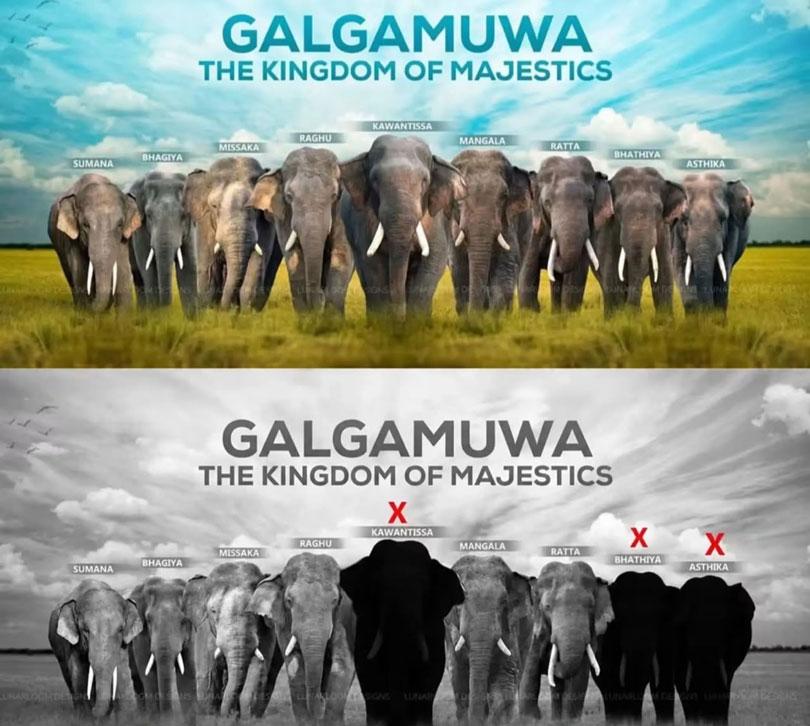
Kavantissa's death is not an isolated tragedy. It is another devastating chapter in Sri Lanka's increasingly troubling relationship with the very wildlife it proudly celebrates as part of its national identity. In 2025, the country mourned Bhathiya, another magnificent tusker whose condition deteriorated following a reported gunshot injury and a subsequent fall into an irrigation well. Before him, the deaths of Dalaputtuwa and the Panama cross-tusker exposed the vulnerability of animals that should have been protected. Today, as we speak of Kavantissa, the names of surviving tuskers such as Sumedha, Agbo and Mahasen remind us of a responsibility that cannot begin only when another elephant is fighting for its life. According to Reuters reporting published on the 14th of October, Sri Lanka has recorded annual averages of 402 elephant deaths and 138 human deaths in human-elephant conflict since 2019. In 2023 alone, elephant deaths reached 488. Approximately 70% of the country's estimated 7,451 wild elephants live outside protected areas. Conservation cannot demand that rural families bear the consequences of institutional shortcomings. Equally, protecting communities cannot mean allowing elephants to disappear from the landscapes they have occupied for generations. And this is precisely where Environment Minister Dammika Patabendi must answer a larger question: where is the system capable of protecting both?
On the 17th of October, Wildlife Conservation Director General Ranjan Marasinghe reportedly defended the Department's efforts, noting that Kavantissa, believed to be over 45 years old, was an elderly elephant. Certainly, age matters in veterinary medicine. But old age is not a medical explanation for every complication, nor should it become a convenient conclusion before the clinical evidence has been independently examined. Minister Patabendi, the country does not need another declaration about how precious its elephants are. It needs evidence that the institutions entrusted with protecting them are capable of doing so. Because if Bhathiya's suffering was not enough, if the deaths of Dalaputtuwa and countless unnamed elephants were not enough, and if even Kavantissa's final struggle cannot compel meaningful institutional reform, how many more magnificent lives must Sri Lanka bury before it finally learns to protect those still standing?
Who Shot Kavantissa? Why Has Nobody Been Publicly Identified?
Before the medical questions, there is a possible crime. Kavantissa's injury was repeatedly described as a suspected gunshot wound, although accounts of its origin differed. If gunfire caused the injury, where is the forensic evidence? Was a projectile recovered? Was a formal complaint recorded? Were witnesses questioned? Has a suspect, weapon or possible motive been identified? The criminal investigation must remain distinct from the veterinary inquiry. Determining the medical cause of death will not necessarily identify whoever inflicted the original injury. Equally, proving that someone shot Kavantissa would not establish that his subsequent treatment was negligent. Both questions demand answers. A wild elephant cannot identify his attacker, testify before a court or demand justice when public attention fades. That responsibility belongs to the state.
Take Politics Out of the Forest. Put Accountability Into Conservation.
Kavantissa's death must not become another convenient political weapon. Conservation failures have accumulated across successive administrations. No single minister created the crisis, and no government can guarantee that every injured elephant will survive. But accountability belongs to whoever holds responsibility when decisions are made. The Department of Wildlife Conservation must release a detailed treatment chronology, including medication records, diagnostic findings, clinical observations and specialist consultations. An expert post-mortem must establish the cause of death as far as the evidence permits. An independent veterinary panel must separately assess the adequacy of treatment. Investigators must report appropriate findings concerning the suspected shooting without compromising criminal proceedings. The government must then explain what will change. Not another promise of coordination. Not another announcement about monitoring. A funded, measurable emergency response system with clear responsibilities, specialist resources and transparent procedures.
What is Sri Lanka without its wildlife?
Without elephants moving through its dry-zone forests, leopards inhabiting its national parks, birds filling its wetlands and the biodiversity that makes this island extraordinary?
These magnificent creatures are not replaceable tourism attractions. They are living parts of a natural inheritance that no government or generation has the right to squander. Whether his death was medically unavoidable remains a question for evidence, not outrage. But whether Sri Lanka owes him an independent investigation should not be debatable. To Minister Patabendi, the wildlife authorities, veterinary leadership and investigators: do not simply tell the country how much Kavantissa meant to Sri Lanka.
- Show us what was done to save him.
- Show us the medical evidence.
- Show us what happened to the investigation into his injury.
- Show us what will change for the elephants still alive.
If the system worked, prove it. If it failed, acknowledge it. And if someone deliberately harmed him, pursue justice through the full force of the law.